Academic

Showing 1-10 of 19 stories

Sort by
Categories

Year

Author / Contributor

Region

us-military-interventions
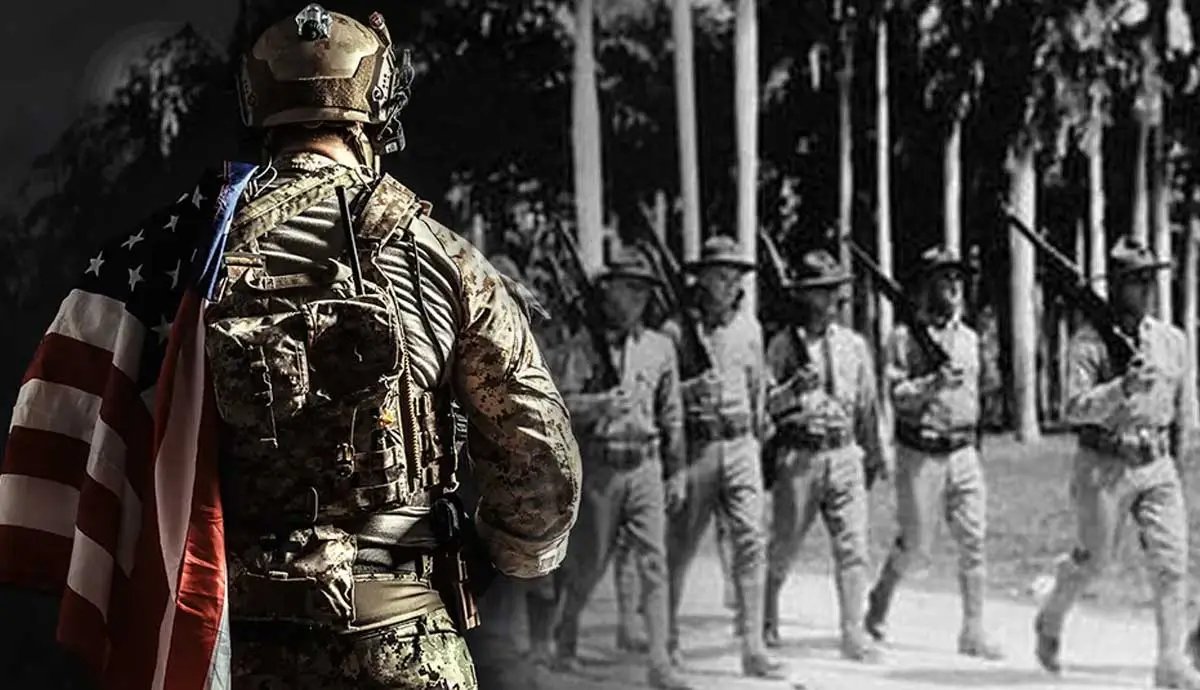
Tufts University November 11, 2022 The United States (US) ‘‘spends roughly as much on defense as the rest of the world put together…and remains the only country able to project military power globally.’’[1] With its extensive defense budget and capabilities, the US remains a military leader in contemporary international politics – but can this military advantage ever become a long-run disadvantage for our foreign policy? According to our data, the US has undertaken over 500 international military interventions since 1776, with nearly 60% undertaken between 1950 and 2017. What’s more, over one-third of these missions occurred after 1999.[2]  With the end of the Cold War era, we would expect the US to decrease its military interventions abroad, assuming lower threats and interests at stake. But these patterns reveal the opposite – the US has increased its military involvements abroad. Originally posted on Tufts University’s homepage here Perhaps as we exclusively...
9379803665_d671dc543b_k
Introduction What does propaganda have to do with academic research and teaching? Citizens can reasonably expect the academic community to generate scholarly understanding and public awareness of what propaganda is and how propaganda operates. Academics should certainly aim to ensure their own research and teaching are not influenced by it. But how well does the academic community actually deal with propaganda? Addressing this question means considering both how propaganda should be dealt with and how academics actually deal with it. Given the distinctive social role of academics, there are five general responsibilities that it is reasonable to expect them to fulfil in relation to propaganda. The most basic is to engage in research and teaching with methods of developing and communicating knowledge quite different from those that constitute propaganda. Whereas propaganda involves strategically communicating information selected on the basis of a prior agenda, the methods of science and scholarship involve collaborative deliberation and openness...
PeaceResearchProblem
Photo collage © Jan Oberg 2021 Researchers who question the legitimacy of US wars, seem to experience being ousted from their positions in research and media institutions. The example presented here is from the Institute for Peace Research in Oslo (PRIO), an institution that historically has had researchers critical of wars of aggression – and who can hardly be labelled friends of nuclear arms. Ola Tunander, Research Professor Emeritus at PRIO Originally published in Norwegian by “Modern Times/Ny Tid”, Whistleblower supplement, March 1, 2021 A researcher is said to seek objectivity and truth. But he or she learns to select their research topics and arrive at conclusions in accordance with what the authorities and management expect, and this despite the fact that academic freedom is codified in Norway through the “freedom to express oneself publicly”, “freedom to promote new ideas” and “freedom to choose method and material». In today’s societal...
albert-einstein-05-1170x670-1
Albert Einstein February 27, 2021 (Originally published in May 1949) Is it advisable for one who is not an expert on economic and social issues to express views on the subject of socialism? I believe for a number of reasons that it is. Let us first consider the question from the point of view of scientific knowledge. It might appear that there are no essential methodological differences between astronomy and economics: scientists in both fields attempt to discover laws of general acceptability for a circumscribed group of phenomena in order to make the interconnection of these phenomena as clearly understandable as possible. Originally published by Monthly Review But in reality such methodological differences do exist. The discovery of general laws in the field of economics is made difficult by the circumstance that observed economic phenomena are often affected by many factors which are very hard to evaluate separately. In addition,...
11-17-john-f-kennedy-ftr
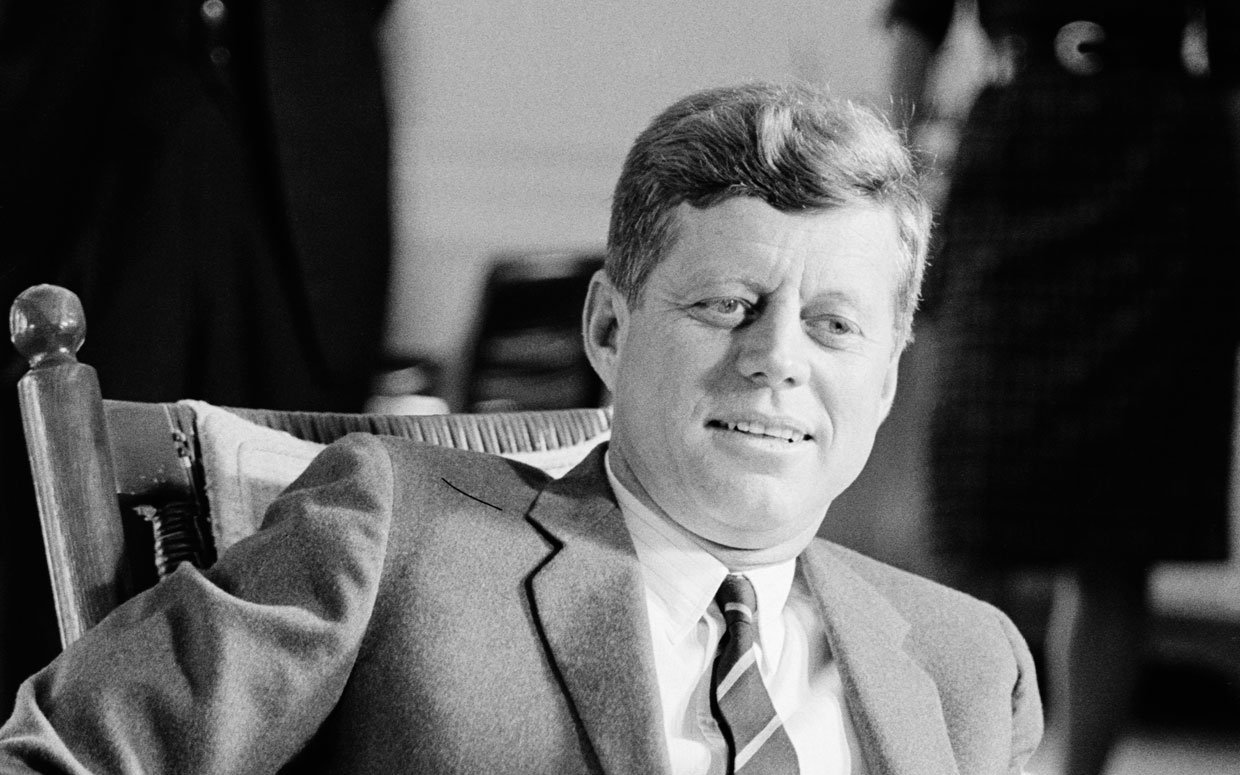
At a time when the intellectual level of much politics has decreased dangerously, it may be useful to remember politicians who earlier on were leaders, visionaries, intellectually alert and able to communicate their message in ways that caught the attention of wide audiences. The Transnational has many student visitors, and if you are 20-25 today you may not have had many chances to experience the mentioned qualities. So we bring you this speech to offer an opportunity to establish some comparative standard and for you to ponder the question: Why is it that politics has become so boring? Why do today’s young people not queue up to participate in their country’s political work? And why are there so few, as it seems, who have the sense of duty that JFK expressed so eloquently in his inauguration speech: “Ask not what your country can do for you, ask what you can...
RichardFalk
By chance I was reading César Vallejo’s poem, “Black Stone on a White Stone,” in a translation by Geoffrey Brock, and was struck by the opening stanza: I’ll die in Paris in the pouring rain a day I have a memory of already. I’ll die in Paris – I won’t try to run – a Thursday perhaps, in Autumn, like today. Without being literal, I was reminded that I could appraise my death while alive, and not leave a final reckoning to some solemn memorial event in which speakers are challenged to find humorous anecdotes to lighten the occasion, otherwise uttering honorific platitudes quite unrelated to the experiential core of my being. I had been thinking quite a bit recently about ‘lost causes.’ Recently I gave a lecture at Columbia University on this theme, inspired by Edward Said’s seminal late essay “On Lost Causes” (1997) in which he ties together...
herbert-marcuse
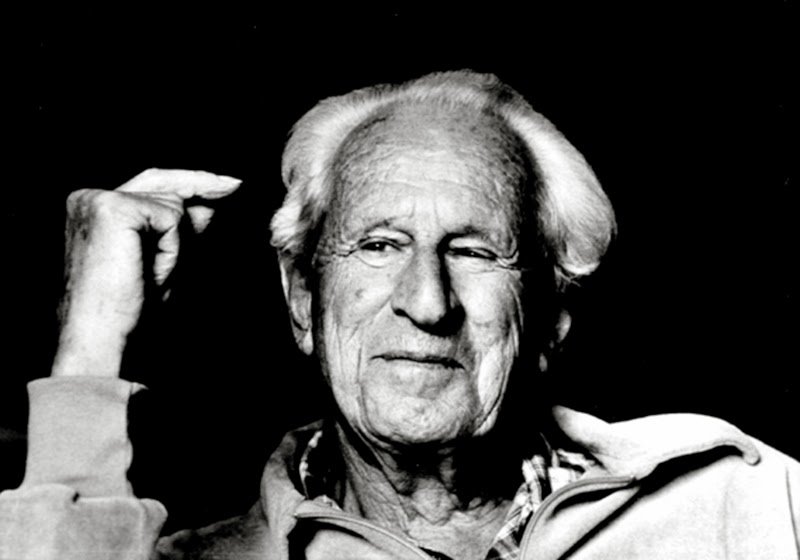
Fifty years later, One-Dimensional Man looks more prescient than its author could have imagined. Ronald Aronson November 23, 2020 When Herbert Marcuse’s One-Dimensional Man appeared fifty years ago, it was a revelation. To many of us who were becoming the New Left, Marcuse reflected and explained our own feeling of suffocation, our alienation from an increasingly totalitarian universe that trumpeted its freedom at every moment. We had grown up in it, we had encountered it in Allen Ginsberg’s Howl; but until One-Dimensional Man, we could scarcely understand, let alone describe, it. A student of Marcuse’s, I wrote at the time in Radical America that the book was “a major step in our breaking out of that closing universe. By naming it, by helping us to get conscious of it, by conveying its overwhelming power, [Marcuse] helped us to define ourselves in opposition to it—total opposition.” Originally published af Boston Review He spoke to a deep sense of...
seddelpresse
Today the money meme rules our lives and social interactions in most societies on Earth. How did this happen? I studied all the economics textbooks of every perspective from the Austrian “laissez-faire” market fundamentalists to Adam Smith’s Wealth of Nations, (1776) and his earlier Theory of Moral Sentiments, (1759), as well as Karl Marx, who claimed not to be an economist. From Karl Polanyi’s broader views, I learned that trading was innate in human behavior and how indigenous peoples in the South Pacific traded shells in their canoe travels and visits among these islands in “Primitive, Archaic and Modern Economics, (1968). In Polanyi’s “The Great Transformation”, (1944), I learned how traditional societies and local market norms in communitarian village life were over-ruled by legislation in the British parliament which created national markets and facilitated global trade and colonial exploitation as these markets expanded. I was fortunate to know Polanyi personally...
GaltungsMetode
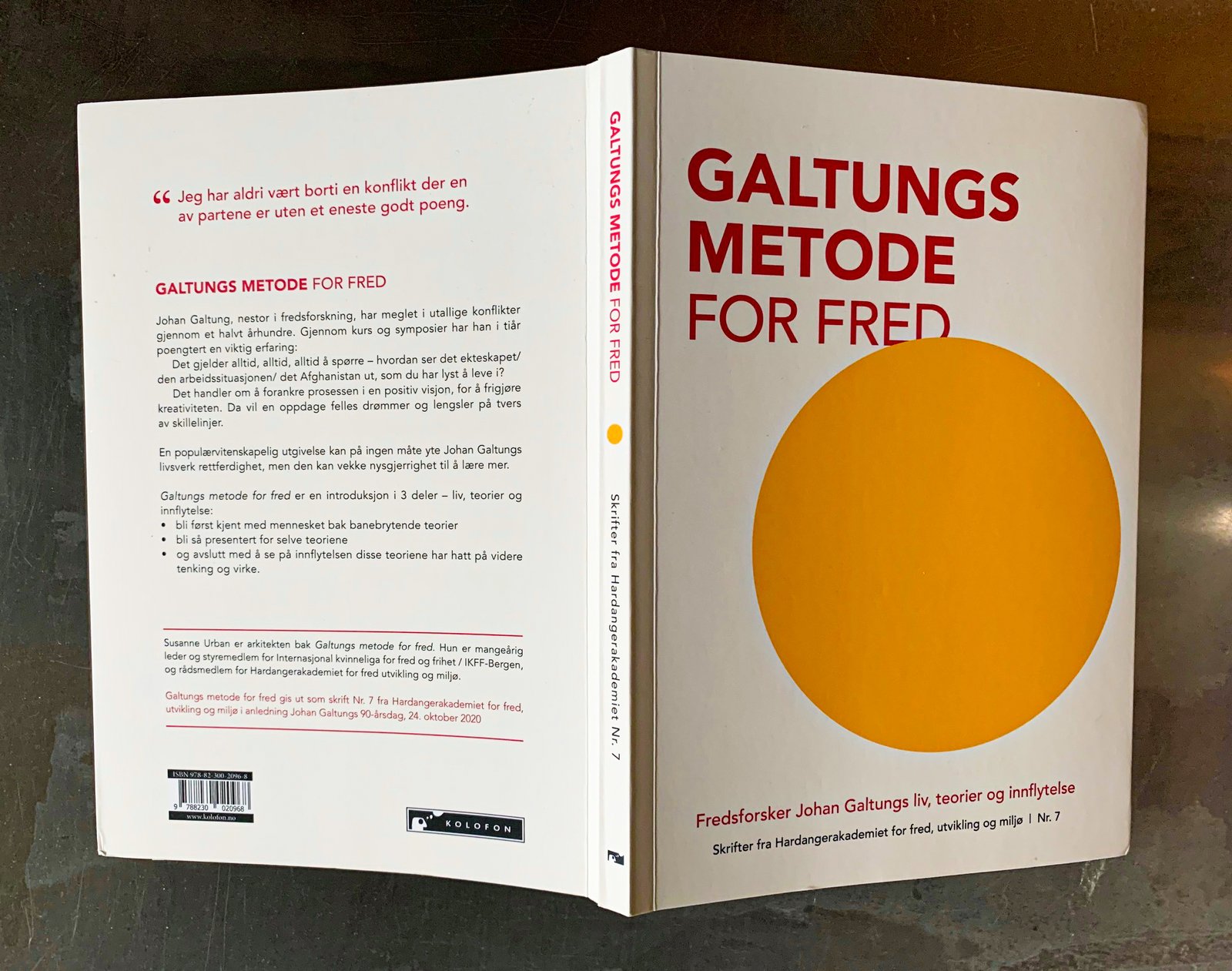
Den norske arkitekt og fredsforkæmper, Susanne Urban har forfattet en righoldig bog, som netop er udkommet for at markere at en af verdens absolut ledende samfundsforskere, Johan Galtung, fylder 90 den 24. oktober 2020. Han er matematiker, sociolog, freds- og fremtidsforsker med en utrolig produktion af foredrag, artikler, gæsteprofessorater og hederdoktorater bag sig – f.eks. medvirket i 170 bøger heraf som eneforfatter af 96. Her mere om ham på Norsk Biografisk Leksikon. Bogen er det 7. skrift fra Hardangerakademiet for fred, utvikling og miljø. Den er på 115 sider og har tre hovedkapitler – de som udtrykkes i undertitlen – og den er fyldt med forklarende tekster, figurer, tegninger og fotografier – så man drives videre i denne forskers univers på en utroligt levende måde. Susanne Amira Maria Urban er kosmopolit, bosat i Norge siden 1977 – belønnet som “innvandrere med suksess i Norge.” Hun er arkitekt, byplanlægger og samfundsdebattør...
Galtung__DSC7860
Keynote Speech, International Peace Research Association (IPRA) – 7 Jan 2006 On professionalization in general Generally, the sociology of professions identifies three characteristics of a profession: The purpose of peace research is to produce intersubjectively communicable and verifiable KNOWLEDGE according to the general rules of research. Thus, research is incompatible with secrecy, as research has to take place in public space. And one purpose of peace studies is the communication of the findings of peace research, in line with general rules for education, another public space activity. The free access of the rest of society to what happens is of the essence. As peace workers are not planning to hurt or harm, in other words to exercise violence, s/he has nothing to conceal. In the following a person exercising the peace profession will be referred to as “peace worker”, like “social worker”, or “peace professional” like “health professional”. Others may...
Fascism-1
A new book I would like to announce the publication of a new book, entitled “Fascism, Then and Now”. It can be freely downloaded here. Please circulate the link to your friends who might be interested. Parallels between fascism of the 1930’w and neo-fascism today There are many extremely worrying similarities between fascism in Europe in the 1930’s and the neo-fascism that we can see around us today. For example, Donald Trump, according to his first wife, kept a book of Hitler’s speeches beside his bed, and studied it thoroughly. Today, he imitates Hitler’s rhetoric, as is discussed in Appendix A. The white supremacist supporters of Donald Trump have revived Nazi ideology, language and symbols. Neo-fascism and neo-Nazism are not confined to the United States, but exist in many countries. Why was Germany allowed to rearm during the period before World War II? Chapters 1 and 2 of this book...
personal-characteristics-leaders-1-marsella-chart-1-768x811
29 Jan 2018 By Anthony J. Marsella and Kathleen Malley-Morrison Introduction 26 Jan 2018 – The annual memorial holiday on January 15, 2018, celebrating Reverend Martin Luther King, Jr.’s enduring contributions to peace and justice, has passed. The events of the day linger in our minds, eternally grateful for Reverend King’s efforts to free people and nations from the brutal oppressions imposed by governments, nations, societies, organizations, and individuals, who willfully continue to support and sustain the evils of racism, prejudice, violence, and war. Reverend King’s commitment to freedom from oppression and abuse compel us to continue his efforts far beyond the words, songs, and promises of his day. To this end, we, (i.e., Kathy Malley-Morrison & Anthony J. Marsella), the authors of this article, have chosen to demonstrate our responsibilities to continuing the work of Reverend King, by identifying 100 living peace and social justice leaders and models. The...

Categories

Year

Author / Contributor

Region