
Branko Marcetic: Mission Creep? How the US role in Ukraine has slowly escalated

Photo by Master Sgt. Sean M. Worrell, U.S. Air Force via ABACAPRESS.COM

Branko Marcetic

February 22, 2023

The Biden team has quietly blown past red lines of involvement. The question now, is how far is it willing to go.

When the United States involves itself militarily in a conflict, it often finds it hard to get itself out, let alone avoid deep entanglements that blow well past lines it had drawn at the start of the intervention. 

It happened in Vietnam, when U.S. military advisers helping the South Vietnamese fight Viet Cong eventually became U.S. soldiers fighting an American war. It happened in Afghanistan, when an initial invasion to capture al-Qaida and overthrow the Taliban morphed into a nearly two-decade-long nation-building project. And it could be happening right now in Ukraine. 

Originally published at Responsible Statecraft

Little by little, NATO and the United States are creeping closer to the catastrophic scenario President Joe Biden said “we must strive to prevent” — direct conflict between the United States and Russia. Despite stressing at the start of the war that “our forces are not and will not be engaged in the conflict,” current and former intelligence officials told the Intercept back in October that “there is a much larger presence of both CIA and US special operations personnel” in Ukraine than there was when Russia invaded, conducting “clandestine American operations” in the country that “are now far more extensive.” 

Among those clandestine operations, investigative journalist and former Green Beret Jack Murphy reported on Dec. 24 to little mainstream attention, is the CIA’s work with an unnamed NATO ally’s spy agency to carry out sabotage operations within Russia, reportedly the cause of the unexplained explosions that have rocked Russian infrastructure throughout the war. This is the kind of activity that skirts dangerously close to direct NATO-Russia confrontation. 

To put it into perspective, consider the way that swaths of the U.S. political establishment viewed the mere act of Russian meddling in the 2016 election an “act of war” — outrageous, but orders of magnitude less serious than helping to carry out infrastructure attacks on another country’s soil.

Meanwhile, the United States and its NATO allies have serially blown past their own self-imposed lines over arms transfers. At the start of the war, the New York Times cautioned that the overt supply of even small arms and light weaponry “risks encouraging a wider war and possible retaliation” from Moscow, while U.S. officials ruled out more advanced weaponry as too escalatory. It took less than two months for the Biden administration to start sending these more risky tranches of high-powered arms. 

By the end of May, it was sending advanced rocket systems that just weeks earlier it had considered too escalatory, on the strict condition that Ukraine didn’t use them to strike inside Russian territory, something they feared could spark escalation drawing in NATO — until that line too, was eventually breached. The Pentagon admitted this past December it had given Ukraine the go-ahead to attack targets in Russia after all, in response to Moscow’s destruction of Ukrainian infrastructure. 

“The fear of escalation has changed since the beginning,” one defense official explained to the Times of London, with the Pentagon less worried ever since Russian president Vladimir Putin pulled back on his nuclear threats in October. 

As the Ukraine war effort has stalled and Russian forces have made small advances, NATO arms transfers have now escalated well beyond what governments had worried just months ago could draw the alliance into direct war with Russia, with the U.S. and European governments now sending armored vehicles and reportedly preparing to send tanks. Ukrainian Defense Minister Oleksii Reznikov had predicted as much in October last year. 

“When I was in D.C. in November, before the invasion, and asked for Stingers, they told me it was impossible,” he had told the New Yorker then. “Now it’s possible. When I asked for 155-millimeter guns, the answer was no. HIMARS, no. HARM, no. Now all of that is a yes. Therefore, I’m certain that tomorrow there will be tanks and ATACMS and F-16s.” 

It remains to be seen how long before U.S. opposition to such military aid goes the way of its earlier opposition to the heavy weaponry it’s already sent, or how long the administration will continue to hold out on sending long-range drones, which a bipartisan group of senators is currently pushing for and which Russian officials have explicitly warned would make Washington “a direct party to the conflict.” 

As the nature of arms transfers has expanded, so have war aims. The alliance’s initial goals were to help Ukraine defend its independence and sovereignty by repelling a Russian invasion bent on regime change. Two months later, U.S. officials were publicly talking about “victory” and inflicting a “strategic defeat” on Russia that would leave it “weakened.” Biden has repeatedly vowed to support Ukraine “as long as it takes,” even as Zelensky and other officials have made repeatedly clear their goals are now to retake Crimea, something that could spark nuclear escalation

Talk of diplomacy is again nearly absent from U.S. commentary on the war, far outnumbered by calls for drastic escalation of NATO involvement to achieve Ukrainian victory, often on the basis that any other result would deal an existential blow to the West and the entire liberal global order. 

“If Russia wins the war in Ukraine, we will see decades of this kind of behavior ahead of us,” Finland’s progressive Prime Minister Sanna Marin recently said at Davos, as she pledged to back the Ukrainian war effort for 15 years if necessary. “We have to make sure that in the end, Ukrainians will win. I don’t think that there’s any other choice.” 

And it seems as of last week, the Biden administration is poised to cross yet another major line, with the New York Times reporting that U.S. officials are strongly considering giving Ukraine the green light to attack Crimea, even while acknowledging the risk of nuclear retaliation that such a move would carry. Fears of such an escalation “have dimmed,” U.S. officials told the paper. 

By escalating their support for Ukraine’s military, the U.S. and NATO have created an incentive structure for Moscow to take a drastic, aggressive step to show the seriousness of its own red lines. This would be dangerous at the best of times, but particularly so when Russian officials are making clear they increasingly view the war as one against NATO as a whole, not merely Ukraine, while threatening nuclear response to the alliance’s escalation in weapons deliveries. 

NATO governments are increasingly painting the conflict to their publics not as a limited effort to help one country repel an invasion from a larger neighbor, but rather as an existential battle for the survival of the West, mirrored in the Russian leadership’s own evolving view of the war as a battle for survival against hostile Western powers. Notably, this has happened despite the Biden administration’s public endorsement of diplomacy late last year.

If the intention is to keep this war a limited, regional one between two neighboring states with NATO playing only a peripheral, supportive role, all of these trend lines point in the exact opposite direction. Unless officials make a concerted effort to de-escalate and pursue a diplomatic track — and prominent voices in media and politics create the political space for them to do it — Biden’s vow to avoid World War Three will mean as much as President Johnson’s 1964 promise not to “send American boys nine or ten thousand miles away from home to do what Asian boys ought to be doing for themselves.” 

Originally published at Responsible Statecraft
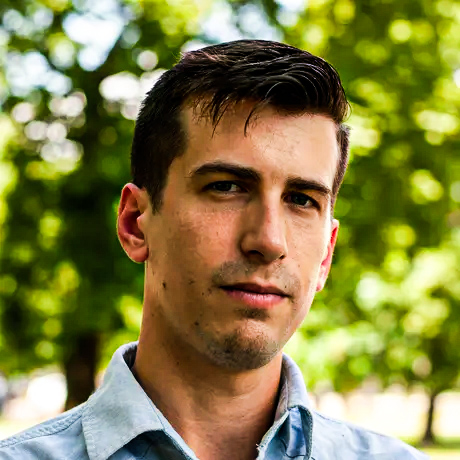
About the author

Branko Marcetic is a staff writer with Jacobin magazine and the author of Yesterday’s Man: the Case Against Joe Biden. His work has appeared in the Washington Post, the Guardian, In These Times, and others.

Please help TFF remain truly independent by contributing if you benefited from this article

[paypal-donation]

No data was found

Share

Leave a Reply

Your email address will not be published. Required fields are marked *

Related Posts

Officially, the drones were not identified. By simply thinking critically – which journalists and selected experts no longer do – there may be a good reason for that. And this article will never be mentioned in Denmark… Drones over Denmark. No damage. No trace. No answers. Yet the headlines scream “Russian threat,” and Prime Minister Mette Frederiksen speaks with a certainty that defies logic: “We don’t know they were Russian—but we know Russia is the biggest threat to Europe.” It could be nobody else – unless you make an interest analysis which I did two days ago. This is not security policy. It’s theatre. And the audience is being played. Let’s rewind. These drones—unphotographed, untracked, unclaimed—appear and vanish like ghosts. Airports shut down. Panic spreads. Military budgets swell. And the narrative hardens: Russia is behind it. But what if that’s not just wrong but deliberately misleading? Here’s a hypothesis for...
And why the world, especially the EU, must now declare itself independent of the United States. UN’s 80th anniversary This year, the United Nations celebrates the 80th anniversary of its founding. The UN was formed after the scourge of the Second World War, in which 70 to 85 million people were killed and many countries were destroyed. That war came on the heels of the First World War, which also killed between 15 and 22 million people. After the Second World War, especially after the use of nuclear weapons by the United States, which marked a turning point in the history of warfare that could result in the end of civilisation as we know it, humanity decided to move away from the era of empires and big power politics and usher in a new era of peace, freedom and cooperation. These were the principles enshrined in the UN Charter. The United States...
Drones over Nordic airports. No damage. No trace. No answers. Most assume Russia—but what if that’s not so? Why is there so much we are not told? This article explores the strategic ambiguity behind recent drone incursions and asks: Who else might benefit from sending drones into NATO airspace? From Ukraine’s surprising drone supremacy to Russia’s possible signalling, the silence itself may be the loudest message. These are the kinds of questions decent, intelligent investigative journalists and commentators could easily research. Why don’t they? Did you, dear reader, know or think of this? That the most powerful weapon in today’s conflicts might be the one that leaves no trace – and no answers. Just enough fear to justify the next move? Recently, drones have repeatedly appeared over Nordic airports and near some military facilities. They cause no damage – for which reason the designation “hybrid attack” is misleading but serves a purpose. These...

Recent Articles

Till Sofias huvudsida
OK, Trump did not get it. But he got a full endorsement of a possible future US regime change in Venezuela. And that is what Ms Machado has advocated. On October 10, 2025, the Norwegian Nobel Committee awarded its Peace Prize to Venezuelan opposition figure María Corina Machado. The citation praised her “tireless work promoting democratic rights.” But Ms Machado has openly called for U.S. military intervention in Venezuela, stating on CBS: “The only way to stop the suppression is by force—U.S. force.” She or her party has received funding from the National Endowment for Democracy (NED), a U.S. government-backed body known as a CIA front organisation and for supporting regime-change operations worldwide. And in 2018, she sent a letter to Israeli Prime Minister Benjamin Netanyahu, asking him to use “force and influence” to help dismantle Venezuela’s government—citing alleged ties to terrorism, Iran and narcotrafficking. This year’s NATO Norwegian prize...
PRESS RELEASE – 6 OCTOBER 2025 LAY DOWN YOUR ARMSPEACE PRIZE FOR 2025 is awarded Francesca Albanese The United Nations Special Rapporteur on the occupied Palestinian territories – as the person who, in accordance with Alfred Nobel’s will, has “done the most or the best work for fraternity between nations and for the abolition or reduction of standing armies as well as for the holding and promotion of peace congresses.” Francesca Albanese has forcefully and unwaveringly worked against Israel’s full-scale war on the occupied Palestinian territories, in particular Israel´s ongoing genocide against the Palestinian people. She has confronted Israel’s systematic war crimes and crimes against humanity in a truly global outreach. Further, she has brought governments, international organisations and people’s groups together to underline the responsibility of the world at large to act and to stop arming, enabling, and profiting from Israel’s ongoing criminal actions. But first of all, Albanese...

TFF on Substack

Discover more from TFF Transnational Foundation & Jan Oberg.

Most Popular

Till Sofias huvudsida
OK, Trump did not get it. But he got a full endorsement of a possible future US regime change in Venezuela. And that is what Ms Machado has advocated. On October 10, 2025, the Norwegian Nobel Committee awarded its Peace Prize to Venezuelan opposition figure María Corina Machado. The citation praised her “tireless work promoting democratic rights.” But Ms Machado has openly called for U.S. military intervention in Venezuela, stating on CBS: “The only way to stop the suppression is by force—U.S. force.” She or her party has received funding from the National Endowment for Democracy (NED), a U.S. government-backed body known as a CIA front organisation and for supporting regime-change operations worldwide. And in 2018, she sent a letter to Israeli Prime Minister Benjamin Netanyahu, asking him to use “force and influence” to help dismantle Venezuela’s government—citing alleged ties to terrorism, Iran and narcotrafficking. This year’s NATO Norwegian prize...
PRESS RELEASE – 6 OCTOBER 2025 LAY DOWN YOUR ARMSPEACE PRIZE FOR 2025 is awarded Francesca Albanese The United Nations Special Rapporteur on the occupied Palestinian territories – as the person who, in accordance with Alfred Nobel’s will, has “done the most or the best work for fraternity between nations and for the abolition or reduction of standing armies as well as for the holding and promotion of peace congresses.” Francesca Albanese has forcefully and unwaveringly worked against Israel’s full-scale war on the occupied Palestinian territories, in particular Israel´s ongoing genocide against the Palestinian people. She has confronted Israel’s systematic war crimes and crimes against humanity in a truly global outreach. Further, she has brought governments, international organisations and people’s groups together to underline the responsibility of the world at large to act and to stop arming, enabling, and profiting from Israel’s ongoing criminal actions. But first of all, Albanese...
Read More
Till Sofias huvudsida
BlackNobel
OK, Trump did not get it. But he got a full endorsement of a possible future US regime change in Venezuela. And that is what Ms Machado has advocated. On October 10, 2025, the Norwegian Nobel Committee awarded its Peace Prize to Venezuelan opposition figure María Corina Machado. The citation praised her “tireless work promoting democratic rights.” But Ms Machado has openly called for U.S. military intervention in Venezuela, stating on CBS: “The only way to stop the suppression is by force—U.S. force.” She or her party has received funding from the National Endowment for Democracy (NED), a U.S. government-backed body known as a CIA front organisation and for supporting regime-change operations worldwide. And in 2018, she sent a letter to Israeli Prime Minister Benjamin Netanyahu, asking him to use “force and influence” to help dismantle Venezuela’s government—citing alleged ties to terrorism, Iran and narcotrafficking. This year’s NATO Norwegian prize...
Screenshot-2025-10-08-163458
PRESS RELEASE – 6 OCTOBER 2025 LAY DOWN YOUR ARMSPEACE PRIZE FOR 2025 is awarded Francesca Albanese The United Nations Special Rapporteur on the occupied Palestinian territories – as the person who, in accordance with Alfred Nobel’s will, has “done the most or the best work for fraternity between nations and for the abolition or reduction of standing armies as well as for the holding and promotion of peace congresses.” Francesca Albanese has forcefully and unwaveringly worked against Israel’s full-scale war on the occupied Palestinian territories, in particular Israel´s ongoing genocide against the Palestinian people. She has confronted Israel’s systematic war crimes and crimes against humanity in a truly global outreach. Further, she has brought governments, international organisations and people’s groups together to underline the responsibility of the world at large to act and to stop arming, enabling, and profiting from Israel’s ongoing criminal actions. But first of all, Albanese...
Copilot_20251003_003414
Officially, the drones were not identified. By simply thinking critically – which journalists and selected experts no longer do – there may be a good reason for that. And this article will never be mentioned in Denmark… Drones over Denmark. No damage. No trace. No answers. Yet the headlines scream “Russian threat,” and Prime Minister Mette Frederiksen speaks with a certainty that defies logic: “We don’t know they were Russian—but we know Russia is the biggest threat to Europe.” It could be nobody else – unless you make an interest analysis which I did two days ago. This is not security policy. It’s theatre. And the audience is being played. Let’s rewind. These drones—unphotographed, untracked, unclaimed—appear and vanish like ghosts. Airports shut down. Panic spreads. Military budgets swell. And the narrative hardens: Russia is behind it. But what if that’s not just wrong but deliberately misleading? Here’s a hypothesis for...
Screenshot-2025-09-30-231913-1
And why the world, especially the EU, must now declare itself independent of the United States. UN’s 80th anniversary This year, the United Nations celebrates the 80th anniversary of its founding. The UN was formed after the scourge of the Second World War, in which 70 to 85 million people were killed and many countries were destroyed. That war came on the heels of the First World War, which also killed between 15 and 22 million people. After the Second World War, especially after the use of nuclear weapons by the United States, which marked a turning point in the history of warfare that could result in the end of civilisation as we know it, humanity decided to move away from the era of empires and big power politics and usher in a new era of peace, freedom and cooperation. These were the principles enshrined in the UN Charter. The United States...
DRONE
Drones over Nordic airports. No damage. No trace. No answers. Most assume Russia—but what if that’s not so? Why is there so much we are not told? This article explores the strategic ambiguity behind recent drone incursions and asks: Who else might benefit from sending drones into NATO airspace? From Ukraine’s surprising drone supremacy to Russia’s possible signalling, the silence itself may be the loudest message. These are the kinds of questions decent, intelligent investigative journalists and commentators could easily research. Why don’t they? Did you, dear reader, know or think of this? That the most powerful weapon in today’s conflicts might be the one that leaves no trace – and no answers. Just enough fear to justify the next move? Recently, drones have repeatedly appeared over Nordic airports and near some military facilities. They cause no damage – for which reason the designation “hybrid attack” is misleading but serves a purpose. These...