
Boaventura de Sousa Santos: Europe is sleepwalking into another world war

Boaventura de Sousa Santos

April 8, 2022

Originally posted on Independent Media Institute’s homepage on April 4th, 2022

More than 100 years after World War I, Europe’s leaders are sleepwalking toward a new all-out war. In 1914, the European governments believed that the war would last three weeks; it lasted four years and resulted in more than 20 million deaths.

The same nonchalance is visible with the war in Ukraine. The dominant view is that the aggressor should be left broken and humbled. Then, the defeated power was Germany. Some dissenting voices, such as John Maynard Keynes, felt that the humbling of Germany would be a disaster. Their warnings went unheeded. Twenty-one years later, Europe was back at war, which lasted six years and killed 70 million people. History neither repeats itself nor seems to teach us anything, but it does illustrate similarities and differences.

The hundred years before 1914 offered Europe relative peace. What wars took place were of a short-lived nature. The reason for this was the Congress of Vienna (1814-15), which brought together the victors and the vanquished from the Napoleonic wars to create a lasting peace. The chair of the conference was Klemens von Metternich, who made sure that the defeated power (France) paid for its actions with territorial losses but that it signed the treaty along with Austria, England, Prussia, and Russia to secure peace with dignity.

Negotiation or Total Defeat

While the Napoleonic wars took place between European powers, today’s war is between a European (Russia) and a non-European (United States) power. It is a proxy war, with both sides using a third country (Ukraine) to achieve geostrategic goals that go well beyond the country in question and the continent to which it belongs.

Russia is at war with Ukraine because it is a war with the North Atlantic Treaty Organization (NATO), which is commanded by the United States. NATO has been at the service of U.S. geostrategic interests. Once a steadfast champion of the self-determination of peoples, Russia is now illegally sacrificing these same principles to assert its own security concerns, after failing to have them recognized through peaceful means, and out of an undisguised imperial nostalgia.

For its part, since the end of the first cold war, the U.S. has striven to deepen Russia’s defeat, a defeat which in fact was probably more self-inflicted than brought about by any superiority on the part of its opponent.

From NATO’s perspective, the goal of the war in Ukraine is to inflict an unconditional defeat on Russia, preferably one that leads to regime change in Moscow. The duration of the war depends on that goal. Where is Russia’s incentive to end the war when British Prime Minister Boris Johnson permits himself to say that sanctions against Russia will continue, no matter what Russia’s position is now?

Would it be sufficient for Russian President Vladimir Putin to be ousted (as was the case with Napoleon in 1815), or is the truth of the matter that the NATO countries insist on the ousting of Russia itself so that China’s expansion can be halted? There was also regime change in the 1918 humbling of Germany, but it all ended up leading to Hitler and an even more devastating war.

Ukrainian President Volodymyr Zelenskyy’s political greatness could be construed as being either in recognition of the brave patriot who defends his country from the invader to the last drop of blood or in recognition of the brave patriot who, faced with the imminence of so many innocent deaths and the asymmetry in military strength, successfully enlists the support of his allies to negotiate fiercely to secure a dignified peace. The fact that the former construction is now the prevalent one probably has little to do with President Zelenskyy’s personal preferences.

Where Is Europe?

During the two world wars of the 20th century, Europe was the self-proclaimed center of the world. That is why we call the two wars world wars. About 4 million of Europe’s troops were in fact African and Asian. Many thousands of non-European deaths were the price paid by the inhabitants of remote colonies of the countries involved, sacrificed in a war that did not concern them.

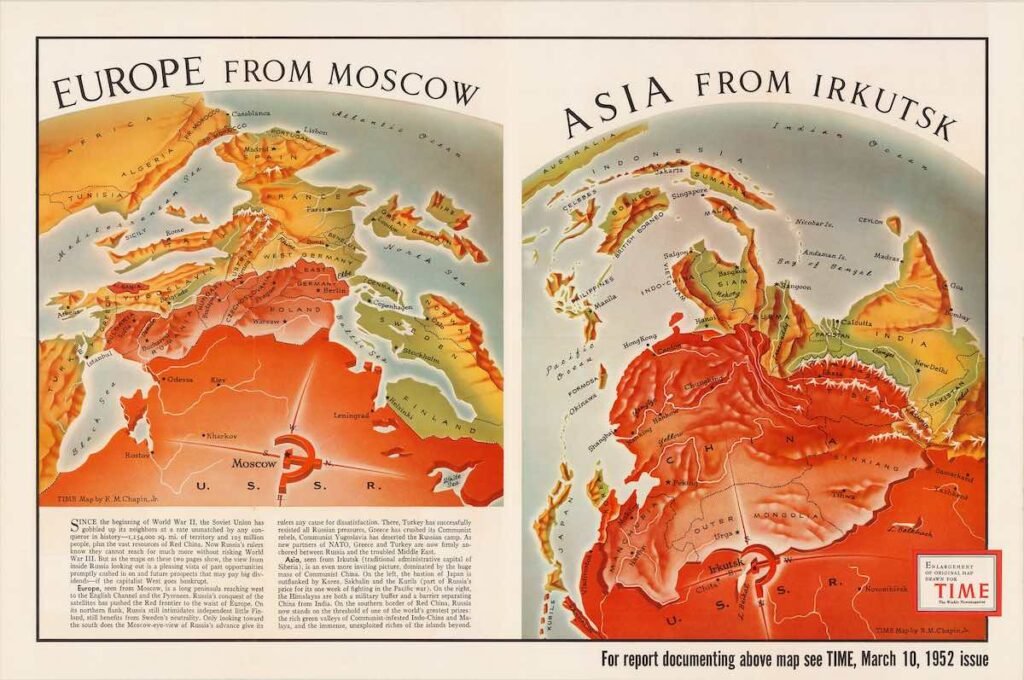
Now, Europe is but a small corner of the world, which the war in Ukraine will render even smaller. For centuries, Europe was merely the western tip of Eurasia, the huge landmass that stretched from China to the Iberian Peninsula and witnessed the exchange of knowledge, products, scientific innovations, and cultures.

Much of what was later attributed to European exceptionalism (from the scientific revolution of the 16th century to the industrial revolution in the 19th century) cannot be understood, nor would it have been possible, without those centuries-old exchanges. The war in Ukraine—especially if it goes on for too long—runs the risk not only of amputating one of Europe’s historic powers (Russia), but also of isolating it from the rest of the world, notably from China.

The world is far bigger than what you get to see through European or North American lenses. Seeing through these lenses, Europeans have never felt so strong, so close to their larger partner, so sure of standing on the right side of history, with the whole planet being run by the rules of the “liberal order,” a world finally feeling strong enough to go forth sometime soon and conquer—or at least neutralize—China, after having destroyed China’s main partner, Russia.

Seeing through non-European lenses, on the other hand, Europe and the U.S. stand haughtily all but alone, probably capable of winning one battle, but on their way to certain defeat in the war of history.

More than half of the world’s population lives in countries that have decided not to join the sanctions against Russia. Many of the United Nations member states that voted (rightly) against the illegal invasion of Ukraine did so based on their historical experience, which consisted of being invaded, not by Russia, but rather by the U.S., England, France, or Israel. Their decision was not dictated by ignorance, but by precaution.

How can they trust countries that created SWIFT—a financial transfer system aimed at protecting economic transactions against political interference—only to end up removing from that system a country on political grounds? Countries that arrogate to themselves the power to confiscate the financial and gold reserves of sovereign nations like Afghanistan, Venezuela, and now Russia?

Countries that trumpet freedom of expression as a sacrosanct universal value, but resort to censorship the moment they are exposed by it? Countries that are supposed to cherish democracy and yet have no qualms about staging a coup whenever an election goes against their interests?

Countries in whose eyes the “dictator” Nicolás Maduro becomes a trading partner overnight because the circumstances have changed?

The world is no longer a place of innocence—if it ever was.

Please help TFF post more quality articles like this and to remain truly independent by contributing if you benefited from this article
Boaventura de Sousa Santos is the emeritus professor of sociology at the University of Coimbra in Portugal. His most recent book is Decolonizing the University: The Challenge of Deep Cognitive Justice.

Share

Leave a Reply

Your email address will not be published. Required fields are marked *

Related Posts

How amazing! The Danish government seemed unprepared for the eventuality that President Trump, if elected, would insist once again on getting Greenland – and a few other “things.” Who was asleep – or much too occupied with hating Russia and helping Ukraine to see what was coming? Secondly, Trump – who is no peace-maker but has other motives – grabbed the phone to Russian President Putin. Why did no European leader do exactly that during the last almost three years? And why did Europe not foresee that he would do that; Trump had said time and again that he would engage in the Ukraine war and stop it. They sat there hearing and seeing nothing of what – very predictably – happened outside their European groupthink box. This interview by the China Academy and Thinkers Forum was recorded on February 12, that is, before the disaster unfolded further at the...
I. Introduction The initiative for the “Nordic Delegation to China, September 7-15, 2024” was taken from the Norwegian side. Journalist and former editor Arild Vollan wanted to investigate claims in the media about an ongoing genocide against the Uyghurs in the autonomous region of Xinjiang in western China. Vollan selected an independent, cross-disciplinary and cross-political delegation group consisting of people who have worked with China and who wanted to get personal impressions of the conditions described in the previous section. The delegation consisted of: The delegation itself developed the project’s mandate. Following an excursion to Xinjiang province, the delegation’s mandate was to clarify whether observations made during the trip substantiated claims in the media that there is an ongoing genocide in Xinjiang today. Arild Vollan prepared the excursion program in dialogue with Thore Vestby, who has previously visited the province. The logistics were set up in dialogue with the Chinese Embassy in...
1. Israel: The policy’s background As a small country with a tiny population surrounded by large and hostile countries, Israel’s policy ever since its establishment has been to rely on some external forces, the British Empire at the beginning of its creation and later on the American superpower to protect herself. It has also involved the creation of a nuclear arsenal in contravention of the Non-Proliferation Treaty (the NPT) and by means of lies and deception, while being the most vociferous opponent of any other country in the Middle East to even have a peaceful nuclear programme for producing energy. Another aspect of this policy of self-preservation has been to divide and partition the neighbouring countries so that they would lose their advantage of larger size and greater population vis-à-vis Israel. As early as 1982, the Israeli scholar Oded Yinon authored an essay called “A Strategy for Israel in the...

Recent Articles

PressInfo # 141, December 21, 2001It’s time to prepare reconciliation between Albanians and Serbs PressInfo # 140, December 14, 2001Ibrahim Rugova’s decade-long leadership in Kosovo/a PressInfo # 139, 11. december, 2001En god nyhet: Jugoslaviens Sannings- och försoningskommission PressInfo # 139, 11. december, 2001Gode nyheder: Jugoslaviens Sandheds- og Forsoningskommission PressInfo # 139, December 11, 2001Good news: Yugoslavia’s Truth and Reconciliation Commission PressInfo # 138, November 8, 2001TFF co-founder PhD with thesis about young people with roots in other cultures PressInfo # 138, November 8, 2001TFF:s medstiftare doktor på avhandling om unga med ursprung i andra kulturer PressInfo # 137, October 17, 2001A new Marshall Plan: Advancing human security and controlling terrorism PressInfo # 136, October 15, 2001The UN and Annan really deserve it PressInfo # 135, October 10, 2001Preventing a terrorist mushroom cloud PressInfo # 134, 17 oktober, 2001Sverige og 11. september PressInfo # 134, October 9, 2001Sweden and September 11...
Peace is promoted by constructive proposals and dialogue Four preceding PressInfos have expressed concern over — and criticised — the ongoing, militarisation of the EU. Some will say: but there are no alternatives. We believe that there are always alternatives, that democracies are characterised by alternatives and choice, and that openly discussed alternatives will improve the quality and legitimacy of society’s decision–making. In addition, it is an intellectual and moral challenge to not only criticise but also be constructive. If we only tell people that we think they are wrong, they are not likely to listen. However, if we say: what are your views on this set of ideas and steps? — we may sometimes engage them in dialogue and sow a seed. Most people in power circles live their daily lives in in a time frame and a social space where certain ideas, viewpoints and concepts are just not...
Photos © TFF 2000 Read PressInfo 90 “Lift the Sanctions and Bring More Aid to Yugoslavia” See Pictures from Belgrade © TFF 2000 Please reprint, copy, archive, quote or re-post this item, but please retain the source.

TFF on Substack

Discover more from TFF Transnational Foundation & Jan Oberg.

Most Popular

PressInfo # 141, December 21, 2001It’s time to prepare reconciliation between Albanians and Serbs PressInfo # 140, December 14, 2001Ibrahim Rugova’s decade-long leadership in Kosovo/a PressInfo # 139, 11. december, 2001En god nyhet: Jugoslaviens Sannings- och försoningskommission PressInfo # 139, 11. december, 2001Gode nyheder: Jugoslaviens Sandheds- og Forsoningskommission PressInfo # 139, December 11, 2001Good news: Yugoslavia’s Truth and Reconciliation Commission PressInfo # 138, November 8, 2001TFF co-founder PhD with thesis about young people with roots in other cultures PressInfo # 138, November 8, 2001TFF:s medstiftare doktor på avhandling om unga med ursprung i andra kulturer PressInfo # 137, October 17, 2001A new Marshall Plan: Advancing human security and controlling terrorism PressInfo # 136, October 15, 2001The UN and Annan really deserve it PressInfo # 135, October 10, 2001Preventing a terrorist mushroom cloud PressInfo # 134, 17 oktober, 2001Sverige og 11. september PressInfo # 134, October 9, 2001Sweden and September 11...
Peace is promoted by constructive proposals and dialogue Four preceding PressInfos have expressed concern over — and criticised — the ongoing, militarisation of the EU. Some will say: but there are no alternatives. We believe that there are always alternatives, that democracies are characterised by alternatives and choice, and that openly discussed alternatives will improve the quality and legitimacy of society’s decision–making. In addition, it is an intellectual and moral challenge to not only criticise but also be constructive. If we only tell people that we think they are wrong, they are not likely to listen. However, if we say: what are your views on this set of ideas and steps? — we may sometimes engage them in dialogue and sow a seed. Most people in power circles live their daily lives in in a time frame and a social space where certain ideas, viewpoints and concepts are just not...
Photos © TFF 2000 Read PressInfo 90 “Lift the Sanctions and Bring More Aid to Yugoslavia” See Pictures from Belgrade © TFF 2000 Please reprint, copy, archive, quote or re-post this item, but please retain the source.
Read More
Imagen-thumbnail-The-Transnational-1
PressInfo # 141, December 21, 2001It’s time to prepare reconciliation between Albanians and Serbs PressInfo # 140, December 14, 2001Ibrahim Rugova’s decade-long leadership in Kosovo/a PressInfo # 139, 11. december, 2001En god nyhet: Jugoslaviens Sannings- och försoningskommission PressInfo # 139, 11. december, 2001Gode nyheder: Jugoslaviens Sandheds- og Forsoningskommission PressInfo # 139, December 11, 2001Good news: Yugoslavia’s Truth and Reconciliation Commission PressInfo # 138, November 8, 2001TFF co-founder PhD with thesis about young people with roots in other cultures PressInfo # 138, November 8, 2001TFF:s medstiftare doktor på avhandling om unga med ursprung i andra kulturer PressInfo # 137, October 17, 2001A new Marshall Plan: Advancing human security and controlling terrorism PressInfo # 136, October 15, 2001The UN and Annan really deserve it PressInfo # 135, October 10, 2001Preventing a terrorist mushroom cloud PressInfo # 134, 17 oktober, 2001Sverige og 11. september PressInfo # 134, October 9, 2001Sweden and September 11...
Imagen-thumbnail-The-Transnational-1
Peace is promoted by constructive proposals and dialogue Four preceding PressInfos have expressed concern over — and criticised — the ongoing, militarisation of the EU. Some will say: but there are no alternatives. We believe that there are always alternatives, that democracies are characterised by alternatives and choice, and that openly discussed alternatives will improve the quality and legitimacy of society’s decision–making. In addition, it is an intellectual and moral challenge to not only criticise but also be constructive. If we only tell people that we think they are wrong, they are not likely to listen. However, if we say: what are your views on this set of ideas and steps? — we may sometimes engage them in dialogue and sow a seed. Most people in power circles live their daily lives in in a time frame and a social space where certain ideas, viewpoints and concepts are just not...
Imagen-thumbnail-The-Transnational-1
Photos © TFF 2000 Read PressInfo 90 “Lift the Sanctions and Bring More Aid to Yugoslavia” See Pictures from Belgrade © TFF 2000 Please reprint, copy, archive, quote or re-post this item, but please retain the source.
Imagen-thumbnail-The-Transnational-1
Av FRANK SØHOLM GREVIL 16 augusti 2004  Vi er nu nået til tredje akt i det absurde teaterstykke, der i analogi med de store skueprocesser i Moskva 1936-38 er blevet døbt ‘Grevil-sagen’. Første akt bestod i min anonyme fremlæggelse af egenhændigt nedklassificerede rapporter i Berlingske Tidende i februar og marts. Andet akt udgjordes af min fremtræden med navn og billede i Information i april samt den efterfølgende mediestorm, som uden min direkte medvirken kostede en forsvarsminister taburetten samt en sigtelse for brud på tavshedspligten. Tredje akt bliver en retssag, hvor jeg står tiltalt for at have overtrådt straffelovens bestemmelser om uberettiget videregivelse eller udnyttelse af fortrolige oplysninger. Statsanklageren har ovenikøbet valgt at påberåbe sig særligt skærpende omstændigheder. Da jeg aldrig har modtaget betaling for at stille rapporterne til rådighed eller lade mig interviewe, må det skærpende bestå i, at “videregivelsen eller udnyttelsen er sket under sådanne omstændigheder, at det påfører...
Imagen-thumbnail-The-Transnational-1
Af Svenska Irakkommittén mot de Ekonomiska Sanktionerna (SIES) 13 september 2002 FN:s ekonomiska sanktioner mot Irak har nu pågått i tolv år och drabbat det irakiska folket med svåra lidanden. Enligt FN:s egna siffror har mer än 1,5 miljoner människor, varav ca 600 000 barn, dött som en direkt följd av sanktionerna. Dessutom har ett lågintensivt bombkrig mot landet pågått under dessa år. Av all denna förödelse- orsakad huvudsakligen av amerikansk och brittisk politik- har Saddam Husseins brutala och diktatoriska regim snarast stärkts än försvagats. Nu förbereder USA under president Bushs ledning ett storskaligt bombkrig mot Irak som kommer att innebära ett ännu större lidande för civilbefolkningen. Ett sådant krig kommer dessutom att ytterligare undergräva freden och säkerheten i världen. Att upprätta en demokratisk regim i Irak är det irakiska folkets angelägenhet och får enligt folkrätten inte ske med krigshandlingar utifrån. Folkrätten och FN:s stadgar måste respekteras. Vi vädjar till...