
Adding outside violence toinside violence will not solve Colombia's problems


MADRID – Before the latest carnage reported from Colombia is shunted down into the archives and certainly before the Bush administration decides it is going to re direct its military aid to Colombia, now concentrated on defeating drug trafficking, in the direction of fighting leftist guerrillas, we should all take time out to reconsider the last 100 years or more of Colombian history. As Gabriel Garcia Marquez, Colombia’s Nobel Prize winning novelist, has reminded us, Cicero wrote two thousand years ago, “To be ignorant of what happened before you were born is to remain forever a child”.

In Colombia’s case the continuing political violence has cut across all levels of society on and off all through the last century and much of the century before. (The common Colombian term La Violencia is usually used for the particular intense period of civil war between 1946 and 1966, to distinguish it from the War of a Thousand Days fought between 1899-1902.) Nearly all Latin American societies have had their civil wars but nowhere have they been so continuous and seemingly unending as in Colombia. The historian R.W. Ramsey described the phenomenon as the “western hemisphere’s largest internal war in the twentieth century”. Politics have never been tranquil or harmonious in Colombia.

At the same time Colombia has long prided itself on its Athenian tradition of democracy, on its sophisticated literary traditions, on its relatively free press and not least its commitment to regular elections. Its military, although an important element, do not rule behind dark glasses. For nearly all its history the civilian politicians have called the shots, as they do today.

Colombia’s violence is rooted in the almost equal contest of electoral politics, between Liberals and Conservatives, whose original highly charged dividing line between an oppressed peasantry and working class and the Church-supported, landed aristocracy has become dulled over time. For decades now what matters most is what political tribe you are born into. As for the Church, according to one study made in Aritama in remote northern Colombia, the political polarization of contemporary society is so complete that the two factions even have their own saints: the Virgin, San Rafael and San Antonio are said to be Conservatives associated with the colour blue while the Sacred Heart of Jesus and San Martin are liberals, and therefore “reds”.

In the course of La Violencia brutal methods of torture and assassination became commonplace in rural Colombia. In the small towns and villages violence was often perpetuated by people who had grown up alongside their victims. The brutality has been literally handed down from grandfather to father to son. For the last 38 years the leftist rebels have concentrated on fighting the government but in recent months much of the rebels’ action has been in moving against the rightists’ paramilitaries. Last week’s largest civilian massacre for decades was a result of a clash between the country’s two biggest irregular armies- one leftist, living off income from the coca trade and the other a paramilitary force supported by landowners and elements of the army. The free-lance armies have begun to eclipse the regular army even though it is now heavily backed and supplied by the U.S.

The endless cycle of violence has been a constant preoccupation of Garcia Marquez – the violence of civil war and economic exploitation in his One Hundred Years of Solitude; the violence of partisan political hatreds in No One Writes to the Colonel; the structural violence of dictatorship in The Autumn of the Patriarch; and the sexual violence of a repressive society in Chronicle of a Death Foretold. In all of them he tries to plumb the reasons for the violence and at the same time to steer outsiders from their caricaturing of the South American as “a man with a moustache, a guitar and a revolver”. But the bitter irony remains, the novels of La Violencia, as Garcia Marquez himself once said, are “the only literary explosion of a genuinely national character that we have had in our history”. Violence is deeply ingrained in the Colombian personality and to root it out will be the work of generations.

Yet despite the writings of this literary master and despite the brave overage of events in Colombia by reporters like Scott Wilson of the Washington Post who brought us the news of last week’s massacre in remote Bellavista, we watch the juggernaught of the American military machine rolling into Colombia with an insouciance that is almost awesome, if it weren’t so foolish. If there were no chance of American intervention working in relatively tiny but also violence-gripped Haiti – where it has been tried twice in the last ninety years, most recently by President Bill Clinton – there is less than zero chance in Colombia. Adding outside violence to inside violence will not solve Colombia’s problems. If there is a solution it will be the slow work of political reform making Colombia’s democracy more open and more relevant to the poor; it will mean weaning society off violence by enforcing the law on human rights abuses; it will mean economic reform that gives the peasantry their own land, legislated away from them in the nineteenth century; and, for the outside world, it will mean the liberalization of drugs so that the drug barons and the illegal armies that hold Colombia to ransom have the financial ground cut from under them. The rest is simply illusion, perhaps fit only for a final chapter of One Hundred Years of Solitude.

I can be reached by phone +44 7785 351172 and e-mail: JonatPower@aol.com

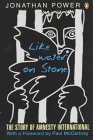
Copyright © 2002 By JONATHAN POWERFollow this link to read about – and order – Jonathan Power’s book written for the

40th Anniversary of Amnesty International

“Like Water on Stone – The Story of Amnesty International”
Foreign affairs columnist, film-maker and author

Share

Leave a Reply

Your email address will not be published. Required fields are marked *

Related Posts

Peace is promoted by constructive proposals and dialogue Four preceding PressInfos have expressed concern over — and criticised — the ongoing, militarisation of the EU. Some will say: but there are no alternatives. We believe that there are always alternatives, that democracies are characterised by alternatives and choice, and that openly discussed alternatives will improve the quality and legitimacy of society’s decision–making. In addition, it is an intellectual and moral challenge to not only criticise but also be constructive. If we only tell people that we think they are wrong, they are not likely to listen. However, if we say: what are your views on this set of ideas and steps? — we may sometimes engage them in dialogue and sow a seed. Most people in power circles live their daily lives in in a time frame and a social space where certain ideas, viewpoints and concepts are just not...
Photos © TFF 2000 Read PressInfo 90 “Lift the Sanctions and Bring More Aid to Yugoslavia” See Pictures from Belgrade © TFF 2000 Please reprint, copy, archive, quote or re-post this item, but please retain the source.
Av FRANK SØHOLM GREVIL 16 augusti 2004  Vi er nu nået til tredje akt i det absurde teaterstykke, der i analogi med de store skueprocesser i Moskva 1936-38 er blevet døbt ‘Grevil-sagen’. Første akt bestod i min anonyme fremlæggelse af egenhændigt nedklassificerede rapporter i Berlingske Tidende i februar og marts. Andet akt udgjordes af min fremtræden med navn og billede i Information i april samt den efterfølgende mediestorm, som uden min direkte medvirken kostede en forsvarsminister taburetten samt en sigtelse for brud på tavshedspligten. Tredje akt bliver en retssag, hvor jeg står tiltalt for at have overtrådt straffelovens bestemmelser om uberettiget videregivelse eller udnyttelse af fortrolige oplysninger. Statsanklageren har ovenikøbet valgt at påberåbe sig særligt skærpende omstændigheder. Da jeg aldrig har modtaget betaling for at stille rapporterne til rådighed eller lade mig interviewe, må det skærpende bestå i, at “videregivelsen eller udnyttelsen er sket under sådanne omstændigheder, at det påfører...

Recent Articles

PressInfo # 141, December 21, 2001It’s time to prepare reconciliation between Albanians and Serbs PressInfo # 140, December 14, 2001Ibrahim Rugova’s decade-long leadership in Kosovo/a PressInfo # 139, 11. december, 2001En god nyhet: Jugoslaviens Sannings- och försoningskommission PressInfo # 139, 11. december, 2001Gode nyheder: Jugoslaviens Sandheds- og Forsoningskommission PressInfo # 139, December 11, 2001Good news: Yugoslavia’s Truth and Reconciliation Commission PressInfo # 138, November 8, 2001TFF co-founder PhD with thesis about young people with roots in other cultures PressInfo # 138, November 8, 2001TFF:s medstiftare doktor på avhandling om unga med ursprung i andra kulturer PressInfo # 137, October 17, 2001A new Marshall Plan: Advancing human security and controlling terrorism PressInfo # 136, October 15, 2001The UN and Annan really deserve it PressInfo # 135, October 10, 2001Preventing a terrorist mushroom cloud PressInfo # 134, 17 oktober, 2001Sverige og 11. september PressInfo # 134, October 9, 2001Sweden and September 11...
Peace is promoted by constructive proposals and dialogue Four preceding PressInfos have expressed concern over — and criticised — the ongoing, militarisation of the EU. Some will say: but there are no alternatives. We believe that there are always alternatives, that democracies are characterised by alternatives and choice, and that openly discussed alternatives will improve the quality and legitimacy of society’s decision–making. In addition, it is an intellectual and moral challenge to not only criticise but also be constructive. If we only tell people that we think they are wrong, they are not likely to listen. However, if we say: what are your views on this set of ideas and steps? — we may sometimes engage them in dialogue and sow a seed. Most people in power circles live their daily lives in in a time frame and a social space where certain ideas, viewpoints and concepts are just not...
Photos © TFF 2000 Read PressInfo 90 “Lift the Sanctions and Bring More Aid to Yugoslavia” See Pictures from Belgrade © TFF 2000 Please reprint, copy, archive, quote or re-post this item, but please retain the source.

TFF on Substack

Discover more from TFF Transnational Foundation & Jan Oberg.

Most Popular

PressInfo # 141, December 21, 2001It’s time to prepare reconciliation between Albanians and Serbs PressInfo # 140, December 14, 2001Ibrahim Rugova’s decade-long leadership in Kosovo/a PressInfo # 139, 11. december, 2001En god nyhet: Jugoslaviens Sannings- och försoningskommission PressInfo # 139, 11. december, 2001Gode nyheder: Jugoslaviens Sandheds- og Forsoningskommission PressInfo # 139, December 11, 2001Good news: Yugoslavia’s Truth and Reconciliation Commission PressInfo # 138, November 8, 2001TFF co-founder PhD with thesis about young people with roots in other cultures PressInfo # 138, November 8, 2001TFF:s medstiftare doktor på avhandling om unga med ursprung i andra kulturer PressInfo # 137, October 17, 2001A new Marshall Plan: Advancing human security and controlling terrorism PressInfo # 136, October 15, 2001The UN and Annan really deserve it PressInfo # 135, October 10, 2001Preventing a terrorist mushroom cloud PressInfo # 134, 17 oktober, 2001Sverige og 11. september PressInfo # 134, October 9, 2001Sweden and September 11...
Peace is promoted by constructive proposals and dialogue Four preceding PressInfos have expressed concern over — and criticised — the ongoing, militarisation of the EU. Some will say: but there are no alternatives. We believe that there are always alternatives, that democracies are characterised by alternatives and choice, and that openly discussed alternatives will improve the quality and legitimacy of society’s decision–making. In addition, it is an intellectual and moral challenge to not only criticise but also be constructive. If we only tell people that we think they are wrong, they are not likely to listen. However, if we say: what are your views on this set of ideas and steps? — we may sometimes engage them in dialogue and sow a seed. Most people in power circles live their daily lives in in a time frame and a social space where certain ideas, viewpoints and concepts are just not...
Photos © TFF 2000 Read PressInfo 90 “Lift the Sanctions and Bring More Aid to Yugoslavia” See Pictures from Belgrade © TFF 2000 Please reprint, copy, archive, quote or re-post this item, but please retain the source.
Read More
Imagen-thumbnail-The-Transnational-1
PressInfo # 141, December 21, 2001It’s time to prepare reconciliation between Albanians and Serbs PressInfo # 140, December 14, 2001Ibrahim Rugova’s decade-long leadership in Kosovo/a PressInfo # 139, 11. december, 2001En god nyhet: Jugoslaviens Sannings- och försoningskommission PressInfo # 139, 11. december, 2001Gode nyheder: Jugoslaviens Sandheds- og Forsoningskommission PressInfo # 139, December 11, 2001Good news: Yugoslavia’s Truth and Reconciliation Commission PressInfo # 138, November 8, 2001TFF co-founder PhD with thesis about young people with roots in other cultures PressInfo # 138, November 8, 2001TFF:s medstiftare doktor på avhandling om unga med ursprung i andra kulturer PressInfo # 137, October 17, 2001A new Marshall Plan: Advancing human security and controlling terrorism PressInfo # 136, October 15, 2001The UN and Annan really deserve it PressInfo # 135, October 10, 2001Preventing a terrorist mushroom cloud PressInfo # 134, 17 oktober, 2001Sverige og 11. september PressInfo # 134, October 9, 2001Sweden and September 11...
Imagen-thumbnail-The-Transnational-1
Peace is promoted by constructive proposals and dialogue Four preceding PressInfos have expressed concern over — and criticised — the ongoing, militarisation of the EU. Some will say: but there are no alternatives. We believe that there are always alternatives, that democracies are characterised by alternatives and choice, and that openly discussed alternatives will improve the quality and legitimacy of society’s decision–making. In addition, it is an intellectual and moral challenge to not only criticise but also be constructive. If we only tell people that we think they are wrong, they are not likely to listen. However, if we say: what are your views on this set of ideas and steps? — we may sometimes engage them in dialogue and sow a seed. Most people in power circles live their daily lives in in a time frame and a social space where certain ideas, viewpoints and concepts are just not...
Imagen-thumbnail-The-Transnational-1
Photos © TFF 2000 Read PressInfo 90 “Lift the Sanctions and Bring More Aid to Yugoslavia” See Pictures from Belgrade © TFF 2000 Please reprint, copy, archive, quote or re-post this item, but please retain the source.
Imagen-thumbnail-The-Transnational-1
Av FRANK SØHOLM GREVIL 16 augusti 2004  Vi er nu nået til tredje akt i det absurde teaterstykke, der i analogi med de store skueprocesser i Moskva 1936-38 er blevet døbt ‘Grevil-sagen’. Første akt bestod i min anonyme fremlæggelse af egenhændigt nedklassificerede rapporter i Berlingske Tidende i februar og marts. Andet akt udgjordes af min fremtræden med navn og billede i Information i april samt den efterfølgende mediestorm, som uden min direkte medvirken kostede en forsvarsminister taburetten samt en sigtelse for brud på tavshedspligten. Tredje akt bliver en retssag, hvor jeg står tiltalt for at have overtrådt straffelovens bestemmelser om uberettiget videregivelse eller udnyttelse af fortrolige oplysninger. Statsanklageren har ovenikøbet valgt at påberåbe sig særligt skærpende omstændigheder. Da jeg aldrig har modtaget betaling for at stille rapporterne til rådighed eller lade mig interviewe, må det skærpende bestå i, at “videregivelsen eller udnyttelsen er sket under sådanne omstændigheder, at det påfører...
Imagen-thumbnail-The-Transnational-1
Af Svenska Irakkommittén mot de Ekonomiska Sanktionerna (SIES) 13 september 2002 FN:s ekonomiska sanktioner mot Irak har nu pågått i tolv år och drabbat det irakiska folket med svåra lidanden. Enligt FN:s egna siffror har mer än 1,5 miljoner människor, varav ca 600 000 barn, dött som en direkt följd av sanktionerna. Dessutom har ett lågintensivt bombkrig mot landet pågått under dessa år. Av all denna förödelse- orsakad huvudsakligen av amerikansk och brittisk politik- har Saddam Husseins brutala och diktatoriska regim snarast stärkts än försvagats. Nu förbereder USA under president Bushs ledning ett storskaligt bombkrig mot Irak som kommer att innebära ett ännu större lidande för civilbefolkningen. Ett sådant krig kommer dessutom att ytterligare undergräva freden och säkerheten i världen. Att upprätta en demokratisk regim i Irak är det irakiska folkets angelägenhet och får enligt folkrätten inte ske med krigshandlingar utifrån. Folkrätten och FN:s stadgar måste respekteras. Vi vädjar till...

