
A structural theory of ageing - or how to enjoy life meaningfully

Wikipedia has much to offer under “aging”. Highly recommended are the 10 points by the world’s oldest living man, 114, Walter Breuning.

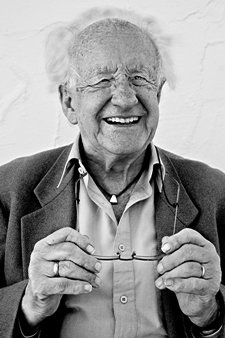
However, older persons, like me at 86, know their own aging best. Less trouble with “oxidant stress” as a major cause, having used anti-oxidants based on blueberry skin – no chemicals – for decades. 20,000 blood stem cells renew my blood, but they are dying. Problematic.

Rule no. 1: Keep mind and body active; maintain a good nutrition.

Obvious to counteract aging. However, equally important:

Rule no. 2: Be open to the positive sides and advantages of aging.

Bertrand Russell’s “On Being 90” in the Observer dispenses with the disadvantages as obvious, in favor of his advantage: the overview.

At the age of 5 he sat on the knee of a man who had fought Napoleon at Waterloo in 1815. The longer the lives we have lived, the more events have impinged upon us. An “overview” identifies some link, a narrative, a common factor.

That identification is often referred to as “wisdom”.

However: thigh muscles weaken, walking falters, fatigue, seeing and hearing impaired. Exercise helps, but aging is unavoidable.

Rule no. 3: At least do not fall; not breaking fragile bones, no ending up bedridden in a hospital, contracting new diseases. Equip the room, the home, the context with handles and handrails.

Then the mental aspects of aging: memories failing, not only of recent events, less ability to handle many and simultaneous stimuli.
As a result, many and more mistakes reinforcing the sense of aging.

Rule no. 4: Simplify the context, contract the circle of living. Be realistic, change the structure of daily life, narrow the circle to what can be handled easily: the ward, the village, the context, the home, the room–but then equipped with a maximum of music, books, social media, as enriching as possible.

If driving, then on known roads with little traffic, in small towns, villages.

Rule no. 5: Togetherness. A society with much loneliness for young or old is a bad society. Get old together, with a spouse, a cooperating partner.

Much conversation will be about pains suffered. But cut it short. Focus on positives, beautiful landscapes, gardens, music, literature. Enjoyment together is more than double enjoyment.

Make shared meals as much of a feast as possible. The ability to enjoy good food lasts; our senses of smell and taste are more solid. No smoking of course and moderation with alcohol, sugar and cereals. Let good food and drinks stay a while in the mouth where the taste buds are, tied to the smell; do not just swallow and “wash it down”.

Rule no. 6: Live both real and virtual lives. Postmodern life has two realities; not only what we sense but also a virtual, IT, reality with friendship and enriching exchanges activating the mind.

IT offers all of that – with no risks of falling! – in the simple context of a computer. Particularly when adding Skype, and even free!

Rule no. 7: No retirement. Go for a job where the older can share experiences with the younger, even if no longer showing up at work.

A work place closed to the older is a bad work place. In post-modernity this is possible in ways unthought-of, for mutual benefit. How much, paid or unpaid, can be negotiated. Being productive is what matters.

Negate this. Retire, cut all links, live only one reality, alone/lonely, in a complex world with physical and mental risks, nothing positive, passively, no exercise, bad nutrition. Brutish, nasty, and short.

Better contract from the macro-society of country-region-world to a rich micro-society of a circle around oneself and the partner(s), relating to other circles. But it does not have to be that micro.

We can argue: high time. To be born into micro-society, then the macro-society of education and work, and then a poor micro-society of retirement is not good enough. Traditionally, women continue working longer than men, living more human lives. Is this why women live longer?

Due to better health, and family planning favoring 2 children, we now have aging populations and even more return into micro-society in old age homes.

Some time ago, huge macro-society growth swallowed such micro-societies as villages; now there is a return to villages and a return to childhood at old age.

And macro becomes even more macro, regional, global, marginalizing the old even more. Inhuman; a far cry from retired farmers still living on the farm for care and experience.

Major structural changes, hence this structural theory of aging.

In those micro-societies of the aged, with nurses and others for “assisted living”, all know that the purpose of still living is dying.

And before that there may be physical and mental suffering. Inhuman!

Fight it: Practice Rules 1-2-3-4-5-6-7.

Aging is nothing to be afraid of, but foresight and planning are indispensable. Some macro can be created. A married couple here and an unmarried there, each managing in their ways, can relate, exchange experiences, also to old-age homes that may be the longer term answer to the aging. Virtually this micro to micro can even cross borders. Reconquering macro life.

Let me end on a subjective note. Having lived an eventful rich life, including meeting many people “high up”, I remember thinking “how can I live without this when I get older”? I find myself, older, thinking “how could I live without the wonderful life I now have”? Deluding myself, in both cases, closing the eye to all the negatives? Maybe.

But then, maybe some selection is part of a good life.

I find myself floating, navigating through time and life, trying, not always successfully, to do more good and less harm.

I’m not concluding that the present is the best period although it often feels like that. It is different, and very good.

One positive aspect is obvious: with less work in the sense of a job there is more time for work in the sense of being creative. With hands and the mind. On the computer.

Thanks, Life, the best of all gifts. For every day.

Originally published by Transcend Media Service, TMS, here.
Master of Arts (M.A.) / Master of Science (M.S.), Master of Business Administration (M.B.A.), Doctor of Philosophy (Ph.D.), Doctor of Medicine (M.D.), Juris Doctor (J.D.)

Share

Leave a Reply

Your email address will not be published. Required fields are marked *

Related Posts

In response to an urgent Appeal from all the living Nobel Peace Prize Laureates, the General Assembly of the United Nations, on November 1998, unanimously declared the first decade of the twenty-first century to be The Decade for a Culture of Peace and Nonviolence. While people are naturally concerned about the amount of violence in our world and how it threatens our future, the Nobel Laureates are right to remind us of the potential of nonviolence and our calling to build a culture of peace and nonviolence.  The twentieth century is instructive in the way that the philosophy and practice of nonviolence have begun to flourish and in the way that nonviolent movements have had an exponential growth across the world. Mohandas Gandhi and Martin Luther King, Jr. are the most famous nonviolent leaders but many have built upon the paths they charted as in country after country, tyrannies and...
We know that medical personnel have failed to report to higher authorities wounds that were clearly caused by torture and that they have neglected to take steps to interrupt this torture. In addition, they have turned over prisoners’ medical records to interrogators who could use them to exploit the prisoners’ weaknesses or vulnerabilities. We have not yet learned the extent of medical involvement in delaying and possibly falsifying the death certificates of prisoners who have been killed by torturers. A May 22 article on Abu Ghraib in the New York Times states that “much of the evidence of abuse at the prison came from medical documents” and that records and statements “showed doctors and medics reporting to the area of the prison where the abuse occurred several times to stitch wounds, tend to collapsed prisoners or see patients with bruised or reddened genitals.” http://www.truthout.org/docs_04/080604J.shtml#16 According to the article, two doctors who...
Jan Øberg behandler i artiklen en lang række faktorer, som ligger til grund for den måde vores samfund er organiseret på – og derfor også for konflikter. Artiklen introducerer således sammenhængen mellem familien, foreninger, regeringer, NGO’ er, nation, stat, nationalstat og alliancer for på denne måde bedre at kunne forstå konflikter og i sidste ende blive klogere mht. at løse disse. Øberg, der er fortaler for global bevidsthed, hvilket skal ses i lyset af den øgede globalisering, skelner mellem kulturkamp og kulturdialog. Endelig behandles begrebet magt og magtesløshed: giver magt ret til at udøve magt – fordi man mener at have ret? Litteraturliste og arbejdsspørgsmål efter artiklen. Ordene vi bruger om verden I satellitperspektiv kan man godt tale om den menneskelige familie eller menneskeheden. Udtrykket understreger, at der eksisterer – eller burde eksistere – et fællesskab fordi vi alle er mennesker og sammen bebor denne klode og ingen anden. Og...

Recent Articles

In response to an urgent Appeal from all the living Nobel Peace Prize Laureates, the General Assembly of the United Nations, on November 1998, unanimously declared the first decade of the twenty-first century to be The Decade for a Culture of Peace and Nonviolence. While people are naturally concerned about the amount of violence in our world and how it threatens our future, the Nobel Laureates are right to remind us of the potential of nonviolence and our calling to build a culture of peace and nonviolence.  The twentieth century is instructive in the way that the philosophy and practice of nonviolence have begun to flourish and in the way that nonviolent movements have had an exponential growth across the world. Mohandas Gandhi and Martin Luther King, Jr. are the most famous nonviolent leaders but many have built upon the paths they charted as in country after country, tyrannies and...
We know that medical personnel have failed to report to higher authorities wounds that were clearly caused by torture and that they have neglected to take steps to interrupt this torture. In addition, they have turned over prisoners’ medical records to interrogators who could use them to exploit the prisoners’ weaknesses or vulnerabilities. We have not yet learned the extent of medical involvement in delaying and possibly falsifying the death certificates of prisoners who have been killed by torturers. A May 22 article on Abu Ghraib in the New York Times states that “much of the evidence of abuse at the prison came from medical documents” and that records and statements “showed doctors and medics reporting to the area of the prison where the abuse occurred several times to stitch wounds, tend to collapsed prisoners or see patients with bruised or reddened genitals.” http://www.truthout.org/docs_04/080604J.shtml#16 According to the article, two doctors who...
Jan Øberg behandler i artiklen en lang række faktorer, som ligger til grund for den måde vores samfund er organiseret på – og derfor også for konflikter. Artiklen introducerer således sammenhængen mellem familien, foreninger, regeringer, NGO’ er, nation, stat, nationalstat og alliancer for på denne måde bedre at kunne forstå konflikter og i sidste ende blive klogere mht. at løse disse. Øberg, der er fortaler for global bevidsthed, hvilket skal ses i lyset af den øgede globalisering, skelner mellem kulturkamp og kulturdialog. Endelig behandles begrebet magt og magtesløshed: giver magt ret til at udøve magt – fordi man mener at have ret? Litteraturliste og arbejdsspørgsmål efter artiklen. Ordene vi bruger om verden I satellitperspektiv kan man godt tale om den menneskelige familie eller menneskeheden. Udtrykket understreger, at der eksisterer – eller burde eksistere – et fællesskab fordi vi alle er mennesker og sammen bebor denne klode og ingen anden. Og...

TFF on Substack

Discover more from TFF Transnational Foundation & Jan Oberg.

Most Popular

In response to an urgent Appeal from all the living Nobel Peace Prize Laureates, the General Assembly of the United Nations, on November 1998, unanimously declared the first decade of the twenty-first century to be The Decade for a Culture of Peace and Nonviolence. While people are naturally concerned about the amount of violence in our world and how it threatens our future, the Nobel Laureates are right to remind us of the potential of nonviolence and our calling to build a culture of peace and nonviolence.  The twentieth century is instructive in the way that the philosophy and practice of nonviolence have begun to flourish and in the way that nonviolent movements have had an exponential growth across the world. Mohandas Gandhi and Martin Luther King, Jr. are the most famous nonviolent leaders but many have built upon the paths they charted as in country after country, tyrannies and...
We know that medical personnel have failed to report to higher authorities wounds that were clearly caused by torture and that they have neglected to take steps to interrupt this torture. In addition, they have turned over prisoners’ medical records to interrogators who could use them to exploit the prisoners’ weaknesses or vulnerabilities. We have not yet learned the extent of medical involvement in delaying and possibly falsifying the death certificates of prisoners who have been killed by torturers. A May 22 article on Abu Ghraib in the New York Times states that “much of the evidence of abuse at the prison came from medical documents” and that records and statements “showed doctors and medics reporting to the area of the prison where the abuse occurred several times to stitch wounds, tend to collapsed prisoners or see patients with bruised or reddened genitals.” http://www.truthout.org/docs_04/080604J.shtml#16 According to the article, two doctors who...
Jan Øberg behandler i artiklen en lang række faktorer, som ligger til grund for den måde vores samfund er organiseret på – og derfor også for konflikter. Artiklen introducerer således sammenhængen mellem familien, foreninger, regeringer, NGO’ er, nation, stat, nationalstat og alliancer for på denne måde bedre at kunne forstå konflikter og i sidste ende blive klogere mht. at løse disse. Øberg, der er fortaler for global bevidsthed, hvilket skal ses i lyset af den øgede globalisering, skelner mellem kulturkamp og kulturdialog. Endelig behandles begrebet magt og magtesløshed: giver magt ret til at udøve magt – fordi man mener at have ret? Litteraturliste og arbejdsspørgsmål efter artiklen. Ordene vi bruger om verden I satellitperspektiv kan man godt tale om den menneskelige familie eller menneskeheden. Udtrykket understreger, at der eksisterer – eller burde eksistere – et fællesskab fordi vi alle er mennesker og sammen bebor denne klode og ingen anden. Og...
Read More
Imagen-thumbnail-The-Transnational-1
In response to an urgent Appeal from all the living Nobel Peace Prize Laureates, the General Assembly of the United Nations, on November 1998, unanimously declared the first decade of the twenty-first century to be The Decade for a Culture of Peace and Nonviolence. While people are naturally concerned about the amount of violence in our world and how it threatens our future, the Nobel Laureates are right to remind us of the potential of nonviolence and our calling to build a culture of peace and nonviolence.  The twentieth century is instructive in the way that the philosophy and practice of nonviolence have begun to flourish and in the way that nonviolent movements have had an exponential growth across the world. Mohandas Gandhi and Martin Luther King, Jr. are the most famous nonviolent leaders but many have built upon the paths they charted as in country after country, tyrannies and...
Imagen-thumbnail-The-Transnational-1
We know that medical personnel have failed to report to higher authorities wounds that were clearly caused by torture and that they have neglected to take steps to interrupt this torture. In addition, they have turned over prisoners’ medical records to interrogators who could use them to exploit the prisoners’ weaknesses or vulnerabilities. We have not yet learned the extent of medical involvement in delaying and possibly falsifying the death certificates of prisoners who have been killed by torturers. A May 22 article on Abu Ghraib in the New York Times states that “much of the evidence of abuse at the prison came from medical documents” and that records and statements “showed doctors and medics reporting to the area of the prison where the abuse occurred several times to stitch wounds, tend to collapsed prisoners or see patients with bruised or reddened genitals.” http://www.truthout.org/docs_04/080604J.shtml#16 According to the article, two doctors who...
Imagen-thumbnail-The-Transnational-1
Jan Øberg behandler i artiklen en lang række faktorer, som ligger til grund for den måde vores samfund er organiseret på – og derfor også for konflikter. Artiklen introducerer således sammenhængen mellem familien, foreninger, regeringer, NGO’ er, nation, stat, nationalstat og alliancer for på denne måde bedre at kunne forstå konflikter og i sidste ende blive klogere mht. at løse disse. Øberg, der er fortaler for global bevidsthed, hvilket skal ses i lyset af den øgede globalisering, skelner mellem kulturkamp og kulturdialog. Endelig behandles begrebet magt og magtesløshed: giver magt ret til at udøve magt – fordi man mener at have ret? Litteraturliste og arbejdsspørgsmål efter artiklen. Ordene vi bruger om verden I satellitperspektiv kan man godt tale om den menneskelige familie eller menneskeheden. Udtrykket understreger, at der eksisterer – eller burde eksistere – et fællesskab fordi vi alle er mennesker og sammen bebor denne klode og ingen anden. Og...
Imagen-thumbnail-The-Transnational-1
Kapitel 2: Forskellige sider af Europa og USA…fortsat 2.5 Militære relationer I forbifarten har vi allerede sagt nogle ting om USA’s militære situation. Kig lige en gang til på afsnit 2.3. Nu skal vi uddybe det militære forhold mellem USA og EU. Der er en række ligheder mellem visse europæiske landes og USA’s militær. Næsten alle er med på en eller anden måde i NATO, direkte som medlem – selv Island, der ikke har et forsvar – eller indirekte i Partnerskab for Fred. USA og Canada er med i OSCE (på dansk OSSE), Organisationen for Sikkerhed og Samarbejde i Europa, der tæller over 50 lande. USA samt England og Frankrig er kernevåbenstater og de har styrker til intervention langt borte fra hjemlandet, om end USA’s er tifold større. Alle har også en omfattende våbeneksport og bruger den som et middel til at tjene penge og få loyale venner på, det...
Imagen-thumbnail-The-Transnational-1
Background Christian Harleman and Jan Oberg conducted a fact-finding mission to Burundi between November 26 and December 6, 2003. (See websites about the country here). The first TFF mission took place in March 1999. Unfortunately, since then it has not been practically possible to implement the co-operation with Burundi’s Ministry of Education and Burundian NGOs that was planned at the time. The 2003 mission had three purposes. First, to do fact-finding in general about the situation and, in particular, the progress under the Arusha Peace Process. Second, to explore the possibilities for co-operation between the government and relevant NGOs on the one hand and TFF on the other, in order to develop and deepen the existing competence in fields such as conflict-understanding, reconciliation and peace-building. Finally, third, to find out whether it would be possible, in co-operation with the Swedish Rescue Services Agency (Statens Räddningsverk), to establish a health care unit that...
Imagen-thumbnail-The-Transnational-1
Former UN Under-Secretary-General with special responsibility for peacekeeping operations TFF associate August 20, 2003 YRINGHAM, Mass.- Ralph Bunche was born in Detroit 100 years ago today (August 7, 2003). His passionate determination to get results did not extend to seeking credit for them, so his work is better remembered than he is. Of all his many accomplishments – civil rights pioneer, Nobel Peace Prize laureate, chief drafter of two chapters of the United Nations charter, negotiator of the armistices that ended the first Arab-Israeli war – Bunche said he was proudest of developing what came to be known as peacekeeping. Setting up the United Nations Truce Supervision Organization in Palestine in 1948, Bunche formulated the principles that have governed peacekeeping operations ever since. In the 1956 Suez crisis, working with Secretary General Dag Hammarskjold and Lester Pearson of Canada, he organized the first peacekeeping force, the United Nations Emergency Force...
