
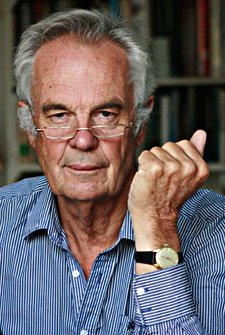
A socialist foreign policy for America

Is Bernie Sanders still in with a chance? It is a slim one, but in these primary elections one never knows. There have been a number of surprising upsets.

Even if Joe Biden comes out on top and has to face Donald Trump for the presidency the Democratic Party has been pushed to the left by Senator Sanders.

That is all to the good. Biden needs to be more critical of capitalism, more prepared to encourage unionism among workers and more prepared to push for universal health coverage, more taxes for the wealthier classes, among many other things that Sanders has pointed out as necessary if the US is not going to shoot itself in the foot with a disintegrating body politic.

If it wants a fair and stable society this is the way to go.

On foreign policy Sanders has also pushed Biden to be more explicit about the need for the US to abjure further Middle Eastern military involvement.

Biden has a bad record. He tried to push President Barack Obama to intervene in Syria and he supported the invasion of Iraq, a move that created both domestic chaos and ISIS. He has been a firm defender of Israel at a time when he should have only been a defender of Judaism.

It is an interesting exercise at this moment to ask the question posed recently by Foreign Policy’s writer Thomas Meaney, “What would a US foreign policy look like if Socialists ran Washington?”

The nearest attempt to do was the Jimmy Carter presidency. But it was partly disguised as being a human rights foreign policy, whereas a fairer label would have been socialist or social democratic.

In many cases, it did well and indeed saved a lot of lives. But in the end, Carter contradicted himself by supplying military equipment to the Mujahedeen who were fighting the Soviet army in Afghanistan.

Although President Mikhail Gorbachev withdrew his army the long-term effect of Carter’s policy was that it encouraged elements of the Mujahedeen to morph into the Taliban which became the West’s fervent enemy.

Is it daydreaming to think a left-orientated president could break through America’s institutional walls – the military-industrial-academic-(Harvard) complex that dominates foreign policy? Obama’s advisor and friend, Ben Rhodes, calls this the “Blob”. Corporate interests are a tough nut to crack.

They contribute re-election funds to members of Congress who tend to be in crises pro-war, especially members of the Senate’s Armed Services Committee. (Hillary Clinton once belonged to this elite club.)

A left-wing foreign policy should concentrate on defeating poverty and disease, especially in Africa and the Indian sub-continent.

As Meaney writes, “At a bare minimum, it should protect the world from the excesses of capitalism and counteract the violent implosion that US policies and interventions around the world have too often oxygenated, if not ignited.”

The US’s military footprint needs to be sharply cut back.*) The US has over 800 military bases and facilities around the world. (China has one and Russia 17) The defence budget in the first instance should be halved to release funds for both domestic social programs and foreign aid.

At the moment the US accounts for well over half the 420 billion dollars global arms industry.

A leftist foreign policy would pursue arms control with Russia and China. The treaty limiting Russia and the US to 1000 intercontinental nuclear rockets would be quickly renewed.

The nuclear treaties that Trump killed would be re-instated. Then once this is done the US should declare that it was unilaterally cutting its nuclear weapons to zero and would rely only on its conventional military and, where appropriate, UN forces.

This is a policy of calling a spade a spade. As Gorbachev has explained nuclear weapons could never be used unless the governments of the US and Russia were run by madmen, “which they are not”.  Surely Russia would follow an American initiative.

One suspects that such policies would be highly popular in both the US and Russia among ordinary people.

Polls consistently show that the US electorate opposes aggressive foreign wars and interventions. In Russia there appears to be a popular weariness with Russian foreign policy. The Russian people want more attention, energy and expenditure given to domestic issues.

Yes, Russians are rightly angry about the provocative expansion of Nato up to or near its borders but they would respond hand over fist if the US admitted that President Bill Clinton’s policy (followed by presidents since) was a bad mistake. It resurrected the Cold War.

Similarly, the Trump policy of confronting China, rather than calmly working out together solutions to problems that divide them would be ended.

Trade policy with China- and elsewhere- should not be a zero sum game, with the US the winner. If the US and Russia got rid of their nuclear weapons so would China- and India and Pakistan too.

Unfortunately, for reasons unclear, Sanders has staked out a hostile stance towards China.

Like Obama, a leftist president would give priority to fighting climate change and protecting the US’s pristine areas, (policies which Trump rolled back).

Like Carter a leftist presidency should lead with its human rights foot. This could well bring it into conflict with China over the issues of Hong Kong’s promised but undelivered democracy and the plight of the Uighurs.

But conflict does not necessarily mean confrontation. It certainly doesn’t have to be linked to trade policy.

A leftist policy is reasonable and doable. But is Biden prepared to implement it? If he wants Sanders’ unequivocal support he will have to face this question.

If you think this article was useful, reward TFF with a dollar or two

[paypal-donation]

Notes

*) See, for instance, TFF’s magazine “BootPrint – Militarism & Environment”

Editor’s note:
While Sanders may be the least war-prone candidate, it is worth noticing that his voting record over time has been pretty interventionist and supportive of military action. See those facts on Wikipedia. It’s a safe prediction that neither Biden nor Sanders will change fundamentally the US when it comes to militarism and interventionism.


Foreign affairs columnist, film-maker and author

Share

Leave a Reply

Your email address will not be published. Required fields are marked *

Related Posts

Officially, the drones were not identified. By simply thinking critically – which journalists and selected experts no longer do – there may be a good reason for that. And this article will never be mentioned in Denmark… Drones over Denmark. No damage. No trace. No answers. Yet the headlines scream “Russian threat,” and Prime Minister Mette Frederiksen speaks with a certainty that defies logic: “We don’t know they were Russian—but we know Russia is the biggest threat to Europe.” It could be nobody else – unless you make an interest analysis which I did two days ago. This is not security policy. It’s theatre. And the audience is being played. Let’s rewind. These drones—unphotographed, untracked, unclaimed—appear and vanish like ghosts. Airports shut down. Panic spreads. Military budgets swell. And the narrative hardens: Russia is behind it. But what if that’s not just wrong but deliberately misleading? Here’s a hypothesis for...
And why the world, especially the EU, must now declare itself independent of the United States. UN’s 80th anniversary This year, the United Nations celebrates the 80th anniversary of its founding. The UN was formed after the scourge of the Second World War, in which 70 to 85 million people were killed and many countries were destroyed. That war came on the heels of the First World War, which also killed between 15 and 22 million people. After the Second World War, especially after the use of nuclear weapons by the United States, which marked a turning point in the history of warfare that could result in the end of civilisation as we know it, humanity decided to move away from the era of empires and big power politics and usher in a new era of peace, freedom and cooperation. These were the principles enshrined in the UN Charter. The United States...
Drones over Nordic airports. No damage. No trace. No answers. Most assume Russia—but what if that’s not so? Why is there so much we are not told? This article explores the strategic ambiguity behind recent drone incursions and asks: Who else might benefit from sending drones into NATO airspace? From Ukraine’s surprising drone supremacy to Russia’s possible signalling, the silence itself may be the loudest message. These are the kinds of questions decent, intelligent investigative journalists and commentators could easily research. Why don’t they? Did you, dear reader, know or think of this? That the most powerful weapon in today’s conflicts might be the one that leaves no trace – and no answers. Just enough fear to justify the next move? Recently, drones have repeatedly appeared over Nordic airports and near some military facilities. They cause no damage – for which reason the designation “hybrid attack” is misleading but serves a purpose. These...

Recent Articles

We know that medical personnel have failed to report to higher authorities wounds that were clearly caused by torture and that they have neglected to take steps to interrupt this torture. In addition, they have turned over prisoners’ medical records to interrogators who could use them to exploit the prisoners’ weaknesses or vulnerabilities. We have not yet learned the extent of medical involvement in delaying and possibly falsifying the death certificates of prisoners who have been killed by torturers. A May 22 article on Abu Ghraib in the New York Times states that “much of the evidence of abuse at the prison came from medical documents” and that records and statements “showed doctors and medics reporting to the area of the prison where the abuse occurred several times to stitch wounds, tend to collapsed prisoners or see patients with bruised or reddened genitals.” http://www.truthout.org/docs_04/080604J.shtml#16 According to the article, two doctors who...
Jan Øberg behandler i artiklen en lang række faktorer, som ligger til grund for den måde vores samfund er organiseret på – og derfor også for konflikter. Artiklen introducerer således sammenhængen mellem familien, foreninger, regeringer, NGO’ er, nation, stat, nationalstat og alliancer for på denne måde bedre at kunne forstå konflikter og i sidste ende blive klogere mht. at løse disse. Øberg, der er fortaler for global bevidsthed, hvilket skal ses i lyset af den øgede globalisering, skelner mellem kulturkamp og kulturdialog. Endelig behandles begrebet magt og magtesløshed: giver magt ret til at udøve magt – fordi man mener at have ret? Litteraturliste og arbejdsspørgsmål efter artiklen. Ordene vi bruger om verden I satellitperspektiv kan man godt tale om den menneskelige familie eller menneskeheden. Udtrykket understreger, at der eksisterer – eller burde eksistere – et fællesskab fordi vi alle er mennesker og sammen bebor denne klode og ingen anden. Og...
Kapitel 2: Forskellige sider af Europa og USA…fortsat 2.5 Militære relationer I forbifarten har vi allerede sagt nogle ting om USA’s militære situation. Kig lige en gang til på afsnit 2.3. Nu skal vi uddybe det militære forhold mellem USA og EU. Der er en række ligheder mellem visse europæiske landes og USA’s militær. Næsten alle er med på en eller anden måde i NATO, direkte som medlem – selv Island, der ikke har et forsvar – eller indirekte i Partnerskab for Fred. USA og Canada er med i OSCE (på dansk OSSE), Organisationen for Sikkerhed og Samarbejde i Europa, der tæller over 50 lande. USA samt England og Frankrig er kernevåbenstater og de har styrker til intervention langt borte fra hjemlandet, om end USA’s er tifold større. Alle har også en omfattende våbeneksport og bruger den som et middel til at tjene penge og få loyale venner på, det...

TFF on Substack

Discover more from TFF Transnational Foundation & Jan Oberg.

Most Popular

We know that medical personnel have failed to report to higher authorities wounds that were clearly caused by torture and that they have neglected to take steps to interrupt this torture. In addition, they have turned over prisoners’ medical records to interrogators who could use them to exploit the prisoners’ weaknesses or vulnerabilities. We have not yet learned the extent of medical involvement in delaying and possibly falsifying the death certificates of prisoners who have been killed by torturers. A May 22 article on Abu Ghraib in the New York Times states that “much of the evidence of abuse at the prison came from medical documents” and that records and statements “showed doctors and medics reporting to the area of the prison where the abuse occurred several times to stitch wounds, tend to collapsed prisoners or see patients with bruised or reddened genitals.” http://www.truthout.org/docs_04/080604J.shtml#16 According to the article, two doctors who...
Jan Øberg behandler i artiklen en lang række faktorer, som ligger til grund for den måde vores samfund er organiseret på – og derfor også for konflikter. Artiklen introducerer således sammenhængen mellem familien, foreninger, regeringer, NGO’ er, nation, stat, nationalstat og alliancer for på denne måde bedre at kunne forstå konflikter og i sidste ende blive klogere mht. at løse disse. Øberg, der er fortaler for global bevidsthed, hvilket skal ses i lyset af den øgede globalisering, skelner mellem kulturkamp og kulturdialog. Endelig behandles begrebet magt og magtesløshed: giver magt ret til at udøve magt – fordi man mener at have ret? Litteraturliste og arbejdsspørgsmål efter artiklen. Ordene vi bruger om verden I satellitperspektiv kan man godt tale om den menneskelige familie eller menneskeheden. Udtrykket understreger, at der eksisterer – eller burde eksistere – et fællesskab fordi vi alle er mennesker og sammen bebor denne klode og ingen anden. Og...
Kapitel 2: Forskellige sider af Europa og USA…fortsat 2.5 Militære relationer I forbifarten har vi allerede sagt nogle ting om USA’s militære situation. Kig lige en gang til på afsnit 2.3. Nu skal vi uddybe det militære forhold mellem USA og EU. Der er en række ligheder mellem visse europæiske landes og USA’s militær. Næsten alle er med på en eller anden måde i NATO, direkte som medlem – selv Island, der ikke har et forsvar – eller indirekte i Partnerskab for Fred. USA og Canada er med i OSCE (på dansk OSSE), Organisationen for Sikkerhed og Samarbejde i Europa, der tæller over 50 lande. USA samt England og Frankrig er kernevåbenstater og de har styrker til intervention langt borte fra hjemlandet, om end USA’s er tifold større. Alle har også en omfattende våbeneksport og bruger den som et middel til at tjene penge og få loyale venner på, det...
Read More
Imagen-thumbnail-The-Transnational-1
We know that medical personnel have failed to report to higher authorities wounds that were clearly caused by torture and that they have neglected to take steps to interrupt this torture. In addition, they have turned over prisoners’ medical records to interrogators who could use them to exploit the prisoners’ weaknesses or vulnerabilities. We have not yet learned the extent of medical involvement in delaying and possibly falsifying the death certificates of prisoners who have been killed by torturers. A May 22 article on Abu Ghraib in the New York Times states that “much of the evidence of abuse at the prison came from medical documents” and that records and statements “showed doctors and medics reporting to the area of the prison where the abuse occurred several times to stitch wounds, tend to collapsed prisoners or see patients with bruised or reddened genitals.” http://www.truthout.org/docs_04/080604J.shtml#16 According to the article, two doctors who...
Imagen-thumbnail-The-Transnational-1
Jan Øberg behandler i artiklen en lang række faktorer, som ligger til grund for den måde vores samfund er organiseret på – og derfor også for konflikter. Artiklen introducerer således sammenhængen mellem familien, foreninger, regeringer, NGO’ er, nation, stat, nationalstat og alliancer for på denne måde bedre at kunne forstå konflikter og i sidste ende blive klogere mht. at løse disse. Øberg, der er fortaler for global bevidsthed, hvilket skal ses i lyset af den øgede globalisering, skelner mellem kulturkamp og kulturdialog. Endelig behandles begrebet magt og magtesløshed: giver magt ret til at udøve magt – fordi man mener at have ret? Litteraturliste og arbejdsspørgsmål efter artiklen. Ordene vi bruger om verden I satellitperspektiv kan man godt tale om den menneskelige familie eller menneskeheden. Udtrykket understreger, at der eksisterer – eller burde eksistere – et fællesskab fordi vi alle er mennesker og sammen bebor denne klode og ingen anden. Og...
Imagen-thumbnail-The-Transnational-1
Kapitel 2: Forskellige sider af Europa og USA…fortsat 2.5 Militære relationer I forbifarten har vi allerede sagt nogle ting om USA’s militære situation. Kig lige en gang til på afsnit 2.3. Nu skal vi uddybe det militære forhold mellem USA og EU. Der er en række ligheder mellem visse europæiske landes og USA’s militær. Næsten alle er med på en eller anden måde i NATO, direkte som medlem – selv Island, der ikke har et forsvar – eller indirekte i Partnerskab for Fred. USA og Canada er med i OSCE (på dansk OSSE), Organisationen for Sikkerhed og Samarbejde i Europa, der tæller over 50 lande. USA samt England og Frankrig er kernevåbenstater og de har styrker til intervention langt borte fra hjemlandet, om end USA’s er tifold større. Alle har også en omfattende våbeneksport og bruger den som et middel til at tjene penge og få loyale venner på, det...
Imagen-thumbnail-The-Transnational-1
Background Christian Harleman and Jan Oberg conducted a fact-finding mission to Burundi between November 26 and December 6, 2003. (See websites about the country here). The first TFF mission took place in March 1999. Unfortunately, since then it has not been practically possible to implement the co-operation with Burundi’s Ministry of Education and Burundian NGOs that was planned at the time. The 2003 mission had three purposes. First, to do fact-finding in general about the situation and, in particular, the progress under the Arusha Peace Process. Second, to explore the possibilities for co-operation between the government and relevant NGOs on the one hand and TFF on the other, in order to develop and deepen the existing competence in fields such as conflict-understanding, reconciliation and peace-building. Finally, third, to find out whether it would be possible, in co-operation with the Swedish Rescue Services Agency (Statens Räddningsverk), to establish a health care unit that...
Imagen-thumbnail-The-Transnational-1
Former UN Under-Secretary-General with special responsibility for peacekeeping operations TFF associate August 20, 2003 YRINGHAM, Mass.- Ralph Bunche was born in Detroit 100 years ago today (August 7, 2003). His passionate determination to get results did not extend to seeking credit for them, so his work is better remembered than he is. Of all his many accomplishments – civil rights pioneer, Nobel Peace Prize laureate, chief drafter of two chapters of the United Nations charter, negotiator of the armistices that ended the first Arab-Israeli war – Bunche said he was proudest of developing what came to be known as peacekeeping. Setting up the United Nations Truce Supervision Organization in Palestine in 1948, Bunche formulated the principles that have governed peacekeeping operations ever since. In the 1956 Suez crisis, working with Secretary General Dag Hammarskjold and Lester Pearson of Canada, he organized the first peacekeeping force, the United Nations Emergency Force...
– nästan 11 månader Till Sofia nästan 11 månader # 1  Till Sofias huvudsida Till alla Privata Foto-Serier