
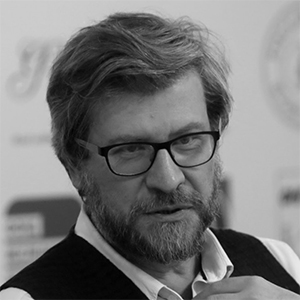
Institut Montaigne’s broad-spectrum interview, on October 13, 2022, with Fyodor A. Lukyanov, Chairman of the Russian Presidium of the Council on Foreign and Defense Policy and editor-in-chief of the “Russia in Global Affairs” journal.
Note to our readers
We intend in the future to publish more materials by Russian scholars and intellectuals because the de facto cancellation by NATO/EU countries of such views and of access to leading Russian media is both unfair, a violation of human rights and an element in a self-serving media warfare which, regrettably, only makes a peaceful, negotiated resolution even more difficult.
We believe it is necessary to hear all conflict participants’ motives and views to be able to help solve a conflict peacefully. Any professional conflict analyst and mediator knows that and also that that does not mean an implicit endorsement of everything stated. Earlier ones are published here, here and here.
– Jan Oberg
•
Russia’s invasion of Ukraine on February 24, 2022, marked the re-emergence of war on the European continent, and an ultimate attempt to correct the Western-led system prevailing since the end of the Cold War. Fyodor A. Lukyanov, Chairman of the Presidium of the Council on Foreign and Defense Policy, clarifies the motives behind the Russian leadership’s decisions in Ukraine. He also shares how Russia views shifts to the new world order and how global governance could be improved. This article is part of Ukraine Shifting the World Order.
• Several rationales have been advanced by President Putin and his circle to justify the attack on Ukraine. How do you assess the respective weight of the motivations behind Russia’s move?
The launching of a military campaign against Ukraine is undoubtedly a groundbreaking event in post-Soviet history – perhaps the most significant. Many intertwined motivations guided this decision. We can try to summarize the most important ones.
- First, there was development both inside and around Ukraine pointing to increased military cooperation between Ukraine, NATO and the US. During the war, many things from the previous period came up, confirming the Kremlin’s suspicious belief that military interaction between Ukraine and the West had been essential and growing after 2014. Now the secret is out in the open and has become a matter of pride for the US, the British and NATO. Since Moscow noticed this dynamic for a protracted while, a conclusion was made that either Ukraine (or Ukraine together with NATO) may try to challenge Russia one day in the foreseeable future. So, when Russian leaders said that the February move was a preemptive strike, they meant it.
- Ukraine is the culmination of a long history of Russian attempts to limit NATO expansion, which started in the 1990s and never stopped since. From the Russian point of view, NATO abused its exceptional position obtained after the collapse of the Soviet Union. The alliance de facto positioned itself as equal to the European security system. Its expansion was presented as the consistent extension of the security zone in Europe despite Russian claims that this went against the overall consensus on indivisible securities. Starting from the late 1990s, Russia came up with several proposals about how to adapt the European security architecture to address Russia’s concerns as a country never considered a potential NATO ally. All Russian ideas were consistently dismissed by Western allies without proper discussions. The assumption that security arrangements (as they emerged in the wake of the collapse of communism and the USSR) were non-negotiable was seen by Western powers as an axiom. Russian bitter irritation grew with each new state joining NATO, and it was clear since 2008 that Moscow considered Ukraine as an absolute red line when it came to NATO membership, Putin warned about that during NATO’s Bucharest summit. The 2014 Euromaidan in Ukraine, passionately supported by the West, contributed to the feeling that the West decided to disregard any red lines drawn by Russia.
The specific part of this decision clearly outlined in President Putin’s article in July 2021 is a perception in Russia that Ukraine in its current borders, and with its current identity based on sharp distancing from Russia, is an artificial creature with no real historical grounds. This is a complicated reckoning with the Soviet past, considered in today’s Russia in an ambivalent way – both as a historic peak of Russian might and an experiment that undermined traditional Russia and encouraged quasi-ethnic separation. Some call the current situation a postponed Russian civil war: one which the nation avoided immediately after the collapse of the Soviet Union, but with growing internal tensions fueled by what was described above.
• Was NATO not de facto in decline? Was the NATO threat not exaggerated by the Russian leadership?
I would not deny that Russia’s leadership and strategic community were excessively focused on the NATO threat. But Moscow had reasons to grow suspicious of this organization. How should one define the decline of NATO? 1991 – 16 member states, 2022 – 30. Is this decline? NATO did not engage in any military campaign during the Cold War, but starting from the 1990s, NATO (or at least NATO countries like Iraq) launched several big campaigns, including a big military operation in Europe (Kosovo war) immediately after the first post-Soviet enlargement in 1999. Obama was supposed to be reluctant to make any new military commitments but he made new ones.
NATO officially stated in 2008 that Ukraine and Georgia will be members of the alliance and did stick to this commitment all the way.
Trump was presented as friendly to Russia, but he proclaimed in his strategic doctrine the new era of great power rivalry between China and Russia. NATO officially stated in 2008 that Ukraine and Georgia will be members of the alliance and did stick to this commitment all the way. Should leaders of those countries and Russian leadership have seen those statements as jokes? Chancellor Scholz said in a recent interview that he told Putin privately that Ukraine had no chance to join NATO within the next 30 years. Well, why not declare this publicly? It was exactly what Russia asked for: denounce the open-door policy.
Especially given the fact that the Kremlin had the experience of oral and private commitments about NATO, which were just abandoned by the US and its allies when they didn’t need them anymore. And, of course, the military support for Ukraine was rapidly growing over several years, regardless of the probability of formally joining NATO. We see it now in the war.
• Do you agree that shaking up a world order still dominated by the West (more specifically the US) was an important motivation for the Russian leadership?
Allow me to formulate it differently. Russia did not want to shake up the Western-led world order. Rather, as it saw signs of a weakening world order due to multiple objective reasons (while remaining pushy when it came to expansionist moves), Russia wanted to use this decline to get rid of post-Cold War arrangements. It is hard to deny that Russia raised this issue many times in different forms – from polite and constructive suggestions in the early 2000s until the ultimatum in December 2021. Until the end, the West assumed that Russia had no legitimate right to demand something beyond the “rules-based order”, whereas rules were formulated without real Russian participation. It should be emphasized that Russia literally turned to arms after decades of other, peaceful attempts to correct (not destroy) the Western-led system and find a proper place there. It did not produce any meaningful response from the West, because the West was fully convinced that the existing scheme was fine for all. And those who thought differently were just wrong.
• Seen from Moscow, what kind of developments, triggered by the war in Ukraine, should produce a real weakening of the grip of the West on the main pillars of the world order?
The most remarkable result so far is that the US failed to recruit any country beyond its official allies to join the anti-Russian coalition. Given the severity of the crisis and the heavy human consequences of it, one could expect the broader scope of countries to support Western attempts to punish Russia. It did not happen; a majority of nations preferred not to join anti-Russian measures. It does not mean they support what Russia is doing, but they flatly rejected to follow prescriptions from the West. And this is a sign of a changing constellation of forces in international relations, and certain Western fatigue among the “Rest”. US monopoly after the Cold War was too overwhelming. The lack of alternatives that did exist during the bipolar era prompted many to aspire to more diversity. The movement towards a new order and away from the hegemonic one has started and will continue.
The way in which the US and its allies orchestrated economic warfare against Russia, which is primarily based on the monopoly of the US dollar, and almost monopoly of the Western financial infrastructure (international payment systems, insurance, currency reserves), moved many nations to question how to avoid such a critical dependence. It will not happen very soon, but sooner than we could imagine, profoundly shifting the international landscape.
The movement towards a new order and away from the hegemonic one has started and will continue.
On the other hand, Russia was not able to get strong support from many countries, including for instance in Central Asia.
Russia is implementing its own security agenda with very harsh methods. This is a national task as formulated by the leadership and basically supported by a large part of the population. Russia did not consult anybody and did not ask for advice because Russian leadership is convinced that it should be done, despite how the rest of the world views it. In such a situation it would be strange to expect “strong support” from anybody. But the very fact that many countries remain neutral or express understanding is important per se.
As far as Central Asia is concerned, expectations that this region will become an apple of discord between Russia and China are not new. As always, the reality is finer and more nuanced. The main reason why it is not happening is that Central Asian countries are much more sophisticated than one suggests. All of them know that they:
- Need to keep friendly and balanced relations with powerful neighbors;
- Feel more comfortable with Russia due to cultural and historical closeness and the economic gravity of Russian space;
- Try to use economic opportunities offered by China, but know exactly that there is no such thing as free cheese;
- Follow changes in the international environment to finetune their policies. To ask who will overtake Central Asia means to be arrogant vis-à-vis those states.
• Even if Russia wins on the ground in Ukraine, it looks like it is doomed to end up in bad shape i.e, more dependent on China, isolated from the West, maybe keeping some support in the Global South, but with less capacity for influence. Do you have a different view?
Russia is facing enormous challenges, no doubt about that. The Russian leadership decided that the path of the last thirty years was wrong and should change. The Soviet Union, by the end of its history, experienced a sharp political and economic decline, but paradoxically, was at the peak of countries’ technological capacities and strategic self-sufficiency. The decision to open up and integrate into a globalized international environment led to improved conditions for a part of the population, but a loss of many skills and rapidly increasing dependency on international markets.
The next question arises, whether Russia will be able to catch up with its technological level being cut from the West and increasingly dependent on China.
The Russian economy thirty years after the Soviet Union’s collapse became more simplistic, and raw material based than in the Soviet time. Expectations that the technological level can be improved through cooperation and interdependence faced obvious limitations because technological leaders were predictably not keen to share the most advanced developments. Rather the opposite, the post-Soviet period was marked by the massive brain drain and leak of technologies, additionally weakening Russia (as the other former Soviet Republic’s) innovative potential.
While small or even middle-sized countries could base their strategies on integration into other powers’ technological spheres, Russia was too big to count on that. And too ambitious to take a subordinated position.
Of course, the next question arises, whether Russia will be able to catch up with its technological level being cut from the West and increasingly dependent on China. One can have well-grounded doubts about that. But Russian history showed that the country can produce unexpected results in the situation of force-majeure while comfortable prosperity leads to strange apathy. Second, the peaceful and linear development of globalization started to show signs of disruption well before the Ukrainian conflict, interdependence has been replaced by the growing rivalry between great powers, and the conclusion made by Russian leadership was that strengthening independent sovereign capacities is the only way to be prepared for the next stage of international development – a Hobbesian style fierce competition on all levels.
As far as China is concerned, the Sino-Russian rapprochement will have the same limits as the Russian-Western one. When Russia starts to feel that there is a chance to lose strategic independence (which is not the case by far yet), it will start to distance itself and seek counterbalances.
• Retaining the hypothesis of a relatively weakened Russia – politically and economically vis-à-vis the US and China – will Moscow increasingly rely on military power and social control to assert dominance? Will destabilizing Europe be the solution for Russian strategists to offset the relative weakening vis-à-vis the US and China?
Relying more on military power and domestic societal control is undoubtedly the path forward for Russia in the foreseeable future. There is simply no other alternative in this crisis environment. The question is whether Russia will be unique in this sense, or whether those trends in various forms will prevail universally. The more crisis and instability worldwide, the more inclined to rely on force and control; this is a universal trend, although forms can differ depending on the political system.
Russia is certainly not capable of breaking the EU, even if this scenario may be seen as desirable in certain constituencies in Moscow. There is another issue that the European integration process shows multiple signs of internal crisis, mostly unconnected to Russian affairs. In the current stage of relations, the European Union is clearly of no value to Russia. So, there is no reason to believe that Moscow will do something to strengthen ties with the European Union anytime soon.
Russia is certainly not capable of breaking the EU, even if this scenario may be seen as desirable in certain constituencies in Moscow.
There are different views in Russia on how to behave vis-à-vis Europe in the next period – to take distance as much as possible and stress differences with Europe at all levels, or to contribute to European transformation towards a more traditional “Europe of nations“. There is an open debate, but no result yet.
• To what extent is the “special relationship” with China counted in Russia’s strategic calculations? What does it mean for Taiwan’s future? Would such a showdown be anticipated as the “last nail” in the coffin of Western dominion over the world order?
The “special relationship” with China is crucial for Russian development in the next period for several reasons. Conflict with the West is the obvious one, but there are other motives of equal importance. China’s position in world affairs fluctuating between being the first or the second superpower is likely under any circumstances. China is Russia’s biggest neighbor, this simple logic suggests that good relations are indispensable. Both economic and geopolitical gravitation of China is in place, this is fact of life. China carefully avoids any allied status in relations with Russia, but objectively, countries move towards each other as both of them are labeled as dangerous revisionists by the US. In the case of Taiwan, China sees the US as an ultimate provocateur who is ready to destroy any mutually beneficial interdependence for its own sake. Russian views on the US, and especially the EU in the Ukrainian context are similar. So, the interests of Russia and China are not coinciding, but the logic of how the West sees them brings Moscow and Beijing ever closer together.
• Finally, for the Russian leadership, what new order should replace the current one? Any alternative to the last 30 years? How can global governance for our most pressing issues be assured in a new world?
The second half of the 20th century was a unique period in the history of international relations. Institutions played a defining role in how to shape relations between states, it has never been the case before (not to that extent at least), and there are doubts that this will be repeated in the future. The international constellation of powers was too specific and exceptional between 1945 and 1991. The more traditional and “normal” situation in international relations is a much more chaotic stance with situational arrangements and agreements based on changing power balances – both regionally and now even globally. It does not mean a high degree of stability, on the contrary, but at least the permanent awareness of all important players, that they should be cautious and always think about the intended and unintended consequences. The universalist ideological framework as it emerged after the end of the Cold War (i.e. after the end of the period with two competing ideological frameworks) can’t stay without an overwhelming dominance of a superpower, the polycentric system requires a “peaceful coexistence” of different ethical and cultural frameworks, based on pragmatic balance and mutual benefits, not on the perception of sides of history, which are “right” or “wrong”.
If this picture is correct, one conclusion follows: the order as we knew it from the previous decades is unlikely to be restored any time soon. All major international problems (including those which used to be called “global”) should be addressed on a much more flexible transactional base, in the process of permanent adjustment of interests and possibilities. This does not promise a very stable future. But in the situation of a deeply asymmetric international environment (multiple players of different calibre and characteristics) without a chance to install anybody’s solid control (be it institutions or great powers), each country should be prepared for a protracted period with very limited ability to strategize.
Copyright: Gavriil Grigorov / SPUTNIK / AFP
This interview was published by Institut Montaigne in France on October 13, 2022, here.
About Fyodor Lukyanov

From the Russian International Affairs Council, RIAC’s, homepage:
Editor-in-Chief of Russia in Global Affairs magazine, Chairman of the Presidium of the Council for Foreign and Defense Policy. RIAC Member.
Graduated from the Faculty of Philology of Lomonosov Moscow State University (MSU).
Worked as senior editor of the International Moscow Radio (The Voice of Russia) broadcasting to North European countries. Later, employed by the Sawyer Miller Group (USA).
Then, correspondent of the international news department of the Segodnya daily; Foreign Editor of the Vremya MN daily; Deputy Editor-in-Chief of the Vremya Novostei daily.
Since 2002, Editor-in-Chief of the “Russia in Global Affairs” journal, which is intended to serve as a discussion and debate platform for Russian and foreign experts and politicians on the prospects of shared development in a changing world.
Member of the Council on Foreign and Defense Policy.
Author of many publications on the problems of contemporary international relations and Russian foreign policy.
