China

Showing 1-10 of 348 stories

Sort by
Categories

Year

Author / Contributor

Region

Screenshot-2025-08-12-181157
Professor Zhang Weiwei is a highly respected Chinese intellectual and professor at Fudan University in Shanghai. He is the director of its China Institute and also runs a series of conversations with many different people around the world. Here is what came out of their meetings there and in Skopje, Macedonia in October 2024: & ◪ As you can see, also at the end of the second one, we both enjoy win-win exchanges like these about world order issues. Zhang Weiwei is known for using videos and social media to reach a large audience in China and worldwide. We suggest you see many more of Zhang Weiwei’s conversations – like recently with Professor Jeffrey Sachs – on the Thinkers’ Forum on YouTube. PS TFF posts hundreds of videos, its own and those of others, in our Video Collections on TFF Substack – including those that appear on YouTube. However, TFF...
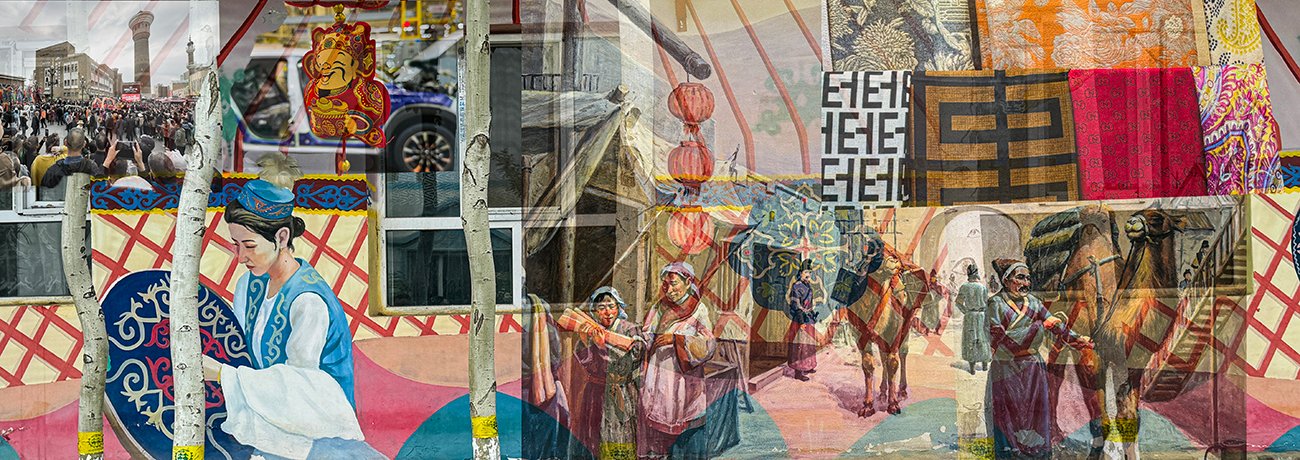
XinjiangTop_Improv_SMALL
Launched on November 17, 2024Updated with new materials regularly TFF Board members Thore Vest. Everywhere, the delegation was met with a sincere wish to develop knowledge, dialogue, cooperative projects, and initiatives based on citizens’ diplomacy – in general, but with the West in particular. For more, see “Report from the Nordic delegation to China’s Xinjiang Province, September 7-15, 2024.” While the delegation was in Xinjiang, various ideas were already being discussed from the local to the top level, i.e., with the governor and party leaders of Xinjiang. The two TFF Associates suggested that TFF set up a special section – in addition to its “China and Silk” – where various quality materials about Xinjiang would regularly be published to promote public education about Xinjiang, particularly its contemporary development – worldwide but in the West in particular. This is now a reality – as can be seen below – but it...

Oppo
Photo Jan Oberg China has recently garnered significant attention due to its advancements in various technological fields, such as quantum physics and artificial intelligence. In media discussions and my lectures on China, it is common to encounter objections asserting that the West, particularly the United States, is certainly ahead of China. These assertions appear to be more emotional than factual. However, a more fundamental consideration is whether this question holds any significance. Cultural Perspective One aspect that Westerners often overlook is the cultural variation in understanding the relationship between abstract academic insights and practical applications of those insights. To comprehend the origin and significance of discussions on technological superiority, it is essential to acknowledge cultural and social differences between China and the West. I have explored this topic before in some of my previous articles published on the TFF website. Particularism On the cultural dimension universalist – particularist, China exhibits...
Eclecticism_90cm_300dpi_1200_100dpi
Foreword The Board of The Transnational Foundation in Sweden has decided to publish an easy-to-read, scholarly anthology that addresses one of the most important – and potentially dangerous – issues of our time: Why are the political, economic, and medialised Western images of China so consistently negative – and what can you do to understand China better? These images may be expressions of a political will to present only various shades of grey and black with the aim of building a consciousness about China as an enemy and not a partner. They may also be seen as a sort of world-dominating ethos of ignorance based upon the assumption that “we’ve-got-nothing-to-learn-from-others,’ we are the teacher. Another possibility is that the West, deep down, feels that it is getting relatively weaker from a macro-historical perspective and comforts itself with denial and accusations against “the other” of being the reason for its manifest...
HMOriginal-1E4590A1-C273-4402-B9D7-552C99535592
Johan Galtung wrote this article in 2010, the original here. It is remarkable, bordering on the prophetic, that Galtung already suggested – in section 4 below – what closely resembles China’s and President Xi Jinping’s Belt and Road Initiative (BRI), which was launched in 2013. 1. East Asia With the current regionalization of the world where and even the biggest states will find their place, an East Asian Community of the two Chinas, the two Koreas and the three Japans (with the Ryu Kyu Islands–Okinawa–and an Ainu region both at high autonomy levels), is inevitable.  The European Community-Union got started around steel and coal, ESC; how about starting with the tricky issues, like right now Diaoyu, of the islet clusters and their economic zones in the East Asian Sea?  An East Asian Sea Authority could declare joint sovereignty, and go beyond joint ventures, exploiting and protecting resources together, the costs and benefits being...
mw960367054-2JDK5jZZ430-unsplash
On the invisible codes of culture that shape our worldviews long before memory or reason. This analysis was initially published on the author’s “China21 Journal” which contains several analyses of related issues, China-Western relations and how to increase knowledge and mutual understanding. Last week, we picked up our 5-year-old son from his public kindergarten in Beijing. On the way home, he proudly recited a Tang Dynasty poem by heart — 春望 (Chūnwàng, or Spring View, 757 AD), one of the most famous and widely recited works from that vibrant dynastic era over a thousand years ago, written by the renowned poet 杜甫 (Dù Fǔ, 712–770). The poem reflects on wartime and exile — hardly light or child-friendly themes. But that’s not the point. Children (and adults) recite ancient poems not just for their content, but for their rhythm, rhyme, tone, and the cultural feeling embedded in them. This is how cultural programming begins: not through rules or explanations,...
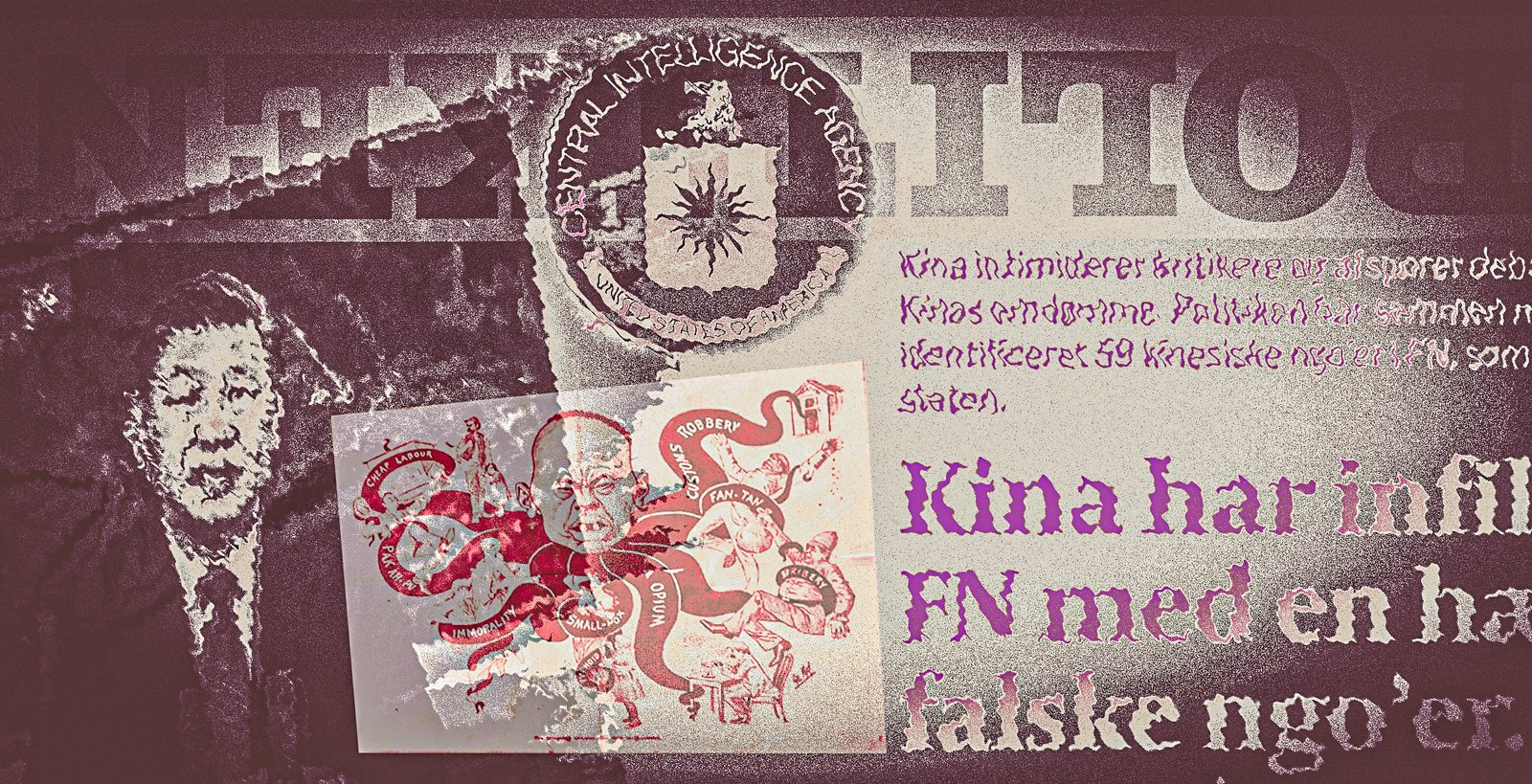
Politiken-Head
And of course, they don’t tell their readers The development – or decline – of the Danish daily newspaper Politiken as a quality newspaper in the field of foreign policy pains me. Allow me a personal, somewhat nostalgic introduction. I wrote frequently for Politiken from 1971 to 1994. As a 20-year-old sociology student, I was naturally proud to be published in what was then a prestigious, liberal media outlet, which was initially shaped by Hørup’s anti-militarism and cultural radicalism. The broadest and best social debate took place in Politiken’s columns and on its debate pages. Over the years, I also got to meet some of the newspaper’s most important ‘influencers,’ editors such as Agner Ahm, not least the legendary feature editor Harald Mogensen, and later – believe it or not – I was invited to lunch with editor-in-chief Herbert Pundik himself at Hotel Kong Frederik, during which he told me,...
Eclecticism_90cm_300dpi_1200_100dpi
Wang Yuewei(王玥玮) March 24, 2025 This is a chapter in a TFF anthology in the making “If You Want To Understand China.” Foreword, Introduction, Authors and Table of Content here. How to treat others is a core issue in a nation’s foreign policy and a direct reflection of its moral tradition. Throughout history, the performance of Western civilizations and Chinese civilization has been different. When it comes to dealing with others, China insists on pacifism and coexistence, whereas the West adopts expansionism and interventionism. Pacifism and expansionism are neither inherently good nor bad; each has its own achievements and losses. Pacifist China did not launch bloody colonial conquests despite its strength, but its conservative stance caused it to miss the Industrial Revolution. The expansionist West, through both violence and peace, spread modern technology and systems globally, but this often resulted in slaughter, plunder, and sometimes genocide in the colonies. National...
Eclecticism_90cm_300dpi_1200_100dpi
This is a chapter in a TFF anthology in the making “If You Want To Understand China.” Foreword, Introduction, Authors and Table of Content here. Cultural bias Before looking at concrete patterns of manipulation, it is necessary to point at the cultural bias that is partly driving the manipulation. Not only the regulations and protocols of most international organizations like the UN, WTO, NATO, etc., are culturally biased, the very idea of a ‘rules-based world’ as the ultimate goal of humanity is rooted in Western cultural values that are not supported by most non-Western nations. In fact, the basic idea behind TFF’s Smokescreen Report cannot be fully understood without taking the cultural bias into account. Dimensions of culture This section uses the 7-Dimension (7-D) model of national culture developed by Fons Trompenaars and Charles Hampden-Turner. These two management consultants identified the seven dimensions of culture, and the model was published...
02b2bf5c-112d-4f60-85c9-36586b0e4e9f_1218x811-1
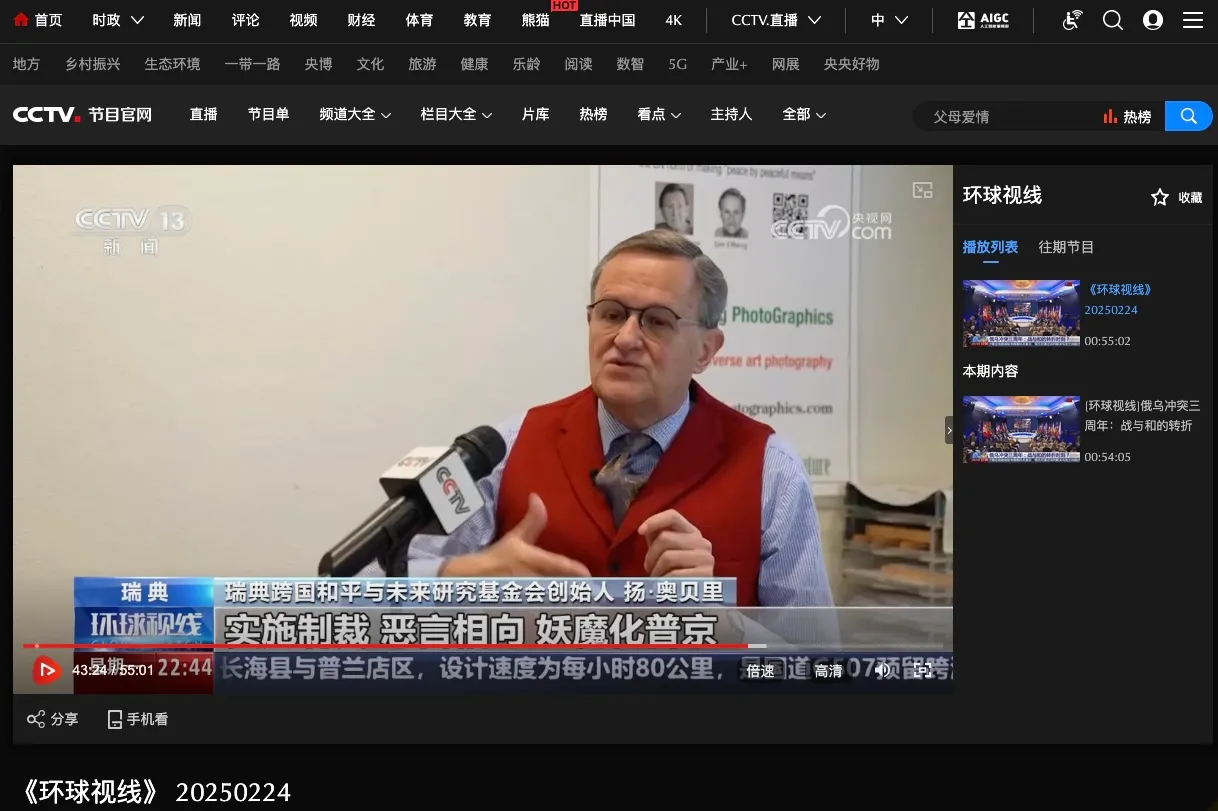
Every few days, I was on TV in Russia and China – Russia TV1 and CCTV – the latter as part of a much longer studio discussion and documentary about Ukraine, Russa and the EU. February 14, 2025 – about half an hour on Russia’s leading TV Channel – 1TV – a kind of portrait with lots of views on current affairs. And many more videos with other TFF Associates and a series of world issues. It’s a great way to learn new angles from some of the most experienced people of our time. And the best part – new videos are selected and uploaded almost every day. Do not miss!! Enjoy and, if you like, share!
Eclecticism_90cm_300dpi_1200_100dpi
But does the West want to understand China? This is a chapter in a TFF anthology in the making “If You Want To Understand China.” Foreword, Introduction, Authors and Table of Content here. We learn about other cultures than our own mostly through our media – however, in many cases, also through books, films, travels and personal encounters. All news are micro glimpses in time and space – something happens there and then, something else happens the next minute. In addition, the world is seen through negative lenses: dramatic and ’bad’ stuff makes the news. Bad news makes good news. We look for causes behind news and events in the immediate past or present, like B did this because A recently did that. It’s all micro in time and space, and very seldom do we get the macro – the larger/broader or deeper space and time – call them macro-history,...
Eclecticism_90cm_300dpi_1200_100dpi
This is a chapter in a TFF anthology in the making “If You Want To Understand China.” Foreword, Introduction, Authors and Table of Content here. China has had an unprecedented development in the last 4 decades. It cannot be disputed. The progress list is long and covers absolutely everything, literally all walks of life, from on pavements to in space, from schools to research, from microchips to quantum computing, from one child to many and on and on. In several fields, though, China remains stable: the culture, the hard work and the commitment to The Project, the project for a shared future for humankind. It is a fact that the West is in decline, and China is on the rise. Relatively speaking, it is logical because that is how it is in zero-sum games. But is it really a zero-sum game? I do not think so; the cake can be...