
PressInfo #237 - Israel, Iran, and the Future of the Middle East

Also posted by JUST
International Movement for a Just World
Vol. 6, # 2, 2006

See Associate David Krieger’s TFF PressInfo 236 – a different angle on the same issues 

There is a dangerous game underway in the Middle East that could erupt at any point in the form of a devastating regional war if urgent diplomatic steps to head it off are not taken immediately. There are growing signs that Israel is pushing the United States to attack Iran’s nuclear facilities partly by threatening (or bluffing) to attack itself and partly by using its leverage in Washington to pressure the U.S. Government to harden their stance on Iran’s nuclear program.

Among the warning signs are dramatic public statements by Israeli military and political leaders, including Sharon, the Defense Minister, Shaul Mofaz, the Chief of Staff, Daniel Halutz, all to the effect that Iran poses an intolerable threat to Israeli security that cannot be resolved diplomatically, calling for sanctions as a first step, which would almost certainly would not be effective in curbing Tehran’s nuclear ambitions, and must be followed by air strikes.

The minimum goal would be to destroy Iran’s nuclear facilities, achieving results comparable to what was done to derail Iraq’s nuclear program in 1981 by an Israeli air strike directed at the Osirak reactor, which was then the core of the Iraqi program. The attack appeared to have achieved its purpose, international reactions were not very damaging to Israel, and there were no serious regional repercussions.

So it can be asked, why be so worried about a similar attack in 2006 this time directed at Iran’s nuclear facilities?

There are indications that Iran is going ahead with its program, and at the very least is keeping its options open with respect to whether nuclear weapons will be developed in the years ahead. Reassurances of peaceful intentions by Iran are not reliable, especially if it is recalled that such current nuclear weapons states as Israel, India, and Pakistan all issued denials of any intention to develop weapons.

In particular, to this day Israel has not officially acknowledged possession, although its intention to develop weapons, and to this day Israel has not officially acknowledged possession, although it is generally understood that their nuclear arsenal contains at least 100 nuclear warheads, and in all probability, a number closer to 400, along with ample means of delivery to any target within the region.

In this sense, there is certainly a strong possibility, if other things do not change, Iran might have nuclear weapons in the future, but almost certainly not before 2008, and probably not until 2015, and even then not in a form or quantity that would make remotely feasible their offensive use.

Naturally, the recent extremely inflammatory and provocative statements of Iran’s president, Mahmoud Ahmadinejad, would agitate the security concerns of any state, much less a state that tends to overreact to perceived security dangers and insults in the manner of Israel.

It should be remembered that Israel initiated preemptive wars in 1967 and 1982 long before George W. Bush had ever heard of such an idea, and has on numerous occasions struck across its borders to destroy or punish adversaries at times and in ways of its own choosing. So when Ahmadinejad insists that the Holocaust was fantasy, that Israel has no place in the region, and should be relocated in Europe, he seems to be taunting Israel to respond militarily, which seems absurdly reckless.

But Israel tends to calculate costs carefully whenever its security is at stake, and a sober assessment would seem to suggest that launching Israeli air strikes against Iran at this time would not be worth the risks.

First of all, the threat to the extent real is remote, and far fetched. Secondly, Israel has an ample deterrent force such that any major future Iranian attack would amount to collective suicide without any national benefits. Thirdly, unlike the 1981 attack on Osirak, the Iranian nuclear facilities are dispersed, multiple, defended, and located in underground bunkered areas.

Fourthly, Iran currently possesses the means to launch a devastating retaliation if attacked, especially via Shahab-3 missiles that could reach targets in Israel with reasonable accuracy. Fifthly, Iran has other options that could lead to a regional war, and possibly even a world war, including intervening in the Iraq situation and escalating support for anti-Israeli resistance forces in Palestinian territories. Sixthly, an attack by Israel on Iran would almost certainly strengthen Islamic tendencies throughout the region as well as put intense pressure on Arab governments to react strongly against Israel.

We can assume that Israelis are aware of these risks, which suggests that their policies may be other than their appearances. Their real effort may be to get Washington to take the lead diplomatically, and then, militarily, allowing Israel to use its incredible influence in the U.S. Congress and with the Bush administration, to induce an American military strike on Iran in the coming months.

Aside from being pushed by Israel, which is clearly happening even openly if we assume that the strident chorus of organized Jewish lobbying for a hard line on Iran is responsive to directives from Tel Aviv, there may be members of the Bush/Cheney leadership that welcome being pushed by Israel so as to pursue a policy line that will divert attention from an unpopular failure in Iraq. It should be recalled that Bush, senior, bribed Israel to stay on the sidelines in the Gulf War of 1991, while the U.S., with UN blessings, restored Kuwait’s sovereignty and removed Israel’s number one security threat at the time.

There is another possibility, which is linked to Israeli domestic politics. To raise the specter of a looming Iranian threat, especially given Ahmadinejad’s inflaming remarks, is to help divert attention from a deepening social crisis in Israel associated with increasing poverty, unemployment, and growing disparities in income and wealth among Israelis. With national elections in Israel for March it is obviously tempting to make Israelis disposed to be preoccupied with security forget about distress on the home front, and elect a leader who has a proven record of toughness with respect to security and foreign policy.

This combination of developments concerns Turkey, as well. There are indications that American officials have been visiting Ankara in recent weeks to explore the prospects for Turkish cooperation if military action is taken. Supposedly, as well, backroom bargains were discussed, including giving Turkey a free hand in dealing with PKK bases and deployments in Iraq, and possibly Iran.

Of course, any attack on Iran, especially if Turkey is complicit, will produce some dangerous uncertainties, as well as likely be a decisive setback for improving Turkish relations with the Muslim world. In some sense, it would involve a clear Turkish decision to give priority to its strategic relationship with the United States as compared to its cultural and geographic affinities with countries in its region. It would also likely antagonize most of Europe, further dimming Turkey’s chances of entering the European Union in the next decade. As well, Turkish complicity in an attack on Iran would also likely intensify the already unstable circumstance in the region, further encourage anti-secular religious and political extremism, and expand the scope and severity of warfare throughout the Middle East.

In the end, the prospect of military action against Iran at this point is frightening. The uncertainties are great, and could set off a chain reaction that culminates in a truly inter-civilizational war. Beyond this, there is no Iranian threat that justifies any serious consideration of such a high risk response.

To initiate an aggressive war in such a setting would further weaken both the United Nations and international law, which have been badly damaged by the unilateral, non-defensive invasion and occupation of Iraq. Let us hope that saner, moderate heads prevail or that this buildup toward war is a bluff that is motivated by domestic politics in Israel and the United States, given an appearance of credibility due to Ahmadinejad’s irresponsible posturing.

Would you be reading this now
if it were not useful to you?
Get more quality articles in the future

There are even wider issues at stake.

Should the Middle East, or for that matter the world, regard nuclear apartheid as normal, that is, a select group of states with a nuclear weapons entitlement while others that seek such weaponry are treated as ‘rogue states’ subject to military intervention? Israel, in particular, seems mainly motivated to ensure that no regional powers acquire nuclear weapons to challenge its regional hegemony that relies to a significant extent on its monopoly of nuclear weaponry.

In this respect, the Israeli cover story based on avoiding a remote future vulnerability seems mainly designed to divert attention from the real concern. After all, even if Iran were to acquire nuclear weapons some years hence, its capabilities would be dwarfed by those of Israel, which would undoubtedly take further steps to achieve continuing nuclear dominance.

In these circumstances Iran would certainly be deterred, if not totally intimidated, which is one of the reasons that Tehran might eventually decide after all to forego the weapons option. More worrisome for Israel is the prospect that Iran might decide that it would acquire a few nuclear warheads, not to threaten Israel, but to deter Israel’s discretion to wage wars of choice in the region.

Professor Emeritus Richard Falk is one of the world’s leading analysts of International politics. He is a member of JUST ‘s International Advisory Panel.
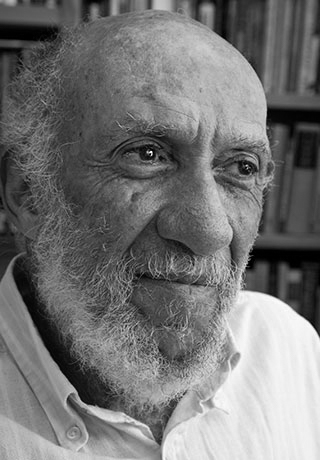

Professor Falk became an adviser to TFF when it was established in 1985.

Share

Leave a Reply

Your email address will not be published. Required fields are marked *

Related Posts

PressInfo # 141, December 21, 2001It’s time to prepare reconciliation between Albanians and Serbs PressInfo # 140, December 14, 2001Ibrahim Rugova’s decade-long leadership in Kosovo/a PressInfo # 139, 11. december, 2001En god nyhet: Jugoslaviens Sannings- och försoningskommission PressInfo # 139, 11. december, 2001Gode nyheder: Jugoslaviens Sandheds- og Forsoningskommission PressInfo # 139, December 11, 2001Good news: Yugoslavia’s Truth and Reconciliation Commission PressInfo # 138, November 8, 2001TFF co-founder PhD with thesis about young people with roots in other cultures PressInfo # 138, November 8, 2001TFF:s medstiftare doktor på avhandling om unga med ursprung i andra kulturer PressInfo # 137, October 17, 2001A new Marshall Plan: Advancing human security and controlling terrorism PressInfo # 136, October 15, 2001The UN and Annan really deserve it PressInfo # 135, October 10, 2001Preventing a terrorist mushroom cloud PressInfo # 134, 17 oktober, 2001Sverige og 11. september PressInfo # 134, October 9, 2001Sweden and September 11...
Peace is promoted by constructive proposals and dialogue Four preceding PressInfos have expressed concern over — and criticised — the ongoing, militarisation of the EU. Some will say: but there are no alternatives. We believe that there are always alternatives, that democracies are characterised by alternatives and choice, and that openly discussed alternatives will improve the quality and legitimacy of society’s decision–making. In addition, it is an intellectual and moral challenge to not only criticise but also be constructive. If we only tell people that we think they are wrong, they are not likely to listen. However, if we say: what are your views on this set of ideas and steps? — we may sometimes engage them in dialogue and sow a seed. Most people in power circles live their daily lives in in a time frame and a social space where certain ideas, viewpoints and concepts are just not...
Photos © TFF 2000 Read PressInfo 90 “Lift the Sanctions and Bring More Aid to Yugoslavia” See Pictures from Belgrade © TFF 2000 Please reprint, copy, archive, quote or re-post this item, but please retain the source.

Recent Articles

PressInfo # 141, December 21, 2001It’s time to prepare reconciliation between Albanians and Serbs PressInfo # 140, December 14, 2001Ibrahim Rugova’s decade-long leadership in Kosovo/a PressInfo # 139, 11. december, 2001En god nyhet: Jugoslaviens Sannings- och försoningskommission PressInfo # 139, 11. december, 2001Gode nyheder: Jugoslaviens Sandheds- og Forsoningskommission PressInfo # 139, December 11, 2001Good news: Yugoslavia’s Truth and Reconciliation Commission PressInfo # 138, November 8, 2001TFF co-founder PhD with thesis about young people with roots in other cultures PressInfo # 138, November 8, 2001TFF:s medstiftare doktor på avhandling om unga med ursprung i andra kulturer PressInfo # 137, October 17, 2001A new Marshall Plan: Advancing human security and controlling terrorism PressInfo # 136, October 15, 2001The UN and Annan really deserve it PressInfo # 135, October 10, 2001Preventing a terrorist mushroom cloud PressInfo # 134, 17 oktober, 2001Sverige og 11. september PressInfo # 134, October 9, 2001Sweden and September 11...
Peace is promoted by constructive proposals and dialogue Four preceding PressInfos have expressed concern over — and criticised — the ongoing, militarisation of the EU. Some will say: but there are no alternatives. We believe that there are always alternatives, that democracies are characterised by alternatives and choice, and that openly discussed alternatives will improve the quality and legitimacy of society’s decision–making. In addition, it is an intellectual and moral challenge to not only criticise but also be constructive. If we only tell people that we think they are wrong, they are not likely to listen. However, if we say: what are your views on this set of ideas and steps? — we may sometimes engage them in dialogue and sow a seed. Most people in power circles live their daily lives in in a time frame and a social space where certain ideas, viewpoints and concepts are just not...
Photos © TFF 2000 Read PressInfo 90 “Lift the Sanctions and Bring More Aid to Yugoslavia” See Pictures from Belgrade © TFF 2000 Please reprint, copy, archive, quote or re-post this item, but please retain the source.

TFF on Substack

Discover more from TFF Transnational Foundation & Jan Oberg.

Most Popular

PressInfo # 141, December 21, 2001It’s time to prepare reconciliation between Albanians and Serbs PressInfo # 140, December 14, 2001Ibrahim Rugova’s decade-long leadership in Kosovo/a PressInfo # 139, 11. december, 2001En god nyhet: Jugoslaviens Sannings- och försoningskommission PressInfo # 139, 11. december, 2001Gode nyheder: Jugoslaviens Sandheds- og Forsoningskommission PressInfo # 139, December 11, 2001Good news: Yugoslavia’s Truth and Reconciliation Commission PressInfo # 138, November 8, 2001TFF co-founder PhD with thesis about young people with roots in other cultures PressInfo # 138, November 8, 2001TFF:s medstiftare doktor på avhandling om unga med ursprung i andra kulturer PressInfo # 137, October 17, 2001A new Marshall Plan: Advancing human security and controlling terrorism PressInfo # 136, October 15, 2001The UN and Annan really deserve it PressInfo # 135, October 10, 2001Preventing a terrorist mushroom cloud PressInfo # 134, 17 oktober, 2001Sverige og 11. september PressInfo # 134, October 9, 2001Sweden and September 11...
Peace is promoted by constructive proposals and dialogue Four preceding PressInfos have expressed concern over — and criticised — the ongoing, militarisation of the EU. Some will say: but there are no alternatives. We believe that there are always alternatives, that democracies are characterised by alternatives and choice, and that openly discussed alternatives will improve the quality and legitimacy of society’s decision–making. In addition, it is an intellectual and moral challenge to not only criticise but also be constructive. If we only tell people that we think they are wrong, they are not likely to listen. However, if we say: what are your views on this set of ideas and steps? — we may sometimes engage them in dialogue and sow a seed. Most people in power circles live their daily lives in in a time frame and a social space where certain ideas, viewpoints and concepts are just not...
Photos © TFF 2000 Read PressInfo 90 “Lift the Sanctions and Bring More Aid to Yugoslavia” See Pictures from Belgrade © TFF 2000 Please reprint, copy, archive, quote or re-post this item, but please retain the source.
Read More
Imagen-thumbnail-The-Transnational-1
PressInfo # 141, December 21, 2001It’s time to prepare reconciliation between Albanians and Serbs PressInfo # 140, December 14, 2001Ibrahim Rugova’s decade-long leadership in Kosovo/a PressInfo # 139, 11. december, 2001En god nyhet: Jugoslaviens Sannings- och försoningskommission PressInfo # 139, 11. december, 2001Gode nyheder: Jugoslaviens Sandheds- og Forsoningskommission PressInfo # 139, December 11, 2001Good news: Yugoslavia’s Truth and Reconciliation Commission PressInfo # 138, November 8, 2001TFF co-founder PhD with thesis about young people with roots in other cultures PressInfo # 138, November 8, 2001TFF:s medstiftare doktor på avhandling om unga med ursprung i andra kulturer PressInfo # 137, October 17, 2001A new Marshall Plan: Advancing human security and controlling terrorism PressInfo # 136, October 15, 2001The UN and Annan really deserve it PressInfo # 135, October 10, 2001Preventing a terrorist mushroom cloud PressInfo # 134, 17 oktober, 2001Sverige og 11. september PressInfo # 134, October 9, 2001Sweden and September 11...
Imagen-thumbnail-The-Transnational-1
Peace is promoted by constructive proposals and dialogue Four preceding PressInfos have expressed concern over — and criticised — the ongoing, militarisation of the EU. Some will say: but there are no alternatives. We believe that there are always alternatives, that democracies are characterised by alternatives and choice, and that openly discussed alternatives will improve the quality and legitimacy of society’s decision–making. In addition, it is an intellectual and moral challenge to not only criticise but also be constructive. If we only tell people that we think they are wrong, they are not likely to listen. However, if we say: what are your views on this set of ideas and steps? — we may sometimes engage them in dialogue and sow a seed. Most people in power circles live their daily lives in in a time frame and a social space where certain ideas, viewpoints and concepts are just not...
Imagen-thumbnail-The-Transnational-1
Photos © TFF 2000 Read PressInfo 90 “Lift the Sanctions and Bring More Aid to Yugoslavia” See Pictures from Belgrade © TFF 2000 Please reprint, copy, archive, quote or re-post this item, but please retain the source.
Imagen-thumbnail-The-Transnational-1
Av FRANK SØHOLM GREVIL 16 augusti 2004  Vi er nu nået til tredje akt i det absurde teaterstykke, der i analogi med de store skueprocesser i Moskva 1936-38 er blevet døbt ‘Grevil-sagen’. Første akt bestod i min anonyme fremlæggelse af egenhændigt nedklassificerede rapporter i Berlingske Tidende i februar og marts. Andet akt udgjordes af min fremtræden med navn og billede i Information i april samt den efterfølgende mediestorm, som uden min direkte medvirken kostede en forsvarsminister taburetten samt en sigtelse for brud på tavshedspligten. Tredje akt bliver en retssag, hvor jeg står tiltalt for at have overtrådt straffelovens bestemmelser om uberettiget videregivelse eller udnyttelse af fortrolige oplysninger. Statsanklageren har ovenikøbet valgt at påberåbe sig særligt skærpende omstændigheder. Da jeg aldrig har modtaget betaling for at stille rapporterne til rådighed eller lade mig interviewe, må det skærpende bestå i, at “videregivelsen eller udnyttelsen er sket under sådanne omstændigheder, at det påfører...
Imagen-thumbnail-The-Transnational-1
Af Svenska Irakkommittén mot de Ekonomiska Sanktionerna (SIES) 13 september 2002 FN:s ekonomiska sanktioner mot Irak har nu pågått i tolv år och drabbat det irakiska folket med svåra lidanden. Enligt FN:s egna siffror har mer än 1,5 miljoner människor, varav ca 600 000 barn, dött som en direkt följd av sanktionerna. Dessutom har ett lågintensivt bombkrig mot landet pågått under dessa år. Av all denna förödelse- orsakad huvudsakligen av amerikansk och brittisk politik- har Saddam Husseins brutala och diktatoriska regim snarast stärkts än försvagats. Nu förbereder USA under president Bushs ledning ett storskaligt bombkrig mot Irak som kommer att innebära ett ännu större lidande för civilbefolkningen. Ett sådant krig kommer dessutom att ytterligare undergräva freden och säkerheten i världen. Att upprätta en demokratisk regim i Irak är det irakiska folkets angelägenhet och får enligt folkrätten inte ske med krigshandlingar utifrån. Folkrätten och FN:s stadgar måste respekteras. Vi vädjar till...

