Teaching Peace in Kosovo. A Report
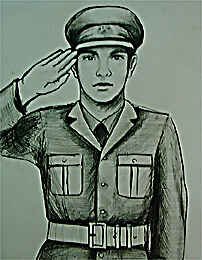
Poster at the Leadership Training Academy
for the – civilian – Kosovo Protection Corps, KPC – Photo © TFF

Report of an IOM/TFF Mission to Kosovo, March 7 to 10, 2000 

More pictures from Pristina

Kerstin Schultz’ report

Purpose

I was invited with Kerstin Schultz to contribute to training in conflict management skills of middle level leaders of the Kosovo Protection Corps, KPC. This followed the earlier involvement of Jan Oberg of TFF with a similar training exercise with the top leadership of the KPC. The three of us are members of TFF’s Balkans mitigation team based in Lund, Sweden, which has made many missions since 1991 to Kosovo and other regions of the Balkans.

Background

IOM are responsible for a comprehensive training programme for the KPC leadership that includes briefings for example from KFOR, the ICRC, UNMIK, and NGO’s working in the region concerned with rehabilitation and safety. TFF was invited to contribute some training seminars on conflict management skills.

Kerstin Schultz and I were invited to give presentations to six groups of KPC middle level leaders, about 550 persons altogether in six locations.

The head of the IOM mission in Pristina, Pasquale Lupoli, advised us that the KPC were drawn from the KLA. Nearly 14,000 of them asked for employment with the KPC and 3000 were selected through a test similar to the British army tests for intelligence, aptitude and suitability. A senior leadership of about 46 were selected from these 3000, a medium level leadership of about 560 were also selected and the remainder were considered as rank and file. We were led to believe that this selection was rather arbitrary &endash; IOM appears only to have rejected outright those that were illiterate whilst the ex-KLA personnel had influence over those given seniority.

We asked people from IOM, KFOR, and OSCE about the role expectations for the KPC – what they might be doing in a few months time. The response was vague. I asked KPC groups what they perceived their role to be but their vision seemed to me to be clouded. I felt that the main purpose of creating the KPC was to employ ex-fighters in a civilian protection Corps, giving them a post-war role rather than inclining them in their idleness towards trouble making through for example drug trafficking, kidnapping and crime as was the case with the ex-Chechen guerrilla fighters.

The TFF training seminars were intended I believe to begin to change the mentality of the KPC from a fighter mind-set to one focused on the security and livelihood of all the peoples of Kosovo. Such an attitude change in principle requires intensive workshop practice in small groups over several weeks. There was I felt a very limited potential in working with large groups for the first time for only an hour or two. In retrospect I feel that a substantial but necessarily limited achievement was effected.
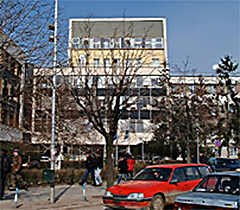
UN HQ in Pristina – Photo © TFF

My first training seminar was with about 260 of these KPC middle rank leaders in a cinema in Pristina on March 8. I was not previously advised that I would be expected to address such a large group in fixed seating accommodation. A set piece, well-orchestrated presentation was called for and I did not have adequate visual material &endash; well prepared overhead transparencies and slides &endash; to make a good impact on such a group. The interpreter from a market organisation was poor and I only had a minute or two beforehand to brief him. Nevertheless I believe that some attitudinal change took place amongst the audience who were very attentive. In asking for questions, I was surprised that a senior KFOR officer in the front row asked me to give specific advice for the situations in which the KPC would be working. Did he have a clearer perception of this role expectation than IOM or myself?

OSCE’s HQ in Pristina – Photo © TFF

My second training seminar with about 60 KPC leaders took place in the basement of a hotel in Prezren on March 9 &endash; the expected accommodation on the ground floor had been double booked. This seminar went very well: good attention, keen and appropriate questions, and several participants asked me for my seminar notes in Albanian which alas I did not have. The IOM interpreters were poor and after about five minutes a KPC officer offered to interpret and he did a very good job. Several participants were professional men: a good response came from a medical doctor, for example.My third seminar was held in a hotel in Pec on March 10 with about 50 KPC officers. The room had a very large oval table and we had to crowd around it. I gave the same seminar that went down so well in Prezren. Although the attention was good, the audience was lifeless when it came to comments and questions. A break of ten minutes would then have been welcomed before engaging the group in some but I was constrained for time as I had a long and uncertain journey that day to get to Skopje in time for my return flight.

Content and style of training seminars

I followed the spirit and intention of the agenda laid out in the IOM contract (as devised by Jan Oberg for his previous training seminar). What worked well at the second meeting was a modification of what did not work out so well with the very large first group in the cinema; the same agenda was used for the third meeting.

1. Brief introduction to myself and my engagement with post war situations in the Balkans and the Caucasus.

2. Emphasised that the KPC and myself were practising the same profession of protecting the lives and livelihoods of civilian populations against violence and suffering.

3. Violence is any action or structure that reduces or takes away fundamental human needs. Explored the hierarchy of human needs beginning with that of food, warmth, shelter, safe water, reliable utilities and the disposal of waste. Then we looked at security arrangements to which the KPC would contribute, and to societal and personal goals.

4. To reduce suffering and violence requires good conflict management skills. Without training in listening skills, conflict perception, negotiation and mediation, much suffering and violence could result.

5. Introduced concepts of forgiveness, repentance and reconciliation through the classic Vietnam war photograph of a Vietnamese girl fleeing from violence and another photograph of her reconciled many years later with one of the American airmen who dropped napalm on Vietnam who asked forgiveness of her and received it.

6. Explored negotiation between people and groups with equal power. Used cartoon of boy and girl fighting over a single orange on a tree before recognising that the boy wanted the juice whilst the girl only wanted the peel for marmalade.

7. Introduced and discussed the triad of conflict formations, attitudes/emotions arising from the conflict &endash; mostly hidden from observation &endash; and the behaviour that can result from such emotions – that could be violent leading to a change in the conflict situation, deeper wounds of feeling and more violent behaviour.

8. Discussed win-lose (zero sum) and win-win negotiations with examples.

9. Discussed asymmetric unbalanced conflict situation using conflicts over territory focussing on latent conflict, conscientization, risks of over conflict as majority population seeks to realise its basic human rights through passive resistance (India) or seizing political control (Nagorno Karabakh). Explored both non-violent and violent resolutions to such conflicts emphasising that violent methods leave a lot of hurt to be addressed.

10. Remarked that ethnic cleansing leads to alienation and with the help of the media enemy stereotypes are created that increases the alienation and makes reconciliation more difficult. To effect changes in attitudes between such alienated groups requires face to face trust building meetings that can be facilitated by third parties. Gave examples from my experience of initiatives by women and young people who have crossed hard borders to meet the other side. (Referred to exercises in which I have accompanied such people across borders in Eastern Slavonia and the North Caucasus.

11. Hurt gives rise to the negative emotions of anger, hate, fear and depression.

12. Discussed forgiveness, repentance and reconciliation between individuals and groups after violence &endash; how can the hurt be healed? Described the truth and reconciliation commission in South Africa.

13. Emphasised that we cannot be imprisoned by the past, by constantly analysing the hurt of the past and blaming that on some other party. We should take command of the present moment here and now to set up realistic goals for a better future.

14. Invited questions and comments continually.

15. Invited a Buddhist bell of mindfulness to sound in memory of all the victims of violence. (The second group sprang to attention at this point!)

Reflections and suggestions

I appreciate the need to train the KPC in conflict management skills intrinsic to building a peaceful and just society in Kosovo. This requires a major shift in attitudes and behaviour that cannot be effected simply by seminars to large groups. I recommend as a next step more intensive small group with the top leadership of the KPC over a period of several days and involving group exercises including role-play.

There are some well-trained conflict management facilitators amongst the civilian population of Pristina who could conduct some training in Albanian against a local cultural background. Naturally IOM would be apprehensive about choosing such Albanian facilitators that would be acceptable to the KPC but TFF with its long experience of Kosovo and its connection with Western NGO’s with similar experience could help in vetting appropriate trainers.

I missed the presence of IOM staff at my seminars in a support role – on two occasions I only had interpreters of no great skills. I also missed having flip charts.

I learnt much from this brief mission and would be pleased to be included in further training missions.

On another occasion it would be good to have some notes in Albanian about conflict management skills to give out to participants.

Thanks to the IOM staff in Geneva, Pristina, and Djakova for their good arrangements and attention to detail. I was on the whole very well looked after.
Share

Leave a Reply

Your email address will not be published. Required fields are marked *

Related Posts

Peace is promoted by constructive proposals and dialogue Four preceding PressInfos have expressed concern over — and criticised — the ongoing, militarisation of the EU. Some will say: but there are no alternatives. We believe that there are always alternatives, that democracies are characterised by alternatives and choice, and that openly discussed alternatives will improve the quality and legitimacy of society’s decision–making. In addition, it is an intellectual and moral challenge to not only criticise but also be constructive. If we only tell people that we think they are wrong, they are not likely to listen. However, if we say: what are your views on this set of ideas and steps? — we may sometimes engage them in dialogue and sow a seed. Most people in power circles live their daily lives in in a time frame and a social space where certain ideas, viewpoints and concepts are just not...
Photos © TFF 2000 Read PressInfo 90 “Lift the Sanctions and Bring More Aid to Yugoslavia” See Pictures from Belgrade © TFF 2000 Please reprint, copy, archive, quote or re-post this item, but please retain the source.
Av FRANK SØHOLM GREVIL 16 augusti 2004  Vi er nu nået til tredje akt i det absurde teaterstykke, der i analogi med de store skueprocesser i Moskva 1936-38 er blevet døbt ‘Grevil-sagen’. Første akt bestod i min anonyme fremlæggelse af egenhændigt nedklassificerede rapporter i Berlingske Tidende i februar og marts. Andet akt udgjordes af min fremtræden med navn og billede i Information i april samt den efterfølgende mediestorm, som uden min direkte medvirken kostede en forsvarsminister taburetten samt en sigtelse for brud på tavshedspligten. Tredje akt bliver en retssag, hvor jeg står tiltalt for at have overtrådt straffelovens bestemmelser om uberettiget videregivelse eller udnyttelse af fortrolige oplysninger. Statsanklageren har ovenikøbet valgt at påberåbe sig særligt skærpende omstændigheder. Da jeg aldrig har modtaget betaling for at stille rapporterne til rådighed eller lade mig interviewe, må det skærpende bestå i, at “videregivelsen eller udnyttelsen er sket under sådanne omstændigheder, at det påfører...

Recent Articles

PressInfo # 141, December 21, 2001It’s time to prepare reconciliation between Albanians and Serbs PressInfo # 140, December 14, 2001Ibrahim Rugova’s decade-long leadership in Kosovo/a PressInfo # 139, 11. december, 2001En god nyhet: Jugoslaviens Sannings- och försoningskommission PressInfo # 139, 11. december, 2001Gode nyheder: Jugoslaviens Sandheds- og Forsoningskommission PressInfo # 139, December 11, 2001Good news: Yugoslavia’s Truth and Reconciliation Commission PressInfo # 138, November 8, 2001TFF co-founder PhD with thesis about young people with roots in other cultures PressInfo # 138, November 8, 2001TFF:s medstiftare doktor på avhandling om unga med ursprung i andra kulturer PressInfo # 137, October 17, 2001A new Marshall Plan: Advancing human security and controlling terrorism PressInfo # 136, October 15, 2001The UN and Annan really deserve it PressInfo # 135, October 10, 2001Preventing a terrorist mushroom cloud PressInfo # 134, 17 oktober, 2001Sverige og 11. september PressInfo # 134, October 9, 2001Sweden and September 11...
Peace is promoted by constructive proposals and dialogue Four preceding PressInfos have expressed concern over — and criticised — the ongoing, militarisation of the EU. Some will say: but there are no alternatives. We believe that there are always alternatives, that democracies are characterised by alternatives and choice, and that openly discussed alternatives will improve the quality and legitimacy of society’s decision–making. In addition, it is an intellectual and moral challenge to not only criticise but also be constructive. If we only tell people that we think they are wrong, they are not likely to listen. However, if we say: what are your views on this set of ideas and steps? — we may sometimes engage them in dialogue and sow a seed. Most people in power circles live their daily lives in in a time frame and a social space where certain ideas, viewpoints and concepts are just not...
Photos © TFF 2000 Read PressInfo 90 “Lift the Sanctions and Bring More Aid to Yugoslavia” See Pictures from Belgrade © TFF 2000 Please reprint, copy, archive, quote or re-post this item, but please retain the source.

TFF on Substack

Discover more from TFF Transnational Foundation & Jan Oberg.

Most Popular

PressInfo # 141, December 21, 2001It’s time to prepare reconciliation between Albanians and Serbs PressInfo # 140, December 14, 2001Ibrahim Rugova’s decade-long leadership in Kosovo/a PressInfo # 139, 11. december, 2001En god nyhet: Jugoslaviens Sannings- och försoningskommission PressInfo # 139, 11. december, 2001Gode nyheder: Jugoslaviens Sandheds- og Forsoningskommission PressInfo # 139, December 11, 2001Good news: Yugoslavia’s Truth and Reconciliation Commission PressInfo # 138, November 8, 2001TFF co-founder PhD with thesis about young people with roots in other cultures PressInfo # 138, November 8, 2001TFF:s medstiftare doktor på avhandling om unga med ursprung i andra kulturer PressInfo # 137, October 17, 2001A new Marshall Plan: Advancing human security and controlling terrorism PressInfo # 136, October 15, 2001The UN and Annan really deserve it PressInfo # 135, October 10, 2001Preventing a terrorist mushroom cloud PressInfo # 134, 17 oktober, 2001Sverige og 11. september PressInfo # 134, October 9, 2001Sweden and September 11...
Peace is promoted by constructive proposals and dialogue Four preceding PressInfos have expressed concern over — and criticised — the ongoing, militarisation of the EU. Some will say: but there are no alternatives. We believe that there are always alternatives, that democracies are characterised by alternatives and choice, and that openly discussed alternatives will improve the quality and legitimacy of society’s decision–making. In addition, it is an intellectual and moral challenge to not only criticise but also be constructive. If we only tell people that we think they are wrong, they are not likely to listen. However, if we say: what are your views on this set of ideas and steps? — we may sometimes engage them in dialogue and sow a seed. Most people in power circles live their daily lives in in a time frame and a social space where certain ideas, viewpoints and concepts are just not...
Photos © TFF 2000 Read PressInfo 90 “Lift the Sanctions and Bring More Aid to Yugoslavia” See Pictures from Belgrade © TFF 2000 Please reprint, copy, archive, quote or re-post this item, but please retain the source.
Read More
Imagen-thumbnail-The-Transnational-1
PressInfo # 141, December 21, 2001It’s time to prepare reconciliation between Albanians and Serbs PressInfo # 140, December 14, 2001Ibrahim Rugova’s decade-long leadership in Kosovo/a PressInfo # 139, 11. december, 2001En god nyhet: Jugoslaviens Sannings- och försoningskommission PressInfo # 139, 11. december, 2001Gode nyheder: Jugoslaviens Sandheds- og Forsoningskommission PressInfo # 139, December 11, 2001Good news: Yugoslavia’s Truth and Reconciliation Commission PressInfo # 138, November 8, 2001TFF co-founder PhD with thesis about young people with roots in other cultures PressInfo # 138, November 8, 2001TFF:s medstiftare doktor på avhandling om unga med ursprung i andra kulturer PressInfo # 137, October 17, 2001A new Marshall Plan: Advancing human security and controlling terrorism PressInfo # 136, October 15, 2001The UN and Annan really deserve it PressInfo # 135, October 10, 2001Preventing a terrorist mushroom cloud PressInfo # 134, 17 oktober, 2001Sverige og 11. september PressInfo # 134, October 9, 2001Sweden and September 11...
Imagen-thumbnail-The-Transnational-1
Peace is promoted by constructive proposals and dialogue Four preceding PressInfos have expressed concern over — and criticised — the ongoing, militarisation of the EU. Some will say: but there are no alternatives. We believe that there are always alternatives, that democracies are characterised by alternatives and choice, and that openly discussed alternatives will improve the quality and legitimacy of society’s decision–making. In addition, it is an intellectual and moral challenge to not only criticise but also be constructive. If we only tell people that we think they are wrong, they are not likely to listen. However, if we say: what are your views on this set of ideas and steps? — we may sometimes engage them in dialogue and sow a seed. Most people in power circles live their daily lives in in a time frame and a social space where certain ideas, viewpoints and concepts are just not...
Imagen-thumbnail-The-Transnational-1
Photos © TFF 2000 Read PressInfo 90 “Lift the Sanctions and Bring More Aid to Yugoslavia” See Pictures from Belgrade © TFF 2000 Please reprint, copy, archive, quote or re-post this item, but please retain the source.
Imagen-thumbnail-The-Transnational-1
Av FRANK SØHOLM GREVIL 16 augusti 2004  Vi er nu nået til tredje akt i det absurde teaterstykke, der i analogi med de store skueprocesser i Moskva 1936-38 er blevet døbt ‘Grevil-sagen’. Første akt bestod i min anonyme fremlæggelse af egenhændigt nedklassificerede rapporter i Berlingske Tidende i februar og marts. Andet akt udgjordes af min fremtræden med navn og billede i Information i april samt den efterfølgende mediestorm, som uden min direkte medvirken kostede en forsvarsminister taburetten samt en sigtelse for brud på tavshedspligten. Tredje akt bliver en retssag, hvor jeg står tiltalt for at have overtrådt straffelovens bestemmelser om uberettiget videregivelse eller udnyttelse af fortrolige oplysninger. Statsanklageren har ovenikøbet valgt at påberåbe sig særligt skærpende omstændigheder. Da jeg aldrig har modtaget betaling for at stille rapporterne til rådighed eller lade mig interviewe, må det skærpende bestå i, at “videregivelsen eller udnyttelsen er sket under sådanne omstændigheder, at det påfører...
Imagen-thumbnail-The-Transnational-1
Af Svenska Irakkommittén mot de Ekonomiska Sanktionerna (SIES) 13 september 2002 FN:s ekonomiska sanktioner mot Irak har nu pågått i tolv år och drabbat det irakiska folket med svåra lidanden. Enligt FN:s egna siffror har mer än 1,5 miljoner människor, varav ca 600 000 barn, dött som en direkt följd av sanktionerna. Dessutom har ett lågintensivt bombkrig mot landet pågått under dessa år. Av all denna förödelse- orsakad huvudsakligen av amerikansk och brittisk politik- har Saddam Husseins brutala och diktatoriska regim snarast stärkts än försvagats. Nu förbereder USA under president Bushs ledning ett storskaligt bombkrig mot Irak som kommer att innebära ett ännu större lidande för civilbefolkningen. Ett sådant krig kommer dessutom att ytterligare undergräva freden och säkerheten i världen. Att upprätta en demokratisk regim i Irak är det irakiska folkets angelägenhet och får enligt folkrätten inte ske med krigshandlingar utifrån. Folkrätten och FN:s stadgar måste respekteras. Vi vädjar till...