

Nato's Claim of Ethnic Cleansing Challenged

NATO’s two main justifications for bombing Yugoslavia on humanitarian grounds have been refuted by the Western alliance’s own official figures and documentary evidence. These justifications rest on two central premises:
1) the alleged indiscriminate mass killings of Albanian civilians (premise number one);
2) the implementation of a deliberate policy of mass deportations or “ethnic cleansing” (premise number two).

“Premise number one” has been invalidated by the FBI and European forensic teams working under the auspices of the Hague Tribunal (ICTY). The forensic and police investigators have uncovered several hundred bodies in grave sites in Kosovo as opposed to the 10,000 to 100,000 civilian massacres claimed by NATO and Western governments as a pretext for waging the War. British Prime Minister Tony Blair had announced that President Milosevic was “set on a Hitler style genocide equivalent to the extermination of the Jews during World war II”.1 “We’ve now seen about 100,000 military-aged men missing… They may have been murdered”, echoed US Defense Secretary William Cohen. 2 “Genocide is starting,” stated German Defense Minister Rudolf Scharping.3…

The Hague Tribunal (ICTY) (while upholding the war crimes indictment against members of the Yugoslav government), has acknowledged the exhumation of 2,108 bodies in Kosovo from grave sites in Kosovo.4 This figure includes the deaths of ethnic Albanians, Serbs, Romani and other ethnic groups who died during the war (23 March -9 June 1999) from all known causes (including politically motivated executions and massacres of civilians, NATO air strikes, the ground-war between the KLA and the Yugoslav Armed Forces and natural causes).


NO REMAINING LEG TO STAND ON

“The allegations of indiscriminate mass murder, rape camps, crematoriums have not been borne out” by the police investigations and forensic evidence. 5 In the absence of “premise number one”, the policy of mass deportations directed against ethnic Albanians (premise number two) is being upheld by NATO and the Western media as “a sufficient justification” for launching the war. In the words of Madeleine Albright “opposing ethnic cleansing is central to our values… We are reaffirming NATO’s core purpose as a defender of democracy, stability and human decency on European soil.”6

Yet the recently released Report entitled “As Seen, As Told: Analysis of the Human Rights Findings of the OSCE Kosovo Verification Mission” suggests that the allegation of mass deportations is also a fabrication. 7 Although heavily slanted in its main conclusions, OSCE figures suggest that there were proportionately more Serbs (as a percentage of population) fleeing Kosovo than ethnic Albanians which puts an obvious question mark on NATO’s assertion that organized mass expulsions of ethnic Albanians were taking place.

According to OSCE numbers and Kosovar Albanian sources on population size and distribution, an estimated 45.7 percent of the Albanian population and 59.5 percent of the Serb population had fled Kosovo during the bombings (i.e. from 23 March to 9 June 1999).8

The OSCE report summarises the balance-sheet of ethnic Albanian refugees as numbering 862,979. In a secluded footnote at the bottom of the main table, the report nonetheless acknowledges that: “In addition [to the 862,979 ethnic Albanian refugees], more than 100,000 Serb IDPs [Internally displaced persons] are estimated to have left Kosovo and to have been registered in Serbia and Montenegro”. 9 Whereas ethnic Albanians (including those who fled to Montenegro) are categorized as “refugees”, Serbs who fled Kosovo during the same period are casually identified as “Internally Displaced Persons”. The figures for ethnic Albanians are very precise in contrast to those indicated for the Serbs in the footnote. The number of refugees belonging to other ethnic groups who fled the province during the bombings is not even acknowledged.

According to Kosovo Albanian sources, the Province had a total population of 2.1 million of which 90 percent are ethnic Albanians, 8 percent Serbs and 2 percent are other ethnic groups.10 Based on these figures (which are accepted both by NATO and the post-conflict KLA provisional government) there were an estimated 1.89 million ethnic Albanians and 168,000 Serbs in Kosovo.10

In accordance with the above population breakdown, the exodus of Serbs (as a percentage of population) was larger than that of the ethnic Albanian population. According to OSCE numbers (from UNHCR sources), it is estimated 45.7 percent of the Albanian population and more than 59.5 percent of the Serb population fled Kosovo during the bombings (i.e. from 23 March to 9 June 1999).

In other words, Serbs –who ostensibly were not the target of “ethnic cleansing perpetrated by the Serbs”– had also fled the theatre of the war in Kosovo. If there had been a deliberate and cohesive policy of ethnic cleansing and massacres directed against ethnic Albanians, the percentages would have been markedly different and this is something which NATO was cautious not to reveal to public opinion while the bombings were ongoing.

The above estimates depend on the veracity of the OSCE-UNHCR refugee figures as well as on the reliability of the data on population size and distribution. In estimating these percentages, we have accepted official OSCE-UNHCR refugee numbers at face value, namely that the OSCE Report had not artificially “inflated” the number of ethnic Albanian refugees nor had it “deflated” the number of Serbs who fled Kosovo during the bombings with a view to vindicating NATO’s claim of ethnic cleansing. We have also taken Kosovar Albanian assumptions pertaining to population size and distribution. In other words, the percentages are derived from their numbers! Moreover, it should be emphasised that the percentage of Serbs who left Kosovo estimated at 59.5 percent is based on the 100,000 figure given by the OSCE. Yet the OSCE report states that the number of Serbs who fled Kosovo during the same period is “more than 100,000”.

Accounting for biases in the OSCE-UNHCR figures and margins of error in the data on population, the estimates do not support NATO’s allegation of a policy of mass deportation directed against ethnic Albanians.

Ironically, the OSCE (also in a discrete footnote) acknowledges the assumptions of Belgrade’s 1991 Census data which indicates the ethnic Albanian population at 82 percent of total population. Yet the Census was boycotted by ethnic Albanians and the figures were never recognised by the parallel provisional government of Kosovo. Why does the OSCE acknowledge Belgrade’s 1991 Census when NATO and KLA statements repeatedly indicate that the ethnic Albanian population is at 90 percent? Based on the 1991 Census figures, the estimated percentage of each population group which fled Kosovo would be 53.7 percent for the ethnic Albanians and more than 51.5 percent for the Serbs.11 Yet even when applying the assumptions of the 1991 Census, NATO’s claim of mass deportations is not borne out.

The refugee crisis, we were told repeatedly during the War was limited to ethnic Albanians. According to the Western media, Serb civilians had been protected by the Serb police and Armed forces. The large scale exodus of Serbs from Kosovo prior to June 9, 1999 (acknowledged by the figures contained in the OSCE Report) was simply not mentioned. To reveal the numbers would have discredited NATO’s main justification for launching its “humanitarian war”.


FROM THE HORSE’S MOUTH

Other documentary evidence including an official report of the German foreign ministry published prior to the War, confirms that there was no evidence of “ethnic cleansing” in Kosovo in the months immediately preceding the bombings. Who is lying? German Foreign Minister Joschka Fischer had justified NATO’s intervention pointing to a “humanitarian catastrophe”, yet the internal documents of his own ministry stated exactly the opposite:

“Even in Kosovo an explicit political persecution linked to Albanian ethnicity is not verifiable. The East of Kosovo is still not involved in armed conflict. Public life in cities like Pristina, Urosevac, Gnjilan, etc. has, in the entire conflict period, continued on a relatively normal basis. The actions of the security forces [were] not directed against the Kosovo-Albanians as an ethnically defined group, but against the military opponent [KLA] and its actual or alleged supporters.”…12

Moreover, a report of the United States Committee on Refugees (USCR) confirms a significant reduction in the number of refugees and internally displaced persons in the period following the signing of the October 13 agreement between U.S. Special Envoy Richard Holbrooke and Federal Republic of Yugoslavia (FRY) President Slobodan Milosevic. According to USCR, the overall refugee situation had improved with the entry of the OSCE Kosovo Verification Mission (KVM). The USCR report also confirms that “KLA ethnic cleansing of ethnic Serb civilian population pockets intensified in December [1999]” substantiating the results of the German Foreign Office intelligence report. But we were told time and again that the Serbs rather than the KLA had been responsible for ethnic cleansing in the months leading up to the War… 13

The OSCE-UNHCR figures on the number of refugees rather than supporting NATO’s main justification for waging the war, suggest that more than half the Serb population had also fled Kosovo during the war. This tendency could be explained by the fact that the KLA had been responsible for relaying intelligence to NATO pertaining to potential targets in the bombing operation. Moreover, a history of the war also suggests that the massacres and atrocities directed against the Serbs by the KLA Military Command (amply documented for the period after June 9) had already commenced prior to the arrival of KFOR forces in Kosovo.

NATO’s two central postulates for waging the war –respectively “indiscriminate mass killings” and “ethnic cleansing”– are not borne out by the relevant data. What then was the justification for the humanitarian bombings? What was the hidden agenda? Ultimately the truth must prevail, public opinion must be informed and those who are responsible for waging this criminal war must be brought to trial.

NOTES

1. Quoted in Peter Gowan, Kosovo; the war and its aftermath, Labour Focus on Eastern Europe, no. 64, 1999, p. 26.
2. CBS Face the Nation, 16 May 1999 quoted by Joyce Howard Price in The Washington Times, May 17, 1999.
3. Quoted in Peter Gowan, op. cit.
4. Reuters, 10 November 1999.
5. Wall Street Journal, 31 December 1999.
6. Quoted in Time Magazine, May 17, 1999, p. 25-26.
7. OSCE, Kosovo/ Kosova, As Seen, As Told, An analysis of the human rights findings of the OSCE Kosovo Verification Mission, October 1998 to June 1999, Warsaw, 1999.
8. Ibid
9. Ibid.
10. Figures for 1993. See Albania Worldwide Web, http://www.albanian.com/main/. See also Musa Limani, The Geographic Position, Natural Riches, Demographic Characteristics, and the Economical Development of Kosova, Pristina, The Association of Lawyers of Kosova, 1992. Kosovar Albanian estimates place the population of Kosovo at 2.3 million for 2000.
11. The Government of Yugoslavia 1991 Census data for Kosovo identified a total population of 1,956,196 of which 82.2 % are Albanians, 9.9 % Serbs and 7.9 % other ethnic groups. The Census was boycotted by the ethnic Albanian population. During the 1990s, the evidence suggests that Kosovar Serbs left the Province in large numbers.
1607993
12. Intelligence Report from the German Foreign Office, January 12, 1999 to the Administrative Court of Trier.
13. See USCR http://www.refugees.org/world/countryrpt/europe/yugoslavia.htm
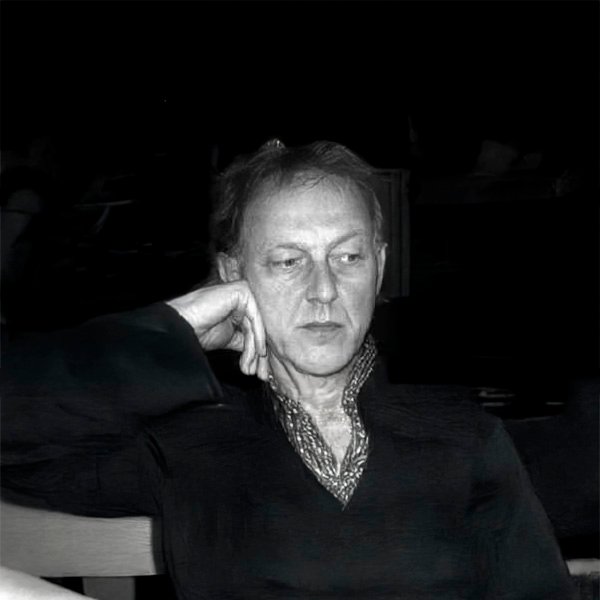
Professor Chossudovsky joined TFF as adviser in 1999.

Share

Leave a Reply

Your email address will not be published. Required fields are marked *

Related Posts

Gandhi, Arun. Lord Richard Attenborough. Kasturba: a lifeNew Delhi: Penguin Books Ltd., 2000.315 pp, 295 Indian Rs, US $22.51 January 29, 2002 Arun Gandhi, grandson to Mohandas and Kasturba, has written a thorough account of Kasturba’s life. Arun begins with a description of Kasturba’s childhood in Porbandar in the late1800s, before she met Mohandas. By having chosen to embark on difficult research into his grandmother’s life, including her first years which are not well-documented, Arun ensures that the reader receives an intimate and life-long portrait of this amazing woman. Kasturba is presented as a lively woman &endash; obedient, yet with a mind of her own. As the relationship between Kasturba and Mohandas developed, Arun maintains that Kasturba’s influence over Mohandas in her own quiet way also grew, to which some of Mohandas’ writings also attest.  Arun paints a vivid picture of the beginnings of Mohandas’ non-violence movement in South Africa, a...
In response to an urgent Appeal from all the living Nobel Peace Prize Laureates, the General Assembly of the United Nations, on November 1998, unanimously declared the first decade of the twenty-first century to be The Decade for a Culture of Peace and Nonviolence. While people are naturally concerned about the amount of violence in our world and how it threatens our future, the Nobel Laureates are right to remind us of the potential of nonviolence and our calling to build a culture of peace and nonviolence.  The twentieth century is instructive in the way that the philosophy and practice of nonviolence have begun to flourish and in the way that nonviolent movements have had an exponential growth across the world. Mohandas Gandhi and Martin Luther King, Jr. are the most famous nonviolent leaders but many have built upon the paths they charted as in country after country, tyrannies and...
We know that medical personnel have failed to report to higher authorities wounds that were clearly caused by torture and that they have neglected to take steps to interrupt this torture. In addition, they have turned over prisoners’ medical records to interrogators who could use them to exploit the prisoners’ weaknesses or vulnerabilities. We have not yet learned the extent of medical involvement in delaying and possibly falsifying the death certificates of prisoners who have been killed by torturers. A May 22 article on Abu Ghraib in the New York Times states that “much of the evidence of abuse at the prison came from medical documents” and that records and statements “showed doctors and medics reporting to the area of the prison where the abuse occurred several times to stitch wounds, tend to collapsed prisoners or see patients with bruised or reddened genitals.” http://www.truthout.org/docs_04/080604J.shtml#16 According to the article, two doctors who...

Recent Articles

Gandhi, Arun. Lord Richard Attenborough. Kasturba: a lifeNew Delhi: Penguin Books Ltd., 2000.315 pp, 295 Indian Rs, US $22.51 January 29, 2002 Arun Gandhi, grandson to Mohandas and Kasturba, has written a thorough account of Kasturba’s life. Arun begins with a description of Kasturba’s childhood in Porbandar in the late1800s, before she met Mohandas. By having chosen to embark on difficult research into his grandmother’s life, including her first years which are not well-documented, Arun ensures that the reader receives an intimate and life-long portrait of this amazing woman. Kasturba is presented as a lively woman &endash; obedient, yet with a mind of her own. As the relationship between Kasturba and Mohandas developed, Arun maintains that Kasturba’s influence over Mohandas in her own quiet way also grew, to which some of Mohandas’ writings also attest.  Arun paints a vivid picture of the beginnings of Mohandas’ non-violence movement in South Africa, a...
In response to an urgent Appeal from all the living Nobel Peace Prize Laureates, the General Assembly of the United Nations, on November 1998, unanimously declared the first decade of the twenty-first century to be The Decade for a Culture of Peace and Nonviolence. While people are naturally concerned about the amount of violence in our world and how it threatens our future, the Nobel Laureates are right to remind us of the potential of nonviolence and our calling to build a culture of peace and nonviolence.  The twentieth century is instructive in the way that the philosophy and practice of nonviolence have begun to flourish and in the way that nonviolent movements have had an exponential growth across the world. Mohandas Gandhi and Martin Luther King, Jr. are the most famous nonviolent leaders but many have built upon the paths they charted as in country after country, tyrannies and...
We know that medical personnel have failed to report to higher authorities wounds that were clearly caused by torture and that they have neglected to take steps to interrupt this torture. In addition, they have turned over prisoners’ medical records to interrogators who could use them to exploit the prisoners’ weaknesses or vulnerabilities. We have not yet learned the extent of medical involvement in delaying and possibly falsifying the death certificates of prisoners who have been killed by torturers. A May 22 article on Abu Ghraib in the New York Times states that “much of the evidence of abuse at the prison came from medical documents” and that records and statements “showed doctors and medics reporting to the area of the prison where the abuse occurred several times to stitch wounds, tend to collapsed prisoners or see patients with bruised or reddened genitals.” http://www.truthout.org/docs_04/080604J.shtml#16 According to the article, two doctors who...

TFF on Substack

Discover more from TFF Transnational Foundation & Jan Oberg.

Most Popular

Gandhi, Arun. Lord Richard Attenborough. Kasturba: a lifeNew Delhi: Penguin Books Ltd., 2000.315 pp, 295 Indian Rs, US $22.51 January 29, 2002 Arun Gandhi, grandson to Mohandas and Kasturba, has written a thorough account of Kasturba’s life. Arun begins with a description of Kasturba’s childhood in Porbandar in the late1800s, before she met Mohandas. By having chosen to embark on difficult research into his grandmother’s life, including her first years which are not well-documented, Arun ensures that the reader receives an intimate and life-long portrait of this amazing woman. Kasturba is presented as a lively woman &endash; obedient, yet with a mind of her own. As the relationship between Kasturba and Mohandas developed, Arun maintains that Kasturba’s influence over Mohandas in her own quiet way also grew, to which some of Mohandas’ writings also attest.  Arun paints a vivid picture of the beginnings of Mohandas’ non-violence movement in South Africa, a...
In response to an urgent Appeal from all the living Nobel Peace Prize Laureates, the General Assembly of the United Nations, on November 1998, unanimously declared the first decade of the twenty-first century to be The Decade for a Culture of Peace and Nonviolence. While people are naturally concerned about the amount of violence in our world and how it threatens our future, the Nobel Laureates are right to remind us of the potential of nonviolence and our calling to build a culture of peace and nonviolence.  The twentieth century is instructive in the way that the philosophy and practice of nonviolence have begun to flourish and in the way that nonviolent movements have had an exponential growth across the world. Mohandas Gandhi and Martin Luther King, Jr. are the most famous nonviolent leaders but many have built upon the paths they charted as in country after country, tyrannies and...
We know that medical personnel have failed to report to higher authorities wounds that were clearly caused by torture and that they have neglected to take steps to interrupt this torture. In addition, they have turned over prisoners’ medical records to interrogators who could use them to exploit the prisoners’ weaknesses or vulnerabilities. We have not yet learned the extent of medical involvement in delaying and possibly falsifying the death certificates of prisoners who have been killed by torturers. A May 22 article on Abu Ghraib in the New York Times states that “much of the evidence of abuse at the prison came from medical documents” and that records and statements “showed doctors and medics reporting to the area of the prison where the abuse occurred several times to stitch wounds, tend to collapsed prisoners or see patients with bruised or reddened genitals.” http://www.truthout.org/docs_04/080604J.shtml#16 According to the article, two doctors who...
Read More
Imagen-thumbnail-The-Transnational-1
Gandhi, Arun. Lord Richard Attenborough. Kasturba: a lifeNew Delhi: Penguin Books Ltd., 2000.315 pp, 295 Indian Rs, US $22.51 January 29, 2002 Arun Gandhi, grandson to Mohandas and Kasturba, has written a thorough account of Kasturba’s life. Arun begins with a description of Kasturba’s childhood in Porbandar in the late1800s, before she met Mohandas. By having chosen to embark on difficult research into his grandmother’s life, including her first years which are not well-documented, Arun ensures that the reader receives an intimate and life-long portrait of this amazing woman. Kasturba is presented as a lively woman &endash; obedient, yet with a mind of her own. As the relationship between Kasturba and Mohandas developed, Arun maintains that Kasturba’s influence over Mohandas in her own quiet way also grew, to which some of Mohandas’ writings also attest.  Arun paints a vivid picture of the beginnings of Mohandas’ non-violence movement in South Africa, a...
Imagen-thumbnail-The-Transnational-1
In response to an urgent Appeal from all the living Nobel Peace Prize Laureates, the General Assembly of the United Nations, on November 1998, unanimously declared the first decade of the twenty-first century to be The Decade for a Culture of Peace and Nonviolence. While people are naturally concerned about the amount of violence in our world and how it threatens our future, the Nobel Laureates are right to remind us of the potential of nonviolence and our calling to build a culture of peace and nonviolence.  The twentieth century is instructive in the way that the philosophy and practice of nonviolence have begun to flourish and in the way that nonviolent movements have had an exponential growth across the world. Mohandas Gandhi and Martin Luther King, Jr. are the most famous nonviolent leaders but many have built upon the paths they charted as in country after country, tyrannies and...
Imagen-thumbnail-The-Transnational-1
We know that medical personnel have failed to report to higher authorities wounds that were clearly caused by torture and that they have neglected to take steps to interrupt this torture. In addition, they have turned over prisoners’ medical records to interrogators who could use them to exploit the prisoners’ weaknesses or vulnerabilities. We have not yet learned the extent of medical involvement in delaying and possibly falsifying the death certificates of prisoners who have been killed by torturers. A May 22 article on Abu Ghraib in the New York Times states that “much of the evidence of abuse at the prison came from medical documents” and that records and statements “showed doctors and medics reporting to the area of the prison where the abuse occurred several times to stitch wounds, tend to collapsed prisoners or see patients with bruised or reddened genitals.” http://www.truthout.org/docs_04/080604J.shtml#16 According to the article, two doctors who...
Imagen-thumbnail-The-Transnational-1
Jan Øberg behandler i artiklen en lang række faktorer, som ligger til grund for den måde vores samfund er organiseret på – og derfor også for konflikter. Artiklen introducerer således sammenhængen mellem familien, foreninger, regeringer, NGO’ er, nation, stat, nationalstat og alliancer for på denne måde bedre at kunne forstå konflikter og i sidste ende blive klogere mht. at løse disse. Øberg, der er fortaler for global bevidsthed, hvilket skal ses i lyset af den øgede globalisering, skelner mellem kulturkamp og kulturdialog. Endelig behandles begrebet magt og magtesløshed: giver magt ret til at udøve magt – fordi man mener at have ret? Litteraturliste og arbejdsspørgsmål efter artiklen. Ordene vi bruger om verden I satellitperspektiv kan man godt tale om den menneskelige familie eller menneskeheden. Udtrykket understreger, at der eksisterer – eller burde eksistere – et fællesskab fordi vi alle er mennesker og sammen bebor denne klode og ingen anden. Og...
Imagen-thumbnail-The-Transnational-1
Kapitel 2: Forskellige sider af Europa og USA…fortsat 2.5 Militære relationer I forbifarten har vi allerede sagt nogle ting om USA’s militære situation. Kig lige en gang til på afsnit 2.3. Nu skal vi uddybe det militære forhold mellem USA og EU. Der er en række ligheder mellem visse europæiske landes og USA’s militær. Næsten alle er med på en eller anden måde i NATO, direkte som medlem – selv Island, der ikke har et forsvar – eller indirekte i Partnerskab for Fred. USA og Canada er med i OSCE (på dansk OSSE), Organisationen for Sikkerhed og Samarbejde i Europa, der tæller over 50 lande. USA samt England og Frankrig er kernevåbenstater og de har styrker til intervention langt borte fra hjemlandet, om end USA’s er tifold større. Alle har også en omfattende våbeneksport og bruger den som et middel til at tjene penge og få loyale venner på, det...
Imagen-thumbnail-The-Transnational-1
Background Christian Harleman and Jan Oberg conducted a fact-finding mission to Burundi between November 26 and December 6, 2003. (See websites about the country here). The first TFF mission took place in March 1999. Unfortunately, since then it has not been practically possible to implement the co-operation with Burundi’s Ministry of Education and Burundian NGOs that was planned at the time. The 2003 mission had three purposes. First, to do fact-finding in general about the situation and, in particular, the progress under the Arusha Peace Process. Second, to explore the possibilities for co-operation between the government and relevant NGOs on the one hand and TFF on the other, in order to develop and deepen the existing competence in fields such as conflict-understanding, reconciliation and peace-building. Finally, third, to find out whether it would be possible, in co-operation with the Swedish Rescue Services Agency (Statens Räddningsverk), to establish a health care unit that...
