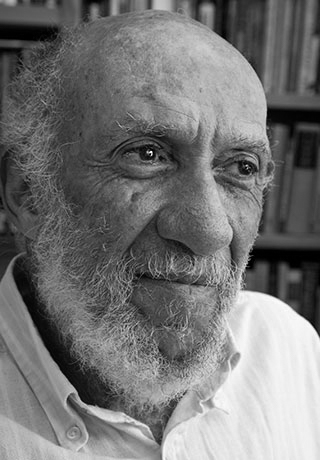
PressInfo #237 - R Falk on Iran, Israel and war

Israel,
Iran, and the
Future of the Middle East


PressInfo #
232

 March
28, 2006

By

Richard
Falk
,
TFF Associate*


Also posted by JUST
International Movement for a Just World
Vol. 6, # 2, 2006

See Associate David
Krieger’s TFF PressInfo 236 – a different angle on the
same issues


There is a dangerous game underway
in the Middle East that could erupt at any point in the
form of a devastating regional war if urgent diplomatic
steps to head it off are not taken immediately. There are
growing signs that Israel is pushing the United States to
attack Iran’s nuclear facilities partly by threatening
(or bluffing) to attack itself and partly by using its
leverage in Washington to pressure the U.S. Government to
harden their stance on Iran’s nuclear program.

Among the warning signs are
dramatic public statements by Israeli military and
political leaders, including Sharon, the Defense
Minister, Shaul Mofaz, the Chief of Staff, Daniel Halutz,
all to the effect that Iran poses an intolerable threat
to Israeli security that cannot be resolved
diplomatically, calling for sanctions as a first step,
which would almost certainly would not be effective in
curbing Tehran’s nuclear ambitions, and must be followed
by air strikes.

The minimum goal would be to
destroy Iran’s nuclear facilities, achieving results
comparable to what was done to derail Iraq’s nuclear
program in 1981 by an Israeli air strike directed at the
Osirak reactor, which was then the core of the Iraqi
program. The attack appeared to have achieved its
purpose, international reactions were not very damaging
to Israel, and there were no serious regional
repercussions.

So it can be asked, why be so
worried about a similar attack in 2006 this time directed
at Iran’s nuclear facilities?

There are indications that Iran is
going ahead with its program, and at the very least is
keeping its options open with respect to whether nuclear
weapons will be developed in the years ahead.
Reassurances of peaceful intentions by Iran are not
reliable, especially if it is recalled that such current
nuclear weapons states as Israel, India, and Pakistan all
issued denials of any intention to develop
weapons.

In particular, to this day Israel
has not officially acknowledged possession, although its
intention to develop weapons, and to this day Israel has
not officially acknowledged possession, although it is
generally understood that their nuclear arsenal contains
at least 100 nuclear warheads, and in all probability, a
number closer to 400, along with ample means of delivery
to any target within the region.

In this sense, there is certainly a
strong possibility, if other things do not change, Iran
might have nuclear weapons in the future, but almost
certainly not before 2008, and probably not until 2015,
and even then not in a form or quantity that would make
remotely feasible their offensive use.

Naturally, the recent extremely
inflammatory and provocative statements of Iran’s
president, Mahmoud Ahmadinejad, would agitate the
security concerns of any state, much less a state that
tends to overreact to perceived security dangers and
insults in the manner of Israel.

It should be remembered that Israel
initiated preemptive wars in 1967 and 1982 long before
George W. Bush had ever heard of such an idea, and has on
numerous occasions struck across its borders to destroy
or punish adversaries at times and in ways of its own
choosing. So when Ahmadinejad insists that the Holocaust
was fantasy, that Israel has no place in the region, and
should be relocated in Europe, he seems to be taunting
Israel to respond militarily, which seems absurdly
reckless.

But Israel tends to calculate costs
carefully whenever its security is at stake, and a sober
assessment would seem to suggest that launching Israeli
air strikes against Iran at this time would not be worth
the risks.

First of all, the threat to the
extent real is remote, and far fetched. Secondly, Israel
has an ample deterrent force such that any major future
Iranian attack would amount to collective suicide without
any national benefits. Thirdly, unlike the 1981 attack on
Osirak, the Iranian nuclear facilities are dispersed,
multiple, defended, and located in underground bunkered
areas.

Fourthly, Iran currently possesses
the means to launch a devastating retaliation if
attacked, especially via Shahab-3 missiles that could
reach targets in Israel with reasonable accuracy.
Fifthly, Iran has other options that could lead to a
regional war, and possibly even a world war, including
intervening in the Iraq situation and escalating support
for anti-Israeli resistance forces in Palestinian
territories. Sixthly, an attack by Israel on Iran would
almost certainly strengthen Islamic tendencies throughout
the region as well as put intense pressure on Arab
governments to react strongly against Israel.

We can assume that Israelis are
aware of these risks, which suggests that their policies
may be other than their appearances. Their real effort
may be to get Washington to take the lead diplomatically,
and then, militarily, allowing Israel to use its
incredible influence in the U.S. Congress and with the
Bush administration, to induce an American military
strike on Iran in the coming months.

Aside from being pushed by Israel,
which is clearly happening even openly if we assume that
the strident chorus of organized Jewish lobbying for a
hard line on Iran is responsive to directives from Tel
Aviv, there may be members of the Bush/Cheney leadership
that welcome being pushed by Israel so as to pursue a
policy line that will divert attention from an unpopular
failure in Iraq. It should be recalled that Bush, senior,
bribed Israel to stay on the sidelines in the Gulf War of
1991, while the U.S., with UN blessings, restored
Kuwait’s sovereignty and removed Israel’s number one
security threat at the time.

There is another possibility, which
is linked to Israeli domestic politics. To raise the
specter of a looming Iranian threat, especially given
Ahmadinejad’s inflaming remarks, is to help divert
attention from a deepening social crisis in Israel
associated with increasing poverty, unemployment, and
growing disparities in income and wealth among Israelis.
With national elections in Israel for March it is
obviously tempting to make Israelis disposed to be
preoccupied with security forget about distress on the
home front, and elect a leader who has a proven record of
toughness with respect to security and foreign
policy.

This combination of developments
concerns Turkey, as well. There are indications that
American officials have been visiting Ankara in recent
weeks to explore the prospects for Turkish cooperation if
military action is taken. Supposedly, as well, backroom
bargains were discussed, including giving Turkey a free
hand in dealing with PKK bases and deployments in Iraq,
and possibly Iran.

Of course, any attack on Iran,
especially if Turkey is complicit, will produce some
dangerous uncertainties, as well as likely be a decisive
setback for improving Turkish relations with the Muslim
world. In some sense, it would involve a clear Turkish
decision to give priority to its strategic relationship
with the United States as compared to its cultural and
geographic affinities with countries in its region. It
would also likely antagonize most of Europe, further
dimming Turkey’s chances of entering the European Union
in the next decade. As well, Turkish complicity in an
attack on Iran would also likely intensify the already
unstable circumstance in the region, further encourage
anti-secular religious and political extremism, and
expand the scope and severity of warfare throughout the
Middle East.

In the end, the prospect of
military action against Iran at this point is
frightening. The uncertainties are great, and could set
off a chain reaction that culminates in a truly
inter-civilizational war. Beyond this, there is no
Iranian threat that justifies any serious consideration
of such a high risk response.

To initiate an aggressive war in
such a setting would further weaken both the United
Nations and international law, which have been badly
damaged by the unilateral, non-defensive invasion and
occupation of Iraq. Let us hope that saner, moderate
heads prevail or that this buildup toward war is a bluff
that is motivated by domestic politics in Israel and the
United States, given an appearance of credibility due to
Ahmadinejad’s irresponsible posturing.

Would
you be reading this now
if it were not useful to you?
Get
more quality articles in the
future

There are even wider issues at
stake.

Should the Middle East, or for that
matter the world, regard nuclear apartheid as normal,
that is, a select group of states with a nuclear weapons
entitlement while others that seek such weaponry are
treated as ‘rogue states’ subject to military
intervention? Israel, in particular, seems mainly
motivated to ensure that no regional powers acquire
nuclear weapons to challenge its regional hegemony that
relies to a significant extent on its monopoly of nuclear
weaponry.

In this respect, the Israeli cover
story based on avoiding a remote future vulnerability
seems mainly designed to divert attention from the real
concern. After all, even if Iran were to acquire nuclear
weapons some years hence, its capabilities would be
dwarfed by those of Israel, which would undoubtedly take
further steps to achieve continuing nuclear dominance.

In these circumstances Iran would
certainly be deterred, if not totally intimidated, which
is one of the reasons that Tehran might eventually decide
after all to forego the weapons option. More worrisome
for Israel is the prospect that Iran might decide that it
would acquire a few nuclear warheads, not to threaten
Israel, but to deter Israel’s discretion to wage wars of
choice in the region.

* Professor Emeritus
Richard Falk is one of the world’s leading analysts of
International politics. He is a member of JUST ‘s
International Advisory Panel.


Get
free articles & updates


gratis artikler og info fra TFF

© TFF and the author 2006


From:

Message and your name


 You are welcome to
reprint, copy, archive, quote or re-post this item, but
please retain the source.


Would
you – or a friend – like to receive TFF PressInfo by
email?


S P E C
I A L S
&
F O R U M S

Iraq
Forum

Gandhi
& India

Burundi
Forum

Photo
galleries

Nonviolence
Forum

TFF
News Navigator

Become
a TFF Friend

TFF
Online Bookstore

Reconciliation
project

EU
conflict-management

Make
an online donation

Foundation
update and more

TFF
Peace Training Network

Make
a donation via bank or postal
giro

Basic
menu below


Professor Falk became an adviser to TFF when it was established in 1985.

Share

Related Posts

We know that medical personnel have failed to report to higher authorities wounds that were clearly caused by torture and that they have neglected to take steps to interrupt this torture. In addition, they have turned over prisoners’ medical records to interrogators who could use them to exploit the prisoners’ weaknesses or vulnerabilities. We have not yet learned the extent of medical involvement in delaying and possibly falsifying the death certificates of prisoners who have been killed by torturers. A May 22 article on Abu Ghraib in the New York Times states that “much of the evidence of abuse at the prison came from medical documents” and that records and statements “showed doctors and medics reporting to the area of the prison where the abuse occurred several times to stitch wounds, tend to collapsed prisoners or see patients with bruised or reddened genitals.” http://www.truthout.org/docs_04/080604J.shtml#16 According to the article, two doctors who...
Jan Øberg behandler i artiklen en lang række faktorer, som ligger til grund for den måde vores samfund er organiseret på – og derfor også for konflikter. Artiklen introducerer således sammenhængen mellem familien, foreninger, regeringer, NGO’ er, nation, stat, nationalstat og alliancer for på denne måde bedre at kunne forstå konflikter og i sidste ende blive klogere mht. at løse disse. Øberg, der er fortaler for global bevidsthed, hvilket skal ses i lyset af den øgede globalisering, skelner mellem kulturkamp og kulturdialog. Endelig behandles begrebet magt og magtesløshed: giver magt ret til at udøve magt – fordi man mener at have ret? Litteraturliste og arbejdsspørgsmål efter artiklen. Ordene vi bruger om verden I satellitperspektiv kan man godt tale om den menneskelige familie eller menneskeheden. Udtrykket understreger, at der eksisterer – eller burde eksistere – et fællesskab fordi vi alle er mennesker og sammen bebor denne klode og ingen anden. Og...
Kapitel 2: Forskellige sider af Europa og USA…fortsat 2.5 Militære relationer I forbifarten har vi allerede sagt nogle ting om USA’s militære situation. Kig lige en gang til på afsnit 2.3. Nu skal vi uddybe det militære forhold mellem USA og EU. Der er en række ligheder mellem visse europæiske landes og USA’s militær. Næsten alle er med på en eller anden måde i NATO, direkte som medlem – selv Island, der ikke har et forsvar – eller indirekte i Partnerskab for Fred. USA og Canada er med i OSCE (på dansk OSSE), Organisationen for Sikkerhed og Samarbejde i Europa, der tæller over 50 lande. USA samt England og Frankrig er kernevåbenstater og de har styrker til intervention langt borte fra hjemlandet, om end USA’s er tifold større. Alle har også en omfattende våbeneksport og bruger den som et middel til at tjene penge og få loyale venner på, det...

Recent Articles

We know that medical personnel have failed to report to higher authorities wounds that were clearly caused by torture and that they have neglected to take steps to interrupt this torture. In addition, they have turned over prisoners’ medical records to interrogators who could use them to exploit the prisoners’ weaknesses or vulnerabilities. We have not yet learned the extent of medical involvement in delaying and possibly falsifying the death certificates of prisoners who have been killed by torturers. A May 22 article on Abu Ghraib in the New York Times states that “much of the evidence of abuse at the prison came from medical documents” and that records and statements “showed doctors and medics reporting to the area of the prison where the abuse occurred several times to stitch wounds, tend to collapsed prisoners or see patients with bruised or reddened genitals.” http://www.truthout.org/docs_04/080604J.shtml#16 According to the article, two doctors who...
Jan Øberg behandler i artiklen en lang række faktorer, som ligger til grund for den måde vores samfund er organiseret på – og derfor også for konflikter. Artiklen introducerer således sammenhængen mellem familien, foreninger, regeringer, NGO’ er, nation, stat, nationalstat og alliancer for på denne måde bedre at kunne forstå konflikter og i sidste ende blive klogere mht. at løse disse. Øberg, der er fortaler for global bevidsthed, hvilket skal ses i lyset af den øgede globalisering, skelner mellem kulturkamp og kulturdialog. Endelig behandles begrebet magt og magtesløshed: giver magt ret til at udøve magt – fordi man mener at have ret? Litteraturliste og arbejdsspørgsmål efter artiklen. Ordene vi bruger om verden I satellitperspektiv kan man godt tale om den menneskelige familie eller menneskeheden. Udtrykket understreger, at der eksisterer – eller burde eksistere – et fællesskab fordi vi alle er mennesker og sammen bebor denne klode og ingen anden. Og...
Kapitel 2: Forskellige sider af Europa og USA…fortsat 2.5 Militære relationer I forbifarten har vi allerede sagt nogle ting om USA’s militære situation. Kig lige en gang til på afsnit 2.3. Nu skal vi uddybe det militære forhold mellem USA og EU. Der er en række ligheder mellem visse europæiske landes og USA’s militær. Næsten alle er med på en eller anden måde i NATO, direkte som medlem – selv Island, der ikke har et forsvar – eller indirekte i Partnerskab for Fred. USA og Canada er med i OSCE (på dansk OSSE), Organisationen for Sikkerhed og Samarbejde i Europa, der tæller over 50 lande. USA samt England og Frankrig er kernevåbenstater og de har styrker til intervention langt borte fra hjemlandet, om end USA’s er tifold større. Alle har også en omfattende våbeneksport og bruger den som et middel til at tjene penge og få loyale venner på, det...

TFF on Substack

Discover more from TFF Transnational Foundation & Jan Oberg.

Most Popular

We know that medical personnel have failed to report to higher authorities wounds that were clearly caused by torture and that they have neglected to take steps to interrupt this torture. In addition, they have turned over prisoners’ medical records to interrogators who could use them to exploit the prisoners’ weaknesses or vulnerabilities. We have not yet learned the extent of medical involvement in delaying and possibly falsifying the death certificates of prisoners who have been killed by torturers. A May 22 article on Abu Ghraib in the New York Times states that “much of the evidence of abuse at the prison came from medical documents” and that records and statements “showed doctors and medics reporting to the area of the prison where the abuse occurred several times to stitch wounds, tend to collapsed prisoners or see patients with bruised or reddened genitals.” http://www.truthout.org/docs_04/080604J.shtml#16 According to the article, two doctors who...
Jan Øberg behandler i artiklen en lang række faktorer, som ligger til grund for den måde vores samfund er organiseret på – og derfor også for konflikter. Artiklen introducerer således sammenhængen mellem familien, foreninger, regeringer, NGO’ er, nation, stat, nationalstat og alliancer for på denne måde bedre at kunne forstå konflikter og i sidste ende blive klogere mht. at løse disse. Øberg, der er fortaler for global bevidsthed, hvilket skal ses i lyset af den øgede globalisering, skelner mellem kulturkamp og kulturdialog. Endelig behandles begrebet magt og magtesløshed: giver magt ret til at udøve magt – fordi man mener at have ret? Litteraturliste og arbejdsspørgsmål efter artiklen. Ordene vi bruger om verden I satellitperspektiv kan man godt tale om den menneskelige familie eller menneskeheden. Udtrykket understreger, at der eksisterer – eller burde eksistere – et fællesskab fordi vi alle er mennesker og sammen bebor denne klode og ingen anden. Og...
Kapitel 2: Forskellige sider af Europa og USA…fortsat 2.5 Militære relationer I forbifarten har vi allerede sagt nogle ting om USA’s militære situation. Kig lige en gang til på afsnit 2.3. Nu skal vi uddybe det militære forhold mellem USA og EU. Der er en række ligheder mellem visse europæiske landes og USA’s militær. Næsten alle er med på en eller anden måde i NATO, direkte som medlem – selv Island, der ikke har et forsvar – eller indirekte i Partnerskab for Fred. USA og Canada er med i OSCE (på dansk OSSE), Organisationen for Sikkerhed og Samarbejde i Europa, der tæller over 50 lande. USA samt England og Frankrig er kernevåbenstater og de har styrker til intervention langt borte fra hjemlandet, om end USA’s er tifold større. Alle har også en omfattende våbeneksport og bruger den som et middel til at tjene penge og få loyale venner på, det...
Read More
Imagen-thumbnail-The-Transnational-1
We know that medical personnel have failed to report to higher authorities wounds that were clearly caused by torture and that they have neglected to take steps to interrupt this torture. In addition, they have turned over prisoners’ medical records to interrogators who could use them to exploit the prisoners’ weaknesses or vulnerabilities. We have not yet learned the extent of medical involvement in delaying and possibly falsifying the death certificates of prisoners who have been killed by torturers. A May 22 article on Abu Ghraib in the New York Times states that “much of the evidence of abuse at the prison came from medical documents” and that records and statements “showed doctors and medics reporting to the area of the prison where the abuse occurred several times to stitch wounds, tend to collapsed prisoners or see patients with bruised or reddened genitals.” http://www.truthout.org/docs_04/080604J.shtml#16 According to the article, two doctors who...
Imagen-thumbnail-The-Transnational-1
Jan Øberg behandler i artiklen en lang række faktorer, som ligger til grund for den måde vores samfund er organiseret på – og derfor også for konflikter. Artiklen introducerer således sammenhængen mellem familien, foreninger, regeringer, NGO’ er, nation, stat, nationalstat og alliancer for på denne måde bedre at kunne forstå konflikter og i sidste ende blive klogere mht. at løse disse. Øberg, der er fortaler for global bevidsthed, hvilket skal ses i lyset af den øgede globalisering, skelner mellem kulturkamp og kulturdialog. Endelig behandles begrebet magt og magtesløshed: giver magt ret til at udøve magt – fordi man mener at have ret? Litteraturliste og arbejdsspørgsmål efter artiklen. Ordene vi bruger om verden I satellitperspektiv kan man godt tale om den menneskelige familie eller menneskeheden. Udtrykket understreger, at der eksisterer – eller burde eksistere – et fællesskab fordi vi alle er mennesker og sammen bebor denne klode og ingen anden. Og...
Imagen-thumbnail-The-Transnational-1
Kapitel 2: Forskellige sider af Europa og USA…fortsat 2.5 Militære relationer I forbifarten har vi allerede sagt nogle ting om USA’s militære situation. Kig lige en gang til på afsnit 2.3. Nu skal vi uddybe det militære forhold mellem USA og EU. Der er en række ligheder mellem visse europæiske landes og USA’s militær. Næsten alle er med på en eller anden måde i NATO, direkte som medlem – selv Island, der ikke har et forsvar – eller indirekte i Partnerskab for Fred. USA og Canada er med i OSCE (på dansk OSSE), Organisationen for Sikkerhed og Samarbejde i Europa, der tæller over 50 lande. USA samt England og Frankrig er kernevåbenstater og de har styrker til intervention langt borte fra hjemlandet, om end USA’s er tifold større. Alle har også en omfattende våbeneksport og bruger den som et middel til at tjene penge og få loyale venner på, det...
Imagen-thumbnail-The-Transnational-1
Background Christian Harleman and Jan Oberg conducted a fact-finding mission to Burundi between November 26 and December 6, 2003. (See websites about the country here). The first TFF mission took place in March 1999. Unfortunately, since then it has not been practically possible to implement the co-operation with Burundi’s Ministry of Education and Burundian NGOs that was planned at the time. The 2003 mission had three purposes. First, to do fact-finding in general about the situation and, in particular, the progress under the Arusha Peace Process. Second, to explore the possibilities for co-operation between the government and relevant NGOs on the one hand and TFF on the other, in order to develop and deepen the existing competence in fields such as conflict-understanding, reconciliation and peace-building. Finally, third, to find out whether it would be possible, in co-operation with the Swedish Rescue Services Agency (Statens Räddningsverk), to establish a health care unit that...
Imagen-thumbnail-The-Transnational-1
Former UN Under-Secretary-General with special responsibility for peacekeeping operations TFF associate August 20, 2003 YRINGHAM, Mass.- Ralph Bunche was born in Detroit 100 years ago today (August 7, 2003). His passionate determination to get results did not extend to seeking credit for them, so his work is better remembered than he is. Of all his many accomplishments – civil rights pioneer, Nobel Peace Prize laureate, chief drafter of two chapters of the United Nations charter, negotiator of the armistices that ended the first Arab-Israeli war – Bunche said he was proudest of developing what came to be known as peacekeeping. Setting up the United Nations Truce Supervision Organization in Palestine in 1948, Bunche formulated the principles that have governed peacekeeping operations ever since. In the 1956 Suez crisis, working with Secretary General Dag Hammarskjold and Lester Pearson of Canada, he organized the first peacekeeping force, the United Nations Emergency Force...
– nästan 11 månader Till Sofia nästan 11 månader # 1  Till Sofias huvudsida Till alla Privata Foto-Serier