
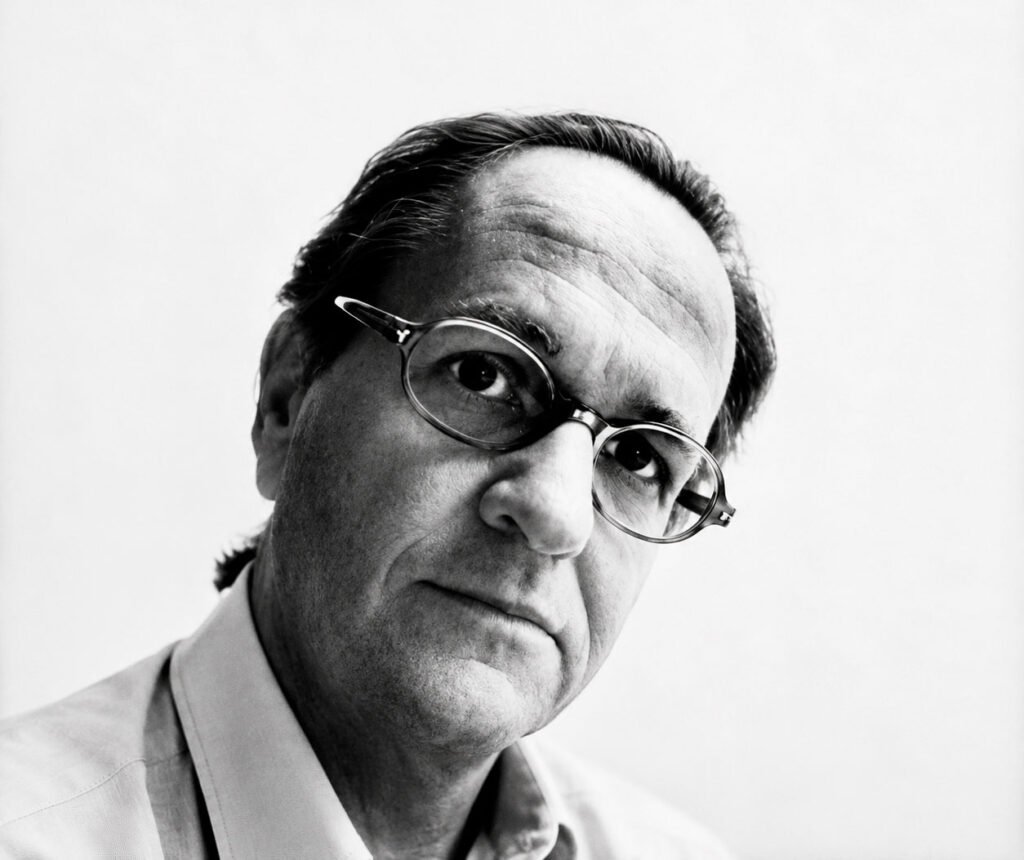
TFF PressInfo # 438: Aleppo's Liberation one year ago - Anybody ashamed today?

, marks the anniversary of the liberation – the West called it fall – of Aleppo in Syria. What happened is conveniently forgotten today by the West.

Some of us can’t and won’t forget what was both world, regional and local history.

Important for Syria, for the West and for the future world order – for at least 5 reasons.

1. The Western mainstream media’s deceptive – constructed, ignorant, or both – narrative since 2011 was debunked.

Perspectives that media and political decision-makers deliberately omitted (remember omitted stuff is more important than fake):

• History and the colonialists’ role in Syria.
• The immense complexity of the Syrian society.
• Syria as a 7000 year-old civilisation and as end of the Silk Road.
• The decades-long conflicts underlying the violence, since CIA’s coup in 1949.
• The Western-driven regime change policies years since before 2011.
• Other causes of the conflicts than “Assad the dictator and his regime” such as environmental crisis, oil and gas, and its being partly occupied since 1967 by Israel.
• That nothing of the conflict complexity can de facto be reduced to a matter of one man’s role – like it couldn’t with Milosevic (now exonerated), Saddam, or Ghadafi;
• That this may have been a civil war for about a week but then almost 7 years of international aggression by thousands of foreign groups, Western governments/arm suppliers and their Saudi-led allies.
• Syria’s right under such circumstances to self-defence according to Article 51 of the UN Charter.
• The major role in the utter destruction of Syria played by NATO countries, Turkey particularly when it comes to Aleppo, and Western allies such as Saudi Arabia and the Gulf states; all was simply ”the dictator/regime killing his own people”…
• That Russia and Iran was the only foreign powers legitimately present according to international law.
• That the UN was sidelined – again – and tasked with the impossible role of making peace out of such member state policies.
• The media interest in Syria disappeared immediately after Aleppo’s liberation as if orchestrated by one conductor. Silence.
• And Facebook and Google Search changes algorithms…

The media coverage stopped there and then – like musicians under a conductor, obeying the tiniest move.

2. It marked the end of the West’s attempt at regime change since 2012

It had started formally on Dec 12, 2012 – on the day four years earlier, in Marrakesh. “Friends (!) of Syria” declared Assad’s government illegitimate and set up a Syrian National Council – without, of course, asking the Syrian people it was supposed to represent. Here’s AlJazeera’s/AFP’s coverage of that cruel decision.

3. It was the turning point in the international aggression on Syria

With Aleppo lost, the RIOTs – Rebels-Insurgency-Opposition-Terrorists – lost momentum. The Free-this-and-that ran away, dispersed or killed each other. And the West’s beloved White Helmets – with their stolen name doing humanitarian work only among terrorists – were nowhere to be seen in Aleppo on December 12.

Anybody in a NATO Ministry of Foreign Affairs, “intelligence agency” or state-financed research institute could have found out on the Internet what that organisation in reality was. They did not. For obvious reasons. But I could and did in November 2016.

4. One more Western interventionist war lost

After Vietnam, Somalia, Yugoslavia, Afghanistan, Iraq, Libya etc. this was one more international law-defying military intervention to impose – allegedly – the best of the Western values in its Mission Civilisatrice but predictably lost, one more contribution to the decline and fall of the West, the US Empire and NATO in particular. And one more positioning on the wrong side of history.

5. One more example of the inability to feel empathy with the human suffering in the wake of our policies.

300 000-400 000 innocent civilians dead, millions displaced and barely surviving outside Syria. History and civilisation destroyed directly or by militant, terrorist proxies – Western supported RIOTs.

And civil society of course was never a player in any negotiations – only the killing groups and countries have met at tables: Complete conflict and peace illiteracy at best or a cruel wish to just destroy and conquer.

Also, it never occurred to the media and politics that you could side with the innocent, non-killing Syrian people. No, you either sided with “the regime” or with the West and its allies against it.

If truth is the first casualty in war, conflict understanding and respect for complexity is the second and third. Our own complicity the fourth.

Even if President Assad had been the worst dictator on earth since Hitler, nothing can justify our – US/NATO countries – complicity in human suffering of such proportions.

Has any Western politician or government expressed regret?

Has any leading media apologised for its coverage?

Did the so-called Left, labour unions or workers around the world express solidarity with the 30 000 workers and their families whose lives were destroyed in Aleppo’s Sheikh Najjar Industrial Zone that produced 5% of the industrial goods in Syria and was the second largest industrial zone in the Middle East?

Does anyone talk about reconciliation with Syria, about a History and Reconciliation Commission for all the war and not just some politicised “Commissions” to investigate single attacks – so the blame game can go on?

Or – as repentant gesture – about a huge program for re-building Syria?

No. There is no shame.

And we expect people in the Middle East to love us, right?

But China is connecting the vast Eurasian continent with a constructive new Silk Belt and Road from Beijing to Serbia.

And Syria.

Positive energy, big vision, potentially peace-promoting like nothing else at the moment.

A Cold War perspective

Some 25 years ago the First Cold War ended. The Soviet Union and the Warsaw Pact fell. Militarised to death and stuck in Afghanistan. Today we could have had a much better, peaceful West and good relations with Russia. We don’t.

Now the West has been in Afghanistan for more than twice the time Russia was – unfortunately it has nobody even remotely comparable to Gorbachev, the last SU President. Instead the West fought wars all over the place and expanded NATO – against all promised made to Gorbachev – when it should have dissolved and a new security structure been built.

NATO allies blindly following the US – their Master’s Voice – without one independent or doubtful thought.

We are now in a new, but different, Second Cold War. Syria is about that too.

That Second Cold War will be lost by the US and NATO countries, the West.

And for the Syrian people, for those who never touched a gun?

As sad as can be.

And Assad can now be – says Washington. The conductor…

We caused the world’s largest humanitarian crisis (at the time) since 1945 for nothing. Perhaps 400 000 died and millions are internally displaced or refugees in neighbouring states.

Better forget it. And move on to new wars – North Korea, Iran…who’s next?

Shamelessly.

Personal reflections

I’ve seen much destruction during my years of work in conflict and war zones. But nothing like Aleppo East, the old City and Aleppo’s industrial zone. Square kilometer after kilometer of destruction – only 5-7% of it from the air, for those who want to know, the rest done by house-to-house fighting. Trillions of bullets.

I’ve seen the suffering – but also the joy – of the people in the East and those who came over to the West to get help – the only helpers present there on December 10-14 were the Red Crescent, Russian field doctors and hospitals, the Syrian Arab Army and volunteers from Aleppo’s University. Shocking.

And deeply deeply moving. Never to leave my memory.

No normal person who has seen what I saw would be able thereafter to defend war as a tool to achieve any political goal whatsoever. Decision-makers and media outside Syria simply won’t get it. Distance and psychic numbing, the shields around the corridors of power kill.

Period.

I don’t blame them for not risking their lives going there. I blame them for their colonialist mentality and their belief in their own exceptionalist moral superiority.

The next shock I experiened – perhaps due to my belief in decency and professionalism but anyhow proving naive – happened at my attempts to reach media with what I had seen.

TFF PressInfo reaches, among others, some 3000-4000 media and journalists worldwide, including many hundreds in the Nordic countries.

Not one reaction was expressive of an interest in what I had seen in a place where I was the only one from the Nordic countries and Western media had been present but had left before December 12, 2016.

But writing in safety from Beirut, Istanbul, Paris, Berlin and Washington they knew that with Aleppo’s ”fall” the next thing would be Assad’s genocide on its inhabitants – who somewhat surprisingly to them, I reported, cried of happiness to have come out from under 4,5 years of terror occupation, danced, drank and celebrated in the streets.

I talked freely with anyone in those streets and was not embedded – but did get military protection in and out of Aleppo’s war zones at a time when all the fighting had not died down yet. I was grateful for that, necessary in such a dangerous environment.

During my work in Yugoslavia’s dissolution wars, in Georgia, in Iraq – there was always some media somewhere that said: OK, he has been there, he knows about conflict analysis, he has talked with people on all sides and represents no government. He’s independent, let’s hear what he has to say.

In the case of Syria? Not so.

In this case I also produced 6 photo documentary series – seen by 134 000 people here but not one of the images used by mainstream media.

So, there were not even the tiniest crack in the massive media wall – media that could have seen interviewing me as a kind of scoop since they had nobody there.

Also not in my regional, leading media such as Dagens Nyheter, Sydsvenskan, Politiken, Berlingske, 24/7, Deadline – you name them. Their responses are all documented here.

And the liberal The Nation, the oldest political magazine in the US, asked me to summarise three articles they had read into one – only to tell me that they had rather suddenly “changed editorial priorities” and would, therefore, not publish my manuscript but pay me a honorarium (which I had not even asked for).

In short, there were only two kinds of responses:

No response or ”we can do an interview with you about how it is for a peace researcher to be embedded with the Syrian regime/dictator and his army” – that is, only an interest in framing. No interest in what I had seen and heard.

Has anyone ever been framed for going to the capitals of Western aggressors say Washington or Brussels?

I was framed for risking my life going to Damascus and Aleppo to try to understand that side too, the side that has not gotten a fair hearing.

So much for the free Western media – proving excellently their place as the second M in the MIMAC – the Military-Industrial-Media-Academic Complex – that is always ready to promote violence and omit or marginalise the voices of conflict understanding and peace.

#KeepFocusOnAleppo

#ILoveAleppo
Peace & future researcher + ‌Art Photographer

Share

Leave a Reply

Your email address will not be published. Required fields are marked *

Related Posts

PRESS RELEASE – 6 OCTOBER 2025 LAY DOWN YOUR ARMSPEACE PRIZE FOR 2025 is awarded Francesca Albanese The United Nations Special Rapporteur on the occupied Palestinian territories – as the person who, in accordance with Alfred Nobel’s will, has “done the most or the best work for fraternity between nations and for the abolition or reduction of standing armies as well as for the holding and promotion of peace congresses.” Francesca Albanese has forcefully and unwaveringly worked against Israel’s full-scale war on the occupied Palestinian territories, in particular Israel´s ongoing genocide against the Palestinian people. She has confronted Israel’s systematic war crimes and crimes against humanity in a truly global outreach. Further, she has brought governments, international organisations and people’s groups together to underline the responsibility of the world at large to act and to stop arming, enabling, and profiting from Israel’s ongoing criminal actions. But first of all, Albanese...
Officially, the drones were not identified. By simply thinking critically – which journalists and selected experts no longer do – there may be a good reason for that. And this article will never be mentioned in Denmark… Drones over Denmark. No damage. No trace. No answers. Yet the headlines scream “Russian threat,” and Prime Minister Mette Frederiksen speaks with a certainty that defies logic: “We don’t know they were Russian—but we know Russia is the biggest threat to Europe.” It could be nobody else – unless you make an interest analysis which I did two days ago. This is not security policy. It’s theatre. And the audience is being played. Let’s rewind. These drones—unphotographed, untracked, unclaimed—appear and vanish like ghosts. Airports shut down. Panic spreads. Military budgets swell. And the narrative hardens: Russia is behind it. But what if that’s not just wrong but deliberately misleading? Here’s a hypothesis for...
Drones over Nordic airports. No damage. No trace. No answers. Most assume Russia—but what if that’s not so? Why is there so much we are not told? This article explores the strategic ambiguity behind recent drone incursions and asks: Who else might benefit from sending drones into NATO airspace? From Ukraine’s surprising drone supremacy to Russia’s possible signalling, the silence itself may be the loudest message. These are the kinds of questions decent, intelligent investigative journalists and commentators could easily research. Why don’t they? Did you, dear reader, know or think of this? That the most powerful weapon in today’s conflicts might be the one that leaves no trace – and no answers. Just enough fear to justify the next move? Recently, drones have repeatedly appeared over Nordic airports and near some military facilities. They cause no damage – for which reason the designation “hybrid attack” is misleading but serves a purpose. These...

Recent Articles

In response to an urgent Appeal from all the living Nobel Peace Prize Laureates, the General Assembly of the United Nations, on November 1998, unanimously declared the first decade of the twenty-first century to be The Decade for a Culture of Peace and Nonviolence. While people are naturally concerned about the amount of violence in our world and how it threatens our future, the Nobel Laureates are right to remind us of the potential of nonviolence and our calling to build a culture of peace and nonviolence.  The twentieth century is instructive in the way that the philosophy and practice of nonviolence have begun to flourish and in the way that nonviolent movements have had an exponential growth across the world. Mohandas Gandhi and Martin Luther King, Jr. are the most famous nonviolent leaders but many have built upon the paths they charted as in country after country, tyrannies and...
We know that medical personnel have failed to report to higher authorities wounds that were clearly caused by torture and that they have neglected to take steps to interrupt this torture. In addition, they have turned over prisoners’ medical records to interrogators who could use them to exploit the prisoners’ weaknesses or vulnerabilities. We have not yet learned the extent of medical involvement in delaying and possibly falsifying the death certificates of prisoners who have been killed by torturers. A May 22 article on Abu Ghraib in the New York Times states that “much of the evidence of abuse at the prison came from medical documents” and that records and statements “showed doctors and medics reporting to the area of the prison where the abuse occurred several times to stitch wounds, tend to collapsed prisoners or see patients with bruised or reddened genitals.” http://www.truthout.org/docs_04/080604J.shtml#16 According to the article, two doctors who...
Jan Øberg behandler i artiklen en lang række faktorer, som ligger til grund for den måde vores samfund er organiseret på – og derfor også for konflikter. Artiklen introducerer således sammenhængen mellem familien, foreninger, regeringer, NGO’ er, nation, stat, nationalstat og alliancer for på denne måde bedre at kunne forstå konflikter og i sidste ende blive klogere mht. at løse disse. Øberg, der er fortaler for global bevidsthed, hvilket skal ses i lyset af den øgede globalisering, skelner mellem kulturkamp og kulturdialog. Endelig behandles begrebet magt og magtesløshed: giver magt ret til at udøve magt – fordi man mener at have ret? Litteraturliste og arbejdsspørgsmål efter artiklen. Ordene vi bruger om verden I satellitperspektiv kan man godt tale om den menneskelige familie eller menneskeheden. Udtrykket understreger, at der eksisterer – eller burde eksistere – et fællesskab fordi vi alle er mennesker og sammen bebor denne klode og ingen anden. Og...

TFF on Substack

Discover more from TFF Transnational Foundation & Jan Oberg.

Most Popular

In response to an urgent Appeal from all the living Nobel Peace Prize Laureates, the General Assembly of the United Nations, on November 1998, unanimously declared the first decade of the twenty-first century to be The Decade for a Culture of Peace and Nonviolence. While people are naturally concerned about the amount of violence in our world and how it threatens our future, the Nobel Laureates are right to remind us of the potential of nonviolence and our calling to build a culture of peace and nonviolence.  The twentieth century is instructive in the way that the philosophy and practice of nonviolence have begun to flourish and in the way that nonviolent movements have had an exponential growth across the world. Mohandas Gandhi and Martin Luther King, Jr. are the most famous nonviolent leaders but many have built upon the paths they charted as in country after country, tyrannies and...
We know that medical personnel have failed to report to higher authorities wounds that were clearly caused by torture and that they have neglected to take steps to interrupt this torture. In addition, they have turned over prisoners’ medical records to interrogators who could use them to exploit the prisoners’ weaknesses or vulnerabilities. We have not yet learned the extent of medical involvement in delaying and possibly falsifying the death certificates of prisoners who have been killed by torturers. A May 22 article on Abu Ghraib in the New York Times states that “much of the evidence of abuse at the prison came from medical documents” and that records and statements “showed doctors and medics reporting to the area of the prison where the abuse occurred several times to stitch wounds, tend to collapsed prisoners or see patients with bruised or reddened genitals.” http://www.truthout.org/docs_04/080604J.shtml#16 According to the article, two doctors who...
Jan Øberg behandler i artiklen en lang række faktorer, som ligger til grund for den måde vores samfund er organiseret på – og derfor også for konflikter. Artiklen introducerer således sammenhængen mellem familien, foreninger, regeringer, NGO’ er, nation, stat, nationalstat og alliancer for på denne måde bedre at kunne forstå konflikter og i sidste ende blive klogere mht. at løse disse. Øberg, der er fortaler for global bevidsthed, hvilket skal ses i lyset af den øgede globalisering, skelner mellem kulturkamp og kulturdialog. Endelig behandles begrebet magt og magtesløshed: giver magt ret til at udøve magt – fordi man mener at have ret? Litteraturliste og arbejdsspørgsmål efter artiklen. Ordene vi bruger om verden I satellitperspektiv kan man godt tale om den menneskelige familie eller menneskeheden. Udtrykket understreger, at der eksisterer – eller burde eksistere – et fællesskab fordi vi alle er mennesker og sammen bebor denne klode og ingen anden. Og...
Read More
Imagen-thumbnail-The-Transnational-1
In response to an urgent Appeal from all the living Nobel Peace Prize Laureates, the General Assembly of the United Nations, on November 1998, unanimously declared the first decade of the twenty-first century to be The Decade for a Culture of Peace and Nonviolence. While people are naturally concerned about the amount of violence in our world and how it threatens our future, the Nobel Laureates are right to remind us of the potential of nonviolence and our calling to build a culture of peace and nonviolence.  The twentieth century is instructive in the way that the philosophy and practice of nonviolence have begun to flourish and in the way that nonviolent movements have had an exponential growth across the world. Mohandas Gandhi and Martin Luther King, Jr. are the most famous nonviolent leaders but many have built upon the paths they charted as in country after country, tyrannies and...
Imagen-thumbnail-The-Transnational-1
We know that medical personnel have failed to report to higher authorities wounds that were clearly caused by torture and that they have neglected to take steps to interrupt this torture. In addition, they have turned over prisoners’ medical records to interrogators who could use them to exploit the prisoners’ weaknesses or vulnerabilities. We have not yet learned the extent of medical involvement in delaying and possibly falsifying the death certificates of prisoners who have been killed by torturers. A May 22 article on Abu Ghraib in the New York Times states that “much of the evidence of abuse at the prison came from medical documents” and that records and statements “showed doctors and medics reporting to the area of the prison where the abuse occurred several times to stitch wounds, tend to collapsed prisoners or see patients with bruised or reddened genitals.” http://www.truthout.org/docs_04/080604J.shtml#16 According to the article, two doctors who...
Imagen-thumbnail-The-Transnational-1
Jan Øberg behandler i artiklen en lang række faktorer, som ligger til grund for den måde vores samfund er organiseret på – og derfor også for konflikter. Artiklen introducerer således sammenhængen mellem familien, foreninger, regeringer, NGO’ er, nation, stat, nationalstat og alliancer for på denne måde bedre at kunne forstå konflikter og i sidste ende blive klogere mht. at løse disse. Øberg, der er fortaler for global bevidsthed, hvilket skal ses i lyset af den øgede globalisering, skelner mellem kulturkamp og kulturdialog. Endelig behandles begrebet magt og magtesløshed: giver magt ret til at udøve magt – fordi man mener at have ret? Litteraturliste og arbejdsspørgsmål efter artiklen. Ordene vi bruger om verden I satellitperspektiv kan man godt tale om den menneskelige familie eller menneskeheden. Udtrykket understreger, at der eksisterer – eller burde eksistere – et fællesskab fordi vi alle er mennesker og sammen bebor denne klode og ingen anden. Og...
Imagen-thumbnail-The-Transnational-1
Kapitel 2: Forskellige sider af Europa og USA…fortsat 2.5 Militære relationer I forbifarten har vi allerede sagt nogle ting om USA’s militære situation. Kig lige en gang til på afsnit 2.3. Nu skal vi uddybe det militære forhold mellem USA og EU. Der er en række ligheder mellem visse europæiske landes og USA’s militær. Næsten alle er med på en eller anden måde i NATO, direkte som medlem – selv Island, der ikke har et forsvar – eller indirekte i Partnerskab for Fred. USA og Canada er med i OSCE (på dansk OSSE), Organisationen for Sikkerhed og Samarbejde i Europa, der tæller over 50 lande. USA samt England og Frankrig er kernevåbenstater og de har styrker til intervention langt borte fra hjemlandet, om end USA’s er tifold større. Alle har også en omfattende våbeneksport og bruger den som et middel til at tjene penge og få loyale venner på, det...
Imagen-thumbnail-The-Transnational-1
Background Christian Harleman and Jan Oberg conducted a fact-finding mission to Burundi between November 26 and December 6, 2003. (See websites about the country here). The first TFF mission took place in March 1999. Unfortunately, since then it has not been practically possible to implement the co-operation with Burundi’s Ministry of Education and Burundian NGOs that was planned at the time. The 2003 mission had three purposes. First, to do fact-finding in general about the situation and, in particular, the progress under the Arusha Peace Process. Second, to explore the possibilities for co-operation between the government and relevant NGOs on the one hand and TFF on the other, in order to develop and deepen the existing competence in fields such as conflict-understanding, reconciliation and peace-building. Finally, third, to find out whether it would be possible, in co-operation with the Swedish Rescue Services Agency (Statens Räddningsverk), to establish a health care unit that...
Imagen-thumbnail-The-Transnational-1
Former UN Under-Secretary-General with special responsibility for peacekeeping operations TFF associate August 20, 2003 YRINGHAM, Mass.- Ralph Bunche was born in Detroit 100 years ago today (August 7, 2003). His passionate determination to get results did not extend to seeking credit for them, so his work is better remembered than he is. Of all his many accomplishments – civil rights pioneer, Nobel Peace Prize laureate, chief drafter of two chapters of the United Nations charter, negotiator of the armistices that ended the first Arab-Israeli war – Bunche said he was proudest of developing what came to be known as peacekeeping. Setting up the United Nations Truce Supervision Organization in Palestine in 1948, Bunche formulated the principles that have governed peacekeeping operations ever since. In the 1956 Suez crisis, working with Secretary General Dag Hammarskjold and Lester Pearson of Canada, he organized the first peacekeeping force, the United Nations Emergency Force...


