
Europe Should Stop Trump from Starting Another War in the Middle East

By Farhang Jahanpour*

As was expected, President Trump has decertified Iran’s compliance with the nuclear deal or, to give it its full name, the Joint Comprehensive Plan of Action (JCPOA), despite the fact that he certified it twice before. As recently as 14 September 2017, Trump also waived certain sanctions against Iran as required under the terms of the deal.

Yet, in an extremely belligerent and hostile speech, he put out his new policy towards Iran.

The certification of the deal is not part of the agreement, but as anti-Iranian hawks in both parties wanted to undermine President Barrack Obama and create obstacles on the path of the deal they required the president to recertify every 90 days that Iran was still in compliance with the provisions of the deal. That certification has no international validity.

Trump provided a long list of contentious issues about Iran’s alleged malign influences in the region and her presumed violation of the JCPOA, while totally ignoring America’s long record of unilateral wars and war crimes and initial support for terrorist groups, such as Al Qaeda, the Taliban and other terrorist groups in the Middle East and beyond.

By law, Congress has 60 days to reimpose sanctions on Iran, which would violate the provisions of the JCPOA, or leave matters as they are. Given the predominance of hawks in Congress, it is likely that they will follow Trump’s lead and will try to kill the deal.

During the campaign, Trump often criticized the deal as the worst agreement in history and promised that he would tear it up. In his inaugural address to the UN General Assembly, Trump proclaimed that the Iran deal “was one of the worst and most one-sided transactions the United States had ever entered into,” even declaring it “an embarrassment to the United States.” He ominously warned that the world had not “heard the last of it, believe me.”

Now, by decertifying Iran’s compliance with the deal, Trump has lived up to his hyperbolic rhetoric about the agreement that was regarded as one of the most remarkable diplomatic achievements since the end of the Cold War.

He is doing this at a time when his administration is in disarray, when none of his major bills has been ratified by Congress, when the threat of terrorism in the Middle East has not yet ended, when US-supported Saudi Arabia’s disastrous war against Yemen is still continuing killing and wounding scores of people in that poverty-stricken country every day, and above all when Trump’s threat of “fire and fury the like of which the world has never seen” against North Korea has not worked and that dangerous standoff still continues.

In the midst of all this, he has decided to add yet another completely unnecessary conflict to the list and to isolate the United States further in the world.

First of all, it is important to point out that the JCPOA is not a bilateral agreement between Iran and the United States that can be unilaterally abrogated by a U.S. president. It was an agreement reached between Iran and all the five permanent members of the Security Council (Britain, China, France, Russia and the United States) plus Germany.

As the result of that landmark deal, Iran has removed two-thirds of its centrifuges and has stopped building more advanced centrifuges that she had started installing. She has altered its heavy-water nuclear reactor to remove its capacity to produce weapons-grade plutonium, has surrendered 98 percent of its nuclear material, has joined the Additional Protocol, and has submitted to intrusive inspections by the IAEA to verify compliance.

Since the implementation of the agreement, on eight different occasions, the International Atomic Energy Agency, IAEA, has certified Iran’s full compliance with her commitments under the deal. After the so-called sunset clauses expire, Iran as a member of the NPT and the Additional Protocol will continue to remain under IAEA inspection and will be prevented from building a nuclear weapon.

In return for that major compromise in her nuclear program, all nuclear-related sanctions were supposed to be lifted, enabling Iran to have normal economic and banking relations with the rest of the world. This landmark non-proliferation deal was achieved without a shot being fired and without another devastating war in the Middle East.

The fact that Trump has probably not even bothered to read or understand the agreement, which was the result of many years of intense and painstaking discussion and debate by the best experts from seven countries, including the U.S. Energy Secretary who is a nuclear expert, is beside the point. Some of those who surround him and write his speeches, and most notably his mentor, the right-wing Israeli Prime Minister Netanyahu, have told him that it was a bad deal and that is enough for him.

Trump’s decision goes against the other five leading global powers, which according to Wolfgang Ischinger, the former German ambassador to the United States, “will show total disrespect for America’s allies.” (1)

It also goes against the entire EU that sponsored that deal and that has been united in its support for the JCPOA. EU High Representative Federica Mogherini has repeatedly stressed that the deal is delivering and will be implemented as agreed.

Only a day before Trump’s decertification, Ms. Mogherini stressed that the deal was working and the EU would remain faithful to it (2). Trump’s action is also in violation of the U.N. Security Council that unanimously endorsed the deal with Resolution 2231 in 2015.

It is interesting to note that while all European countries and the vast majority of the rest of the world have condemned Trump’s belligerent speech, Israel and Saudi Arabia have been the only two countries that have praised it. Netanyahu congratulated Trump for his “courageous decision”, while Saudi Arabia’s support has been more muted.

When Trump chose Saudi Arabia as the first country to visit after his inauguration to take part in a lavish reception and sign a $400 billion deal on arms and other American goods, and then flew directly to Israel to lavish praise upon Israeli prime minister, it was clear what direction he would take during his presidency.

He has consistently sided with autocrats and regimes that wage wars against their neighbours and has tried to undermine all the democratic achievements of his predecessor.

Iranian President Hassan Rouhani has put a brave face on Trump’s outburst, saying: “Today the United States is more than ever isolated in its opposition to the nuclear deal and in its plots against the Iranian people. What was heard today was nothing but the repetition of baseless accusations and swear words that they have repeated for years.”

He said of Trump: “He has not studied international law. Can a president annul a multilateral international treaty on his own? Apparently, he does not know that this agreement is not a bilateral agreement solely between Iran and the United States.”

However, the speech has definitely strengthened the hardliners in Iran who see Trump’s hostility to Iran as a vindication of their warnings that America could not be trusted. It has also harmed relations between the two countries and has made the Middle East less secure.

As Mohamed ElBaradei, the former head of the IAEA, has tweeted “Trump ignoring IAEA inspection findings re Iran’s compliance w/ nuclear deal brings to mind run up to Iraq war. Will we ever learn?”

This is not the first of President Obama’s major achievements that Trump has tried to undermine.

He scrapped the critical health care subsidies to hit Obamacare, while the bill that he sent to Congress was not approved. He has taken America out of the Paris Climate Accord, which is an agreement within the United Nations Framework Convention on Climate Change, which 195 members have signed and 168 members have already ratified.

He has taken the United States out of the Trans-Pacific Partnership, and on 11 October he announced that the US would drop out of the North American Free Trade Agreement.

The United States and Israel announced that they would withdraw from UNESCO because of its alleged anti-Israeli bias.

Domestically, Trump has fallen out with American intelligence, comparing them to the Nazis. He has attacked most of the media as “being the greatest enemy of the people” and producing fake news.

He has attacked “the so-called judges” for trying to block his unconstitutional executive order banning Muslim refugees or immigrants from seven Muslim-majority countries.

However, we should not lump Trump’s latest decision on Iran with all his other wild policies at home and abroad, because by decertifying the nuclear deal Trump is posing a major threat to international peace and security and violating a Security Council resolution.

There are many people, including many Iranians, who wish to see a change in Iranian policies, especially in its poor human rights record. However, the only meaningful change in Iran will be one brought about by Iranians themselves, not imposed from outside by those with malign intentions and on the basis of concocted excuses.

Nobody wants to see a repetition of US policies in Iraq, Afghanistan, Somalia, Libya, Yemen and Syria that have resulted in horrendous bloodshed and have given rise to the terrorist scourge and the refugee problem in Europe.

It is interesting to note that the United States has kept itself immune from the outcome of her violent policies by banning any immigrants from the Middle East, while Europe and the countries in the Middle East have had to bear the brunt of the problem.

The renegotiation of the Iran deal is only a ruse by those who wish to pave the way for war with Iran.

Iranian officials have repeatedly stressed that while they are ready to discuss other issues with the international community, the nuclear deal will not be renegotiated. President Rouhani told NBC News in September: “Every word was analyzed many times by countries involved before its ratification, so if the United States were to not adhere to the commitments and trample upon this agreement, this will mean that it will carry with it the lack of subsequent trust from countries towards the United States.”

There is no doubt that Trump’s new policy towards Iran bears the hallmark of Netanyahu and his supporters in the White House who write Trump’s speeches for him.

There are three main issues at stake.

The first question is whether U.S. politicians are finally prepared to overcome their 40-year hostility towards Iran and resolve their differences through negotiations, as was done with the Iran deal, or whether they persevere with the dream of toppling the Iranian government by violent means.

The second is whether European countries and the rest of the world allow themselves to be held hostage to U.S. and Israeli policies or will they stand up to Trump and safeguard their national interests.

The third and a more fundamental point is whether – for the sake of appeasing Israel’s ultra-rightwing prime minister and his U.S. supporters – they are prepared to drag the Middle East through another devastating war and perhaps start a global conflict, or whether the time has finally come to tell Israel to resolve the Palestinian issue and put an end to this long-simmering conflict, which is at the root of all the other conflicts in the Middle East.

Let us not make a mistake, war is the inevitable logic of Trump’s and Israeli policies, and they will be solely responsible if another conflict breaks out in the Middle East.

Footnotes
1- Roger Cohen, “Trump’s Iran Derangement” New York Times, Oct 11, 2017.
2- Mogherini’s interview with PBS, “Iran deal will remain valid regardless of U.S. decision”

* Farhang Jahanpour is a British national of Iranian origin. He was a former Professor and Dean of the Faculty of Languages at the University of Isfahan. He spent a year as a Senior Fulbright Research Scholar at Harvard and also taught five years at the University of Cambridge. He has been a part-time tutor at the Department of Continuing Education and a member of Kellogg College at the University of Oxford since 1985, teaching courses on Middle East history and politics. Jahanpour is a TFF board member.
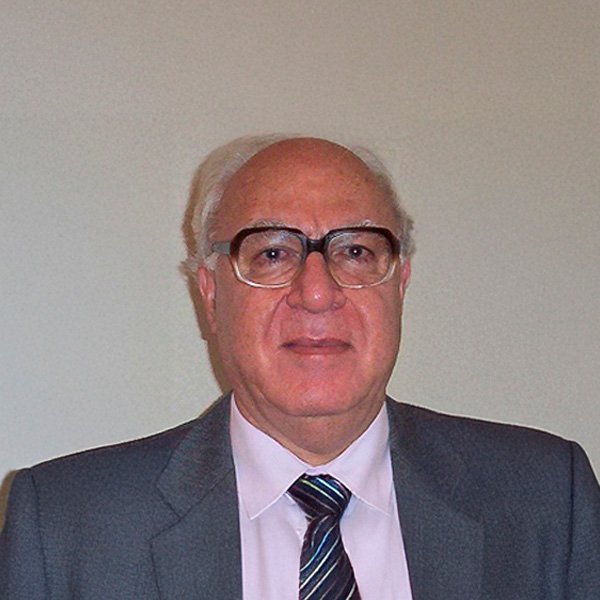

Former Professor and Dean of the Faculty of Languages, University of Isfahan; former lecturer at Cambridge, Harvard and Oxford universities; retired Editor for Middle East and North Africa, BBC Monitoring.

Share

Leave a Reply

Your email address will not be published. Required fields are marked *

Related Posts

Gandhi, Arun. Lord Richard Attenborough. Kasturba: a lifeNew Delhi: Penguin Books Ltd., 2000.315 pp, 295 Indian Rs, US $22.51 January 29, 2002 Arun Gandhi, grandson to Mohandas and Kasturba, has written a thorough account of Kasturba’s life. Arun begins with a description of Kasturba’s childhood in Porbandar in the late1800s, before she met Mohandas. By having chosen to embark on difficult research into his grandmother’s life, including her first years which are not well-documented, Arun ensures that the reader receives an intimate and life-long portrait of this amazing woman. Kasturba is presented as a lively woman &endash; obedient, yet with a mind of her own. As the relationship between Kasturba and Mohandas developed, Arun maintains that Kasturba’s influence over Mohandas in her own quiet way also grew, to which some of Mohandas’ writings also attest.  Arun paints a vivid picture of the beginnings of Mohandas’ non-violence movement in South Africa, a...
In response to an urgent Appeal from all the living Nobel Peace Prize Laureates, the General Assembly of the United Nations, on November 1998, unanimously declared the first decade of the twenty-first century to be The Decade for a Culture of Peace and Nonviolence. While people are naturally concerned about the amount of violence in our world and how it threatens our future, the Nobel Laureates are right to remind us of the potential of nonviolence and our calling to build a culture of peace and nonviolence.  The twentieth century is instructive in the way that the philosophy and practice of nonviolence have begun to flourish and in the way that nonviolent movements have had an exponential growth across the world. Mohandas Gandhi and Martin Luther King, Jr. are the most famous nonviolent leaders but many have built upon the paths they charted as in country after country, tyrannies and...
We know that medical personnel have failed to report to higher authorities wounds that were clearly caused by torture and that they have neglected to take steps to interrupt this torture. In addition, they have turned over prisoners’ medical records to interrogators who could use them to exploit the prisoners’ weaknesses or vulnerabilities. We have not yet learned the extent of medical involvement in delaying and possibly falsifying the death certificates of prisoners who have been killed by torturers. A May 22 article on Abu Ghraib in the New York Times states that “much of the evidence of abuse at the prison came from medical documents” and that records and statements “showed doctors and medics reporting to the area of the prison where the abuse occurred several times to stitch wounds, tend to collapsed prisoners or see patients with bruised or reddened genitals.” http://www.truthout.org/docs_04/080604J.shtml#16 According to the article, two doctors who...

Recent Articles

Gandhi, Arun. Lord Richard Attenborough. Kasturba: a lifeNew Delhi: Penguin Books Ltd., 2000.315 pp, 295 Indian Rs, US $22.51 January 29, 2002 Arun Gandhi, grandson to Mohandas and Kasturba, has written a thorough account of Kasturba’s life. Arun begins with a description of Kasturba’s childhood in Porbandar in the late1800s, before she met Mohandas. By having chosen to embark on difficult research into his grandmother’s life, including her first years which are not well-documented, Arun ensures that the reader receives an intimate and life-long portrait of this amazing woman. Kasturba is presented as a lively woman &endash; obedient, yet with a mind of her own. As the relationship between Kasturba and Mohandas developed, Arun maintains that Kasturba’s influence over Mohandas in her own quiet way also grew, to which some of Mohandas’ writings also attest.  Arun paints a vivid picture of the beginnings of Mohandas’ non-violence movement in South Africa, a...
In response to an urgent Appeal from all the living Nobel Peace Prize Laureates, the General Assembly of the United Nations, on November 1998, unanimously declared the first decade of the twenty-first century to be The Decade for a Culture of Peace and Nonviolence. While people are naturally concerned about the amount of violence in our world and how it threatens our future, the Nobel Laureates are right to remind us of the potential of nonviolence and our calling to build a culture of peace and nonviolence.  The twentieth century is instructive in the way that the philosophy and practice of nonviolence have begun to flourish and in the way that nonviolent movements have had an exponential growth across the world. Mohandas Gandhi and Martin Luther King, Jr. are the most famous nonviolent leaders but many have built upon the paths they charted as in country after country, tyrannies and...
We know that medical personnel have failed to report to higher authorities wounds that were clearly caused by torture and that they have neglected to take steps to interrupt this torture. In addition, they have turned over prisoners’ medical records to interrogators who could use them to exploit the prisoners’ weaknesses or vulnerabilities. We have not yet learned the extent of medical involvement in delaying and possibly falsifying the death certificates of prisoners who have been killed by torturers. A May 22 article on Abu Ghraib in the New York Times states that “much of the evidence of abuse at the prison came from medical documents” and that records and statements “showed doctors and medics reporting to the area of the prison where the abuse occurred several times to stitch wounds, tend to collapsed prisoners or see patients with bruised or reddened genitals.” http://www.truthout.org/docs_04/080604J.shtml#16 According to the article, two doctors who...

TFF on Substack

Discover more from TFF Transnational Foundation & Jan Oberg.

Most Popular

Gandhi, Arun. Lord Richard Attenborough. Kasturba: a lifeNew Delhi: Penguin Books Ltd., 2000.315 pp, 295 Indian Rs, US $22.51 January 29, 2002 Arun Gandhi, grandson to Mohandas and Kasturba, has written a thorough account of Kasturba’s life. Arun begins with a description of Kasturba’s childhood in Porbandar in the late1800s, before she met Mohandas. By having chosen to embark on difficult research into his grandmother’s life, including her first years which are not well-documented, Arun ensures that the reader receives an intimate and life-long portrait of this amazing woman. Kasturba is presented as a lively woman &endash; obedient, yet with a mind of her own. As the relationship between Kasturba and Mohandas developed, Arun maintains that Kasturba’s influence over Mohandas in her own quiet way also grew, to which some of Mohandas’ writings also attest.  Arun paints a vivid picture of the beginnings of Mohandas’ non-violence movement in South Africa, a...
In response to an urgent Appeal from all the living Nobel Peace Prize Laureates, the General Assembly of the United Nations, on November 1998, unanimously declared the first decade of the twenty-first century to be The Decade for a Culture of Peace and Nonviolence. While people are naturally concerned about the amount of violence in our world and how it threatens our future, the Nobel Laureates are right to remind us of the potential of nonviolence and our calling to build a culture of peace and nonviolence.  The twentieth century is instructive in the way that the philosophy and practice of nonviolence have begun to flourish and in the way that nonviolent movements have had an exponential growth across the world. Mohandas Gandhi and Martin Luther King, Jr. are the most famous nonviolent leaders but many have built upon the paths they charted as in country after country, tyrannies and...
We know that medical personnel have failed to report to higher authorities wounds that were clearly caused by torture and that they have neglected to take steps to interrupt this torture. In addition, they have turned over prisoners’ medical records to interrogators who could use them to exploit the prisoners’ weaknesses or vulnerabilities. We have not yet learned the extent of medical involvement in delaying and possibly falsifying the death certificates of prisoners who have been killed by torturers. A May 22 article on Abu Ghraib in the New York Times states that “much of the evidence of abuse at the prison came from medical documents” and that records and statements “showed doctors and medics reporting to the area of the prison where the abuse occurred several times to stitch wounds, tend to collapsed prisoners or see patients with bruised or reddened genitals.” http://www.truthout.org/docs_04/080604J.shtml#16 According to the article, two doctors who...
Read More
Imagen-thumbnail-The-Transnational-1
Gandhi, Arun. Lord Richard Attenborough. Kasturba: a lifeNew Delhi: Penguin Books Ltd., 2000.315 pp, 295 Indian Rs, US $22.51 January 29, 2002 Arun Gandhi, grandson to Mohandas and Kasturba, has written a thorough account of Kasturba’s life. Arun begins with a description of Kasturba’s childhood in Porbandar in the late1800s, before she met Mohandas. By having chosen to embark on difficult research into his grandmother’s life, including her first years which are not well-documented, Arun ensures that the reader receives an intimate and life-long portrait of this amazing woman. Kasturba is presented as a lively woman &endash; obedient, yet with a mind of her own. As the relationship between Kasturba and Mohandas developed, Arun maintains that Kasturba’s influence over Mohandas in her own quiet way also grew, to which some of Mohandas’ writings also attest.  Arun paints a vivid picture of the beginnings of Mohandas’ non-violence movement in South Africa, a...
Imagen-thumbnail-The-Transnational-1
In response to an urgent Appeal from all the living Nobel Peace Prize Laureates, the General Assembly of the United Nations, on November 1998, unanimously declared the first decade of the twenty-first century to be The Decade for a Culture of Peace and Nonviolence. While people are naturally concerned about the amount of violence in our world and how it threatens our future, the Nobel Laureates are right to remind us of the potential of nonviolence and our calling to build a culture of peace and nonviolence.  The twentieth century is instructive in the way that the philosophy and practice of nonviolence have begun to flourish and in the way that nonviolent movements have had an exponential growth across the world. Mohandas Gandhi and Martin Luther King, Jr. are the most famous nonviolent leaders but many have built upon the paths they charted as in country after country, tyrannies and...
Imagen-thumbnail-The-Transnational-1
We know that medical personnel have failed to report to higher authorities wounds that were clearly caused by torture and that they have neglected to take steps to interrupt this torture. In addition, they have turned over prisoners’ medical records to interrogators who could use them to exploit the prisoners’ weaknesses or vulnerabilities. We have not yet learned the extent of medical involvement in delaying and possibly falsifying the death certificates of prisoners who have been killed by torturers. A May 22 article on Abu Ghraib in the New York Times states that “much of the evidence of abuse at the prison came from medical documents” and that records and statements “showed doctors and medics reporting to the area of the prison where the abuse occurred several times to stitch wounds, tend to collapsed prisoners or see patients with bruised or reddened genitals.” http://www.truthout.org/docs_04/080604J.shtml#16 According to the article, two doctors who...
Imagen-thumbnail-The-Transnational-1
Jan Øberg behandler i artiklen en lang række faktorer, som ligger til grund for den måde vores samfund er organiseret på – og derfor også for konflikter. Artiklen introducerer således sammenhængen mellem familien, foreninger, regeringer, NGO’ er, nation, stat, nationalstat og alliancer for på denne måde bedre at kunne forstå konflikter og i sidste ende blive klogere mht. at løse disse. Øberg, der er fortaler for global bevidsthed, hvilket skal ses i lyset af den øgede globalisering, skelner mellem kulturkamp og kulturdialog. Endelig behandles begrebet magt og magtesløshed: giver magt ret til at udøve magt – fordi man mener at have ret? Litteraturliste og arbejdsspørgsmål efter artiklen. Ordene vi bruger om verden I satellitperspektiv kan man godt tale om den menneskelige familie eller menneskeheden. Udtrykket understreger, at der eksisterer – eller burde eksistere – et fællesskab fordi vi alle er mennesker og sammen bebor denne klode og ingen anden. Og...
Imagen-thumbnail-The-Transnational-1
Kapitel 2: Forskellige sider af Europa og USA…fortsat 2.5 Militære relationer I forbifarten har vi allerede sagt nogle ting om USA’s militære situation. Kig lige en gang til på afsnit 2.3. Nu skal vi uddybe det militære forhold mellem USA og EU. Der er en række ligheder mellem visse europæiske landes og USA’s militær. Næsten alle er med på en eller anden måde i NATO, direkte som medlem – selv Island, der ikke har et forsvar – eller indirekte i Partnerskab for Fred. USA og Canada er med i OSCE (på dansk OSSE), Organisationen for Sikkerhed og Samarbejde i Europa, der tæller over 50 lande. USA samt England og Frankrig er kernevåbenstater og de har styrker til intervention langt borte fra hjemlandet, om end USA’s er tifold større. Alle har også en omfattende våbeneksport og bruger den som et middel til at tjene penge og få loyale venner på, det...
Imagen-thumbnail-The-Transnational-1
Background Christian Harleman and Jan Oberg conducted a fact-finding mission to Burundi between November 26 and December 6, 2003. (See websites about the country here). The first TFF mission took place in March 1999. Unfortunately, since then it has not been practically possible to implement the co-operation with Burundi’s Ministry of Education and Burundian NGOs that was planned at the time. The 2003 mission had three purposes. First, to do fact-finding in general about the situation and, in particular, the progress under the Arusha Peace Process. Second, to explore the possibilities for co-operation between the government and relevant NGOs on the one hand and TFF on the other, in order to develop and deepen the existing competence in fields such as conflict-understanding, reconciliation and peace-building. Finally, third, to find out whether it would be possible, in co-operation with the Swedish Rescue Services Agency (Statens Räddningsverk), to establish a health care unit that...