
Al-Baghdadi, Self-Proclaimed Caliph of the Islamic State (Part 2)

By Farhang Jahanpour


Part 1 of this series

A shorter version of this article has been published by IPS

When Ibrahim al-Badri al-Samarrai adopted the name of Abu-Bakr al-Baghdadi al-Husseini al-Quraishi and revealed himself to the world as the Amir al-Mu’minin (the Commander of the Faithful) Caliph Ibrahim of the self-proclaimed Islamic State, the whole world had to sit up and take notice of him.

The choice of the long title that he has chosen for himself is most interesting and symbolic. The title Abu-Bakr clearly refers to the first caliph after Prophet Muhammad’s death, the first of the four “Orthodox Caliphs”.

The term Husseini presumably refers to Imam Hussein, the Prophet’s grandson and Imam Ali’s son, who was martyred in Karbala on 13 October 680. His martyrdom is seen as a turning point in the history of Islam and is mourned in elaborate mourning ceremonies by the Shi’ites throughout the world on the 10th of Muharram each year, which is accompanied with many processions and self-flagellation.

Both Sunnis and Shi’is regard Imam Hussein as a great martyr, and as someone who gave up his life in order to defend Islam and to stand up against tyranny.

Finally, al-Quraishi refers to Quraish, the tribe to which the Prophet of Islam belonged.

Therefore, his chosen title is full of Islamic symbolism.

According to an alleged biography posted on jihadi Internet forums, al-Baghdadi is a direct descendant of the Prophet, but curiously enough his ancestors come from the Shi’a line of the Imams who descended from the Prophet’s daughter Fatimah.

According to this alleged biography, al-Baghdadi derives his lineage directly from nine Shi’a Imams, “Ali Al-Hadi, Muhammad al-Jawad, Ali al-Rida, Musa al-Kazim, Ja’far al-Sadiq, Muhammad al-Baqir, Ali Zayn al-Abidin, Husayn Bin-Ali, Ali Bin Abi-Talib, right up to the Prophet’s daughter Fatimah and ending in Prophet Muhammad himself.”

Despite his great hostility towards the Shi’is, is this genealogy a way of portraying himself as the true son of the descendants of the Prophet, thus appealing to both Shi’is and Sunnis?

According to the same biography, al-Baghdadi was born near Samarra, in Iraq, in 1971. It is alleged that he received BA, MA and PhD degrees in Islamic studies from the Islamic University of Baghdad. It is also suggested that he was a cleric at the Imam Ahmad ibn Hanbal Mosque in Samarra at around the time of the US invasion of Iraq in 2003. (1)

According to a senior Afghan security official, al-Baghdadi went to Afghanistan in the late 1990s, where he received his early jihadi training. He lived with the Jordanian militant fighter Abu Musab al-Zarqarwi in Kabul from 1996-2000. (2)

It is likely that al-Baghdadi fled Afghanistan with leading Taliban fighters after the US invasion of Afghanistan following 9/11.

After the US invasion of Iraq in 2003, Zarqawi and other militants, perhaps including al-Baghdadi, formed Al-Qaeda in Iraq.
In September 2005, Zarqawi declared an all-out war on the Shi’is in Iraq, after the Iraqi and American offensive on insurgents in the Sunni town of Tal Afar. Zarqawi was killed in a targeted killing by US forces on June 7, 2006.

According to US Department of Defense records, al-Baghdadi was held at Camp Bucca from February until December 2004, but some sources claim that he was interned from 2005-2009.

In any case, his history of militancy in both Afghanistan and Iraq and fighting against American forces goes back a long way. He was battle-hardened in the jihad against U.S. forces, and being detained by US forces further strengthened his ambitions and credentials as a militant jihadi fighter.

In the wake of the “Arab Spring” and anti-government protests in Syria, some Western governments, Saudi Arabia and Turkey decided to topple the regime of the Syrian President Bashar al-Assad by training and funding Syrian insurgents. The upheaval in Syria provided al-Baghdadi with an opportunity to engage in jihad and to widen the circle of his followers, until he suddenly emerged at the head of thousands of jihadi fighters again attacking Iraq from Syria.

His forces conquered vast swaths of territory in both Syria and Iraq, and he set up his so-called Islamic State in Iraq and Sham (or greater Syria), ISIS.

On the first Friday in the Muslim month of fasting or Ramadan on 4th July 2014 (American Independence Day), al-Baghdadi suddenly emerged out of the shadows and delivered the sermon at the Great Mosque in Mosul, which had been recently conquered by ISIS. (3) His sermon showed not only his command of Koranic verses, but also his ability to speak clearly and eloquently. He is certainly more steeped in radical Sunni theology than any of the al-Qaeda leaders, past and present, ever were.

His sermon touched on some of the key militant Sunni doctrines, going back to the strict Salafi Hanbali doctrines, the writings of Ibn Taymiyyah who lived at the time of the Mongol invasion of Iraq, to the views of the militant Egyptian ideologue Sayyid Qutb, the Lebanese-Egyptian Salafi preacher Rashid Rida, and Pakistani militant theologian and political activist Abul Ala Maududi.

His biographer says that Al-Baghdadi “purged vast areas in Iraq and Syria from the filth of the Safavids [a term referring to the 16th century Iranian Shiite dynasty of the Safavids], the Nusayris [a derogatory term referring to the Syrian Alawite Shiites], and the apostate [Sunni] Awakening Councils. He established the rule of Islam.”

In his short sermon, al-Baghdadi denounced those who did not follow his strict interpretation of Islam as being guilty of bid’a or heresy. He quoted many verses from the Koran about the need to mobilize and to fight against non-believers, and to remain steadfast in God’s path.

He also stressed some key concepts, such as piety and performing religious rituals, obeying God’s commandments, and God’s promise to bring victory to the downtrodden and the oppressed. Finally, he talked about the necessity of the establishment of a caliphate.

In the Koranic context, these terms have broad meanings, similar to the concepts of piety, living by divine teachings, mobilizing in the service of religion, helping the downtrodden and the oppressed, etc.

However, in the hands of al-Baghdadi and other militant jihadis, these terms are given completely different and menacing meanings, calling for jihad and the subjugation of the non-believers. (4)

On 1 July 2014, only two days after the group announced that it would establish a caliphate, it released an audio message by al-Baghdadi in which he promised support to Muslims everywhere. The similarity between al-Baghdadi’s views and the views expressed by Osama Bin Laden shortly after the 9/11 attacks are striking. In the same way that Bin Laden had a long list of alleged oppressions that Muslims suffered throughout the world, al-Baghdadi also portrays himself as the defender of Muslim rights everywhere.

In that message he declared: “Muslim rights are forcibly seized in China, India, Palestine, Somalia, the Arabian Peninsula, the Caucasus, Al-Sham, Egypt, Iraq, Indonesia, Afghanistan, the Philippines, Ahvaz, Iran … Pakistan, Tunisia, Libya, Algeria and Morocco, in the East and the West.”

He called on his followers to rise up to free Muslims from oppression: “So raise your ambitions, O soldiers of the Islamic State! For your brothers all over the world are awaiting for your rescue, and are anticipating your brigades.”

He told his fighters to rise up not only against corrupt Muslim rulers, but also against their alleged masters in the West. He said: “So listen, O Ummah of Islam… Stand up and rise; for the time has come for you to free yourselves from the shackles of weakness, and stand in the face of tyranny, against the treacherous rulers – the agents of the Crusaders and the atheists, and the guards of the Jews.” (5)

The views and actions of al-Baghdadi and his followers are almost an exact copy of the Wahhabi revivalist movement instigated by an 18th century theologian from Najd in the Arabian Peninsula, Muhammad Ibn Abd al-Wahhab (1703–1792).

Indeed what we are seeing in Iraq now is almost the exact repetition of the violent Sunni uprising in Arabian deserts that led to the establishment of the Wahhabi state founded by the Al Saud clan almost exactly 200 years ago.

In 1802, after having seized control of most of the Arabian Peninsula, the Saudi warlord Abdulaziz attacked Karbala in Iraq, killed the majority of its inhabitants, destroyed the shrine of Imam Hussein, where Prophet Muhammad’s grandson is buried, and plundered everything that they could lay their hands on.

The establishment of that dynasty has resulted in the propagation of the most fundamentalist form of Islam in its long history, which eventually has given rise to Osama Bin Laden and Al Qaeda, and now to ISIS and al-Baghdadi.

The jihadis reduce the entire rich and varied tapestry of Islamic civilisation, Islamic philosophy, Islamic literature, Islamic mysticism, jurisprudence, Kalam and tafsir (hermeneutics) to the Shari’a, putting it above everything else, including their rationality.

It is important to note that their version of Islam represents a very narrow and dogmatic view of the Shari’a that is rejected by the greatest minds in Islam.

Indeed, it is a travesty that such barbaric terrorist acts are attributed to Islam.

Notes

1. The alleged biography is by Jihadist Cleric Turki al-Bin-Ali, also known as Abu Sufyan al-Salmi, posted to Ana al-Muslim Network in Arabic 01 Oct 14. For other accounts of al-Baghdadi’s biography see “A Biography of Abu Bakr al-Baghdadi”, Insite Blog on Terrorism and Extremism, 12 August 2014.

BBC Profile of Baghdadi, 5 July 2014, BBC profile of Baghdadi.

2. See “Isis chief lived in Kabul during Taliban rule”, Pajhwok Afghan News, June 11, 2014.

3. Al-Baghdadi’s sermon at the Great Mosque in Mosul on the meaning of the Caliphate.

4. For an analysis of al-Baghdadi’s sermon, see: Joshua Landis, “The Six Words You Need to Know to Be a Successful Jihadi and Establish Your Own Caliphate”, Syria Comment, July 6th, 2014.

5. For a translation of al-Baghdadi’s speech see a translation provided by MEMRI.
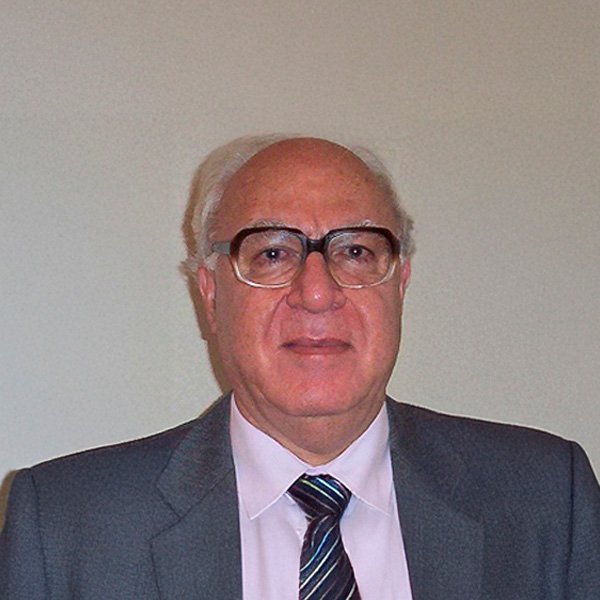
Former Professor and Dean of the Faculty of Languages, University of Isfahan; former lecturer at Cambridge, Harvard and Oxford universities; retired Editor for Middle East and North Africa, BBC Monitoring.

Share

Leave a Reply

Your email address will not be published. Required fields are marked *

Related Posts

Gandhi, Arun. Lord Richard Attenborough. Kasturba: a lifeNew Delhi: Penguin Books Ltd., 2000.315 pp, 295 Indian Rs, US $22.51 January 29, 2002 Arun Gandhi, grandson to Mohandas and Kasturba, has written a thorough account of Kasturba’s life. Arun begins with a description of Kasturba’s childhood in Porbandar in the late1800s, before she met Mohandas. By having chosen to embark on difficult research into his grandmother’s life, including her first years which are not well-documented, Arun ensures that the reader receives an intimate and life-long portrait of this amazing woman. Kasturba is presented as a lively woman &endash; obedient, yet with a mind of her own. As the relationship between Kasturba and Mohandas developed, Arun maintains that Kasturba’s influence over Mohandas in her own quiet way also grew, to which some of Mohandas’ writings also attest.  Arun paints a vivid picture of the beginnings of Mohandas’ non-violence movement in South Africa, a...
In response to an urgent Appeal from all the living Nobel Peace Prize Laureates, the General Assembly of the United Nations, on November 1998, unanimously declared the first decade of the twenty-first century to be The Decade for a Culture of Peace and Nonviolence. While people are naturally concerned about the amount of violence in our world and how it threatens our future, the Nobel Laureates are right to remind us of the potential of nonviolence and our calling to build a culture of peace and nonviolence.  The twentieth century is instructive in the way that the philosophy and practice of nonviolence have begun to flourish and in the way that nonviolent movements have had an exponential growth across the world. Mohandas Gandhi and Martin Luther King, Jr. are the most famous nonviolent leaders but many have built upon the paths they charted as in country after country, tyrannies and...
We know that medical personnel have failed to report to higher authorities wounds that were clearly caused by torture and that they have neglected to take steps to interrupt this torture. In addition, they have turned over prisoners’ medical records to interrogators who could use them to exploit the prisoners’ weaknesses or vulnerabilities. We have not yet learned the extent of medical involvement in delaying and possibly falsifying the death certificates of prisoners who have been killed by torturers. A May 22 article on Abu Ghraib in the New York Times states that “much of the evidence of abuse at the prison came from medical documents” and that records and statements “showed doctors and medics reporting to the area of the prison where the abuse occurred several times to stitch wounds, tend to collapsed prisoners or see patients with bruised or reddened genitals.” http://www.truthout.org/docs_04/080604J.shtml#16 According to the article, two doctors who...

Recent Articles

Gandhi, Arun. Lord Richard Attenborough. Kasturba: a lifeNew Delhi: Penguin Books Ltd., 2000.315 pp, 295 Indian Rs, US $22.51 January 29, 2002 Arun Gandhi, grandson to Mohandas and Kasturba, has written a thorough account of Kasturba’s life. Arun begins with a description of Kasturba’s childhood in Porbandar in the late1800s, before she met Mohandas. By having chosen to embark on difficult research into his grandmother’s life, including her first years which are not well-documented, Arun ensures that the reader receives an intimate and life-long portrait of this amazing woman. Kasturba is presented as a lively woman &endash; obedient, yet with a mind of her own. As the relationship between Kasturba and Mohandas developed, Arun maintains that Kasturba’s influence over Mohandas in her own quiet way also grew, to which some of Mohandas’ writings also attest.  Arun paints a vivid picture of the beginnings of Mohandas’ non-violence movement in South Africa, a...
In response to an urgent Appeal from all the living Nobel Peace Prize Laureates, the General Assembly of the United Nations, on November 1998, unanimously declared the first decade of the twenty-first century to be The Decade for a Culture of Peace and Nonviolence. While people are naturally concerned about the amount of violence in our world and how it threatens our future, the Nobel Laureates are right to remind us of the potential of nonviolence and our calling to build a culture of peace and nonviolence.  The twentieth century is instructive in the way that the philosophy and practice of nonviolence have begun to flourish and in the way that nonviolent movements have had an exponential growth across the world. Mohandas Gandhi and Martin Luther King, Jr. are the most famous nonviolent leaders but many have built upon the paths they charted as in country after country, tyrannies and...
We know that medical personnel have failed to report to higher authorities wounds that were clearly caused by torture and that they have neglected to take steps to interrupt this torture. In addition, they have turned over prisoners’ medical records to interrogators who could use them to exploit the prisoners’ weaknesses or vulnerabilities. We have not yet learned the extent of medical involvement in delaying and possibly falsifying the death certificates of prisoners who have been killed by torturers. A May 22 article on Abu Ghraib in the New York Times states that “much of the evidence of abuse at the prison came from medical documents” and that records and statements “showed doctors and medics reporting to the area of the prison where the abuse occurred several times to stitch wounds, tend to collapsed prisoners or see patients with bruised or reddened genitals.” http://www.truthout.org/docs_04/080604J.shtml#16 According to the article, two doctors who...

TFF on Substack

Discover more from TFF Transnational Foundation & Jan Oberg.

Most Popular

Gandhi, Arun. Lord Richard Attenborough. Kasturba: a lifeNew Delhi: Penguin Books Ltd., 2000.315 pp, 295 Indian Rs, US $22.51 January 29, 2002 Arun Gandhi, grandson to Mohandas and Kasturba, has written a thorough account of Kasturba’s life. Arun begins with a description of Kasturba’s childhood in Porbandar in the late1800s, before she met Mohandas. By having chosen to embark on difficult research into his grandmother’s life, including her first years which are not well-documented, Arun ensures that the reader receives an intimate and life-long portrait of this amazing woman. Kasturba is presented as a lively woman &endash; obedient, yet with a mind of her own. As the relationship between Kasturba and Mohandas developed, Arun maintains that Kasturba’s influence over Mohandas in her own quiet way also grew, to which some of Mohandas’ writings also attest.  Arun paints a vivid picture of the beginnings of Mohandas’ non-violence movement in South Africa, a...
In response to an urgent Appeal from all the living Nobel Peace Prize Laureates, the General Assembly of the United Nations, on November 1998, unanimously declared the first decade of the twenty-first century to be The Decade for a Culture of Peace and Nonviolence. While people are naturally concerned about the amount of violence in our world and how it threatens our future, the Nobel Laureates are right to remind us of the potential of nonviolence and our calling to build a culture of peace and nonviolence.  The twentieth century is instructive in the way that the philosophy and practice of nonviolence have begun to flourish and in the way that nonviolent movements have had an exponential growth across the world. Mohandas Gandhi and Martin Luther King, Jr. are the most famous nonviolent leaders but many have built upon the paths they charted as in country after country, tyrannies and...
We know that medical personnel have failed to report to higher authorities wounds that were clearly caused by torture and that they have neglected to take steps to interrupt this torture. In addition, they have turned over prisoners’ medical records to interrogators who could use them to exploit the prisoners’ weaknesses or vulnerabilities. We have not yet learned the extent of medical involvement in delaying and possibly falsifying the death certificates of prisoners who have been killed by torturers. A May 22 article on Abu Ghraib in the New York Times states that “much of the evidence of abuse at the prison came from medical documents” and that records and statements “showed doctors and medics reporting to the area of the prison where the abuse occurred several times to stitch wounds, tend to collapsed prisoners or see patients with bruised or reddened genitals.” http://www.truthout.org/docs_04/080604J.shtml#16 According to the article, two doctors who...
Read More
Imagen-thumbnail-The-Transnational-1
Gandhi, Arun. Lord Richard Attenborough. Kasturba: a lifeNew Delhi: Penguin Books Ltd., 2000.315 pp, 295 Indian Rs, US $22.51 January 29, 2002 Arun Gandhi, grandson to Mohandas and Kasturba, has written a thorough account of Kasturba’s life. Arun begins with a description of Kasturba’s childhood in Porbandar in the late1800s, before she met Mohandas. By having chosen to embark on difficult research into his grandmother’s life, including her first years which are not well-documented, Arun ensures that the reader receives an intimate and life-long portrait of this amazing woman. Kasturba is presented as a lively woman &endash; obedient, yet with a mind of her own. As the relationship between Kasturba and Mohandas developed, Arun maintains that Kasturba’s influence over Mohandas in her own quiet way also grew, to which some of Mohandas’ writings also attest.  Arun paints a vivid picture of the beginnings of Mohandas’ non-violence movement in South Africa, a...
Imagen-thumbnail-The-Transnational-1
In response to an urgent Appeal from all the living Nobel Peace Prize Laureates, the General Assembly of the United Nations, on November 1998, unanimously declared the first decade of the twenty-first century to be The Decade for a Culture of Peace and Nonviolence. While people are naturally concerned about the amount of violence in our world and how it threatens our future, the Nobel Laureates are right to remind us of the potential of nonviolence and our calling to build a culture of peace and nonviolence.  The twentieth century is instructive in the way that the philosophy and practice of nonviolence have begun to flourish and in the way that nonviolent movements have had an exponential growth across the world. Mohandas Gandhi and Martin Luther King, Jr. are the most famous nonviolent leaders but many have built upon the paths they charted as in country after country, tyrannies and...
Imagen-thumbnail-The-Transnational-1
We know that medical personnel have failed to report to higher authorities wounds that were clearly caused by torture and that they have neglected to take steps to interrupt this torture. In addition, they have turned over prisoners’ medical records to interrogators who could use them to exploit the prisoners’ weaknesses or vulnerabilities. We have not yet learned the extent of medical involvement in delaying and possibly falsifying the death certificates of prisoners who have been killed by torturers. A May 22 article on Abu Ghraib in the New York Times states that “much of the evidence of abuse at the prison came from medical documents” and that records and statements “showed doctors and medics reporting to the area of the prison where the abuse occurred several times to stitch wounds, tend to collapsed prisoners or see patients with bruised or reddened genitals.” http://www.truthout.org/docs_04/080604J.shtml#16 According to the article, two doctors who...
Imagen-thumbnail-The-Transnational-1
Jan Øberg behandler i artiklen en lang række faktorer, som ligger til grund for den måde vores samfund er organiseret på – og derfor også for konflikter. Artiklen introducerer således sammenhængen mellem familien, foreninger, regeringer, NGO’ er, nation, stat, nationalstat og alliancer for på denne måde bedre at kunne forstå konflikter og i sidste ende blive klogere mht. at løse disse. Øberg, der er fortaler for global bevidsthed, hvilket skal ses i lyset af den øgede globalisering, skelner mellem kulturkamp og kulturdialog. Endelig behandles begrebet magt og magtesløshed: giver magt ret til at udøve magt – fordi man mener at have ret? Litteraturliste og arbejdsspørgsmål efter artiklen. Ordene vi bruger om verden I satellitperspektiv kan man godt tale om den menneskelige familie eller menneskeheden. Udtrykket understreger, at der eksisterer – eller burde eksistere – et fællesskab fordi vi alle er mennesker og sammen bebor denne klode og ingen anden. Og...
Imagen-thumbnail-The-Transnational-1
Kapitel 2: Forskellige sider af Europa og USA…fortsat 2.5 Militære relationer I forbifarten har vi allerede sagt nogle ting om USA’s militære situation. Kig lige en gang til på afsnit 2.3. Nu skal vi uddybe det militære forhold mellem USA og EU. Der er en række ligheder mellem visse europæiske landes og USA’s militær. Næsten alle er med på en eller anden måde i NATO, direkte som medlem – selv Island, der ikke har et forsvar – eller indirekte i Partnerskab for Fred. USA og Canada er med i OSCE (på dansk OSSE), Organisationen for Sikkerhed og Samarbejde i Europa, der tæller over 50 lande. USA samt England og Frankrig er kernevåbenstater og de har styrker til intervention langt borte fra hjemlandet, om end USA’s er tifold større. Alle har også en omfattende våbeneksport og bruger den som et middel til at tjene penge og få loyale venner på, det...
Imagen-thumbnail-The-Transnational-1
Background Christian Harleman and Jan Oberg conducted a fact-finding mission to Burundi between November 26 and December 6, 2003. (See websites about the country here). The first TFF mission took place in March 1999. Unfortunately, since then it has not been practically possible to implement the co-operation with Burundi’s Ministry of Education and Burundian NGOs that was planned at the time. The 2003 mission had three purposes. First, to do fact-finding in general about the situation and, in particular, the progress under the Arusha Peace Process. Second, to explore the possibilities for co-operation between the government and relevant NGOs on the one hand and TFF on the other, in order to develop and deepen the existing competence in fields such as conflict-understanding, reconciliation and peace-building. Finally, third, to find out whether it would be possible, in co-operation with the Swedish Rescue Services Agency (Statens Räddningsverk), to establish a health care unit that...


