
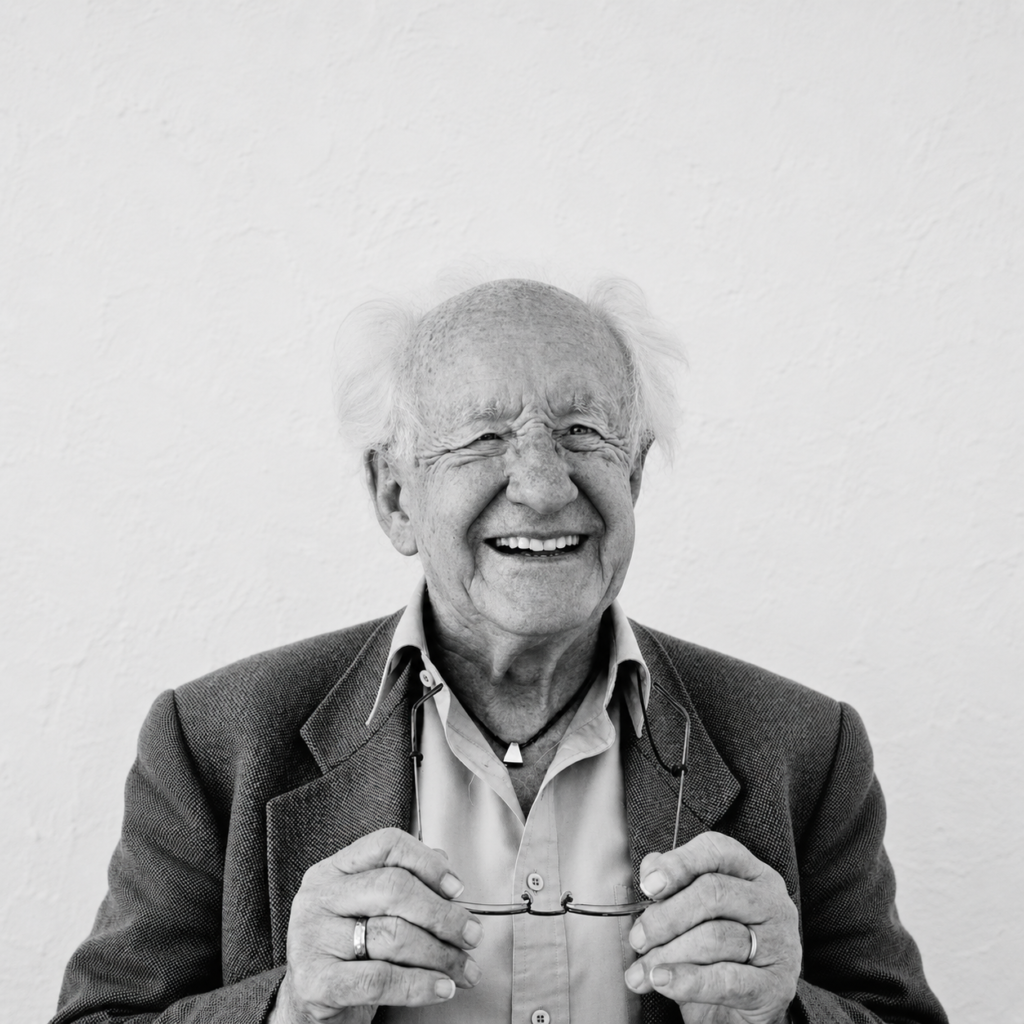
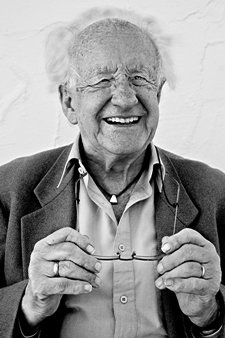
Arne Næss - the next hundred years

Speech given in Oslo on January 27, 2012

Norway’s by any comparison greatest philosopher was born one hundred years ago today, and died close to the age of 97. A world philosopher, a human being with an incredible radiation. Nobody who came close to him remained the same.
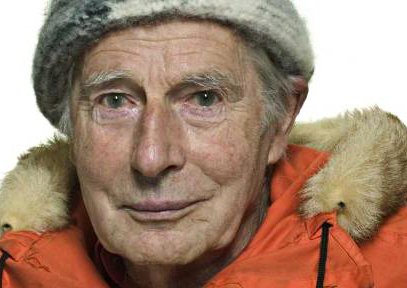
Arne Næss 27 January 1912 – 12 January 2009

What was his basic theme? In one word: nonviolence, but in a broader and deeper sense than most approaching demanding idea.

Arne Næss was very sensitive to verbal violence in debates; his answer was objectivity. He identified physical violence in political struggle; his answer was Gandhian nonviolence, strongly inspired as a student in Paris early 1930s by Indian students strongly convinced that nonviolence was the way.

He identified violence against nature, inspired by Rachel Carson’s Silent Spring and his own closeness to nature as a mountaineer; his answer was deep ecology.

He identified violence to reality through the logico-empirical straitjacket of positivism, a philosophy he shared as a younger man but gradually left in favor of what he called possibilism, the diversity of the world inspired by Duhem-Poincaré’s thesis of theory manifold.

And he identified violence to philosophy by reducing it to Western philosophy, starting with a Geek and ending with a French or German philosopher. His answer was a world philosophy at least open to Indian and Chinese thought.

A theme in Norway is “Anglo-American vs continental”, the latter in practice meaning Germany or France. Much too narrow for Næss. He had a yearning eastward, at home in Greek, Latin and mathematics, but when we drove together by car from Oslo to a Gandhi conference in Varanasi in January 1969 he examined himself in Sanskrit. Næss worked hard, deeply, broadly.

His philosophy history included Gandhi and general Chinese thought, under the heading “The Masses Philosophize”. This was an early theme in Næss’ research, with questionnaires and interview guides, social science methods, not only analysis of philosophers’ texts and, thus, exploring “Truth as Conceived of by –” Norwegian housewives and students.

He found that housewives had in them the key interpretations of “truth”: correspondence with empirical reality, valid deduction from axioms, and a pragmatic truth as means to higher goals. But housewives did not write down their thoughts.

Philosophy is pluralistic, like the world. He wanted diverse images of the world, and also many possible worlds, in symbiosis.

Næss was a moralist. He expressed his ideas analytically, but also normatively, as Thou shalt.

His deep ecology was summarized in eight normative propositions:

1. That human and other forms of life unfold on earth has a value in its own right regardless of the use value for narrow human purposes;

2. The diversity and richness of all forms of life has a value in its own right;

3. Human beings have no right to reduce this diversity which in no way limits the satisfaction of their needs;

4. The complete realization of the potentials of individual human beings and the diversity of cultures is compatible with a reduction of the size of the human population; the preservation and further development of the diversity and richness of forms of life presuppose that reduction unless, alternatively, we change our style of life fundamentally, which seems improbable;

5. The human intervention in nature at the present time is indefensible and the deterioration of the situation accelerates;

6. Basic improvement presupposes fundamental change of economic, technical and ideological structures to a joyful experience of how “everything hangs together”, the so-called struggle against nature becomes meaningless;

7. The ideological change will be in terms of search for quality of life rather than standard of living, and a concern for goals rather than means for their own sake;

8. Those who accept these points have a responsibility to try to contribute directly or indirectly to create the necessary changes.

His six theses about objectivity in debates were:

1) Avoid ad hominem, characteristics of personalities and motives, stick to the issue, the arguments;

2) Avoid biased presentation of your opponent’s arguments;

3) Avoid attributing to your opponent views he has not himself expressed;

4) Avoid presentations that are untrue, incomplete, biased, withholding relevant information;

5) Avoid irony, sarcasms, negative epithets, exaggerations, threats.

6) You serve common human interest and enrich yourself by taking in the strongest argument of your opponent against your own views, not the weakest. And you may conclude that you both have valid points to offer, that neither you nor he has monopoly on truth.

And then the norms he extracted from Gandhi’s life and teachings, like: Struggle against the antagonism, not the antagonist; be willing to compromise; admit when you are in the wrong; convert, don’t coerce your opponent.[i]

A challenging vision to what happens today in his native Norway: more biased, ad hominem debate than ever in the name of freedom of expression, even anonymous on the web-site of the Norwegian state broadcasting corporation; instead of deep ecology Norway buys eco-quotas abroad so as to proceed as before; Norway joins one US-led war after the other – Serbia, Afghanistan, Iraq, Libya; Norway propagates itself as a world norm, not diversity; and textbooks are back to normal, Western regional philosophy.

So the message for the coming hundred years emanating from this giant would be: time has come for practice. He will be rediscovered. And his vision will enlighten our inner selves, and guide us toward better, less violent, societies.

Note

[i]. Typical of his ability to make much younger researchers parties to his work I was invited to be his assistant on Gandhi’s Political Ethics, Oslo: Tanum 1955. By Johan Galtung and Arne Næss (though out by Arne, written by Johan). Taken to task by one who has propagated and used gandhian nonviolence all over the world, Jörgen Johansen, for not having a translation into English the answer could be that we tried five English publishing companies at the time. But the doors were closed. Maybe not that enthusiastic about a book trying to elevate the political ethics of the man who brought down not only the British rule in India but the whole British empire? Well, never too late!

Share

Leave a Reply

Your email address will not be published. Required fields are marked *

Related Posts

Peace is promoted by constructive proposals and dialogue Four preceding PressInfos have expressed concern over — and criticised — the ongoing, militarisation of the EU. Some will say: but there are no alternatives. We believe that there are always alternatives, that democracies are characterised by alternatives and choice, and that openly discussed alternatives will improve the quality and legitimacy of society’s decision–making. In addition, it is an intellectual and moral challenge to not only criticise but also be constructive. If we only tell people that we think they are wrong, they are not likely to listen. However, if we say: what are your views on this set of ideas and steps? — we may sometimes engage them in dialogue and sow a seed. Most people in power circles live their daily lives in in a time frame and a social space where certain ideas, viewpoints and concepts are just not...
Photos © TFF 2000 Read PressInfo 90 “Lift the Sanctions and Bring More Aid to Yugoslavia” See Pictures from Belgrade © TFF 2000 Please reprint, copy, archive, quote or re-post this item, but please retain the source.
Av FRANK SØHOLM GREVIL 16 augusti 2004  Vi er nu nået til tredje akt i det absurde teaterstykke, der i analogi med de store skueprocesser i Moskva 1936-38 er blevet døbt ‘Grevil-sagen’. Første akt bestod i min anonyme fremlæggelse af egenhændigt nedklassificerede rapporter i Berlingske Tidende i februar og marts. Andet akt udgjordes af min fremtræden med navn og billede i Information i april samt den efterfølgende mediestorm, som uden min direkte medvirken kostede en forsvarsminister taburetten samt en sigtelse for brud på tavshedspligten. Tredje akt bliver en retssag, hvor jeg står tiltalt for at have overtrådt straffelovens bestemmelser om uberettiget videregivelse eller udnyttelse af fortrolige oplysninger. Statsanklageren har ovenikøbet valgt at påberåbe sig særligt skærpende omstændigheder. Da jeg aldrig har modtaget betaling for at stille rapporterne til rådighed eller lade mig interviewe, må det skærpende bestå i, at “videregivelsen eller udnyttelsen er sket under sådanne omstændigheder, at det påfører...

Recent Articles

PressInfo # 141, December 21, 2001It’s time to prepare reconciliation between Albanians and Serbs PressInfo # 140, December 14, 2001Ibrahim Rugova’s decade-long leadership in Kosovo/a PressInfo # 139, 11. december, 2001En god nyhet: Jugoslaviens Sannings- och försoningskommission PressInfo # 139, 11. december, 2001Gode nyheder: Jugoslaviens Sandheds- og Forsoningskommission PressInfo # 139, December 11, 2001Good news: Yugoslavia’s Truth and Reconciliation Commission PressInfo # 138, November 8, 2001TFF co-founder PhD with thesis about young people with roots in other cultures PressInfo # 138, November 8, 2001TFF:s medstiftare doktor på avhandling om unga med ursprung i andra kulturer PressInfo # 137, October 17, 2001A new Marshall Plan: Advancing human security and controlling terrorism PressInfo # 136, October 15, 2001The UN and Annan really deserve it PressInfo # 135, October 10, 2001Preventing a terrorist mushroom cloud PressInfo # 134, 17 oktober, 2001Sverige og 11. september PressInfo # 134, October 9, 2001Sweden and September 11...
Peace is promoted by constructive proposals and dialogue Four preceding PressInfos have expressed concern over — and criticised — the ongoing, militarisation of the EU. Some will say: but there are no alternatives. We believe that there are always alternatives, that democracies are characterised by alternatives and choice, and that openly discussed alternatives will improve the quality and legitimacy of society’s decision–making. In addition, it is an intellectual and moral challenge to not only criticise but also be constructive. If we only tell people that we think they are wrong, they are not likely to listen. However, if we say: what are your views on this set of ideas and steps? — we may sometimes engage them in dialogue and sow a seed. Most people in power circles live their daily lives in in a time frame and a social space where certain ideas, viewpoints and concepts are just not...
Photos © TFF 2000 Read PressInfo 90 “Lift the Sanctions and Bring More Aid to Yugoslavia” See Pictures from Belgrade © TFF 2000 Please reprint, copy, archive, quote or re-post this item, but please retain the source.

TFF on Substack

Discover more from TFF Transnational Foundation & Jan Oberg.

Most Popular

PressInfo # 141, December 21, 2001It’s time to prepare reconciliation between Albanians and Serbs PressInfo # 140, December 14, 2001Ibrahim Rugova’s decade-long leadership in Kosovo/a PressInfo # 139, 11. december, 2001En god nyhet: Jugoslaviens Sannings- och försoningskommission PressInfo # 139, 11. december, 2001Gode nyheder: Jugoslaviens Sandheds- og Forsoningskommission PressInfo # 139, December 11, 2001Good news: Yugoslavia’s Truth and Reconciliation Commission PressInfo # 138, November 8, 2001TFF co-founder PhD with thesis about young people with roots in other cultures PressInfo # 138, November 8, 2001TFF:s medstiftare doktor på avhandling om unga med ursprung i andra kulturer PressInfo # 137, October 17, 2001A new Marshall Plan: Advancing human security and controlling terrorism PressInfo # 136, October 15, 2001The UN and Annan really deserve it PressInfo # 135, October 10, 2001Preventing a terrorist mushroom cloud PressInfo # 134, 17 oktober, 2001Sverige og 11. september PressInfo # 134, October 9, 2001Sweden and September 11...
Peace is promoted by constructive proposals and dialogue Four preceding PressInfos have expressed concern over — and criticised — the ongoing, militarisation of the EU. Some will say: but there are no alternatives. We believe that there are always alternatives, that democracies are characterised by alternatives and choice, and that openly discussed alternatives will improve the quality and legitimacy of society’s decision–making. In addition, it is an intellectual and moral challenge to not only criticise but also be constructive. If we only tell people that we think they are wrong, they are not likely to listen. However, if we say: what are your views on this set of ideas and steps? — we may sometimes engage them in dialogue and sow a seed. Most people in power circles live their daily lives in in a time frame and a social space where certain ideas, viewpoints and concepts are just not...
Photos © TFF 2000 Read PressInfo 90 “Lift the Sanctions and Bring More Aid to Yugoslavia” See Pictures from Belgrade © TFF 2000 Please reprint, copy, archive, quote or re-post this item, but please retain the source.
Read More
Imagen-thumbnail-The-Transnational-1
PressInfo # 141, December 21, 2001It’s time to prepare reconciliation between Albanians and Serbs PressInfo # 140, December 14, 2001Ibrahim Rugova’s decade-long leadership in Kosovo/a PressInfo # 139, 11. december, 2001En god nyhet: Jugoslaviens Sannings- och försoningskommission PressInfo # 139, 11. december, 2001Gode nyheder: Jugoslaviens Sandheds- og Forsoningskommission PressInfo # 139, December 11, 2001Good news: Yugoslavia’s Truth and Reconciliation Commission PressInfo # 138, November 8, 2001TFF co-founder PhD with thesis about young people with roots in other cultures PressInfo # 138, November 8, 2001TFF:s medstiftare doktor på avhandling om unga med ursprung i andra kulturer PressInfo # 137, October 17, 2001A new Marshall Plan: Advancing human security and controlling terrorism PressInfo # 136, October 15, 2001The UN and Annan really deserve it PressInfo # 135, October 10, 2001Preventing a terrorist mushroom cloud PressInfo # 134, 17 oktober, 2001Sverige og 11. september PressInfo # 134, October 9, 2001Sweden and September 11...
Imagen-thumbnail-The-Transnational-1
Peace is promoted by constructive proposals and dialogue Four preceding PressInfos have expressed concern over — and criticised — the ongoing, militarisation of the EU. Some will say: but there are no alternatives. We believe that there are always alternatives, that democracies are characterised by alternatives and choice, and that openly discussed alternatives will improve the quality and legitimacy of society’s decision–making. In addition, it is an intellectual and moral challenge to not only criticise but also be constructive. If we only tell people that we think they are wrong, they are not likely to listen. However, if we say: what are your views on this set of ideas and steps? — we may sometimes engage them in dialogue and sow a seed. Most people in power circles live their daily lives in in a time frame and a social space where certain ideas, viewpoints and concepts are just not...
Imagen-thumbnail-The-Transnational-1
Photos © TFF 2000 Read PressInfo 90 “Lift the Sanctions and Bring More Aid to Yugoslavia” See Pictures from Belgrade © TFF 2000 Please reprint, copy, archive, quote or re-post this item, but please retain the source.
Imagen-thumbnail-The-Transnational-1
Av FRANK SØHOLM GREVIL 16 augusti 2004  Vi er nu nået til tredje akt i det absurde teaterstykke, der i analogi med de store skueprocesser i Moskva 1936-38 er blevet døbt ‘Grevil-sagen’. Første akt bestod i min anonyme fremlæggelse af egenhændigt nedklassificerede rapporter i Berlingske Tidende i februar og marts. Andet akt udgjordes af min fremtræden med navn og billede i Information i april samt den efterfølgende mediestorm, som uden min direkte medvirken kostede en forsvarsminister taburetten samt en sigtelse for brud på tavshedspligten. Tredje akt bliver en retssag, hvor jeg står tiltalt for at have overtrådt straffelovens bestemmelser om uberettiget videregivelse eller udnyttelse af fortrolige oplysninger. Statsanklageren har ovenikøbet valgt at påberåbe sig særligt skærpende omstændigheder. Da jeg aldrig har modtaget betaling for at stille rapporterne til rådighed eller lade mig interviewe, må det skærpende bestå i, at “videregivelsen eller udnyttelsen er sket under sådanne omstændigheder, at det påfører...
Imagen-thumbnail-The-Transnational-1
Af Svenska Irakkommittén mot de Ekonomiska Sanktionerna (SIES) 13 september 2002 FN:s ekonomiska sanktioner mot Irak har nu pågått i tolv år och drabbat det irakiska folket med svåra lidanden. Enligt FN:s egna siffror har mer än 1,5 miljoner människor, varav ca 600 000 barn, dött som en direkt följd av sanktionerna. Dessutom har ett lågintensivt bombkrig mot landet pågått under dessa år. Av all denna förödelse- orsakad huvudsakligen av amerikansk och brittisk politik- har Saddam Husseins brutala och diktatoriska regim snarast stärkts än försvagats. Nu förbereder USA under president Bushs ledning ett storskaligt bombkrig mot Irak som kommer att innebära ett ännu större lidande för civilbefolkningen. Ett sådant krig kommer dessutom att ytterligare undergräva freden och säkerheten i världen. Att upprätta en demokratisk regim i Irak är det irakiska folkets angelägenhet och får enligt folkrätten inte ske med krigshandlingar utifrån. Folkrätten och FN:s stadgar måste respekteras. Vi vädjar till...

