
The Western Liberal Media New Messaging on Gaza: A Critique from the Perspective of Peace and Justice Journalism

A slightly modified version of a text published on Sept. 1, 2025 in TMS.

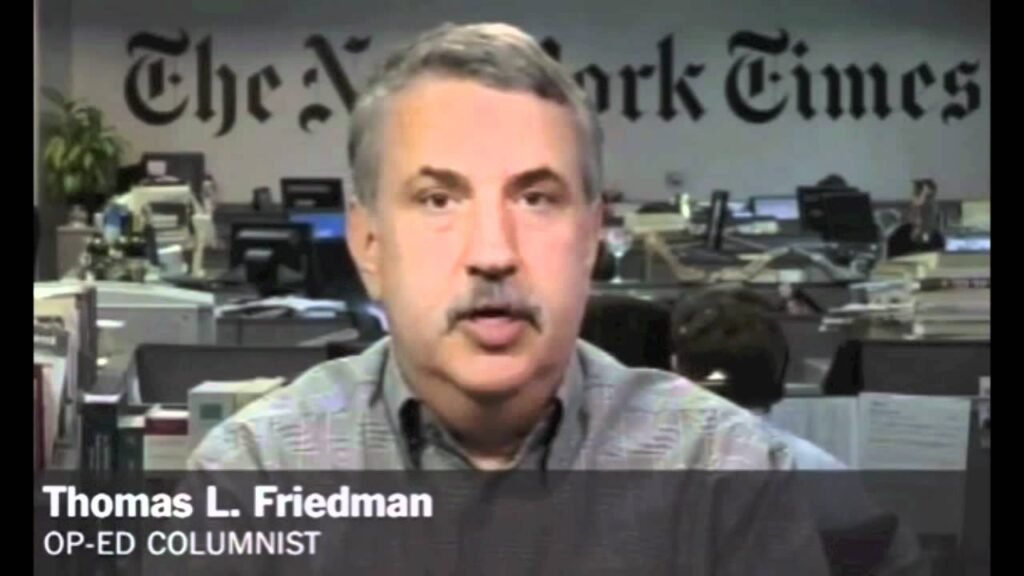
On August 25 Thomas Friedman, always a weathervane for political and economic establishment thinking in the West, wrote a notable column in the NY Times that was pragmatic in tone, misleading in substance, and regressive in intention. Yet it reflects a growing ambivalence toward Israel’s prolonged genocide even among longtime supporters of Israel that now highlights starvation, famine, and a gross distortion of the delivery of humanitarian aid under emergency conditions. But expressed dangerously without hiding the hope that Israel could even now restore its legitimacy without being held accountable for crimes in Gaza and despite all, still expecting to be rewarded by excluding Hamas from any further governance role in Gaza and continuing to move toward the annexation of the West Bank by formal action or through further settlement expansion.

It is notable that the headline of the Friedman opinion piece is titled “Israel’s Gaza Campaign is Making It a Pariah State.” [NY Times, Aug 25, 2025].

This Israeli misfortune is blamed by Friedman almost totally on Netanyahu and his ultra-right religious coalition partners usually as represented by Bezalel Smotrich and Itamar Ben-Gvir who both serve as important cabinet ministers in Tel Aviv’s coalition government. Neither the apartheid matrix of control exercised by Israel over Palestinians in place many years prior to October 7 nor Jewish supremist demographic policies and territorial ambitions embedded in Zionist ideology and written into Israel’s 2018 Basic Law are even mentioned by Friedman as major contributors to Israel’s collapsing legitimacy. What is not said is often more important than what is said.
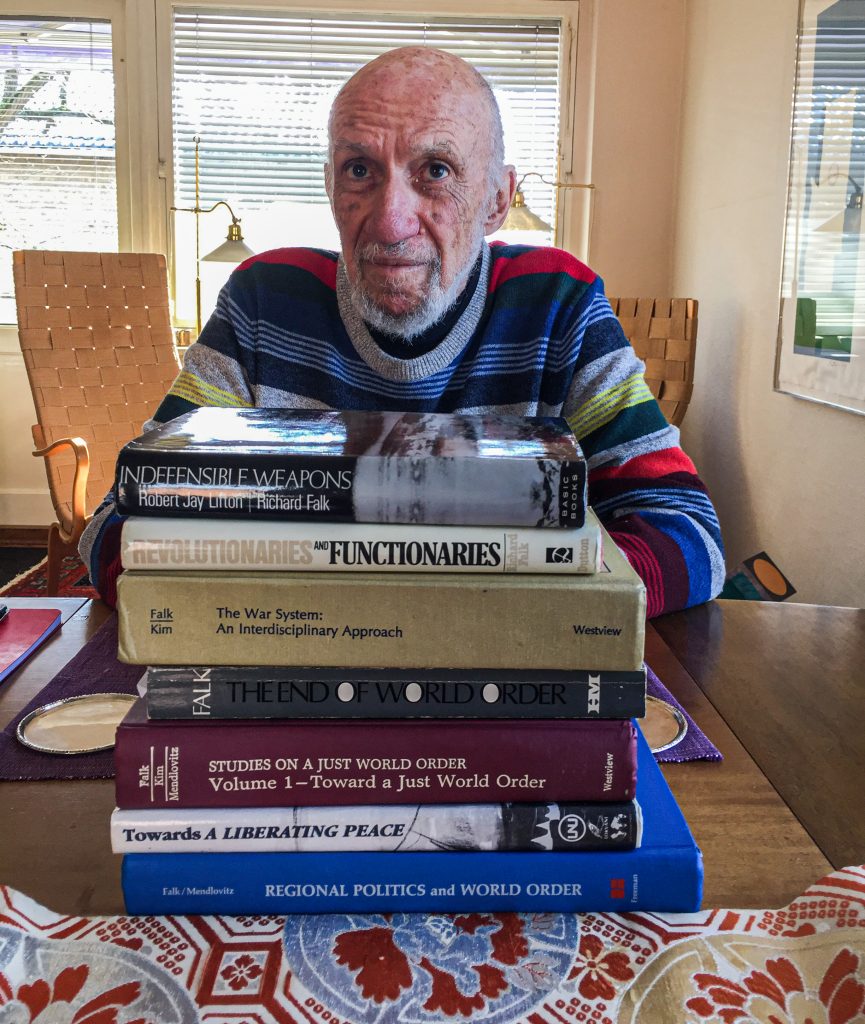
The author Richard Falk ©️ Jan Oberg

 Beyond this, Friedman in his telltale and flip opening sentence writes, “I will leave it to historians to debate whether Israel is committing genocide in Gaza.” To begin with, at this stage the reality of Gaza genocide is no more debatable than that of the Holocaust, or for that matter the genocide carried out some years ago against the Rohingya people living in Myanmar. And the continued evasion of naming is no longer acceptable, although it could be responsibly personally hedged by being described as reflecting a now unchallengeable consensus among genocide scholars and legal experts.

At most an authoritative pronouncement of genocide awaits only a definitive legal judgment by the International Court of Justice in responding to the 2023 South African submission invoking the Convention on the Prevention and Punishment of Genocide (1948). Early in 2024 nearly unanimous rulings of the ICJ in an interim decision has already affirmed the plausibility of genocide allegations and the wrongfulness of Israeli disruptions of international deliveries of humanitarian aid. To refrain at this juncture from naming the onslaught in Gaza as ‘genocide’ is to avert one’s gaze from the gigantic elephant in the room. At the very least, Friedman might have written as follows: “In deference to the ICJ I will leave it to the jurists to settle any lingering debate as to whether Israel is committing genocide in Gaza.” Even such a revision still casts an agnostic eye on the gruesome realities daily confirmed by the images and words of brave photographers and journalists on the ground who have too often paid with their lives for acts of truth-telling professionalism

A second level of evasion on Friedman’s part is to fall in line with those that call the Israeli violence of the past two years in Gaza as acts committed during a ‘war.’ Such a designation enables atrocities to be sidelined in public consciousness as at worst regrettable incidents of ‘collateral damage’ or ‘mishaps’ attributable to ‘the fog of war,’ explained away as combat tactics reasonably relied upon as matters of ‘self-defense’ and ‘military necessity.’ Yet by now such an Israeli dominated public discourse on the violence, suffering, and cruelty inflicted on over two million entrapped Palestinians lacks any credibility, and so the war discourse should be disregarded as state propaganda. The conflict as has been widely observed by many close observers bears a closer resemblance to ‘a massacre’ than a war because it is so one sided with the most modern weaponry of land, sea and air possessed on the Israeli side and primitive weaponry or none at all on the Palestinian resisting side.

The casualty statistics, although confirming this interpretation are diversely measured at present, with the Gaza Ministry of Health as of July 2025 officially listing over 63,000 deaths, plus more than double that number wounded, while declaring 887 IDF personnel killed as well as 815 Israeli civilians. The respected UK medical journal, The Lancet, has published various expert analyses suggesting that the Palestinians are at least 41% underreported by these official figures, especially in relation to indirect deaths due to traumatic causes and malnourishment, including one Lancet estimate in July 2024 that at least 186,000 Palestinian have perished due to the Israeli attack. At present, the entire surviving Palestinian population is at risk due to the recent Gaza City escalation, acutely imperiling one million sheltering Palestinian civilians and abetted by ordering dangerous evacuations amid Famine 5 acute food shortages.

The third level of Israeli-oriented brainwashing is perhaps the most disturbing of all, allowing Israel and the US to decide upon ‘day after arrangements’ with the perverse consequences of rewarding the perpetrators and accomplices of genocide, while further punishing the victim population and affirming a reductionist demonization of Hamas as ‘a terrorist entity.’ It is as if it was left to surviving Nazi leaders to preside over post-World War II arrangements, including regarding those affecting surviving death camp inhabitants and the fate of Israel.Friedman completely adheres to the Israeli narrative when it comes to the October 7 attack as unprovoked and barbaric, also subscribing to ‘a blaming the victim’ rationale of the ongoing Palestinian ordeal.

Friedman insist that if only Hamas had returned the remaining Israeli hostages it would have spared Palestinians the slaughter of recent months. In his words, “Hamas’s leadership could have ended all of this suffering by agreeing to quit Gaza and release all its hostages. By perpetuating this war, Hamas has also engaged in its own heinous crimes — the murder of Israeli hostages and the human sacrifice of thousands of Gazans to Hamas’s mad dreams. It’s all true — and relevant.” [For a more nuanced and accurate portrayal of Hamas see Helena Cobban & Rami G. Khouri, Understanding Hamas and Why It Matters (OR Books, 2024).] Is it really true or relevant?

There is again silence on the part of Western media when it comes to the most verified influential reports of post-October 7 detention of hundreds of innocent Palestinian civilians and confinement accompanied by routine torture. Such Palestinians are hardly noticed and certainly never receiving the special attention reserved  by the term ‘hostages,’ a term reserved for the unfortunate Israelis detained in the course of the October 7 attack. The Israeli managed the public discourse on this issue in such a distorted manner that only Israelis are media identified as ‘hostages,’ with the unconscious effect of the dehumanization of the Palestinian ‘other’ whose captivity is not even worthy of notice.  

Friedman’s explanation for why Israel is feeling the heat of global criticism while Hamas generally escapes censure except by complicit Western governments. Friedman poses the rhetorical question, “So why is the world ganging up on Israel now?” His disguised Zionist response is revealingly tone deaf, as well as stunningly blind to the unfolding account of the cruel daily occurrences that brings tears to the eyes of persons of conscience the world over: “Because it holds Israel to a higher standard than Hamas, because Israel has always held itself to a higher standard.” Only a self-censoring media platform would allow such slanted language to find its way into print. To forget the expulsion of more than 700,000 Palestinians from their homeland with no right of return in 1948 was winked at by the world, as were decades of defiant lawlessness in administering the occupied territories of Gaza and the West Bank. Rather than being held to a higher standard Israel was given a no holds barred exemption from its legal duties to apply international humanitarian law in its treatment of Palestinians and their rights, including Israel’s lapsed commitment to implement the UNGA 1947 Partition Resolution 181(II) which underpins Israel’s own claims of sovereign rights.

There are reasons to take a serious look at Friedman’s warnings to Israel’s supporters that its current leadership “is committing suicide, homicide and fratricide.” Such an evaluation from a longtime influential journalist is in reaction to his overall conviction that Israel’s future is indeed bleak if it fails to challenge effectively Israel’s growing classification and treatment as a pariah state. If this status becomes frozen, as now seems almost certain, it will jeopardize Israel’s prospects for a normal, prosperous, viable future.

Friedman’s solution is indeed a great departure from his uncritical prior unabashed pro-Israeli writings when it comes to questioning Zionist approaches to the conflict. It for Israel to agree immediately to a permanent ceasefire and military withdrawal from Gaza in exchange for a release of the hostages. This preliminary recommended move is to be followed by Palestinian governance of Gaza configured to please Israel as well as the complicit West by excluding Hamas and relying upon a reconstituted Palestinian Authority that is sufficiently collaborative to satisfy the Tel Aviv leadership. In my view, this is a non-solution, but a formula for a more subtle way of achieving Zionist goals and consigning the Palestinian people to new miseries. Friedmans ‘solution’ is what Palestinians who insist on their right of self-determination dismiss as ‘breadcrumb diplomacy’ in the form of a demilitarized statelet, aptly alternatively described as ‘a Bantustan,’     

The true path to a justice-driven peace depends on implementing the ICJ July 2024 Advisory Opinion terminating Israel’s role as Occupying Power in Gaza and the West Bank. This change of formal status should be coordinated with internationally monitored free elections in Gaza with Hamas having the option to compete for votes with other political entities. If this process were able to go forward smoothly it might become  possible to have real peace and justice negotiations between Israel and Palestine but only after Israel renounces Zionism, dismantles apartheid, agrees to respect the right of return of Palestinian refugees, and engages with leading Arab governments, the EU, Canada, and the US in reparation arrangement allowing for reconstruction of devastated Gaza, and the ravaged West Bank. It would also be desirable to redress past Palestinian grievances to establish a Peace and Reconciliation Commission that would provide an objective account of the historical record, which has helped clear the air in other post-conflict situations of transition. A final vital step would be a nuclear free internationally verified nuclear free zone applicable throughout the Middle East together with a cap on annual military spending.

A long and difficult to do agenda, but anything less will not reach the deep roots of this century long conflict that began during the British Mandate that commenced after Palestine’s relatively peaceful existence beneath the mantle of the Ottoman Empire. After World War I and the Ottoman collapse Britain fulfilled the colonialist Balfour Declaration that pledged support to the Zionist Movement for a Jewish homeland (but not a state) in Palestine.  Support consisted of greenlighting Jewish immigration and property purchases without bothering to obtain the consent of the Arab large majority population in Palestine. This paved the way after World War II for the Zionist settler colonial project that reached its current genocidal climax during the past two years and is now poised to either further reenforce this criminal past or transcend it. If the latter happens it will be an historic victory not only for the Palestinians but for all of humanity, and a tribute to the activism of civil society. If not, worse is sure to come.

Professor Falk became an adviser to TFF when it was established in 1985.

Share

Leave a Reply

Your email address will not be published. Required fields are marked *

Related Posts

PRESS RELEASE – 6 OCTOBER 2025 LAY DOWN YOUR ARMSPEACE PRIZE FOR 2025 is awarded Francesca Albanese The United Nations Special Rapporteur on the occupied Palestinian territories – as the person who, in accordance with Alfred Nobel’s will, has “done the most or the best work for fraternity between nations and for the abolition or reduction of standing armies as well as for the holding and promotion of peace congresses.” Francesca Albanese has forcefully and unwaveringly worked against Israel’s full-scale war on the occupied Palestinian territories, in particular Israel´s ongoing genocide against the Palestinian people. She has confronted Israel’s systematic war crimes and crimes against humanity in a truly global outreach. Further, she has brought governments, international organisations and people’s groups together to underline the responsibility of the world at large to act and to stop arming, enabling, and profiting from Israel’s ongoing criminal actions. But first of all, Albanese...
Officially, the drones were not identified. By simply thinking critically – which journalists and selected experts no longer do – there may be a good reason for that. And this article will never be mentioned in Denmark… Drones over Denmark. No damage. No trace. No answers. Yet the headlines scream “Russian threat,” and Prime Minister Mette Frederiksen speaks with a certainty that defies logic: “We don’t know they were Russian—but we know Russia is the biggest threat to Europe.” It could be nobody else – unless you make an interest analysis which I did two days ago. This is not security policy. It’s theatre. And the audience is being played. Let’s rewind. These drones—unphotographed, untracked, unclaimed—appear and vanish like ghosts. Airports shut down. Panic spreads. Military budgets swell. And the narrative hardens: Russia is behind it. But what if that’s not just wrong but deliberately misleading? Here’s a hypothesis for...
And why the world, especially the EU, must now declare itself independent of the United States. UN’s 80th anniversary This year, the United Nations celebrates the 80th anniversary of its founding. The UN was formed after the scourge of the Second World War, in which 70 to 85 million people were killed and many countries were destroyed. That war came on the heels of the First World War, which also killed between 15 and 22 million people. After the Second World War, especially after the use of nuclear weapons by the United States, which marked a turning point in the history of warfare that could result in the end of civilisation as we know it, humanity decided to move away from the era of empires and big power politics and usher in a new era of peace, freedom and cooperation. These were the principles enshrined in the UN Charter. The United States...

Recent Articles

Gandhi, Arun. Lord Richard Attenborough. Kasturba: a lifeNew Delhi: Penguin Books Ltd., 2000.315 pp, 295 Indian Rs, US $22.51 January 29, 2002 Arun Gandhi, grandson to Mohandas and Kasturba, has written a thorough account of Kasturba’s life. Arun begins with a description of Kasturba’s childhood in Porbandar in the late1800s, before she met Mohandas. By having chosen to embark on difficult research into his grandmother’s life, including her first years which are not well-documented, Arun ensures that the reader receives an intimate and life-long portrait of this amazing woman. Kasturba is presented as a lively woman &endash; obedient, yet with a mind of her own. As the relationship between Kasturba and Mohandas developed, Arun maintains that Kasturba’s influence over Mohandas in her own quiet way also grew, to which some of Mohandas’ writings also attest.  Arun paints a vivid picture of the beginnings of Mohandas’ non-violence movement in South Africa, a...
In response to an urgent Appeal from all the living Nobel Peace Prize Laureates, the General Assembly of the United Nations, on November 1998, unanimously declared the first decade of the twenty-first century to be The Decade for a Culture of Peace and Nonviolence. While people are naturally concerned about the amount of violence in our world and how it threatens our future, the Nobel Laureates are right to remind us of the potential of nonviolence and our calling to build a culture of peace and nonviolence.  The twentieth century is instructive in the way that the philosophy and practice of nonviolence have begun to flourish and in the way that nonviolent movements have had an exponential growth across the world. Mohandas Gandhi and Martin Luther King, Jr. are the most famous nonviolent leaders but many have built upon the paths they charted as in country after country, tyrannies and...
We know that medical personnel have failed to report to higher authorities wounds that were clearly caused by torture and that they have neglected to take steps to interrupt this torture. In addition, they have turned over prisoners’ medical records to interrogators who could use them to exploit the prisoners’ weaknesses or vulnerabilities. We have not yet learned the extent of medical involvement in delaying and possibly falsifying the death certificates of prisoners who have been killed by torturers. A May 22 article on Abu Ghraib in the New York Times states that “much of the evidence of abuse at the prison came from medical documents” and that records and statements “showed doctors and medics reporting to the area of the prison where the abuse occurred several times to stitch wounds, tend to collapsed prisoners or see patients with bruised or reddened genitals.” http://www.truthout.org/docs_04/080604J.shtml#16 According to the article, two doctors who...

TFF on Substack

Discover more from TFF Transnational Foundation & Jan Oberg.

Most Popular

Gandhi, Arun. Lord Richard Attenborough. Kasturba: a lifeNew Delhi: Penguin Books Ltd., 2000.315 pp, 295 Indian Rs, US $22.51 January 29, 2002 Arun Gandhi, grandson to Mohandas and Kasturba, has written a thorough account of Kasturba’s life. Arun begins with a description of Kasturba’s childhood in Porbandar in the late1800s, before she met Mohandas. By having chosen to embark on difficult research into his grandmother’s life, including her first years which are not well-documented, Arun ensures that the reader receives an intimate and life-long portrait of this amazing woman. Kasturba is presented as a lively woman &endash; obedient, yet with a mind of her own. As the relationship between Kasturba and Mohandas developed, Arun maintains that Kasturba’s influence over Mohandas in her own quiet way also grew, to which some of Mohandas’ writings also attest.  Arun paints a vivid picture of the beginnings of Mohandas’ non-violence movement in South Africa, a...
In response to an urgent Appeal from all the living Nobel Peace Prize Laureates, the General Assembly of the United Nations, on November 1998, unanimously declared the first decade of the twenty-first century to be The Decade for a Culture of Peace and Nonviolence. While people are naturally concerned about the amount of violence in our world and how it threatens our future, the Nobel Laureates are right to remind us of the potential of nonviolence and our calling to build a culture of peace and nonviolence.  The twentieth century is instructive in the way that the philosophy and practice of nonviolence have begun to flourish and in the way that nonviolent movements have had an exponential growth across the world. Mohandas Gandhi and Martin Luther King, Jr. are the most famous nonviolent leaders but many have built upon the paths they charted as in country after country, tyrannies and...
We know that medical personnel have failed to report to higher authorities wounds that were clearly caused by torture and that they have neglected to take steps to interrupt this torture. In addition, they have turned over prisoners’ medical records to interrogators who could use them to exploit the prisoners’ weaknesses or vulnerabilities. We have not yet learned the extent of medical involvement in delaying and possibly falsifying the death certificates of prisoners who have been killed by torturers. A May 22 article on Abu Ghraib in the New York Times states that “much of the evidence of abuse at the prison came from medical documents” and that records and statements “showed doctors and medics reporting to the area of the prison where the abuse occurred several times to stitch wounds, tend to collapsed prisoners or see patients with bruised or reddened genitals.” http://www.truthout.org/docs_04/080604J.shtml#16 According to the article, two doctors who...
Read More
Imagen-thumbnail-The-Transnational-1
Gandhi, Arun. Lord Richard Attenborough. Kasturba: a lifeNew Delhi: Penguin Books Ltd., 2000.315 pp, 295 Indian Rs, US $22.51 January 29, 2002 Arun Gandhi, grandson to Mohandas and Kasturba, has written a thorough account of Kasturba’s life. Arun begins with a description of Kasturba’s childhood in Porbandar in the late1800s, before she met Mohandas. By having chosen to embark on difficult research into his grandmother’s life, including her first years which are not well-documented, Arun ensures that the reader receives an intimate and life-long portrait of this amazing woman. Kasturba is presented as a lively woman &endash; obedient, yet with a mind of her own. As the relationship between Kasturba and Mohandas developed, Arun maintains that Kasturba’s influence over Mohandas in her own quiet way also grew, to which some of Mohandas’ writings also attest.  Arun paints a vivid picture of the beginnings of Mohandas’ non-violence movement in South Africa, a...
Imagen-thumbnail-The-Transnational-1
In response to an urgent Appeal from all the living Nobel Peace Prize Laureates, the General Assembly of the United Nations, on November 1998, unanimously declared the first decade of the twenty-first century to be The Decade for a Culture of Peace and Nonviolence. While people are naturally concerned about the amount of violence in our world and how it threatens our future, the Nobel Laureates are right to remind us of the potential of nonviolence and our calling to build a culture of peace and nonviolence.  The twentieth century is instructive in the way that the philosophy and practice of nonviolence have begun to flourish and in the way that nonviolent movements have had an exponential growth across the world. Mohandas Gandhi and Martin Luther King, Jr. are the most famous nonviolent leaders but many have built upon the paths they charted as in country after country, tyrannies and...
Imagen-thumbnail-The-Transnational-1
We know that medical personnel have failed to report to higher authorities wounds that were clearly caused by torture and that they have neglected to take steps to interrupt this torture. In addition, they have turned over prisoners’ medical records to interrogators who could use them to exploit the prisoners’ weaknesses or vulnerabilities. We have not yet learned the extent of medical involvement in delaying and possibly falsifying the death certificates of prisoners who have been killed by torturers. A May 22 article on Abu Ghraib in the New York Times states that “much of the evidence of abuse at the prison came from medical documents” and that records and statements “showed doctors and medics reporting to the area of the prison where the abuse occurred several times to stitch wounds, tend to collapsed prisoners or see patients with bruised or reddened genitals.” http://www.truthout.org/docs_04/080604J.shtml#16 According to the article, two doctors who...
Imagen-thumbnail-The-Transnational-1
Jan Øberg behandler i artiklen en lang række faktorer, som ligger til grund for den måde vores samfund er organiseret på – og derfor også for konflikter. Artiklen introducerer således sammenhængen mellem familien, foreninger, regeringer, NGO’ er, nation, stat, nationalstat og alliancer for på denne måde bedre at kunne forstå konflikter og i sidste ende blive klogere mht. at løse disse. Øberg, der er fortaler for global bevidsthed, hvilket skal ses i lyset af den øgede globalisering, skelner mellem kulturkamp og kulturdialog. Endelig behandles begrebet magt og magtesløshed: giver magt ret til at udøve magt – fordi man mener at have ret? Litteraturliste og arbejdsspørgsmål efter artiklen. Ordene vi bruger om verden I satellitperspektiv kan man godt tale om den menneskelige familie eller menneskeheden. Udtrykket understreger, at der eksisterer – eller burde eksistere – et fællesskab fordi vi alle er mennesker og sammen bebor denne klode og ingen anden. Og...
Imagen-thumbnail-The-Transnational-1
Kapitel 2: Forskellige sider af Europa og USA…fortsat 2.5 Militære relationer I forbifarten har vi allerede sagt nogle ting om USA’s militære situation. Kig lige en gang til på afsnit 2.3. Nu skal vi uddybe det militære forhold mellem USA og EU. Der er en række ligheder mellem visse europæiske landes og USA’s militær. Næsten alle er med på en eller anden måde i NATO, direkte som medlem – selv Island, der ikke har et forsvar – eller indirekte i Partnerskab for Fred. USA og Canada er med i OSCE (på dansk OSSE), Organisationen for Sikkerhed og Samarbejde i Europa, der tæller over 50 lande. USA samt England og Frankrig er kernevåbenstater og de har styrker til intervention langt borte fra hjemlandet, om end USA’s er tifold større. Alle har også en omfattende våbeneksport og bruger den som et middel til at tjene penge og få loyale venner på, det...
Imagen-thumbnail-The-Transnational-1
Background Christian Harleman and Jan Oberg conducted a fact-finding mission to Burundi between November 26 and December 6, 2003. (See websites about the country here). The first TFF mission took place in March 1999. Unfortunately, since then it has not been practically possible to implement the co-operation with Burundi’s Ministry of Education and Burundian NGOs that was planned at the time. The 2003 mission had three purposes. First, to do fact-finding in general about the situation and, in particular, the progress under the Arusha Peace Process. Second, to explore the possibilities for co-operation between the government and relevant NGOs on the one hand and TFF on the other, in order to develop and deepen the existing competence in fields such as conflict-understanding, reconciliation and peace-building. Finally, third, to find out whether it would be possible, in co-operation with the Swedish Rescue Services Agency (Statens Räddningsverk), to establish a health care unit that...

