Greenland in Denmark's American Puppet Theatre
. It points to the scandalous situation the Trump Regime is now causing in 2025.

Re-published on March 30, 2025

With Foreign Minister Jeppe Kofod at the helm, Denmark is now heading for its biggest foreign policy scandal – and that’s saying a lot – since the occupation of Iraq.

According to this article on DR.dk, neither the Foreign Policy Committee nor the Greenland Committee has been informed about the US ‘offer you can’t refuse’ to Greenland – as presented by the US ambassador in Copenhagen, Carla Sands, on Altinget.*
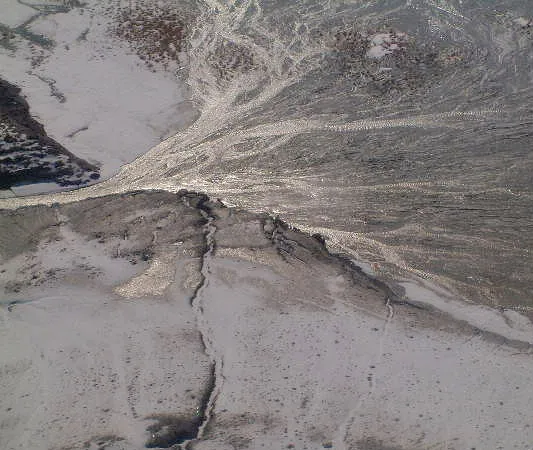
© Jan Oberg

Members of parliament from both SF and the Danish People’s Party call the US announcement ‘reprehensible’ and ‘unheard of.’ Former Foreign Minister Martin Lidegaard says he has not been informed about it.

So either the government has been informed by the US but has kept the negotiations secret, or the US is now in the process of buying Greenland behind Denmark’s back.

The Foreign Minister’s response in the above article’s video smells like something is not quite right. And what he is quoted as saying shows that he hasn’t understood the much larger conflict that this is part of. For him, the relationship with the US is paramount.

It will prove to be a very short-term perspective. But it’s the most convenient.

Denmark doesn’t dare enter into a conflict with the US over this as much as anything else. Presumably, Danish foreign policy pants were shaken when Prime Minister Frederiksen used the word ‘absurd’ in relation to Trump’s ‘property trade’ proposal last year and his insulting cancellation of his visit to Denmark.

Then the president had to be softened up with a phone call and a consulate in Greenland, and now comes Trump’s heartwarming desire to help the poor Greenlanders. The amount – DKK 83 million – is small enough not to seem like a purchase and large enough to be interesting to the apparently somewhat inexperienced Greenlandic members of parliament in international politics.

It’s a kind of bait and switch. To get on the slippery slope. The strategy is well known, where the US does not use bombing and occupation: Incremental influence via money and services leading over time to total domination and consequent disempowerment and use of Greenland in the US confrontation policy against Russia and China.

It seems that the chairman of the Greenlandic Home Rule Government, Kim Kielsen, is on board. But will Greenland – strategically speaking – be more independent with Washington alone than with Copenhagen? Together with the US, Denmark, Russia and China?

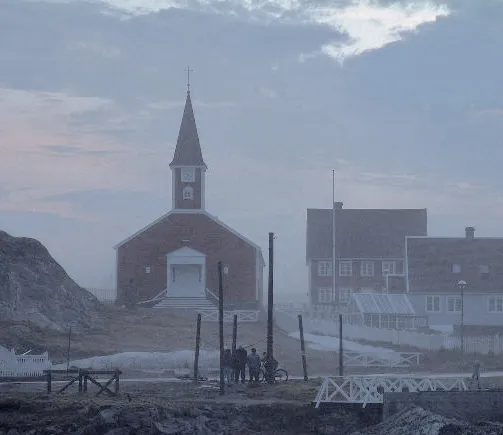
Greenland fading… © Jan Oberg

Denmark’s submission and the Danish Broadcasting’s role as the US mouthpiece

Seen with independent eyes, it should be clear enough that Denmark has not, at least in the last 30 years, pursued anything that could be called an independent – or independently-minded – foreign policy in relation to the US.

To be more loyal to the interests of your own population – the Danes and Greenlanders – than to the imperial and militaristic interests of the US state – well, you just can‘t do that.

But it is an unfreedom that goes against sovereignty, democracy and the idea of freedom of speech – yes, even a normal interpretation of friendship.

In terms of foreign policy, Denmark behaves towards Washington as East Germany did towards Moscow in its time. The most telling thing that has been said about the relationship with the US was expressed by Prime Minister Mette Frederiksen at the press conference following the US assassination of Iranian General Soleimani when (after condemning Iran’s weak response) she was asked how she viewed it: ‘I have no need to comment on American activities.’

And without exception, DR – The Danish Broadcasting – plays the completely unacceptable role of US mouthpiece for public service. All you have to do is find an associate professor at the Royal Danish Defence College – a clear party to the case and not impartial expertise – who has already interpreted the case in the US military press (informatively but one-sidedly) in favour of the strategy the US is now following.

Naturally, DR wouldn’t dare find an expert with a critical stance on US foreign policy, but still feels obliged to report if members of parliament are critical.

The government and Jeppe Kofoed have a very bad case on their hands.

© Jan Oberg

A simple analysis and good friends with everyone: Win/win and ‘equidistance’

I’ve written about this before – way back in 2005 when I visited Greenland in connection with the Igaliku Agreement (see below) – and here on the blog, especially with reference to an excellent article by Ulrik Tarp Jensen from last year – ‘How the US is kicking the Danes out of Greenland.’

Denmark is now subject to a form of regime change policy from the US.

© Jan Oberg

If the Danish foreign ministry had the political courage and will, a knowledgeable, broad investigative capacity and a reasonable planning horizon, a sober conflict analysis of the motives and capacities of the Arctic actors would have been made long ago, and scenarios of the type ‘if we do A, this will happen’ and ‘if we instead do B or C or D, the other actors in current and future conflicts will probably do the positive and the negative. So, all things being equal, we should probably choose to go this way for the next 20-30 years…’

I would think that a total submission like this to the US and thus antagonising all other players would be the most likely losing strategy for both Greenland and Denmark itself.

Also, the US is a sinking ship in the short term; neither Russia nor China is. China in particular has infinitely more to offer Greenland in terms of economic, cultural, ecological and other civil co-operation à la the new Silk Roads – which you can read wise perspectives on by Mia Bennett here and here – ‘the US has already fallen behind.’

Personally, I would use the theory of equidistance and keep as many doors open as possible – not playing one against the other, but playing together. After all, this not a zero-sum game.

By letting the US take an incrementalist approach to Greenland, where the US will gain infinitely more than Greenland and Copenhagen will lose Greenland for all practical purposes, you miss out on all the potential for cooperation and détente that could be found in a good relationship with Russia and China.

In other words: loose/loose (which Kofod erroneously and wishfully presents as win/win) instead of loose a little and win a lot.

Notes and more reading

– The fact that ambassador Sands’ description of both Russia and China is chock-full of both fake and omissions should give anyone cause to suspect foul play. It also shows that this is a matter of big politics, not concern for Greenlanders.

– There are several informative articles on Altinget about this whole affair.

The Ministry of Foreign Affairs’ Arctic Strategy 2011-2020

– On 28 April, Hans Jakob Helms writes an interesting article on Altinget about the current development in light of the 2004 Igaliku Agreement between Denmark, Greenland and the USA.

– Jan Øberg, Greenlandic Cultural and Social Research 2004-05, Balancér Igaliku-aftalen med fredspolitik. Here in English.
The Igaliku Agreement is the Greenlandic-Danish-American agreement that gives the US carte blanche to use the Thule Air Base. The article reviews what the agreement says and doesn’t say, and places it within the framework of the US strategy for nuclear warfare.
I then make 7 suggestions on how Greenland can contribute to a more peaceful world in the future, now that it has – probably unwittingly – contributed to a possible nuclear war.
The lecture gave rise to some debate in Greenland and is now published in the University of Greenland’s – Ilimatusarfik’s – Yearbook by Atuagkat Publishing.

The Igaliku agreement should have been put to a referendum
IA’s Kuupik Kleist has lashed out at peace and conflict researcher Jan Øberg, who has criticised Greenland for allowing the missile shield at the Thule base. (Greenland Broadcasting Corporation).

– Fredrik Heffermehl in Politiken last 2019.

Find here the original article in Danish on Jan Oberg’s blog, April 2020.
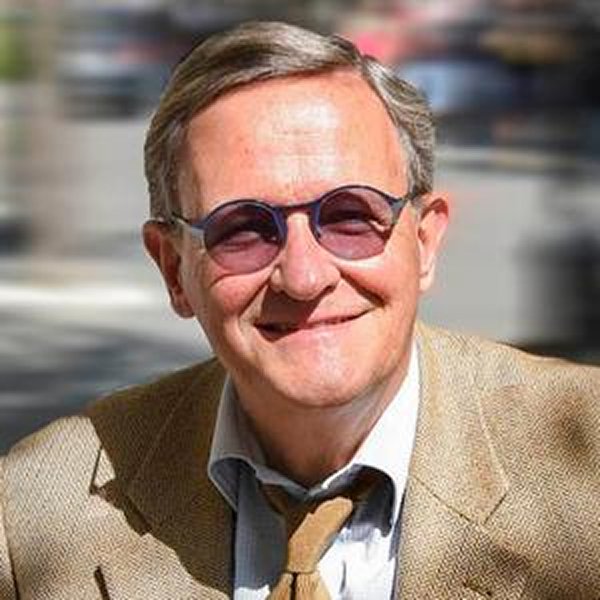
Peace & future researcher + ‌Art Photographer

Share

Leave a Reply

Your email address will not be published. Required fields are marked *

Related Posts

Officially, the drones were not identified. By simply thinking critically – which journalists and selected experts no longer do – there may be a good reason for that. And this article will never be mentioned in Denmark… Drones over Denmark. No damage. No trace. No answers. Yet the headlines scream “Russian threat,” and Prime Minister Mette Frederiksen speaks with a certainty that defies logic: “We don’t know they were Russian—but we know Russia is the biggest threat to Europe.” It could be nobody else – unless you make an interest analysis which I did two days ago. This is not security policy. It’s theatre. And the audience is being played. Let’s rewind. These drones—unphotographed, untracked, unclaimed—appear and vanish like ghosts. Airports shut down. Panic spreads. Military budgets swell. And the narrative hardens: Russia is behind it. But what if that’s not just wrong but deliberately misleading? Here’s a hypothesis for...
And why the world, especially the EU, must now declare itself independent of the United States. UN’s 80th anniversary This year, the United Nations celebrates the 80th anniversary of its founding. The UN was formed after the scourge of the Second World War, in which 70 to 85 million people were killed and many countries were destroyed. That war came on the heels of the First World War, which also killed between 15 and 22 million people. After the Second World War, especially after the use of nuclear weapons by the United States, which marked a turning point in the history of warfare that could result in the end of civilisation as we know it, humanity decided to move away from the era of empires and big power politics and usher in a new era of peace, freedom and cooperation. These were the principles enshrined in the UN Charter. The United States...
Drones over Nordic airports. No damage. No trace. No answers. Most assume Russia—but what if that’s not so? Why is there so much we are not told? This article explores the strategic ambiguity behind recent drone incursions and asks: Who else might benefit from sending drones into NATO airspace? From Ukraine’s surprising drone supremacy to Russia’s possible signalling, the silence itself may be the loudest message. These are the kinds of questions decent, intelligent investigative journalists and commentators could easily research. Why don’t they? Did you, dear reader, know or think of this? That the most powerful weapon in today’s conflicts might be the one that leaves no trace – and no answers. Just enough fear to justify the next move? Recently, drones have repeatedly appeared over Nordic airports and near some military facilities. They cause no damage – for which reason the designation “hybrid attack” is misleading but serves a purpose. These...

Recent Articles

In response to an urgent Appeal from all the living Nobel Peace Prize Laureates, the General Assembly of the United Nations, on November 1998, unanimously declared the first decade of the twenty-first century to be The Decade for a Culture of Peace and Nonviolence. While people are naturally concerned about the amount of violence in our world and how it threatens our future, the Nobel Laureates are right to remind us of the potential of nonviolence and our calling to build a culture of peace and nonviolence.  The twentieth century is instructive in the way that the philosophy and practice of nonviolence have begun to flourish and in the way that nonviolent movements have had an exponential growth across the world. Mohandas Gandhi and Martin Luther King, Jr. are the most famous nonviolent leaders but many have built upon the paths they charted as in country after country, tyrannies and...
We know that medical personnel have failed to report to higher authorities wounds that were clearly caused by torture and that they have neglected to take steps to interrupt this torture. In addition, they have turned over prisoners’ medical records to interrogators who could use them to exploit the prisoners’ weaknesses or vulnerabilities. We have not yet learned the extent of medical involvement in delaying and possibly falsifying the death certificates of prisoners who have been killed by torturers. A May 22 article on Abu Ghraib in the New York Times states that “much of the evidence of abuse at the prison came from medical documents” and that records and statements “showed doctors and medics reporting to the area of the prison where the abuse occurred several times to stitch wounds, tend to collapsed prisoners or see patients with bruised or reddened genitals.” http://www.truthout.org/docs_04/080604J.shtml#16 According to the article, two doctors who...
Jan Øberg behandler i artiklen en lang række faktorer, som ligger til grund for den måde vores samfund er organiseret på – og derfor også for konflikter. Artiklen introducerer således sammenhængen mellem familien, foreninger, regeringer, NGO’ er, nation, stat, nationalstat og alliancer for på denne måde bedre at kunne forstå konflikter og i sidste ende blive klogere mht. at løse disse. Øberg, der er fortaler for global bevidsthed, hvilket skal ses i lyset af den øgede globalisering, skelner mellem kulturkamp og kulturdialog. Endelig behandles begrebet magt og magtesløshed: giver magt ret til at udøve magt – fordi man mener at have ret? Litteraturliste og arbejdsspørgsmål efter artiklen. Ordene vi bruger om verden I satellitperspektiv kan man godt tale om den menneskelige familie eller menneskeheden. Udtrykket understreger, at der eksisterer – eller burde eksistere – et fællesskab fordi vi alle er mennesker og sammen bebor denne klode og ingen anden. Og...

TFF on Substack

Discover more from TFF Transnational Foundation & Jan Oberg.

Most Popular

In response to an urgent Appeal from all the living Nobel Peace Prize Laureates, the General Assembly of the United Nations, on November 1998, unanimously declared the first decade of the twenty-first century to be The Decade for a Culture of Peace and Nonviolence. While people are naturally concerned about the amount of violence in our world and how it threatens our future, the Nobel Laureates are right to remind us of the potential of nonviolence and our calling to build a culture of peace and nonviolence.  The twentieth century is instructive in the way that the philosophy and practice of nonviolence have begun to flourish and in the way that nonviolent movements have had an exponential growth across the world. Mohandas Gandhi and Martin Luther King, Jr. are the most famous nonviolent leaders but many have built upon the paths they charted as in country after country, tyrannies and...
We know that medical personnel have failed to report to higher authorities wounds that were clearly caused by torture and that they have neglected to take steps to interrupt this torture. In addition, they have turned over prisoners’ medical records to interrogators who could use them to exploit the prisoners’ weaknesses or vulnerabilities. We have not yet learned the extent of medical involvement in delaying and possibly falsifying the death certificates of prisoners who have been killed by torturers. A May 22 article on Abu Ghraib in the New York Times states that “much of the evidence of abuse at the prison came from medical documents” and that records and statements “showed doctors and medics reporting to the area of the prison where the abuse occurred several times to stitch wounds, tend to collapsed prisoners or see patients with bruised or reddened genitals.” http://www.truthout.org/docs_04/080604J.shtml#16 According to the article, two doctors who...
Jan Øberg behandler i artiklen en lang række faktorer, som ligger til grund for den måde vores samfund er organiseret på – og derfor også for konflikter. Artiklen introducerer således sammenhængen mellem familien, foreninger, regeringer, NGO’ er, nation, stat, nationalstat og alliancer for på denne måde bedre at kunne forstå konflikter og i sidste ende blive klogere mht. at løse disse. Øberg, der er fortaler for global bevidsthed, hvilket skal ses i lyset af den øgede globalisering, skelner mellem kulturkamp og kulturdialog. Endelig behandles begrebet magt og magtesløshed: giver magt ret til at udøve magt – fordi man mener at have ret? Litteraturliste og arbejdsspørgsmål efter artiklen. Ordene vi bruger om verden I satellitperspektiv kan man godt tale om den menneskelige familie eller menneskeheden. Udtrykket understreger, at der eksisterer – eller burde eksistere – et fællesskab fordi vi alle er mennesker og sammen bebor denne klode og ingen anden. Og...
Read More
Imagen-thumbnail-The-Transnational-1
In response to an urgent Appeal from all the living Nobel Peace Prize Laureates, the General Assembly of the United Nations, on November 1998, unanimously declared the first decade of the twenty-first century to be The Decade for a Culture of Peace and Nonviolence. While people are naturally concerned about the amount of violence in our world and how it threatens our future, the Nobel Laureates are right to remind us of the potential of nonviolence and our calling to build a culture of peace and nonviolence.  The twentieth century is instructive in the way that the philosophy and practice of nonviolence have begun to flourish and in the way that nonviolent movements have had an exponential growth across the world. Mohandas Gandhi and Martin Luther King, Jr. are the most famous nonviolent leaders but many have built upon the paths they charted as in country after country, tyrannies and...
Imagen-thumbnail-The-Transnational-1
We know that medical personnel have failed to report to higher authorities wounds that were clearly caused by torture and that they have neglected to take steps to interrupt this torture. In addition, they have turned over prisoners’ medical records to interrogators who could use them to exploit the prisoners’ weaknesses or vulnerabilities. We have not yet learned the extent of medical involvement in delaying and possibly falsifying the death certificates of prisoners who have been killed by torturers. A May 22 article on Abu Ghraib in the New York Times states that “much of the evidence of abuse at the prison came from medical documents” and that records and statements “showed doctors and medics reporting to the area of the prison where the abuse occurred several times to stitch wounds, tend to collapsed prisoners or see patients with bruised or reddened genitals.” http://www.truthout.org/docs_04/080604J.shtml#16 According to the article, two doctors who...
Imagen-thumbnail-The-Transnational-1
Jan Øberg behandler i artiklen en lang række faktorer, som ligger til grund for den måde vores samfund er organiseret på – og derfor også for konflikter. Artiklen introducerer således sammenhængen mellem familien, foreninger, regeringer, NGO’ er, nation, stat, nationalstat og alliancer for på denne måde bedre at kunne forstå konflikter og i sidste ende blive klogere mht. at løse disse. Øberg, der er fortaler for global bevidsthed, hvilket skal ses i lyset af den øgede globalisering, skelner mellem kulturkamp og kulturdialog. Endelig behandles begrebet magt og magtesløshed: giver magt ret til at udøve magt – fordi man mener at have ret? Litteraturliste og arbejdsspørgsmål efter artiklen. Ordene vi bruger om verden I satellitperspektiv kan man godt tale om den menneskelige familie eller menneskeheden. Udtrykket understreger, at der eksisterer – eller burde eksistere – et fællesskab fordi vi alle er mennesker og sammen bebor denne klode og ingen anden. Og...
Imagen-thumbnail-The-Transnational-1
Kapitel 2: Forskellige sider af Europa og USA…fortsat 2.5 Militære relationer I forbifarten har vi allerede sagt nogle ting om USA’s militære situation. Kig lige en gang til på afsnit 2.3. Nu skal vi uddybe det militære forhold mellem USA og EU. Der er en række ligheder mellem visse europæiske landes og USA’s militær. Næsten alle er med på en eller anden måde i NATO, direkte som medlem – selv Island, der ikke har et forsvar – eller indirekte i Partnerskab for Fred. USA og Canada er med i OSCE (på dansk OSSE), Organisationen for Sikkerhed og Samarbejde i Europa, der tæller over 50 lande. USA samt England og Frankrig er kernevåbenstater og de har styrker til intervention langt borte fra hjemlandet, om end USA’s er tifold større. Alle har også en omfattende våbeneksport og bruger den som et middel til at tjene penge og få loyale venner på, det...
Imagen-thumbnail-The-Transnational-1
Background Christian Harleman and Jan Oberg conducted a fact-finding mission to Burundi between November 26 and December 6, 2003. (See websites about the country here). The first TFF mission took place in March 1999. Unfortunately, since then it has not been practically possible to implement the co-operation with Burundi’s Ministry of Education and Burundian NGOs that was planned at the time. The 2003 mission had three purposes. First, to do fact-finding in general about the situation and, in particular, the progress under the Arusha Peace Process. Second, to explore the possibilities for co-operation between the government and relevant NGOs on the one hand and TFF on the other, in order to develop and deepen the existing competence in fields such as conflict-understanding, reconciliation and peace-building. Finally, third, to find out whether it would be possible, in co-operation with the Swedish Rescue Services Agency (Statens Räddningsverk), to establish a health care unit that...
Imagen-thumbnail-The-Transnational-1
Former UN Under-Secretary-General with special responsibility for peacekeeping operations TFF associate August 20, 2003 YRINGHAM, Mass.- Ralph Bunche was born in Detroit 100 years ago today (August 7, 2003). His passionate determination to get results did not extend to seeking credit for them, so his work is better remembered than he is. Of all his many accomplishments – civil rights pioneer, Nobel Peace Prize laureate, chief drafter of two chapters of the United Nations charter, negotiator of the armistices that ended the first Arab-Israeli war – Bunche said he was proudest of developing what came to be known as peacekeeping. Setting up the United Nations Truce Supervision Organization in Palestine in 1948, Bunche formulated the principles that have governed peacekeeping operations ever since. In the 1956 Suez crisis, working with Secretary General Dag Hammarskjold and Lester Pearson of Canada, he organized the first peacekeeping force, the United Nations Emergency Force...