This is a chapter in a TFF anthology in the making
“If You Want To Understand China.”
Foreword, Introduction, Authors and Table of Content here.
China has had an unprecedented development in the last 4 decades. It cannot be disputed. The progress list is long and covers absolutely everything, literally all walks of life, from on pavements to in space, from schools to research, from microchips to quantum computing, from one child to many and on and on.
In several fields, though, China remains stable: the culture, the hard work and the commitment to The Project, the project for a shared future for humankind.
It is a fact that the West is in decline, and China is on the rise. Relatively speaking, it is logical because that is how it is in zero-sum games. But is it really a zero-sum game? I do not think so; the cake can be baked bigger. It needs to be baked bigger with the increase in the global population. The zero-sum thinking is in line with the black-and-white thinking: There is no such thing; there are lots of colours in between. (It has been estimated that humans can distinguish approximately 10 million different colours from each other.)
This brings me to the conclusion that even if China is rising, the West could also be rising. Why, then, is the West declining?
My understanding of it can be condensed to the fact that China has a Project while, in contrast, the West has no Project.
The China Project is more than 5000 years old. No matter the dynasty, governance, or comings and goings, the kernel of the culture has been – and is – kept. Now, approximately 1,4 billion people contribute to the project. That is powerful.
It is based on:
• A family thinking, filial piety, respect and trust. These were key elements for survival in ancient times, and they still work. The family thinking is implemented in all layers of the Chinese ”onion.”
• Meritocracy, as from Plato’s The State. There is a very sophisticated system of selection to put the best person on the next step on the educational and later bureaucratic/governance ladder. The rulers rule because they are best at that, the workers work because they are best at that. Decisions are taken in a thousand-year perspective.
• Peace brings prosperity; war brings disparity. The Belt and Road Initiative (BRI) has been called the biggest peace project ever launched. Currently, 140+ countries take part and benefit from it, representing 2/3 of the world population. All in a win-win context. Common development of infrastructure, trade and other types of cooperation can make the nations feel more secure and seek disarmament rather than confrontation and armament.
• “It does not matter if the cat is black or white as long as it catches mice.” It is accepted to make money in China, much money, billions. The billionaires create jobs, and they can only eat one breakfast a day. However, according to the governance principle and the general culture of win-win, greed is not “inside”. And to challenge “Beijing’s” power is definitely “outside”.
• The Century of Humiliation stretches from the First Opium War (1839-1842) to the end of the civil war. This tragedy is driving the nation on full string. What the West did to China shall never happen again.
• Hard work. 1400 million people x hard work – and in the same direction or, say, in the at any time given directions – results in an enormously powerful movement forward.
• Modernisation, not Westernisation. China has been looking to the West and copying, testing and modifying to what suits their system and culture in a beneficial way. Not only technology and style, but also political doctrines and ideas: This and that but always “with Chinese characteristics”.
• Global initiatives. Over the very recent years, China has presented a series of global initiatives:
GSI – Global Security Initiative, which stays committed to the vision of common, comprehensive, cooperative and sustainable security, respecting the sovereignty and territorial integrity of all countries.
GDI – Global Development Initiative, calling on the international community to accelerate implementation of the 2030 SDGs for more robust, greener and more balanced global development.
GCI – Global Civilisation Initiative advocates respect for the diversity of civilisations, the common values of humanity, the importance of inheritance and innovation of civilisations, and robust international people-to-people exchanges and cooperation.
And, of course, the Belt & Road Initiative, BRI.
This is China summarised in a few points. Add to that that the Chinese have far more trust in their governance and authorities than citizens in all other countries. Furthermore, China is not on a mission to spread its system; it does not seek hegemony. Things work, and a Chinese proverb makes this point: Do not change what works.
How is the West doing? Not so well, I am afraid, it’s lagging behind. It does not have a Project. Some of the symptoms are a lack of political leadership, failing diplomatic skill, a colonialist attitude, a hollowed-out democracy, and short-lived politicians putting re-election first. Further, endless discussions on all levels because individual rights and principles often result in upholding decisions for years and decades, wasting time, losing money and breaking progress – as well as attacking opponents, fake news and narratives – in short, overall negativity.
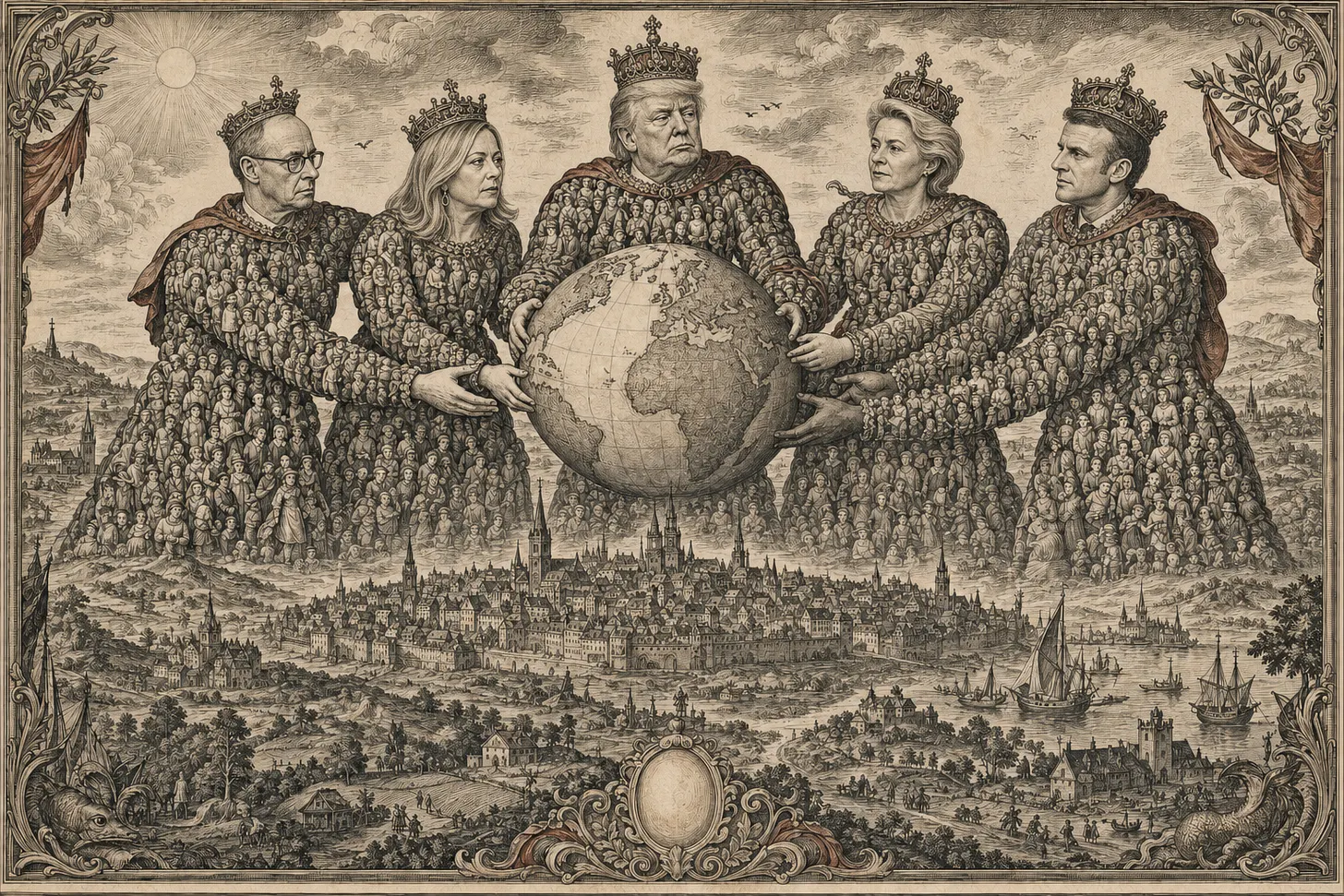
Being basically the extended arm of Washington, Europe’s position is difficult; it will split when faced with the real question of whom to support: the USA, the EU itself or China? Henry Kissinger asked, “Who to call in Europe?” A lot can be said about von der Leyen, her background, mission and attitude, but she does not have an easy task. Her leading job is like a farmer carrying a bundle of sticks that point in different directions.
The significant economic drivers, Germany and France, are trying to protect their domestic and vital industries while Hungary and Poland are against most of what comes from Brussels challenges the right to self-determination and all the other members with their different – perhaps minor, but for them essential – issues.
On top of this, the EU faces challenges from the US concerning the Build Back Better Act and the Green Act. So, seen from the outside – from the rest of the world – the EU is in chaos.
The US is running a trade war with China, and the EU does not know what to do in relation to that war or with China. Perhaps that is natural since the EU doesn’t even seem to know what to do with itself. These factors summarise the West’s troublesome position when it tries to move forward these days.
In my view, all this clearly points in one direction: If the West wants fair trade, a win-win context, as well as peace and prosperity, it ought to cooperate with China!
That, however, would be a blow to the Military-Industrial Complex (MIC), of course, but that choice must be made.
There are problems worldwide – small and big, in every family, in every country, and so too in China. One main difference in addressing them is that the West focuses on the problems while the Chinese focus on the possibilities, the solutions, and the future.
The West is split and does not have a collective project. China has.
The Chinese sign for crises contains two words: 危机 – danger and possibilities.
Which one would you choose?