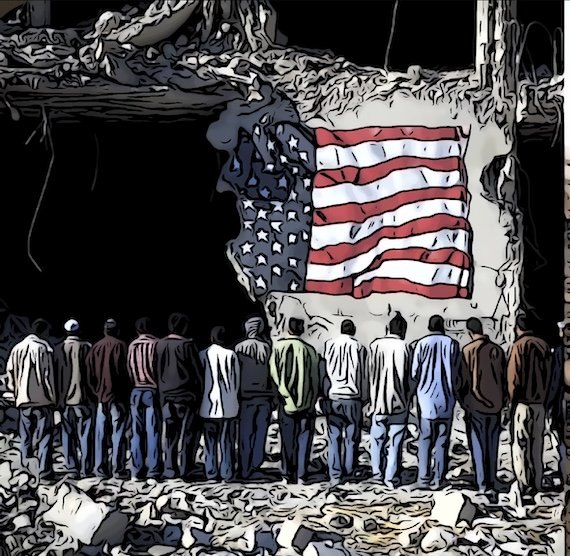
No Extermination without Representation: U.S. Election 2024

“No Extermination without Representation,” Digital, Midjourney / Clip2Comic, 2024

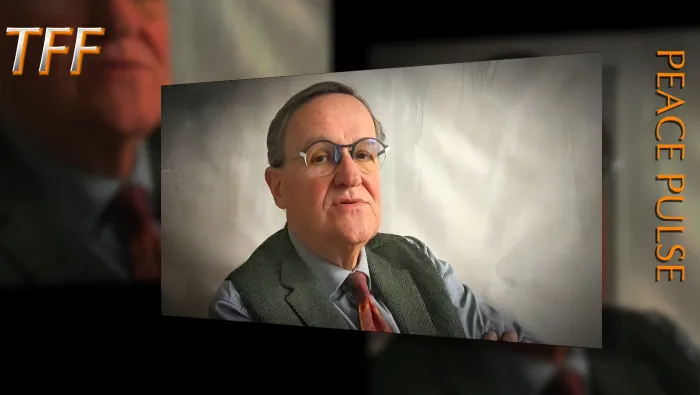
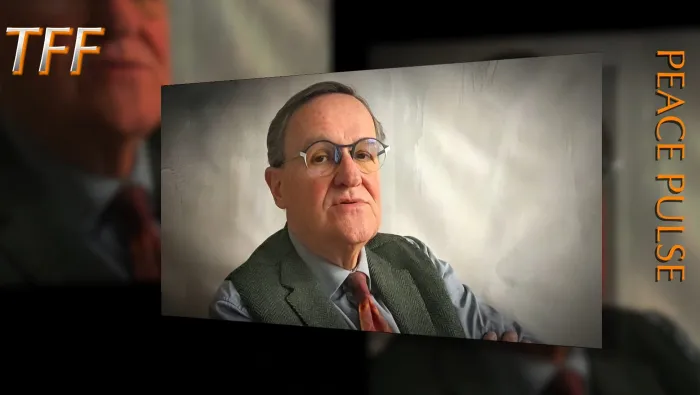
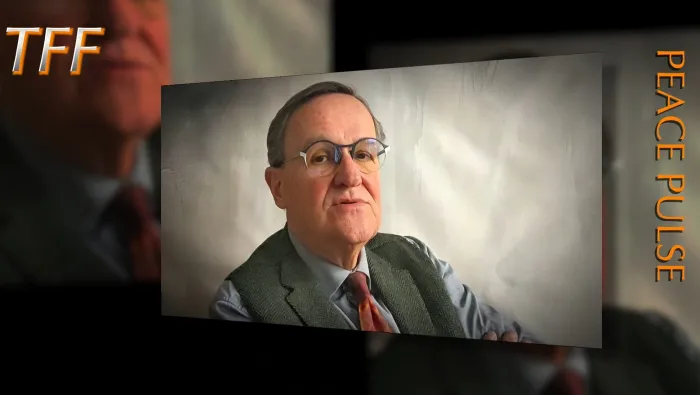
TFF Associate & former Board member

On November 5, the American people go to the polls in one of the most consequential elections for the United States and the world. Normally, outsiders should not interfere in other countries’ elections, although the United States has a habit of interfering in other countries’ elections, often overtly and sometimes with the use of coups, plots, subversion, etc.

However, as the Americans chanted “no taxation without representation” when they were fighting for their independence and tried to shake off the yoke of a foreign power over their lives, it is now appropriate for the people of the world to say “no extermination without representation.” If the rest of the world cannot have representation in US elections, at least we are entitled to express a view about it, especially when it affects the well-being or even the continued existence of the rest of the world.

This article was initially published by Informed Comment/Juan Cole here

I am writing this not as an enemy of the United States, but as a long-time friend and admirer. From my childhood, I heard glowing praise of America and its history from my father who had spent many years of his life as a young man in New York and who was a great lover of that country. I wrote a PhD thesis on Oriental Influences on the Work of Ralph Waldo Emerson when I came to study in England, and spent a wonderful summer in the United States visiting Emerson’s house in Concorde and doing research on his work at the Weidner Library at Harvard. Later on, I spent a year at Harvard as a Senior Fulbright visiting scholar teaching courses on Persian and American literature.

I also established the first Department of American Studies in Iran when I served as professor and Dean of the Faculty of Languages at the University of Isfahan. I also helped arrange the conference on the 200th anniversary of American Independence at the University of Shiraz, which served as the main anniversary conference in the Middle East and Asia. So, I have many reasons to be interested in the outcome of the US election.

The United States continues to be the most consequential country in the world. By nominal GDP, the United States is still the biggest economy in the world, and even by PPP, it is the second richest country. However, from a military point of view, it is by far the most powerful country compared to all its rivals. Never in world history has a country possessed such overwhelming power in all the corners of the world. While Russia and China can be regarded as regional superpowers, the United States is the only hyperpower with global reach and can even be regarded as the sole world hegemon.

As American generals are fond of repeating, the United States enjoys “full spectrum dominance” on land, on sea and in the air, and they are not reluctant to use America’s awesome military power. There are more than 750 U.S. military bases in at least 80 countries. They are spread from Europe to the Middle East to the Far East, right up to Japan, Australia, South Korea, and many offshore bases all over the world. NATO, which the United States leads, has 32 members and constitutes by far the biggest military alliance, surrounding Russia.

In addition to NATO in the West (which has also taken part in US wars in Afghanistan and the Middle East), there are a number of US-led alliances aimed at containing China. Following the Australia-UK-US (AUKUS) and Japan-U.S.-South Korea trilaterals, and the U.S.-Japan-India-Australia Quad, the latest US-Japan-Philippines military alliance is yet another initiative to isolate China and enhance the US’s position in the Asia-Pacific.

Since the Second World War when, on the ruins of European and Asian empires, the United States became the richest and strongest country in the world, it tried to extend its power and became a virtual empire. Although many justifications have been put forward for the use of nuclear bombs in Hiroshima and Nagasaki, the available evidence shows that one of the main reasons for their use was a demonstration of US power to Russia, which was emerging as the main US rival in the form of the former Soviet Union.

Shortly after the Second World War, the United States tried to stop the communist advance in the Far East with the invasions of Korea, Vietnam, Laos and Cambodia, killing many millions of people in those countries. Those wars were really proxy wars between the United States and the Soviet Union and China. While during the Cold War, there existed some military balance between the Western and Soviet blocs, after the collapse of the Soviet Union in 1991, the United States felt that all restrictions on her had been lifted and she could act as the sole superpower in a unipolar world. That gave rise to the US’s Operation Desert Shield to expel the Iraqi forces from Kuwait, which killed tens of thousands of Iraqi forces.

The war was followed by the invasion of Afghanistan following the 9/11 terrorist outrage, and later Iraq, and different military campaigns in Libya, Syria, Somalia, Yemen, etc. Those wars killed a few million people and cost a few trillion dollars to US taxpayers. Following the expansion of NATO to nearly all former Warsaw Pact member states, and plans to bring Ukraine into NATO, President Putin felt he had no alternative but to invade Ukraine to prevent the establishment of NATO bases in the country that he regarded as Russia’s backyard.

Since the Russian invasion of Ukraine, the U.S. Congress has provided Ukraine with at least $175b of military and humanitarian assistance. This is in addition to billions of dollars of military and economic aid given to Ukraine by Europe and other NATO members.

Since the horrendous HAMAS attack on Israel on 7 October, the Israeli government has conducted a merciless war and massacre on Palestinians in Gaza and the West Bank, and lately on Lebanon, which has killed at least 44,000, most of them women and children, 134-146 journalists, 120 academics, over 224 humanitarian aid workers, including 179 employees of UNRWA, and has injured hundreds of thousands of civilians. Most people in the Global South and even in Europe and the United States cannot understand how a Democratic administration can so blindly support a regime which according to ICJ, the world’s highest judicial authority, is engaged in “plausible genocide” and whose leaders are accused by the ICC of war crimes.

Although the Biden administration carries the major responsibility for arming Israel and becoming complicit in its war crimes, the decision of the Trump administration to grant Jerusalem and the Golan Heights to Israel, contrary to international law, and bribe some subservient Arab regimes to normalise relations with Israel in some phoney deals, known as the Abraham Accords, created a feeling of impunity among Israeli leaders who feel they can commit any crime and violate any international law without any sanctions or punishments. As a result, Israel has been acting as though it is above the law and can openly challenge and ignore numerous UN Security Council and General Assembly resolutions. This blatant lawlessness and impunity endangers the entire international order and bodes ill for the future of the so-called “rules-based international order”.

In a landmark ruling on 19 July 2024, the ICJ “declared that Israel’s occupation of the Gaza strip and the West Bank, including East Jerusalem, is unlawful, along with the associated settlement regime, annexation and use of natural resources.” It called on Israel to immediately withdraw its forces and settlements from the occupied territories and pay reparation to the Palestinians. Not only has the US not implemented that resolution, but it has continued to deliver the most-deadly weapons to Israel enabling its genocide in Gaza and war crimes in the West Bank and Lebanon.


The scope of the war on Gaza has now expanded to neighbouring countries with dangerous confrontations between Israel and Iran, Syria, Iraq and Yemen. Far from punishing Israel for those war crimes, the United States has imposed further sanctions on Iran and several other Middle Eastern countries. Iran and Russia are two of the most sanctioned countries in the world. Not only have those unilateral sanctions not forced those countries to surrender to US demands, but they have also pushed Iran closer to Russia and Russia closer to China.

The recent BRICS summit in Kazan, held from 22-24 October, was convened with the participation of five new members, namely Egypt, Ethiopia, Iran, Saudi Arabia and the United Arab Emirates. The new Nine-member BRICS partnership accounts for 45% of the world’s population and 30% of the world’s land surface. Its combined GDP of around US$65 trillion (35% of global GDP PPP) and an estimated US$5.2 trillion in combined foreign reserves are larger than that of the G7 bloc.

The wars raging in Ukraine and the Middle East and growing conflict with China have brought the world to the brink of a devastating world war with unimaginable consequences. The planet is now in a more dangerous position than at any time since the Second World War. At the same time, the United States is now more isolated than ever. A good example of US isolation can be seen in the vote at the United Nations General Assembly on 30th October 2024, demanding an end to the US embargo on Cuba. Only the United States and Israel voted against the resolution, Moldova abstained, and 187 countries, including all European countries, Australia, New Zealand, Japan, and Canada, voted for it. This level of isolation, the whole world against the United States and Israel, is unprecedented.

Most American voters do not usually pay much attention to foreign affairs, but as can be seen from the above examples, in the current interconnected world no country can keep itself immune to international developments. What the United States does in its foreign policy matters and will boomerang back to itself. Without presuming to tell the Americans how to vote in the forthcoming election, I only wish to urge them to pay more attention to the US’s foreign policies and to American values that must govern those relations.
Former Professor and Dean of the Faculty of Languages, University of Isfahan; former lecturer at Cambridge, Harvard and Oxford universities; retired Editor for Middle East and North Africa, BBC Monitoring.

Share

Leave a Reply

Your email address will not be published. Required fields are marked *

Related Posts

Officially, the drones were not identified. By simply thinking critically – which journalists and selected experts no longer do – there may be a good reason for that. And this article will never be mentioned in Denmark… Drones over Denmark. No damage. No trace. No answers. Yet the headlines scream “Russian threat,” and Prime Minister Mette Frederiksen speaks with a certainty that defies logic: “We don’t know they were Russian—but we know Russia is the biggest threat to Europe.” It could be nobody else – unless you make an interest analysis which I did two days ago. This is not security policy. It’s theatre. And the audience is being played. Let’s rewind. These drones—unphotographed, untracked, unclaimed—appear and vanish like ghosts. Airports shut down. Panic spreads. Military budgets swell. And the narrative hardens: Russia is behind it. But what if that’s not just wrong but deliberately misleading? Here’s a hypothesis for...
And why the world, especially the EU, must now declare itself independent of the United States. UN’s 80th anniversary This year, the United Nations celebrates the 80th anniversary of its founding. The UN was formed after the scourge of the Second World War, in which 70 to 85 million people were killed and many countries were destroyed. That war came on the heels of the First World War, which also killed between 15 and 22 million people. After the Second World War, especially after the use of nuclear weapons by the United States, which marked a turning point in the history of warfare that could result in the end of civilisation as we know it, humanity decided to move away from the era of empires and big power politics and usher in a new era of peace, freedom and cooperation. These were the principles enshrined in the UN Charter. The United States...
Drones over Nordic airports. No damage. No trace. No answers. Most assume Russia—but what if that’s not so? Why is there so much we are not told? This article explores the strategic ambiguity behind recent drone incursions and asks: Who else might benefit from sending drones into NATO airspace? From Ukraine’s surprising drone supremacy to Russia’s possible signalling, the silence itself may be the loudest message. These are the kinds of questions decent, intelligent investigative journalists and commentators could easily research. Why don’t they? Did you, dear reader, know or think of this? That the most powerful weapon in today’s conflicts might be the one that leaves no trace – and no answers. Just enough fear to justify the next move? Recently, drones have repeatedly appeared over Nordic airports and near some military facilities. They cause no damage – for which reason the designation “hybrid attack” is misleading but serves a purpose. These...

Recent Articles

In response to an urgent Appeal from all the living Nobel Peace Prize Laureates, the General Assembly of the United Nations, on November 1998, unanimously declared the first decade of the twenty-first century to be The Decade for a Culture of Peace and Nonviolence. While people are naturally concerned about the amount of violence in our world and how it threatens our future, the Nobel Laureates are right to remind us of the potential of nonviolence and our calling to build a culture of peace and nonviolence.  The twentieth century is instructive in the way that the philosophy and practice of nonviolence have begun to flourish and in the way that nonviolent movements have had an exponential growth across the world. Mohandas Gandhi and Martin Luther King, Jr. are the most famous nonviolent leaders but many have built upon the paths they charted as in country after country, tyrannies and...
We know that medical personnel have failed to report to higher authorities wounds that were clearly caused by torture and that they have neglected to take steps to interrupt this torture. In addition, they have turned over prisoners’ medical records to interrogators who could use them to exploit the prisoners’ weaknesses or vulnerabilities. We have not yet learned the extent of medical involvement in delaying and possibly falsifying the death certificates of prisoners who have been killed by torturers. A May 22 article on Abu Ghraib in the New York Times states that “much of the evidence of abuse at the prison came from medical documents” and that records and statements “showed doctors and medics reporting to the area of the prison where the abuse occurred several times to stitch wounds, tend to collapsed prisoners or see patients with bruised or reddened genitals.” http://www.truthout.org/docs_04/080604J.shtml#16 According to the article, two doctors who...
Jan Øberg behandler i artiklen en lang række faktorer, som ligger til grund for den måde vores samfund er organiseret på – og derfor også for konflikter. Artiklen introducerer således sammenhængen mellem familien, foreninger, regeringer, NGO’ er, nation, stat, nationalstat og alliancer for på denne måde bedre at kunne forstå konflikter og i sidste ende blive klogere mht. at løse disse. Øberg, der er fortaler for global bevidsthed, hvilket skal ses i lyset af den øgede globalisering, skelner mellem kulturkamp og kulturdialog. Endelig behandles begrebet magt og magtesløshed: giver magt ret til at udøve magt – fordi man mener at have ret? Litteraturliste og arbejdsspørgsmål efter artiklen. Ordene vi bruger om verden I satellitperspektiv kan man godt tale om den menneskelige familie eller menneskeheden. Udtrykket understreger, at der eksisterer – eller burde eksistere – et fællesskab fordi vi alle er mennesker og sammen bebor denne klode og ingen anden. Og...

TFF on Substack

Discover more from TFF Transnational Foundation & Jan Oberg.

Most Popular

In response to an urgent Appeal from all the living Nobel Peace Prize Laureates, the General Assembly of the United Nations, on November 1998, unanimously declared the first decade of the twenty-first century to be The Decade for a Culture of Peace and Nonviolence. While people are naturally concerned about the amount of violence in our world and how it threatens our future, the Nobel Laureates are right to remind us of the potential of nonviolence and our calling to build a culture of peace and nonviolence.  The twentieth century is instructive in the way that the philosophy and practice of nonviolence have begun to flourish and in the way that nonviolent movements have had an exponential growth across the world. Mohandas Gandhi and Martin Luther King, Jr. are the most famous nonviolent leaders but many have built upon the paths they charted as in country after country, tyrannies and...
We know that medical personnel have failed to report to higher authorities wounds that were clearly caused by torture and that they have neglected to take steps to interrupt this torture. In addition, they have turned over prisoners’ medical records to interrogators who could use them to exploit the prisoners’ weaknesses or vulnerabilities. We have not yet learned the extent of medical involvement in delaying and possibly falsifying the death certificates of prisoners who have been killed by torturers. A May 22 article on Abu Ghraib in the New York Times states that “much of the evidence of abuse at the prison came from medical documents” and that records and statements “showed doctors and medics reporting to the area of the prison where the abuse occurred several times to stitch wounds, tend to collapsed prisoners or see patients with bruised or reddened genitals.” http://www.truthout.org/docs_04/080604J.shtml#16 According to the article, two doctors who...
Jan Øberg behandler i artiklen en lang række faktorer, som ligger til grund for den måde vores samfund er organiseret på – og derfor også for konflikter. Artiklen introducerer således sammenhængen mellem familien, foreninger, regeringer, NGO’ er, nation, stat, nationalstat og alliancer for på denne måde bedre at kunne forstå konflikter og i sidste ende blive klogere mht. at løse disse. Øberg, der er fortaler for global bevidsthed, hvilket skal ses i lyset af den øgede globalisering, skelner mellem kulturkamp og kulturdialog. Endelig behandles begrebet magt og magtesløshed: giver magt ret til at udøve magt – fordi man mener at have ret? Litteraturliste og arbejdsspørgsmål efter artiklen. Ordene vi bruger om verden I satellitperspektiv kan man godt tale om den menneskelige familie eller menneskeheden. Udtrykket understreger, at der eksisterer – eller burde eksistere – et fællesskab fordi vi alle er mennesker og sammen bebor denne klode og ingen anden. Og...
Read More
Imagen-thumbnail-The-Transnational-1
In response to an urgent Appeal from all the living Nobel Peace Prize Laureates, the General Assembly of the United Nations, on November 1998, unanimously declared the first decade of the twenty-first century to be The Decade for a Culture of Peace and Nonviolence. While people are naturally concerned about the amount of violence in our world and how it threatens our future, the Nobel Laureates are right to remind us of the potential of nonviolence and our calling to build a culture of peace and nonviolence.  The twentieth century is instructive in the way that the philosophy and practice of nonviolence have begun to flourish and in the way that nonviolent movements have had an exponential growth across the world. Mohandas Gandhi and Martin Luther King, Jr. are the most famous nonviolent leaders but many have built upon the paths they charted as in country after country, tyrannies and...
Imagen-thumbnail-The-Transnational-1
We know that medical personnel have failed to report to higher authorities wounds that were clearly caused by torture and that they have neglected to take steps to interrupt this torture. In addition, they have turned over prisoners’ medical records to interrogators who could use them to exploit the prisoners’ weaknesses or vulnerabilities. We have not yet learned the extent of medical involvement in delaying and possibly falsifying the death certificates of prisoners who have been killed by torturers. A May 22 article on Abu Ghraib in the New York Times states that “much of the evidence of abuse at the prison came from medical documents” and that records and statements “showed doctors and medics reporting to the area of the prison where the abuse occurred several times to stitch wounds, tend to collapsed prisoners or see patients with bruised or reddened genitals.” http://www.truthout.org/docs_04/080604J.shtml#16 According to the article, two doctors who...
Imagen-thumbnail-The-Transnational-1
Jan Øberg behandler i artiklen en lang række faktorer, som ligger til grund for den måde vores samfund er organiseret på – og derfor også for konflikter. Artiklen introducerer således sammenhængen mellem familien, foreninger, regeringer, NGO’ er, nation, stat, nationalstat og alliancer for på denne måde bedre at kunne forstå konflikter og i sidste ende blive klogere mht. at løse disse. Øberg, der er fortaler for global bevidsthed, hvilket skal ses i lyset af den øgede globalisering, skelner mellem kulturkamp og kulturdialog. Endelig behandles begrebet magt og magtesløshed: giver magt ret til at udøve magt – fordi man mener at have ret? Litteraturliste og arbejdsspørgsmål efter artiklen. Ordene vi bruger om verden I satellitperspektiv kan man godt tale om den menneskelige familie eller menneskeheden. Udtrykket understreger, at der eksisterer – eller burde eksistere – et fællesskab fordi vi alle er mennesker og sammen bebor denne klode og ingen anden. Og...
Imagen-thumbnail-The-Transnational-1
Kapitel 2: Forskellige sider af Europa og USA…fortsat 2.5 Militære relationer I forbifarten har vi allerede sagt nogle ting om USA’s militære situation. Kig lige en gang til på afsnit 2.3. Nu skal vi uddybe det militære forhold mellem USA og EU. Der er en række ligheder mellem visse europæiske landes og USA’s militær. Næsten alle er med på en eller anden måde i NATO, direkte som medlem – selv Island, der ikke har et forsvar – eller indirekte i Partnerskab for Fred. USA og Canada er med i OSCE (på dansk OSSE), Organisationen for Sikkerhed og Samarbejde i Europa, der tæller over 50 lande. USA samt England og Frankrig er kernevåbenstater og de har styrker til intervention langt borte fra hjemlandet, om end USA’s er tifold større. Alle har også en omfattende våbeneksport og bruger den som et middel til at tjene penge og få loyale venner på, det...
Imagen-thumbnail-The-Transnational-1
Background Christian Harleman and Jan Oberg conducted a fact-finding mission to Burundi between November 26 and December 6, 2003. (See websites about the country here). The first TFF mission took place in March 1999. Unfortunately, since then it has not been practically possible to implement the co-operation with Burundi’s Ministry of Education and Burundian NGOs that was planned at the time. The 2003 mission had three purposes. First, to do fact-finding in general about the situation and, in particular, the progress under the Arusha Peace Process. Second, to explore the possibilities for co-operation between the government and relevant NGOs on the one hand and TFF on the other, in order to develop and deepen the existing competence in fields such as conflict-understanding, reconciliation and peace-building. Finally, third, to find out whether it would be possible, in co-operation with the Swedish Rescue Services Agency (Statens Räddningsverk), to establish a health care unit that...
Imagen-thumbnail-The-Transnational-1
Former UN Under-Secretary-General with special responsibility for peacekeeping operations TFF associate August 20, 2003 YRINGHAM, Mass.- Ralph Bunche was born in Detroit 100 years ago today (August 7, 2003). His passionate determination to get results did not extend to seeking credit for them, so his work is better remembered than he is. Of all his many accomplishments – civil rights pioneer, Nobel Peace Prize laureate, chief drafter of two chapters of the United Nations charter, negotiator of the armistices that ended the first Arab-Israeli war – Bunche said he was proudest of developing what came to be known as peacekeeping. Setting up the United Nations Truce Supervision Organization in Palestine in 1948, Bunche formulated the principles that have governed peacekeeping operations ever since. In the 1956 Suez crisis, working with Secretary General Dag Hammarskjold and Lester Pearson of Canada, he organized the first peacekeeping force, the United Nations Emergency Force...