
Xinjiang deserves to be seen with eyes wide open!

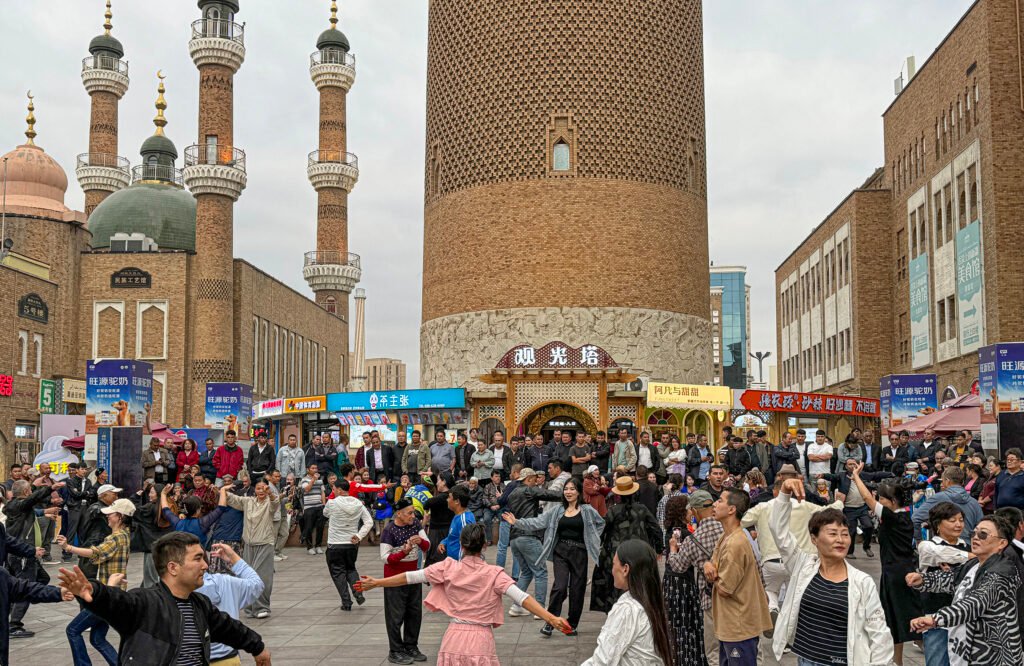
Citizens dancing on a Friday afternoon at the Grand Bazaar Square in Urumqi, Xinjiang, China – Photo Jan Oberg 2024

This is just a brief reflection on my second visit to China. Still tired from the long journey, I’m slowly adjusting to our time zone and trying to focus on the tasks waiting for me. But a flood of impressions keeps swirling in my mind, making it impossible to rest—especially after realizing how much Western propaganda had shaped my expectations. I thought I was heading to a brutal and backward corner of China, only to find myself utterly enchanted by what I encountered.

What intrigued me the most was the fact that I was about to visit what is often portrayed as China’s “most notorious” region. This is the province at the centre of ongoing accusations against China—claims of massive human rights abuses and even genocide, particularly targeting the Uyghur population. Sinophobia has various sources, triggers, and motives, and the narrative surrounding Xinjiang plays a major role in shaping perceptions.

What I find truly absurd is the eagerness to condemn the idea of genocide in Xinjiang while turning a blind eye to the very real and ongoing genocide in Palestine. Fact-checkers and so-called truth-verifiers operate with a clear agenda, often driven by Western grants that need justification.

Xinjiang is an incredible destination for anyone who prefers to experience a place firsthand, free from the interpretations of fact-checkers or NGOs who have never set foot here. This province has a remarkable tourism story to tell: in the first nine months of 2024, it welcomed an astounding 250 million visitors!

I hope I don’t come across as an arrogant representative of (so-called) developed Europe—or, to put it bluntly, the West. I’ll admit that I was initially caught up in the Western narrative myself. I expected to find a remote, desolate area—essentially “the middle of nowhere.” This assumption wasn’t rooted in ignorance, but rather in preconceived notions.

However, during my first visit to China last month, I was struck by its mysticism, diversity, and depth. I quickly realized that even a lifetime wouldn’t be enough to fully appreciate all its richness and nuances. Whenever I mentioned to my Chinese hosts that my next stop was Urumqi, they would light up and say, “Ah, that’s such a different place! Expect to see new things!” And they were absolutely right—it was unlike anything I had ever experienced!

Like a modern-day Marco Polo or Sinbad the Sailor—albeit travelling by plane in the 21st century—I was excited for a “different” experience in Urumqi. What I discovered, however, was more of a continuation of the familiar China, but with a surprising twist. The real surprise came from the scents, colours, and sounds that reminded me of my homeland, Macedonia. It was an unexpected and fascinating blend!

As I boarded the flight to Urumqi, I noticed just as many passengers as I had seen on the flight from Frankfurt to Beijing. “Ah,” I thought, “after all, this is China—a country with 1.5 billion people!” When we landed at Urumqi’s airport, I was amazed by how modern and bustling it was compared to Skopje’s modest terminal. Urumqi had spacious, functional facilities for both domestic and international flights.

The bus ride to the hotel took place at night, providing me with a glimpse of the illuminated city—massive boulevards with four to six lanes in each direction, towering skyscrapers, brightly lit intersections, and iconic landmarks. In comparison, Skopje felt like a small Ottoman town from two or three centuries ago.

Another striking impression was the seemingly endless construction—buildings going up everywhere, with no end in sight! The city is clearly booming. We later witnessed the fruits of this economic growth during our visit to the China Energy Group (a small segment of which could potentially solve Macedonia’s entire energy issues) and the leading electric car factory. I couldn’t help but laugh bitterly at the thought of the “camel cornerstone” fiasco in Tetovo while observing this progress.

During our free time, we ventured out to explore the city on our own. I’ll save the story of Urumqi’s phenomenal museum for another time—it was so rich and exciting that it even evoked memories of Balkan history, where civilizations, cultures, ethnicities, and languages intersect in a beautiful tapestry.

One thing I’ll emphasize is this: while the EU promotes the slogan “unity in diversity,” China embraces the philosophy of “harmony in diversity.” This approach has successfully created a soft, seamless mosaic—not through domination but by integrating everyone into the vibrant fabric of Chinese society.

At times, I genuinely felt at home—whether through the intricate embroidery patterns, the carpets and crafts, or the traditional music and food. Xinjiang’s natural beauty is hard to capture in words, with its breathtaking blend of mountain ranges, rivers, lakes, and deserts. Yet, every now and then, I would spot familiar elements that reminded me of home—like Radika, Lake Ohrid (which has its own “Heavenly Lake,” Tianchi), the peaks of Korab and Šar Mountain, or the horses of Mavrovo.

This region has been both fortunate and unfortunate throughout the centuries, serving as a crossroads for various peoples and cultures. It lies at a central point of the ancient Silk Road, whose beginnings I had glimpsed during my first visit to Jinan, on the other side of China. Today, the modern Belt and Road Initiative, BRI, follows these same routes but with cutting-edge infrastructure for connection.

It’s heartwarming to realize that many influences—musical instruments, traditional costumes, and more—have travelled from this place to reach us. This experience underscores the idea that the world is both vast and small, and that we, too, are a part of it.

During the wars in the former Yugoslavia, there was a Bosnian joke about superficial foreign “researchers.” A local man named Mujo encounters a foreigner in a pub, who is busily jotting down notes. After they exchange greetings, Mujo asks how long the foreigner will be in town and what he’s writing. The foreigner, who hails from the West, replies that he arrived yesterday and is leaving tomorrow, and that he’s working on a book titled “Bosnia and Herzegovina: Yesterday, Today, and Tomorrow.”

I’m not claiming to be an expert on China or its complexities, nor do I intend to write a book about it. But my experiences have turned me into a modest and curious explorer—someone eager to learn more, not just about China, but also about the connections between our civilizations and the potential for collaboration in creating a peaceful world. We often hear that we stand on “opposite sides,” even unfriendly ones, a narrative spread by those in this tranquil country of ours, now transformed into a military base and a NATO outpost.

However, I felt welcomed and safe among warm, hospitable friends. There was also a subtle sense of Eastern familiarity in many aspects of life. It’s essential for us to set aside stereotypes and explore every opportunity for closer cooperation across various fields. There’s so much to learn from these people—not only about them but also about ourselves as part of the global community.

I hope I shall return to China. I want to write about the Grand Bazaar in Urumqi, the fascinating stories in the museum, and how they helped me better understand the complexities of the Balkans—where diverse influences have intersected and continue to shape the lives of our ancestors, contemporaries, and future generations. I also wish to reflect on the Islamic Institute, a university that is more modern than many of our secular institutions.

It’s true that China faces internal challenges, but not all stem from ethnic or religious diversity. Many arise from far more complex historical and external influences—issues we know all too well from personal experience. Yet, China addresses these challenges through investments, compromises, diplomacy, gentleness, and relentless development.

In just a few days, I gathered countless stories, inspired by the rich cultural tapestry and intellectual challenges I encountered. It was worth the exhaustion and effort. As for the critics—they can keep complaining: If I have the chance again, especially now as I navigate life’s final stretch, I would gladly return and experience the “most notorious” places for myself. No one else will define who my friends are or are not.

For now, China feels like a warm and familiar place—it even smells like home, reminiscent of the bread from the Grand Bazaar in Urumqi.
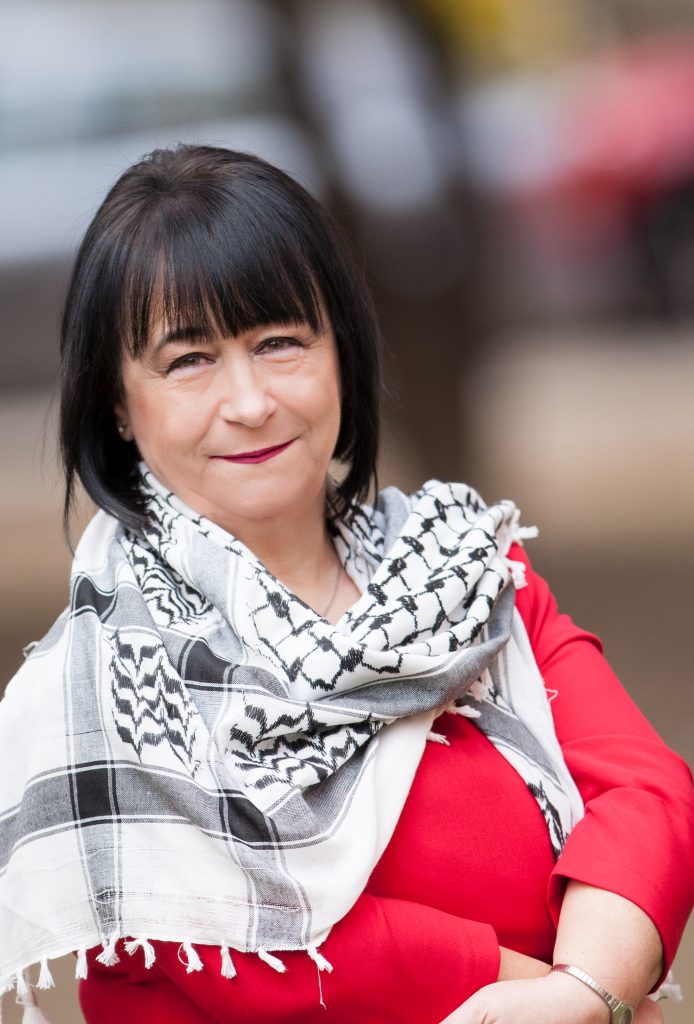
Biljana Vankovska is a Professor of international relations and peace studies at the Institute for Security, Defense, and Peace, Faculty of Philosophy, Ss. Cyril and Methodius University in Skopje, Macedonia.

After having been a TFF Associate over 25 years, she joined TFF’s Board in October 2024.

Read about her here.

Ph.D. Political Science, Department of Political Studies, Faculty of Law, University of Skopje, 1992 MA Political Science, Department for Political Studies, Faculty of Law, University of Skopje, 1988 BA Law, Department of Political and Administrative Studies, Faculty of Law, University of Skopje, 1982

Share

Leave a Reply

Your email address will not be published. Required fields are marked *

Related Posts

Officially, the drones were not identified. By simply thinking critically – which journalists and selected experts no longer do – there may be a good reason for that. And this article will never be mentioned in Denmark… Drones over Denmark. No damage. No trace. No answers. Yet the headlines scream “Russian threat,” and Prime Minister Mette Frederiksen speaks with a certainty that defies logic: “We don’t know they were Russian—but we know Russia is the biggest threat to Europe.” It could be nobody else – unless you make an interest analysis which I did two days ago. This is not security policy. It’s theatre. And the audience is being played. Let’s rewind. These drones—unphotographed, untracked, unclaimed—appear and vanish like ghosts. Airports shut down. Panic spreads. Military budgets swell. And the narrative hardens: Russia is behind it. But what if that’s not just wrong but deliberately misleading? Here’s a hypothesis for...
And why the world, especially the EU, must now declare itself independent of the United States. UN’s 80th anniversary This year, the United Nations celebrates the 80th anniversary of its founding. The UN was formed after the scourge of the Second World War, in which 70 to 85 million people were killed and many countries were destroyed. That war came on the heels of the First World War, which also killed between 15 and 22 million people. After the Second World War, especially after the use of nuclear weapons by the United States, which marked a turning point in the history of warfare that could result in the end of civilisation as we know it, humanity decided to move away from the era of empires and big power politics and usher in a new era of peace, freedom and cooperation. These were the principles enshrined in the UN Charter. The United States...
Drones over Nordic airports. No damage. No trace. No answers. Most assume Russia—but what if that’s not so? Why is there so much we are not told? This article explores the strategic ambiguity behind recent drone incursions and asks: Who else might benefit from sending drones into NATO airspace? From Ukraine’s surprising drone supremacy to Russia’s possible signalling, the silence itself may be the loudest message. These are the kinds of questions decent, intelligent investigative journalists and commentators could easily research. Why don’t they? Did you, dear reader, know or think of this? That the most powerful weapon in today’s conflicts might be the one that leaves no trace – and no answers. Just enough fear to justify the next move? Recently, drones have repeatedly appeared over Nordic airports and near some military facilities. They cause no damage – for which reason the designation “hybrid attack” is misleading but serves a purpose. These...

Recent Articles

In response to an urgent Appeal from all the living Nobel Peace Prize Laureates, the General Assembly of the United Nations, on November 1998, unanimously declared the first decade of the twenty-first century to be The Decade for a Culture of Peace and Nonviolence. While people are naturally concerned about the amount of violence in our world and how it threatens our future, the Nobel Laureates are right to remind us of the potential of nonviolence and our calling to build a culture of peace and nonviolence.  The twentieth century is instructive in the way that the philosophy and practice of nonviolence have begun to flourish and in the way that nonviolent movements have had an exponential growth across the world. Mohandas Gandhi and Martin Luther King, Jr. are the most famous nonviolent leaders but many have built upon the paths they charted as in country after country, tyrannies and...
We know that medical personnel have failed to report to higher authorities wounds that were clearly caused by torture and that they have neglected to take steps to interrupt this torture. In addition, they have turned over prisoners’ medical records to interrogators who could use them to exploit the prisoners’ weaknesses or vulnerabilities. We have not yet learned the extent of medical involvement in delaying and possibly falsifying the death certificates of prisoners who have been killed by torturers. A May 22 article on Abu Ghraib in the New York Times states that “much of the evidence of abuse at the prison came from medical documents” and that records and statements “showed doctors and medics reporting to the area of the prison where the abuse occurred several times to stitch wounds, tend to collapsed prisoners or see patients with bruised or reddened genitals.” http://www.truthout.org/docs_04/080604J.shtml#16 According to the article, two doctors who...
Jan Øberg behandler i artiklen en lang række faktorer, som ligger til grund for den måde vores samfund er organiseret på – og derfor også for konflikter. Artiklen introducerer således sammenhængen mellem familien, foreninger, regeringer, NGO’ er, nation, stat, nationalstat og alliancer for på denne måde bedre at kunne forstå konflikter og i sidste ende blive klogere mht. at løse disse. Øberg, der er fortaler for global bevidsthed, hvilket skal ses i lyset af den øgede globalisering, skelner mellem kulturkamp og kulturdialog. Endelig behandles begrebet magt og magtesløshed: giver magt ret til at udøve magt – fordi man mener at have ret? Litteraturliste og arbejdsspørgsmål efter artiklen. Ordene vi bruger om verden I satellitperspektiv kan man godt tale om den menneskelige familie eller menneskeheden. Udtrykket understreger, at der eksisterer – eller burde eksistere – et fællesskab fordi vi alle er mennesker og sammen bebor denne klode og ingen anden. Og...

TFF on Substack

Discover more from TFF Transnational Foundation & Jan Oberg.

Most Popular

In response to an urgent Appeal from all the living Nobel Peace Prize Laureates, the General Assembly of the United Nations, on November 1998, unanimously declared the first decade of the twenty-first century to be The Decade for a Culture of Peace and Nonviolence. While people are naturally concerned about the amount of violence in our world and how it threatens our future, the Nobel Laureates are right to remind us of the potential of nonviolence and our calling to build a culture of peace and nonviolence.  The twentieth century is instructive in the way that the philosophy and practice of nonviolence have begun to flourish and in the way that nonviolent movements have had an exponential growth across the world. Mohandas Gandhi and Martin Luther King, Jr. are the most famous nonviolent leaders but many have built upon the paths they charted as in country after country, tyrannies and...
We know that medical personnel have failed to report to higher authorities wounds that were clearly caused by torture and that they have neglected to take steps to interrupt this torture. In addition, they have turned over prisoners’ medical records to interrogators who could use them to exploit the prisoners’ weaknesses or vulnerabilities. We have not yet learned the extent of medical involvement in delaying and possibly falsifying the death certificates of prisoners who have been killed by torturers. A May 22 article on Abu Ghraib in the New York Times states that “much of the evidence of abuse at the prison came from medical documents” and that records and statements “showed doctors and medics reporting to the area of the prison where the abuse occurred several times to stitch wounds, tend to collapsed prisoners or see patients with bruised or reddened genitals.” http://www.truthout.org/docs_04/080604J.shtml#16 According to the article, two doctors who...
Jan Øberg behandler i artiklen en lang række faktorer, som ligger til grund for den måde vores samfund er organiseret på – og derfor også for konflikter. Artiklen introducerer således sammenhængen mellem familien, foreninger, regeringer, NGO’ er, nation, stat, nationalstat og alliancer for på denne måde bedre at kunne forstå konflikter og i sidste ende blive klogere mht. at løse disse. Øberg, der er fortaler for global bevidsthed, hvilket skal ses i lyset af den øgede globalisering, skelner mellem kulturkamp og kulturdialog. Endelig behandles begrebet magt og magtesløshed: giver magt ret til at udøve magt – fordi man mener at have ret? Litteraturliste og arbejdsspørgsmål efter artiklen. Ordene vi bruger om verden I satellitperspektiv kan man godt tale om den menneskelige familie eller menneskeheden. Udtrykket understreger, at der eksisterer – eller burde eksistere – et fællesskab fordi vi alle er mennesker og sammen bebor denne klode og ingen anden. Og...
Read More
Imagen-thumbnail-The-Transnational-1
In response to an urgent Appeal from all the living Nobel Peace Prize Laureates, the General Assembly of the United Nations, on November 1998, unanimously declared the first decade of the twenty-first century to be The Decade for a Culture of Peace and Nonviolence. While people are naturally concerned about the amount of violence in our world and how it threatens our future, the Nobel Laureates are right to remind us of the potential of nonviolence and our calling to build a culture of peace and nonviolence.  The twentieth century is instructive in the way that the philosophy and practice of nonviolence have begun to flourish and in the way that nonviolent movements have had an exponential growth across the world. Mohandas Gandhi and Martin Luther King, Jr. are the most famous nonviolent leaders but many have built upon the paths they charted as in country after country, tyrannies and...
Imagen-thumbnail-The-Transnational-1
We know that medical personnel have failed to report to higher authorities wounds that were clearly caused by torture and that they have neglected to take steps to interrupt this torture. In addition, they have turned over prisoners’ medical records to interrogators who could use them to exploit the prisoners’ weaknesses or vulnerabilities. We have not yet learned the extent of medical involvement in delaying and possibly falsifying the death certificates of prisoners who have been killed by torturers. A May 22 article on Abu Ghraib in the New York Times states that “much of the evidence of abuse at the prison came from medical documents” and that records and statements “showed doctors and medics reporting to the area of the prison where the abuse occurred several times to stitch wounds, tend to collapsed prisoners or see patients with bruised or reddened genitals.” http://www.truthout.org/docs_04/080604J.shtml#16 According to the article, two doctors who...
Imagen-thumbnail-The-Transnational-1
Jan Øberg behandler i artiklen en lang række faktorer, som ligger til grund for den måde vores samfund er organiseret på – og derfor også for konflikter. Artiklen introducerer således sammenhængen mellem familien, foreninger, regeringer, NGO’ er, nation, stat, nationalstat og alliancer for på denne måde bedre at kunne forstå konflikter og i sidste ende blive klogere mht. at løse disse. Øberg, der er fortaler for global bevidsthed, hvilket skal ses i lyset af den øgede globalisering, skelner mellem kulturkamp og kulturdialog. Endelig behandles begrebet magt og magtesløshed: giver magt ret til at udøve magt – fordi man mener at have ret? Litteraturliste og arbejdsspørgsmål efter artiklen. Ordene vi bruger om verden I satellitperspektiv kan man godt tale om den menneskelige familie eller menneskeheden. Udtrykket understreger, at der eksisterer – eller burde eksistere – et fællesskab fordi vi alle er mennesker og sammen bebor denne klode og ingen anden. Og...
Imagen-thumbnail-The-Transnational-1
Kapitel 2: Forskellige sider af Europa og USA…fortsat 2.5 Militære relationer I forbifarten har vi allerede sagt nogle ting om USA’s militære situation. Kig lige en gang til på afsnit 2.3. Nu skal vi uddybe det militære forhold mellem USA og EU. Der er en række ligheder mellem visse europæiske landes og USA’s militær. Næsten alle er med på en eller anden måde i NATO, direkte som medlem – selv Island, der ikke har et forsvar – eller indirekte i Partnerskab for Fred. USA og Canada er med i OSCE (på dansk OSSE), Organisationen for Sikkerhed og Samarbejde i Europa, der tæller over 50 lande. USA samt England og Frankrig er kernevåbenstater og de har styrker til intervention langt borte fra hjemlandet, om end USA’s er tifold større. Alle har også en omfattende våbeneksport og bruger den som et middel til at tjene penge og få loyale venner på, det...
Imagen-thumbnail-The-Transnational-1
Background Christian Harleman and Jan Oberg conducted a fact-finding mission to Burundi between November 26 and December 6, 2003. (See websites about the country here). The first TFF mission took place in March 1999. Unfortunately, since then it has not been practically possible to implement the co-operation with Burundi’s Ministry of Education and Burundian NGOs that was planned at the time. The 2003 mission had three purposes. First, to do fact-finding in general about the situation and, in particular, the progress under the Arusha Peace Process. Second, to explore the possibilities for co-operation between the government and relevant NGOs on the one hand and TFF on the other, in order to develop and deepen the existing competence in fields such as conflict-understanding, reconciliation and peace-building. Finally, third, to find out whether it would be possible, in co-operation with the Swedish Rescue Services Agency (Statens Räddningsverk), to establish a health care unit that...
Imagen-thumbnail-The-Transnational-1
Former UN Under-Secretary-General with special responsibility for peacekeeping operations TFF associate August 20, 2003 YRINGHAM, Mass.- Ralph Bunche was born in Detroit 100 years ago today (August 7, 2003). His passionate determination to get results did not extend to seeking credit for them, so his work is better remembered than he is. Of all his many accomplishments – civil rights pioneer, Nobel Peace Prize laureate, chief drafter of two chapters of the United Nations charter, negotiator of the armistices that ended the first Arab-Israeli war – Bunche said he was proudest of developing what came to be known as peacekeeping. Setting up the United Nations Truce Supervision Organization in Palestine in 1948, Bunche formulated the principles that have governed peacekeeping operations ever since. In the 1956 Suez crisis, working with Secretary General Dag Hammarskjold and Lester Pearson of Canada, he organized the first peacekeeping force, the United Nations Emergency Force...

