Critiquing Biden’s Worldview, Democratic Party Tactics and America’s Destiny

Photo by Tim Mossholder

The Democratic Party is waging its 2024 electoral campaign by focusing on two themes: first, a denunciation of all that Trump proposes to bring to the presidency, centering on the destruction of American democracy if elected, and secondly, a positive domestic record of the Biden years with several notable benefits for the American people including jobs and wages, climate, energy policy, social protection, gun control, and a stock market at record highs.

What is missing from this rosy picture of America and even more so from Democratic Party advocacy is neither claims nor explanations of foreign policy, only a deafening silence. It is as if the leadership of the Democratic Party wants the voting public to forget that there is a world out there beyond national boundaries. And it has good reasons to adopt this evasive approach, especially in an election year.

Reposted from Counterpunch, July 9, 2024

And yet this national posture seems strange as the US has so heavily invested in military capabilities to secure its global dominance in the decades after the collapse of the Soviet Union over 30 years ago.  And as a consequence, finds itself currently engaged controversially in the wars raging in Ukraine and Gaza. It appears that even Biden is reluctant to claim credit in national settings for US support of Israel and Ukraine, and prefers to speak in generalities about the greatness of America as a country whose future is bright except to the extent dimmed by the threat advent of Trump and Trumpism.

This tendency to ignore the world should be more troubling to American voters than even Biden’s refusal to leave the presidential stage in light of his thinly deniable disabilities of age and mental health that have put his 2024 candidacy in peril. Such an evasive pattern gives voice to absurdly grandiose, yet distorting, assessments of the present broad political situation.

Biden’s speech on the 3rd Anniversary of the January 6th Insurrectionary attack on Congress is a typical example. After a lengthy, persuasive recital of warnings about the Trump menace, Biden offers some unhinged general remarks, starting with his oft-repeated startling expression of personal faith in the future of America: “I have never been more optimistic about the future of our country.”  No explanation is given for why this is so, and there could not be one even if Orwellian tropes were relied upon. No mention of the dubious wars, massive homelessness, dangerously large inequalities, an epidemic of mass shootings, growing migrant tensions, backsliding on carbon emission and the related rise of extreme weather events, or numerous signs of rising risks of future major wars with China and Russia, quite possibly prompting the use of nuclear weapons, of deeply disturbing erosions of academic freedom often accompanied by punitive encroachments on dissent and freedom of expression, as well as the bitterest and most divisive societal polarization since the Civil War.

I confess that I have never in my life felt more pessimistic about the future of the country. At least one would have expected a self-professed liberal such as Biden to be forthright about addressing the unmet illiberal challenges that have been rampant during his years in the White House, and a program to do so if Democrats are given a mandate to govern in November.

Biden also was immaturely boastful on the same occasion. “We’re the greatest nation on the face of the earth.” And possibly betraying his uncertainty immediately added these words but no specifics, “We really are.’ Then proceeded to display the kind of hubris long associated with the twilight period of past declining empires. Counter-historically Biden observed that “We know America is winning. That’s American patriotism.’ It underpins the broader claim that evokes doubt and opposition outside the West:

“There’s no country in the world better positioned to lead the world than America…Just remember who we are. We are the United States of America, for God’s sake.’ Remembering who we are, or have become, is the ideological leader of the (il)liberal democracies of the West who mostly lent a helping hand to Israel while it in recent months carried out a genocidal assault on the helplessly vulnerable 2.3 million civilian population of the tiny Gaza Strip.

This American-led complicity in what much of the world’s peoples perceived as a transparent genocide was even proclaimed as such in the rationale articulated and policies pursued by Israel’s political leaders and put into deadly practice by its armed forces. While claiming to be “defending the sacred cause of democracy,” Biden doesn’t respect the citizenry sufficiently to acknowledge Israel’s policies face unprecedented challenges at the International Court of Justice (ICJ) and the International Criminal Court (ICC), offering neither an explanation nor an apology.

We must ask ourselves whether such a failure to include the citizenry in evaluating foreign policy that much of the public dissents from is in keeping with an existential commitment to democratic styles of governance. Or for that matter, whether cooperative security arrangements and friendly relations with the governments of India, Saudi Arabia, Egypt and others can be reconciled with the goals of promoting a democratizing world.

US democracy has from the founding of the republic almost 250 years ago been associated with a constitutional arrangement that stresses the division of and balance between the three principal branches of government as supplemented by the guiding idea that even the acts of the president are not above the restraints and accountability procedures of law. Currently, both of these vital pillars of a functioning democracy are crumbling, and near collapse.

The US Supreme Court has never been so out of touch with the values of society and the defense of its democratic character, not only by its denial of women’s reproductive rights but in relation to upholding the rule of law in relation to the behavior of the president and the regulation of corporate wrongdoing.

Congress, in many vital sectors of public policy, has become captive to well-funded lobbying pressures and the interests of the wealthiest American leading commentators to argue that plutocracy has become a more accurate description of the form of government than democracy, To be optimistic in the face of such developments has all the appearances of playing the role of the fool.

For me, an unmistakable indicator of the alienation of the governing process from the citizenry is the extension of a bipartisan invitation to the embattled Israeli Prime Minister, Benjamin Netanyahu to address a joint session of Congress later in July. This bestowal of such a signal honor on a foreign leader for whom ‘arrest warrants’ have been recommended by the habitually cautious ICC, will be further enhanced by a meeting with the President in the White House undoubtedly accompanied by a TV moment exhibiting harmony between these two leaders that includes unconditional support and a profession of shared values.

Such an inappropriate gesture of approval is a slap in the faces of those many American opponents of Israel’s policies in Gaza over the course of recent months, especially a show of disrespect toward young Americans who protested on university campuses across the country, and for their activity experienced police brutality and professionally harmful punishments from educational administrators, themselves under pressure from donors and politicians.

The Netanyahu invitation is an edifying metaphor that confirms the dark foreboding of skeptics like myself critical of the US’ global role since the end of the Cold War and deeply pessimistic about the future of the country.

From such an angle, Biden’s off-the-wall optimism and the tactics of the Democratic Party establishment are not reassuring. Rather I find these patterns as strong evidence of dangerous forms of escapism from the uncomfortable realities of national circumstances and stubborn show of a failing leader’s vanity.

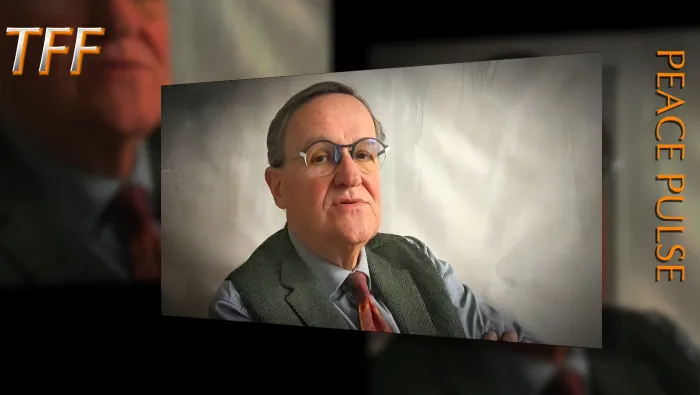
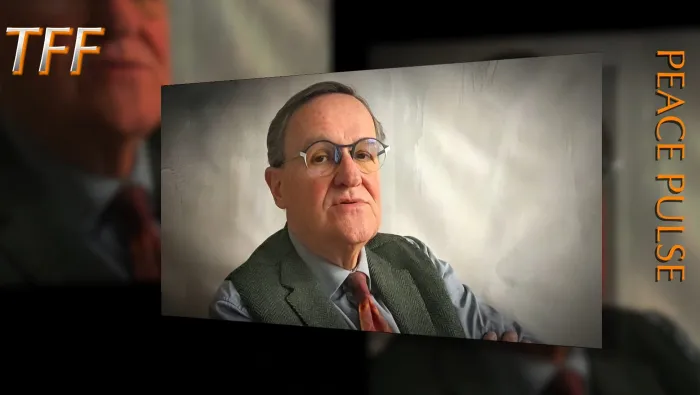
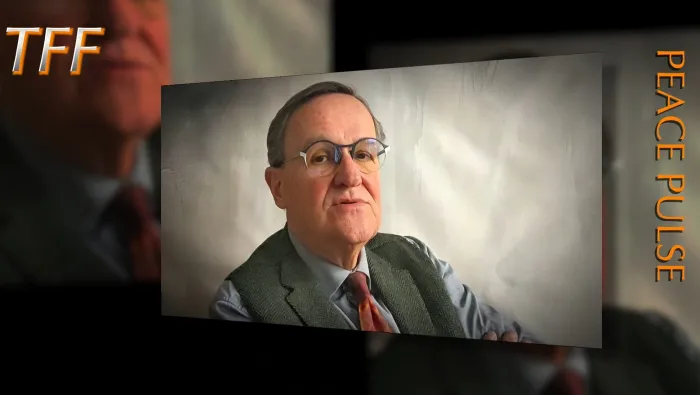
Richard Falk is Albert G. Milbank Professor Emeritus of International Law at Princeton University, Chair of Global law, Queen Mary University London, and Research Associate, Orfalea Center of Global Studies, UCSB.
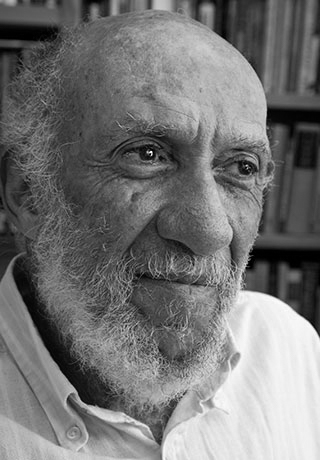
Professor Falk became an adviser to TFF when it was established in 1985.

Share

Leave a Reply

Your email address will not be published. Required fields are marked *

Related Posts

Officially, the drones were not identified. By simply thinking critically – which journalists and selected experts no longer do – there may be a good reason for that. And this article will never be mentioned in Denmark… Drones over Denmark. No damage. No trace. No answers. Yet the headlines scream “Russian threat,” and Prime Minister Mette Frederiksen speaks with a certainty that defies logic: “We don’t know they were Russian—but we know Russia is the biggest threat to Europe.” It could be nobody else – unless you make an interest analysis which I did two days ago. This is not security policy. It’s theatre. And the audience is being played. Let’s rewind. These drones—unphotographed, untracked, unclaimed—appear and vanish like ghosts. Airports shut down. Panic spreads. Military budgets swell. And the narrative hardens: Russia is behind it. But what if that’s not just wrong but deliberately misleading? Here’s a hypothesis for...
And why the world, especially the EU, must now declare itself independent of the United States. UN’s 80th anniversary This year, the United Nations celebrates the 80th anniversary of its founding. The UN was formed after the scourge of the Second World War, in which 70 to 85 million people were killed and many countries were destroyed. That war came on the heels of the First World War, which also killed between 15 and 22 million people. After the Second World War, especially after the use of nuclear weapons by the United States, which marked a turning point in the history of warfare that could result in the end of civilisation as we know it, humanity decided to move away from the era of empires and big power politics and usher in a new era of peace, freedom and cooperation. These were the principles enshrined in the UN Charter. The United States...
Drones over Nordic airports. No damage. No trace. No answers. Most assume Russia—but what if that’s not so? Why is there so much we are not told? This article explores the strategic ambiguity behind recent drone incursions and asks: Who else might benefit from sending drones into NATO airspace? From Ukraine’s surprising drone supremacy to Russia’s possible signalling, the silence itself may be the loudest message. These are the kinds of questions decent, intelligent investigative journalists and commentators could easily research. Why don’t they? Did you, dear reader, know or think of this? That the most powerful weapon in today’s conflicts might be the one that leaves no trace – and no answers. Just enough fear to justify the next move? Recently, drones have repeatedly appeared over Nordic airports and near some military facilities. They cause no damage – for which reason the designation “hybrid attack” is misleading but serves a purpose. These...

Recent Articles

We know that medical personnel have failed to report to higher authorities wounds that were clearly caused by torture and that they have neglected to take steps to interrupt this torture. In addition, they have turned over prisoners’ medical records to interrogators who could use them to exploit the prisoners’ weaknesses or vulnerabilities. We have not yet learned the extent of medical involvement in delaying and possibly falsifying the death certificates of prisoners who have been killed by torturers. A May 22 article on Abu Ghraib in the New York Times states that “much of the evidence of abuse at the prison came from medical documents” and that records and statements “showed doctors and medics reporting to the area of the prison where the abuse occurred several times to stitch wounds, tend to collapsed prisoners or see patients with bruised or reddened genitals.” http://www.truthout.org/docs_04/080604J.shtml#16 According to the article, two doctors who...
Jan Øberg behandler i artiklen en lang række faktorer, som ligger til grund for den måde vores samfund er organiseret på – og derfor også for konflikter. Artiklen introducerer således sammenhængen mellem familien, foreninger, regeringer, NGO’ er, nation, stat, nationalstat og alliancer for på denne måde bedre at kunne forstå konflikter og i sidste ende blive klogere mht. at løse disse. Øberg, der er fortaler for global bevidsthed, hvilket skal ses i lyset af den øgede globalisering, skelner mellem kulturkamp og kulturdialog. Endelig behandles begrebet magt og magtesløshed: giver magt ret til at udøve magt – fordi man mener at have ret? Litteraturliste og arbejdsspørgsmål efter artiklen. Ordene vi bruger om verden I satellitperspektiv kan man godt tale om den menneskelige familie eller menneskeheden. Udtrykket understreger, at der eksisterer – eller burde eksistere – et fællesskab fordi vi alle er mennesker og sammen bebor denne klode og ingen anden. Og...
Kapitel 2: Forskellige sider af Europa og USA…fortsat 2.5 Militære relationer I forbifarten har vi allerede sagt nogle ting om USA’s militære situation. Kig lige en gang til på afsnit 2.3. Nu skal vi uddybe det militære forhold mellem USA og EU. Der er en række ligheder mellem visse europæiske landes og USA’s militær. Næsten alle er med på en eller anden måde i NATO, direkte som medlem – selv Island, der ikke har et forsvar – eller indirekte i Partnerskab for Fred. USA og Canada er med i OSCE (på dansk OSSE), Organisationen for Sikkerhed og Samarbejde i Europa, der tæller over 50 lande. USA samt England og Frankrig er kernevåbenstater og de har styrker til intervention langt borte fra hjemlandet, om end USA’s er tifold større. Alle har også en omfattende våbeneksport og bruger den som et middel til at tjene penge og få loyale venner på, det...

TFF on Substack

Discover more from TFF Transnational Foundation & Jan Oberg.

Most Popular

We know that medical personnel have failed to report to higher authorities wounds that were clearly caused by torture and that they have neglected to take steps to interrupt this torture. In addition, they have turned over prisoners’ medical records to interrogators who could use them to exploit the prisoners’ weaknesses or vulnerabilities. We have not yet learned the extent of medical involvement in delaying and possibly falsifying the death certificates of prisoners who have been killed by torturers. A May 22 article on Abu Ghraib in the New York Times states that “much of the evidence of abuse at the prison came from medical documents” and that records and statements “showed doctors and medics reporting to the area of the prison where the abuse occurred several times to stitch wounds, tend to collapsed prisoners or see patients with bruised or reddened genitals.” http://www.truthout.org/docs_04/080604J.shtml#16 According to the article, two doctors who...
Jan Øberg behandler i artiklen en lang række faktorer, som ligger til grund for den måde vores samfund er organiseret på – og derfor også for konflikter. Artiklen introducerer således sammenhængen mellem familien, foreninger, regeringer, NGO’ er, nation, stat, nationalstat og alliancer for på denne måde bedre at kunne forstå konflikter og i sidste ende blive klogere mht. at løse disse. Øberg, der er fortaler for global bevidsthed, hvilket skal ses i lyset af den øgede globalisering, skelner mellem kulturkamp og kulturdialog. Endelig behandles begrebet magt og magtesløshed: giver magt ret til at udøve magt – fordi man mener at have ret? Litteraturliste og arbejdsspørgsmål efter artiklen. Ordene vi bruger om verden I satellitperspektiv kan man godt tale om den menneskelige familie eller menneskeheden. Udtrykket understreger, at der eksisterer – eller burde eksistere – et fællesskab fordi vi alle er mennesker og sammen bebor denne klode og ingen anden. Og...
Kapitel 2: Forskellige sider af Europa og USA…fortsat 2.5 Militære relationer I forbifarten har vi allerede sagt nogle ting om USA’s militære situation. Kig lige en gang til på afsnit 2.3. Nu skal vi uddybe det militære forhold mellem USA og EU. Der er en række ligheder mellem visse europæiske landes og USA’s militær. Næsten alle er med på en eller anden måde i NATO, direkte som medlem – selv Island, der ikke har et forsvar – eller indirekte i Partnerskab for Fred. USA og Canada er med i OSCE (på dansk OSSE), Organisationen for Sikkerhed og Samarbejde i Europa, der tæller over 50 lande. USA samt England og Frankrig er kernevåbenstater og de har styrker til intervention langt borte fra hjemlandet, om end USA’s er tifold større. Alle har også en omfattende våbeneksport og bruger den som et middel til at tjene penge og få loyale venner på, det...
Read More
Imagen-thumbnail-The-Transnational-1
We know that medical personnel have failed to report to higher authorities wounds that were clearly caused by torture and that they have neglected to take steps to interrupt this torture. In addition, they have turned over prisoners’ medical records to interrogators who could use them to exploit the prisoners’ weaknesses or vulnerabilities. We have not yet learned the extent of medical involvement in delaying and possibly falsifying the death certificates of prisoners who have been killed by torturers. A May 22 article on Abu Ghraib in the New York Times states that “much of the evidence of abuse at the prison came from medical documents” and that records and statements “showed doctors and medics reporting to the area of the prison where the abuse occurred several times to stitch wounds, tend to collapsed prisoners or see patients with bruised or reddened genitals.” http://www.truthout.org/docs_04/080604J.shtml#16 According to the article, two doctors who...
Imagen-thumbnail-The-Transnational-1
Jan Øberg behandler i artiklen en lang række faktorer, som ligger til grund for den måde vores samfund er organiseret på – og derfor også for konflikter. Artiklen introducerer således sammenhængen mellem familien, foreninger, regeringer, NGO’ er, nation, stat, nationalstat og alliancer for på denne måde bedre at kunne forstå konflikter og i sidste ende blive klogere mht. at løse disse. Øberg, der er fortaler for global bevidsthed, hvilket skal ses i lyset af den øgede globalisering, skelner mellem kulturkamp og kulturdialog. Endelig behandles begrebet magt og magtesløshed: giver magt ret til at udøve magt – fordi man mener at have ret? Litteraturliste og arbejdsspørgsmål efter artiklen. Ordene vi bruger om verden I satellitperspektiv kan man godt tale om den menneskelige familie eller menneskeheden. Udtrykket understreger, at der eksisterer – eller burde eksistere – et fællesskab fordi vi alle er mennesker og sammen bebor denne klode og ingen anden. Og...
Imagen-thumbnail-The-Transnational-1
Kapitel 2: Forskellige sider af Europa og USA…fortsat 2.5 Militære relationer I forbifarten har vi allerede sagt nogle ting om USA’s militære situation. Kig lige en gang til på afsnit 2.3. Nu skal vi uddybe det militære forhold mellem USA og EU. Der er en række ligheder mellem visse europæiske landes og USA’s militær. Næsten alle er med på en eller anden måde i NATO, direkte som medlem – selv Island, der ikke har et forsvar – eller indirekte i Partnerskab for Fred. USA og Canada er med i OSCE (på dansk OSSE), Organisationen for Sikkerhed og Samarbejde i Europa, der tæller over 50 lande. USA samt England og Frankrig er kernevåbenstater og de har styrker til intervention langt borte fra hjemlandet, om end USA’s er tifold større. Alle har også en omfattende våbeneksport og bruger den som et middel til at tjene penge og få loyale venner på, det...
Imagen-thumbnail-The-Transnational-1
Background Christian Harleman and Jan Oberg conducted a fact-finding mission to Burundi between November 26 and December 6, 2003. (See websites about the country here). The first TFF mission took place in March 1999. Unfortunately, since then it has not been practically possible to implement the co-operation with Burundi’s Ministry of Education and Burundian NGOs that was planned at the time. The 2003 mission had three purposes. First, to do fact-finding in general about the situation and, in particular, the progress under the Arusha Peace Process. Second, to explore the possibilities for co-operation between the government and relevant NGOs on the one hand and TFF on the other, in order to develop and deepen the existing competence in fields such as conflict-understanding, reconciliation and peace-building. Finally, third, to find out whether it would be possible, in co-operation with the Swedish Rescue Services Agency (Statens Räddningsverk), to establish a health care unit that...
Imagen-thumbnail-The-Transnational-1
Former UN Under-Secretary-General with special responsibility for peacekeeping operations TFF associate August 20, 2003 YRINGHAM, Mass.- Ralph Bunche was born in Detroit 100 years ago today (August 7, 2003). His passionate determination to get results did not extend to seeking credit for them, so his work is better remembered than he is. Of all his many accomplishments – civil rights pioneer, Nobel Peace Prize laureate, chief drafter of two chapters of the United Nations charter, negotiator of the armistices that ended the first Arab-Israeli war – Bunche said he was proudest of developing what came to be known as peacekeeping. Setting up the United Nations Truce Supervision Organization in Palestine in 1948, Bunche formulated the principles that have governed peacekeeping operations ever since. In the 1956 Suez crisis, working with Secretary General Dag Hammarskjold and Lester Pearson of Canada, he organized the first peacekeeping force, the United Nations Emergency Force...
– nästan 11 månader Till Sofia nästan 11 månader # 1  Till Sofias huvudsida Till alla Privata Foto-Serier