On the Brink: The NATO-Russia Ukrainian War Comes to Europe

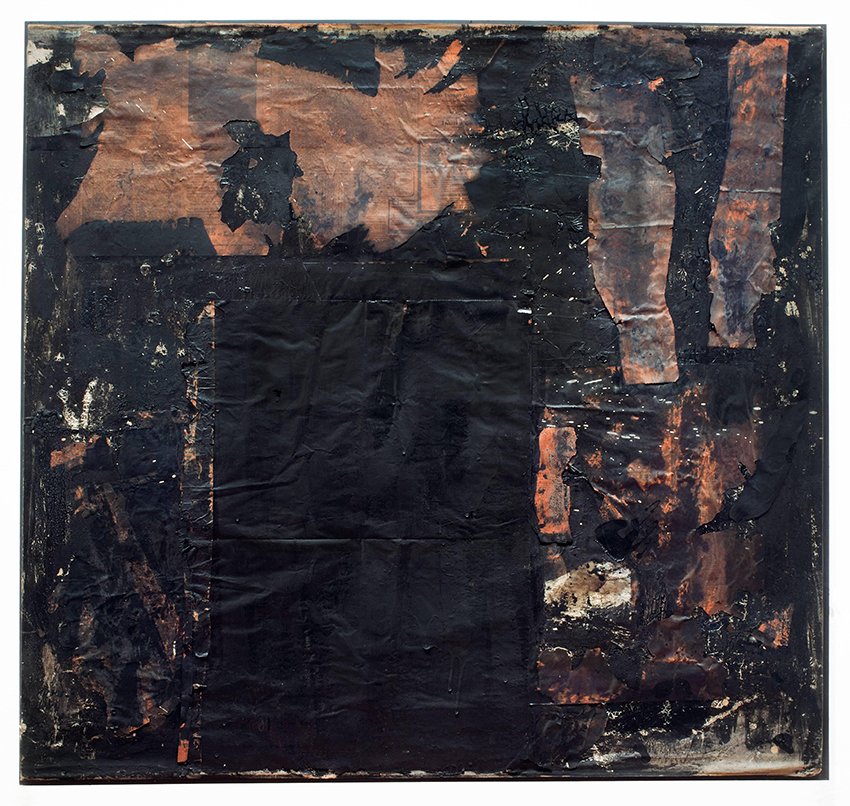
Robert Rauschenberg, Untitled (Black Painting with Portal Form), 1952-53 (alternative orientation) San Francisco MOMA.

Gordon Hahn

June 4, 2024

The NATO-Russia Ukrainian war for and against NATO expansion, is on the brink of expanding to the NATO countries that provoked Russia to invade Ukraine on 24 February 2024 and have supported its continuation ever since, save one—the United States of America—ironically, the real force behind the war’s genesis. Sixteen years ago today’s CIA Director, at the time US Ambassador to Moscow, William Burns was ignored when he informed Washington: 

Ukraine and Georgia’s NATO aspirations not only touch a raw nerve in Russia, they engender serious concerns about the consequences for stability in the region.  Not only does Russia perceive encirclement, and efforts to undermine Russia’s influence in the region, but it also fears unpredictable and uncontrolled consequences which would seriously affect Russian security interests.  Experts tell us that Russia is particularly worried that the strong divisions in Ukraine over NATO membership, with much of the ethnic-Russian community against membership, could lead to a major split, involving violence or at worst, civil war. In that eventuality, Russia would have to decide whether to intervene; a decision Russia does not want to have to face. ….“Russia’s opposition to NATO membership for Ukraine and Georgia is both emotional and based on perceived strategic concerns about the impact on Russia’s interests in the region. It is also politically popular to paint the U.S. and NATO as Russia’s adversaries and to use NATO’s outreach to Ukraine and Georgia as a means of generating support from Russian nationalists. While Russian opposition to the first round of NATO enlargement in the mid-1990’s was strong, Russia now feels itself able to respond more forcefully to what it perceives as actions contrary to its national interests” (https://wikileaks.org/plusd/cables/08MOSCOW265_a.html).

Rather than heed Burns’s warning and that of numerous objective experts, the US and NATO tried to remake Ukraine, funding anti-Russian forces and backing what became a violent, terrorist coup led by neofascists in February 2013, confounding an agreement worked out by the regime, opposition, Europe, and Russia that would have resolved the crisis. 

The post-coup NATO involvement in Ukraine was discussed in unusual pieces. One had purposes beyond the present discussion, The New York Times (NYT), acknowledged that the CIA was involved in Maidan Ukraine no later than immediately after the coup (https://www.nytimes.com/2024/02/25/world/europe/cia-ukraine-intelligence-russia-war.html).

In one rare objective opinion published in NYT on the subject, it was noted: “Over the next decade, the US and its allies built a powerful Ukrainian army while sabotaging the Minsk agreement and later (after the Russian invasion) also sabotaged the Istanbul negotiations. Weapon systems poured in, Ukrainian ports were modernised to fit American warships, and Ukraine was becoming a de facto NATO member. Top Ukrainian officials like Arestovich argued openly they were preparing for a war with Russia. A top adviser to former president Nicolas Sarkozy, warned that the US-Ukraine Charter on Strategic Partnership of November 2021 convinced Russia that it must attack or be attacked’.” (https://www.nytimes.com/2022/05/31/opinion/us-ukraine-putin-war.html).

The decision to supply nuclear capable F-16 fighter jets to Kiev and the recent French and presumably other Western countries’ coming declarations making official their previous and future deployments of ‘instructors’ and ‘advisors’ to the Ukrainian front is dangerously escalatory enough. Moscow is required to respond with an answering escalation to save face internally before the Russian people and externally before the world.

Now NATO, in the person of its GenSec, has opened up the Overton window by way of convening discussions with member-states on the introduction of troops and the use of Western-supplied mid-range rockets to hit deep inside Russian territory. Poland is on the verge of deploying its missile defense systems to protect Ukraine from Russia attacks. Moreover, a claim is being circulated to the effect that decision of 12 NATO countries (UK, France, Netherlands, Denmark, Canada, Sweden, Finland, Poland, the Czech Republic, Estonia, Latvia, and Lithuania so far) to allow Kiev to use Western missiles to strike deep into Russia — as far as Moscow and Russia’s ‘second capital’ of St. Petersburg.

Germany, not included in the list, has apparently changed its position and now supports attacks on Russia using Western weapons, as Chancellor Olaf Shultz stated, standing next to French President Emmanuel Macron last week. Berlin also is still considering sending long-range Taurus missiles to Kiev.

For its part, the US is considering giving permission to Kiev to use US weapons, such as ATACM missiles (180-mile range), against military targets deep inside Russia (https://www.wsj.com/world/blinken-signals-u-s-may-allow-ukraine-to-strike-inside-russia-with-u-s-weapons-61fedb10). The US has announced that it will allow the use of weapons it has supplied to Ukraine for attacks on Russian proper in the battle in the Kharkov (Kharkiv) border region now the focus of a Russian counteroffensive.

Otherwise, for the moment, Washington will continue to pretend it is opposed to Ukraine’s use of American weapons against Russia proper, using official statements and media plants to this tune: “a U.S. official said Washington had expressed concerns to Kyiv over Ukraine’s strikes — using its own weapons — on Russian radar stations that provide conventional air defense and early warning of nuclear launches by the West.” (https://www.washingtonpost.com/national-security/2024/05/30/ukraine-us-strategy-disagreement-corruption/). But Ukraine’s armed forces could not have made this attack without US assistance.

The US also will soon conclude a US-Ukraine Security Pact likely intended to institutionalize US weapons, training, intelligence, operational, and financial support to Kiev for the ‘long war.’ Fifteen European states have already concluded such long-term security agreements with Kiev over the last few months (https://www.pravda.com.ua/rus/news/2024/05/31/7458547/).

All this — added to the Western weapons, intelligence, training, operational planning, and undercover military personnel contributed to Kiev — makes Ukraine de facto a full-fledged NATO member-state. In other words, NATO countries — and thus de facto NATO itself — are preparing to do officially what they have been doing clandestinely since February 2022: fight Russia in Ukraine for the right to expand NATO when and where Washington and Brussels want.

Before all this, Western countries — all the leading members of NATO — were de facto and de jure co-belligerents with Ukraine against Russia. Suffice it to note that Ukraine does not have space-based reconnaissance data for targeting but is receiving such from French, German, US and other NATO militaries.

It appears that the recent Western escalations are driven in part by the need to prevent a Russian victory at all costs in order to save face for the US and NATO and, perhaps no less importantly, to salvage US President Joe Biden’s career in the coming presidential elections—a career that has been so disastrous for his family, Americans in general, and now the world. The authoritarianizing Democrat Party-state Biden administration has no limits in what it will do to achieve foreign and domestic hegemony; regarding the latter, witness the weaponization of the judicial system against both rank-and-file American citizens and former US President Donald Trump.

To achieve its ends, Washington and other Western countries are willing to mount an over-escalation that very possibly will provoke Russian to target Western sites, perhaps ‘decision-making centres’ as some Russians have proposed. It is more likely that Moscow will target any objects located in NATO countries used for air sorties for attacks on Russia: airfields in Poland and Romania, operational and intelligence centers, air defense installations in Poland, and the like.

In the event, a Europe-wide war conflagration threatens to break out. Such Russian retaliation will cause NATO to invoke Chapter 5 requiring a decision on whether to undertake military measures against Moscow directly. Russian officials and media are already preparing the Russian public for the likelihood of a broader war  sparked by the West. 

Two weeks ago, Ukraine attacked and damaged or destroyed 2 of Russia’s 10 early ballistic missile warning systems designed to pick up nuclear missile attacks on Russia coming from the south. The Austrian Armed Forces published an analysis suggesting that the attacks could have been sanctioned by the US and were meant as a warning to Moscow, because these targets were of no military value for Kiev.

If this is how Austrian military elements see this attack, one can imagine how the Russian GRU, SVR, and other security-interested elements see this attack, at least in symbolic terms or future potentialities, since the radar systems were not aimed at discovering missiles coming from the west. 

These attacks were clearly intended by Ukrainian leader Volodomyr Zelensky to intensify tensions between Russia and the West and provoke Moscow into an overreaction in order to bring NATO closer to direct military intervention in the war. Zelensky has attempted this numerous times, from attacking Crimea and the Black Sea Fleet with Western rockets, using American intelligence for targeting, to claiming Russian plots to explode nuclear power plants and the like. He will now have a much easier job pushing the West and, thus, Russia over red lines. Expanding the war is the only way to save himself, the Maidan regime, and a Ukraine — if a rump one — with a viable opportunity to join NATO and the EU.

Although these intensifications of the war crisis may not occur immediately, once the Russian forces’ offensive seems destined to reach the Dniepr River and/or political instability breaks out in Kiev, Washington will be forced to return to the issue and likely ‘pull the trigger’ allowing Kiev to use Western missiles and operations to hit targets deep inside Russia. This may come in autumn. 

This dangerous approach would be consistent with the West’s possible strategy of upping the length and costs of the war so that it lasts until Putin’s health falters and/or war costs damage the Russian economy’s health, prompting his political demise. This ‘long’ war strategy is reflected in the noted security pacts between Ukraine and 15 European states, with Washington soon to follow.

Worse still, the European NATO war risks expanding into a world war, if, for example, in addition to Belarus, other CSTO states were to send equipment or even troops to support Moscow in Ukraine, or if China were to intervene on Moscow’s behalf more aggressively in these or other ways. Western criticism of Chinese trade and technology transfers with military applicability and more recent Western claims that China is already supplying weapons to Moscow demonstrate just how this vector in the expansion of the NATO-Russia Ukraine War is already kinetic rather than theoretical.

China cannot allow Moscow to lose its ‘special military operation’ that likely would deprive it of its most powerful ally at a time when Washington is gearing up for a twilight struggle against Beijing. Moreover, once the war spreads beyond Ukraine, the temptation on both sides to machinate asymmetrical escalations elsewhere grow.

The West might target Georgia, Kazakhstan, or, again Belarus, Syria, and Iran. Moldova and Armenia could become Russian foci of asymmetrical escalation. In a grave pinch, China and Russia might be able to entice North Korea to attack South Korea. The US and China can provoke each other on Taiwan or in the South China Sea.

The US’s hundreds of military and intelligence installations abroad could become targets, transformed from assets into liabilities. A kind of perfect storm is coming.

This autumn there likely will be a collapse of the Ukrainian front and/or army and/or regime; the Russian army’s approach to the Dniepr and perhaps encirclement of Zaporozhe, Kharkiv, and even Kyiv; and an American political crisis (given the guilty verdict against Republican presidential candidate Donald Trump).

The possibilities are almost endless, and some rather dire ones are becoming increasingly more probable.

This article was originally published on Gordon Hahn’s homepage on June 2, 2024, here.
No data was found

Share

Leave a Reply

Your email address will not be published. Required fields are marked *

Related Posts

Officially, the drones were not identified. By simply thinking critically – which journalists and selected experts no longer do – there may be a good reason for that. And this article will never be mentioned in Denmark… Drones over Denmark. No damage. No trace. No answers. Yet the headlines scream “Russian threat,” and Prime Minister Mette Frederiksen speaks with a certainty that defies logic: “We don’t know they were Russian—but we know Russia is the biggest threat to Europe.” It could be nobody else – unless you make an interest analysis which I did two days ago. This is not security policy. It’s theatre. And the audience is being played. Let’s rewind. These drones—unphotographed, untracked, unclaimed—appear and vanish like ghosts. Airports shut down. Panic spreads. Military budgets swell. And the narrative hardens: Russia is behind it. But what if that’s not just wrong but deliberately misleading? Here’s a hypothesis for...
Drones over Nordic airports. No damage. No trace. No answers. Most assume Russia—but what if that’s not so? Why is there so much we are not told? This article explores the strategic ambiguity behind recent drone incursions and asks: Who else might benefit from sending drones into NATO airspace? From Ukraine’s surprising drone supremacy to Russia’s possible signalling, the silence itself may be the loudest message. These are the kinds of questions decent, intelligent investigative journalists and commentators could easily research. Why don’t they? Did you, dear reader, know or think of this? That the most powerful weapon in today’s conflicts might be the one that leaves no trace – and no answers. Just enough fear to justify the next move? Recently, drones have repeatedly appeared over Nordic airports and near some military facilities. They cause no damage – for which reason the designation “hybrid attack” is misleading but serves a purpose. These...
By World BEYOND War A new report by the global peace group World BEYOND War finds that military bases used by foreign militaries are growing in number, as are public protests and advocacy against those bases. Of 1,247 foreign military bases in the world, 877 of them, by latest count, are U.S. bases outside of the United States. Eighteen other nations, combined, have 370 bases outside their borders. The full report is available at https://worldbeyondwar.org/basesreport2025 While U.S. bases are in 95 foreign countries all over the globe and virtually encircling the borders of Russia and China, the nation with the second-most foreign bases, Türkiye, has them all near Türkiye, with the exception of one base in Somalia, and the majority of them in Syria and Iraq where Türkiye has been waging wars. During U.S. wars in Iraq and Afghanistan, the United States added, and later closed, hundreds of bases. Türkiye and...

Recent Articles

Gandhi, Arun. Lord Richard Attenborough. Kasturba: a lifeNew Delhi: Penguin Books Ltd., 2000.315 pp, 295 Indian Rs, US $22.51 January 29, 2002 Arun Gandhi, grandson to Mohandas and Kasturba, has written a thorough account of Kasturba’s life. Arun begins with a description of Kasturba’s childhood in Porbandar in the late1800s, before she met Mohandas. By having chosen to embark on difficult research into his grandmother’s life, including her first years which are not well-documented, Arun ensures that the reader receives an intimate and life-long portrait of this amazing woman. Kasturba is presented as a lively woman &endash; obedient, yet with a mind of her own. As the relationship between Kasturba and Mohandas developed, Arun maintains that Kasturba’s influence over Mohandas in her own quiet way also grew, to which some of Mohandas’ writings also attest.  Arun paints a vivid picture of the beginnings of Mohandas’ non-violence movement in South Africa, a...
In response to an urgent Appeal from all the living Nobel Peace Prize Laureates, the General Assembly of the United Nations, on November 1998, unanimously declared the first decade of the twenty-first century to be The Decade for a Culture of Peace and Nonviolence. While people are naturally concerned about the amount of violence in our world and how it threatens our future, the Nobel Laureates are right to remind us of the potential of nonviolence and our calling to build a culture of peace and nonviolence.  The twentieth century is instructive in the way that the philosophy and practice of nonviolence have begun to flourish and in the way that nonviolent movements have had an exponential growth across the world. Mohandas Gandhi and Martin Luther King, Jr. are the most famous nonviolent leaders but many have built upon the paths they charted as in country after country, tyrannies and...
We know that medical personnel have failed to report to higher authorities wounds that were clearly caused by torture and that they have neglected to take steps to interrupt this torture. In addition, they have turned over prisoners’ medical records to interrogators who could use them to exploit the prisoners’ weaknesses or vulnerabilities. We have not yet learned the extent of medical involvement in delaying and possibly falsifying the death certificates of prisoners who have been killed by torturers. A May 22 article on Abu Ghraib in the New York Times states that “much of the evidence of abuse at the prison came from medical documents” and that records and statements “showed doctors and medics reporting to the area of the prison where the abuse occurred several times to stitch wounds, tend to collapsed prisoners or see patients with bruised or reddened genitals.” http://www.truthout.org/docs_04/080604J.shtml#16 According to the article, two doctors who...

TFF on Substack

Discover more from TFF Transnational Foundation & Jan Oberg.

Most Popular

Gandhi, Arun. Lord Richard Attenborough. Kasturba: a lifeNew Delhi: Penguin Books Ltd., 2000.315 pp, 295 Indian Rs, US $22.51 January 29, 2002 Arun Gandhi, grandson to Mohandas and Kasturba, has written a thorough account of Kasturba’s life. Arun begins with a description of Kasturba’s childhood in Porbandar in the late1800s, before she met Mohandas. By having chosen to embark on difficult research into his grandmother’s life, including her first years which are not well-documented, Arun ensures that the reader receives an intimate and life-long portrait of this amazing woman. Kasturba is presented as a lively woman &endash; obedient, yet with a mind of her own. As the relationship between Kasturba and Mohandas developed, Arun maintains that Kasturba’s influence over Mohandas in her own quiet way also grew, to which some of Mohandas’ writings also attest.  Arun paints a vivid picture of the beginnings of Mohandas’ non-violence movement in South Africa, a...
In response to an urgent Appeal from all the living Nobel Peace Prize Laureates, the General Assembly of the United Nations, on November 1998, unanimously declared the first decade of the twenty-first century to be The Decade for a Culture of Peace and Nonviolence. While people are naturally concerned about the amount of violence in our world and how it threatens our future, the Nobel Laureates are right to remind us of the potential of nonviolence and our calling to build a culture of peace and nonviolence.  The twentieth century is instructive in the way that the philosophy and practice of nonviolence have begun to flourish and in the way that nonviolent movements have had an exponential growth across the world. Mohandas Gandhi and Martin Luther King, Jr. are the most famous nonviolent leaders but many have built upon the paths they charted as in country after country, tyrannies and...
We know that medical personnel have failed to report to higher authorities wounds that were clearly caused by torture and that they have neglected to take steps to interrupt this torture. In addition, they have turned over prisoners’ medical records to interrogators who could use them to exploit the prisoners’ weaknesses or vulnerabilities. We have not yet learned the extent of medical involvement in delaying and possibly falsifying the death certificates of prisoners who have been killed by torturers. A May 22 article on Abu Ghraib in the New York Times states that “much of the evidence of abuse at the prison came from medical documents” and that records and statements “showed doctors and medics reporting to the area of the prison where the abuse occurred several times to stitch wounds, tend to collapsed prisoners or see patients with bruised or reddened genitals.” http://www.truthout.org/docs_04/080604J.shtml#16 According to the article, two doctors who...
Read More
Imagen-thumbnail-The-Transnational-1
Gandhi, Arun. Lord Richard Attenborough. Kasturba: a lifeNew Delhi: Penguin Books Ltd., 2000.315 pp, 295 Indian Rs, US $22.51 January 29, 2002 Arun Gandhi, grandson to Mohandas and Kasturba, has written a thorough account of Kasturba’s life. Arun begins with a description of Kasturba’s childhood in Porbandar in the late1800s, before she met Mohandas. By having chosen to embark on difficult research into his grandmother’s life, including her first years which are not well-documented, Arun ensures that the reader receives an intimate and life-long portrait of this amazing woman. Kasturba is presented as a lively woman &endash; obedient, yet with a mind of her own. As the relationship between Kasturba and Mohandas developed, Arun maintains that Kasturba’s influence over Mohandas in her own quiet way also grew, to which some of Mohandas’ writings also attest.  Arun paints a vivid picture of the beginnings of Mohandas’ non-violence movement in South Africa, a...
Imagen-thumbnail-The-Transnational-1
In response to an urgent Appeal from all the living Nobel Peace Prize Laureates, the General Assembly of the United Nations, on November 1998, unanimously declared the first decade of the twenty-first century to be The Decade for a Culture of Peace and Nonviolence. While people are naturally concerned about the amount of violence in our world and how it threatens our future, the Nobel Laureates are right to remind us of the potential of nonviolence and our calling to build a culture of peace and nonviolence.  The twentieth century is instructive in the way that the philosophy and practice of nonviolence have begun to flourish and in the way that nonviolent movements have had an exponential growth across the world. Mohandas Gandhi and Martin Luther King, Jr. are the most famous nonviolent leaders but many have built upon the paths they charted as in country after country, tyrannies and...
Imagen-thumbnail-The-Transnational-1
We know that medical personnel have failed to report to higher authorities wounds that were clearly caused by torture and that they have neglected to take steps to interrupt this torture. In addition, they have turned over prisoners’ medical records to interrogators who could use them to exploit the prisoners’ weaknesses or vulnerabilities. We have not yet learned the extent of medical involvement in delaying and possibly falsifying the death certificates of prisoners who have been killed by torturers. A May 22 article on Abu Ghraib in the New York Times states that “much of the evidence of abuse at the prison came from medical documents” and that records and statements “showed doctors and medics reporting to the area of the prison where the abuse occurred several times to stitch wounds, tend to collapsed prisoners or see patients with bruised or reddened genitals.” http://www.truthout.org/docs_04/080604J.shtml#16 According to the article, two doctors who...
Imagen-thumbnail-The-Transnational-1
Jan Øberg behandler i artiklen en lang række faktorer, som ligger til grund for den måde vores samfund er organiseret på – og derfor også for konflikter. Artiklen introducerer således sammenhængen mellem familien, foreninger, regeringer, NGO’ er, nation, stat, nationalstat og alliancer for på denne måde bedre at kunne forstå konflikter og i sidste ende blive klogere mht. at løse disse. Øberg, der er fortaler for global bevidsthed, hvilket skal ses i lyset af den øgede globalisering, skelner mellem kulturkamp og kulturdialog. Endelig behandles begrebet magt og magtesløshed: giver magt ret til at udøve magt – fordi man mener at have ret? Litteraturliste og arbejdsspørgsmål efter artiklen. Ordene vi bruger om verden I satellitperspektiv kan man godt tale om den menneskelige familie eller menneskeheden. Udtrykket understreger, at der eksisterer – eller burde eksistere – et fællesskab fordi vi alle er mennesker og sammen bebor denne klode og ingen anden. Og...
Imagen-thumbnail-The-Transnational-1
Kapitel 2: Forskellige sider af Europa og USA…fortsat 2.5 Militære relationer I forbifarten har vi allerede sagt nogle ting om USA’s militære situation. Kig lige en gang til på afsnit 2.3. Nu skal vi uddybe det militære forhold mellem USA og EU. Der er en række ligheder mellem visse europæiske landes og USA’s militær. Næsten alle er med på en eller anden måde i NATO, direkte som medlem – selv Island, der ikke har et forsvar – eller indirekte i Partnerskab for Fred. USA og Canada er med i OSCE (på dansk OSSE), Organisationen for Sikkerhed og Samarbejde i Europa, der tæller over 50 lande. USA samt England og Frankrig er kernevåbenstater og de har styrker til intervention langt borte fra hjemlandet, om end USA’s er tifold større. Alle har også en omfattende våbeneksport og bruger den som et middel til at tjene penge og få loyale venner på, det...
Imagen-thumbnail-The-Transnational-1
Background Christian Harleman and Jan Oberg conducted a fact-finding mission to Burundi between November 26 and December 6, 2003. (See websites about the country here). The first TFF mission took place in March 1999. Unfortunately, since then it has not been practically possible to implement the co-operation with Burundi’s Ministry of Education and Burundian NGOs that was planned at the time. The 2003 mission had three purposes. First, to do fact-finding in general about the situation and, in particular, the progress under the Arusha Peace Process. Second, to explore the possibilities for co-operation between the government and relevant NGOs on the one hand and TFF on the other, in order to develop and deepen the existing competence in fields such as conflict-understanding, reconciliation and peace-building. Finally, third, to find out whether it would be possible, in co-operation with the Swedish Rescue Services Agency (Statens Räddningsverk), to establish a health care unit that...