NATO - A Steadfast Pretender

Over the last 70 years, we have heard here in Europe that ”the Russians are coming.” During the old Cold War ending in 1991, they did come to Hungary (1956), Czechoslovakia (1968) – and Afghanistan (1979). But they came neither to any of the neutral countries – Finland, Sweden, Switzerland, Yugoslavia or Austria – nor to any NATO member.

NATO’s militarist predictions and enemy images have proven consistently wrong over seven decades.

During the First Cold War, the Moscow-dominated Warsaw Pact’s military expenditures were about 65-80% of NATO, and its technology and efficiency was way behind that of its Western brother. But to be sure, the OSCE – the Organisation of Security and Cooperation in Europe (set up in the early 1970s with 57 members) constructively developed a series of confidence-building measures and dialogue principles.

Under Willy Brandt’s visionary leadership, Germany initiated the ”Ostpolitik” and rapprochement. Like with the Swedish Prime Minister Olof Palme’s Commission (1982), there was a clear understanding that East and West Europe must continuously talk with each other, inform each other about exercises, build confidence, and create security with and not against each other. What a difference in intellectualism and maturity from today’s leaders and the new Iron Curtain.

The Soviet Union and the Warsaw Pact fell apart in 1990-91, and all important NATO leaders are documented to have promised Mikhail Gorbachev that NATO would not expand ”one inch” if only he accepted that East Germany could unite with NATO member West Germany.

Before Russia’s invasion of Ukraine, its military expenditures were only 8% of the 30-member NATO’s. Neither then nor today is it a threat to any NATO country, but NATO can’t live without enemies.

What most people do not know is that the Warsaw Pact was established in 1954 only after the Soviet leaders had asked to join NATO, which had been established in 1949; it was turned down. Most also do not know that all Russian leaders, also Gorbachev and Putin, have signalled a wish to join NATO but were turned down too.

Fast forward some 30 years. NATO broke all promises, did not listen to Russian security concerns and expanded NATO instead of developing an all-Europe peace and security structure. Ukraine – where NATO had worked for about 30 years to prepare it for NATO membership against the majority of the Ukrainian people (according to all opinion polls) – and very much against Moscow’s wish – became NATO’s Himalayan hubris blunder.

So the alliance that has promised its taxpayers’ stability, security and peace’ – NATO’s mantra no matter what it does – is now the main (but not only) creator of the most dangerous situation in Europe since 1945. It’s particularly tragic since Ukraine was never strategically important to the West. Making it a NATO member was a show of force that could just as well have been avoided – an attempt to contain and humiliate Russia.

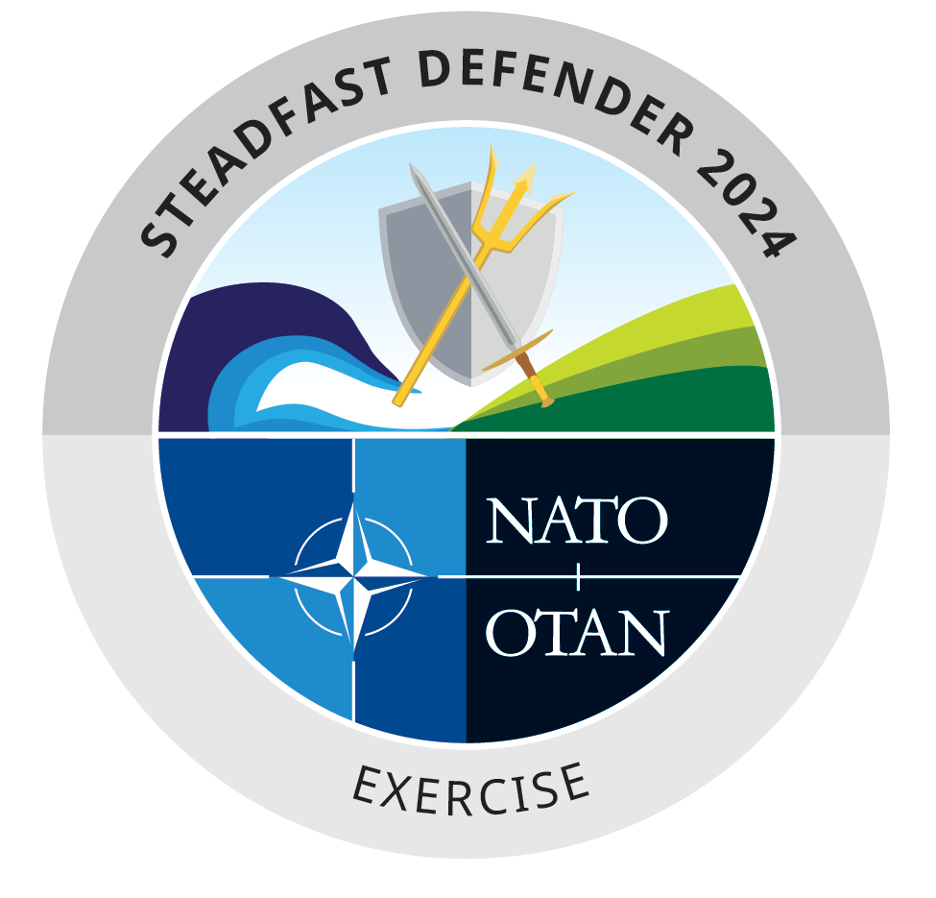
It is in this perspective one must see that NATO now holds its largest military exercise for decades, Steadfast Defender, involving 90 000 troops from all 31 NATO members and Sweden, from January 22 to May 31.

Why this tremendous waste of taxpayers’ money? Why this huge waste of energy and destructive impact on the environment? Why this militarist attitude in the midst of a Europe in deep structural, political and economic crisis and increasing malfunctioning of societal services and infrastructure?

The answer can be found on NATO’s homepage: ”Steadfast Defender 2024 will demonstrate our ability to deploy forces rapidly from North America and other parts of the Alliance to reinforce the defence of Europe. It will show that we can conduct and sustain complex multi-domain operations over several months, across thousands of kilometres, from the High North to Central and Eastern Europe, and in any conditions.  It will be a clear demonstration of our transatlantic unity and strength and our determination to continue to do all that is necessary to protect each other, our values and the rules-based international order.”

First, it is about ”ourselves” – our unity, capabilities, strength, determination and values. After the mentioned Himalayan blunder and the de jure and de facto fiasco of turning Ukraine into a NATO proxy fighting Russia on behalf of the alliance, the exercise is about beating breast.

So sure is the alliance of its fake fearology-based threat assertion about the Russians coming that it does not even have to mention Russia in the official text. The exercise, rather, aims to demonstrate military unity on top of political fragmentation and show – or pretend – that NATO’s citizens get security and peace for their money now they are fearing war.

It does not seem to occur to the NATO-based MIMAC – Military-Industrial-Media-Academic Complex – elites or priesthood that they are fighting ghosts that will not come this year either. To anyone with a clear and rational analysis, Russia has more than enough on its hands approaching its third year of warfare in Ukraine, and that it won’t be an easy piece of cake even if Russia wins militarily.

It is 30+ years ago now that NATO should have dissolved because its raison d’etre – the Soviet Union and the Warsaw Pact – disappeared. Its way of thinking about offensive instead of defensive deterrence combined with never-ending nuclear and conventional armament based on invented enemy images – also China – is outdated.

The alliance desperately needs to boost its crisis-ridden low self-confidence by pretending that the US will come to rescue Europe when ”the Russians are coming.” However, the US is now dropping Ukraine for the Middle East/Gaza and China and with the prospect of Donald Trump in the White House, the alliance faces an existential crisis – not unusual for creatures approaching 80 years of age without even attempting new thinking.

Holding such absurd exercises is a way to signal to their own citizens that “we see a threat and we protect you” – despite the fact that the enemy is invented. Because, how to squeeze money out of the taxpayers if there were no threat?

The anti-intellectual approach is also indicated in the bizarre idea that military expenditures shall be tied to NATO members’ economic performance – 2% of the GDP. Rational intelligence would tie military budgets to an analysis of what foreseeable threats there are, which of them each country chooses to guard against with the funds it is able to allocate.

But not so NATO! Here the idea is that – irrespective of every decent threat analysis – 2% is needed. Did any country ever think of doing similarly when it comes to health or culture?

In summary, if you want peace, prepare for peace. Prepare for war and you get enemies – and those you need to maintain your MIMAC as a parasite on civil society. Human and common security – genuine peace – is of no relevance to the military Steadfast Pretender of such fake peace. But eventually, Steadfast Pretenders will militarise themselves to death thanks to their addiction to weapons instead of intelligent diplomacy, civilian conflict resolution, common global security and true peace-making.

The Global East and South must now learn from and take concrete steps to avoid falling into the trap of self-destructive militarism that the Occident has fallen into. They must not do tit-for-tat but re-invent peace and outline a new global peace system with genuine common security without nukes, constant armament and wars.

Fortunately, that is eminently possible.

Note

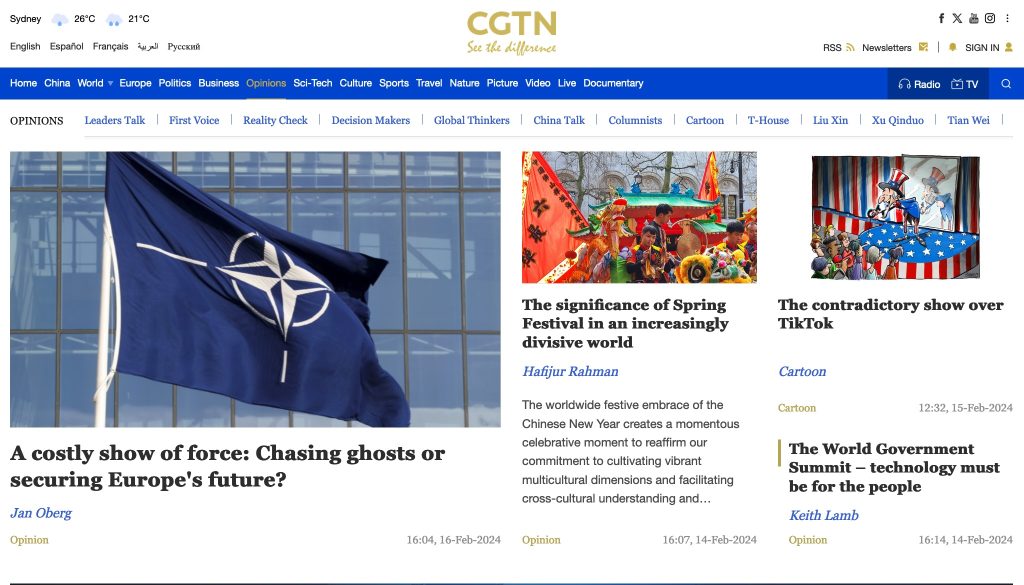
This article was written on February 8, 2024, in response to an invitation by CGTN – China Global Television Network – to write it. CGTN published it with some changes on February 16, 2024. Thus, it was written before Donald Trump, on February 11, talked about those NATO members who were ‘delinquent’ and did not deserve to be defended.
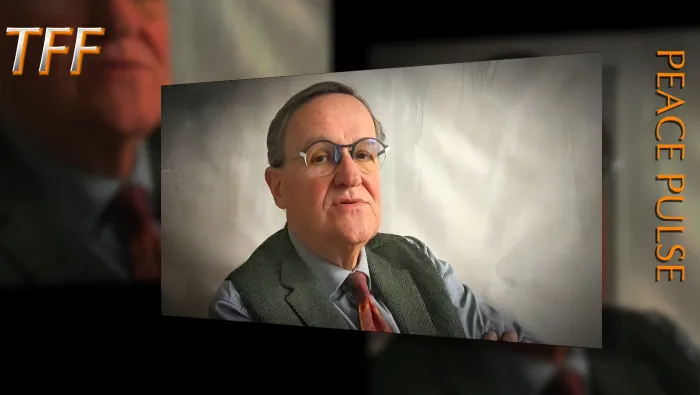
Peace & future researcher + ‌Art Photographer

Share

Leave a Reply

Your email address will not be published. Required fields are marked *

Related Posts

PRESS RELEASE – 6 OCTOBER 2025 LAY DOWN YOUR ARMSPEACE PRIZE FOR 2025 is awarded Francesca Albanese The United Nations Special Rapporteur on the occupied Palestinian territories – as the person who, in accordance with Alfred Nobel’s will, has “done the most or the best work for fraternity between nations and for the abolition or reduction of standing armies as well as for the holding and promotion of peace congresses.” Francesca Albanese has forcefully and unwaveringly worked against Israel’s full-scale war on the occupied Palestinian territories, in particular Israel´s ongoing genocide against the Palestinian people. She has confronted Israel’s systematic war crimes and crimes against humanity in a truly global outreach. Further, she has brought governments, international organisations and people’s groups together to underline the responsibility of the world at large to act and to stop arming, enabling, and profiting from Israel’s ongoing criminal actions. But first of all, Albanese...
Officially, the drones were not identified. By simply thinking critically – which journalists and selected experts no longer do – there may be a good reason for that. And this article will never be mentioned in Denmark… Drones over Denmark. No damage. No trace. No answers. Yet the headlines scream “Russian threat,” and Prime Minister Mette Frederiksen speaks with a certainty that defies logic: “We don’t know they were Russian—but we know Russia is the biggest threat to Europe.” It could be nobody else – unless you make an interest analysis which I did two days ago. This is not security policy. It’s theatre. And the audience is being played. Let’s rewind. These drones—unphotographed, untracked, unclaimed—appear and vanish like ghosts. Airports shut down. Panic spreads. Military budgets swell. And the narrative hardens: Russia is behind it. But what if that’s not just wrong but deliberately misleading? Here’s a hypothesis for...
And why the world, especially the EU, must now declare itself independent of the United States. UN’s 80th anniversary This year, the United Nations celebrates the 80th anniversary of its founding. The UN was formed after the scourge of the Second World War, in which 70 to 85 million people were killed and many countries were destroyed. That war came on the heels of the First World War, which also killed between 15 and 22 million people. After the Second World War, especially after the use of nuclear weapons by the United States, which marked a turning point in the history of warfare that could result in the end of civilisation as we know it, humanity decided to move away from the era of empires and big power politics and usher in a new era of peace, freedom and cooperation. These were the principles enshrined in the UN Charter. The United States...

Recent Articles

Jan Øberg behandler i artiklen en lang række faktorer, som ligger til grund for den måde vores samfund er organiseret på – og derfor også for konflikter. Artiklen introducerer således sammenhængen mellem familien, foreninger, regeringer, NGO’ er, nation, stat, nationalstat og alliancer for på denne måde bedre at kunne forstå konflikter og i sidste ende blive klogere mht. at løse disse. Øberg, der er fortaler for global bevidsthed, hvilket skal ses i lyset af den øgede globalisering, skelner mellem kulturkamp og kulturdialog. Endelig behandles begrebet magt og magtesløshed: giver magt ret til at udøve magt – fordi man mener at have ret? Litteraturliste og arbejdsspørgsmål efter artiklen. Ordene vi bruger om verden I satellitperspektiv kan man godt tale om den menneskelige familie eller menneskeheden. Udtrykket understreger, at der eksisterer – eller burde eksistere – et fællesskab fordi vi alle er mennesker og sammen bebor denne klode og ingen anden. Og...
Kapitel 2: Forskellige sider af Europa og USA…fortsat 2.5 Militære relationer I forbifarten har vi allerede sagt nogle ting om USA’s militære situation. Kig lige en gang til på afsnit 2.3. Nu skal vi uddybe det militære forhold mellem USA og EU. Der er en række ligheder mellem visse europæiske landes og USA’s militær. Næsten alle er med på en eller anden måde i NATO, direkte som medlem – selv Island, der ikke har et forsvar – eller indirekte i Partnerskab for Fred. USA og Canada er med i OSCE (på dansk OSSE), Organisationen for Sikkerhed og Samarbejde i Europa, der tæller over 50 lande. USA samt England og Frankrig er kernevåbenstater og de har styrker til intervention langt borte fra hjemlandet, om end USA’s er tifold større. Alle har også en omfattende våbeneksport og bruger den som et middel til at tjene penge og få loyale venner på, det...
Background Christian Harleman and Jan Oberg conducted a fact-finding mission to Burundi between November 26 and December 6, 2003. (See websites about the country here). The first TFF mission took place in March 1999. Unfortunately, since then it has not been practically possible to implement the co-operation with Burundi’s Ministry of Education and Burundian NGOs that was planned at the time. The 2003 mission had three purposes. First, to do fact-finding in general about the situation and, in particular, the progress under the Arusha Peace Process. Second, to explore the possibilities for co-operation between the government and relevant NGOs on the one hand and TFF on the other, in order to develop and deepen the existing competence in fields such as conflict-understanding, reconciliation and peace-building. Finally, third, to find out whether it would be possible, in co-operation with the Swedish Rescue Services Agency (Statens Räddningsverk), to establish a health care unit that...

TFF on Substack

Discover more from TFF Transnational Foundation & Jan Oberg.

Most Popular

Jan Øberg behandler i artiklen en lang række faktorer, som ligger til grund for den måde vores samfund er organiseret på – og derfor også for konflikter. Artiklen introducerer således sammenhængen mellem familien, foreninger, regeringer, NGO’ er, nation, stat, nationalstat og alliancer for på denne måde bedre at kunne forstå konflikter og i sidste ende blive klogere mht. at løse disse. Øberg, der er fortaler for global bevidsthed, hvilket skal ses i lyset af den øgede globalisering, skelner mellem kulturkamp og kulturdialog. Endelig behandles begrebet magt og magtesløshed: giver magt ret til at udøve magt – fordi man mener at have ret? Litteraturliste og arbejdsspørgsmål efter artiklen. Ordene vi bruger om verden I satellitperspektiv kan man godt tale om den menneskelige familie eller menneskeheden. Udtrykket understreger, at der eksisterer – eller burde eksistere – et fællesskab fordi vi alle er mennesker og sammen bebor denne klode og ingen anden. Og...
Kapitel 2: Forskellige sider af Europa og USA…fortsat 2.5 Militære relationer I forbifarten har vi allerede sagt nogle ting om USA’s militære situation. Kig lige en gang til på afsnit 2.3. Nu skal vi uddybe det militære forhold mellem USA og EU. Der er en række ligheder mellem visse europæiske landes og USA’s militær. Næsten alle er med på en eller anden måde i NATO, direkte som medlem – selv Island, der ikke har et forsvar – eller indirekte i Partnerskab for Fred. USA og Canada er med i OSCE (på dansk OSSE), Organisationen for Sikkerhed og Samarbejde i Europa, der tæller over 50 lande. USA samt England og Frankrig er kernevåbenstater og de har styrker til intervention langt borte fra hjemlandet, om end USA’s er tifold større. Alle har også en omfattende våbeneksport og bruger den som et middel til at tjene penge og få loyale venner på, det...
Background Christian Harleman and Jan Oberg conducted a fact-finding mission to Burundi between November 26 and December 6, 2003. (See websites about the country here). The first TFF mission took place in March 1999. Unfortunately, since then it has not been practically possible to implement the co-operation with Burundi’s Ministry of Education and Burundian NGOs that was planned at the time. The 2003 mission had three purposes. First, to do fact-finding in general about the situation and, in particular, the progress under the Arusha Peace Process. Second, to explore the possibilities for co-operation between the government and relevant NGOs on the one hand and TFF on the other, in order to develop and deepen the existing competence in fields such as conflict-understanding, reconciliation and peace-building. Finally, third, to find out whether it would be possible, in co-operation with the Swedish Rescue Services Agency (Statens Räddningsverk), to establish a health care unit that...
Read More
Imagen-thumbnail-The-Transnational-1
Jan Øberg behandler i artiklen en lang række faktorer, som ligger til grund for den måde vores samfund er organiseret på – og derfor også for konflikter. Artiklen introducerer således sammenhængen mellem familien, foreninger, regeringer, NGO’ er, nation, stat, nationalstat og alliancer for på denne måde bedre at kunne forstå konflikter og i sidste ende blive klogere mht. at løse disse. Øberg, der er fortaler for global bevidsthed, hvilket skal ses i lyset af den øgede globalisering, skelner mellem kulturkamp og kulturdialog. Endelig behandles begrebet magt og magtesløshed: giver magt ret til at udøve magt – fordi man mener at have ret? Litteraturliste og arbejdsspørgsmål efter artiklen. Ordene vi bruger om verden I satellitperspektiv kan man godt tale om den menneskelige familie eller menneskeheden. Udtrykket understreger, at der eksisterer – eller burde eksistere – et fællesskab fordi vi alle er mennesker og sammen bebor denne klode og ingen anden. Og...
Imagen-thumbnail-The-Transnational-1
Kapitel 2: Forskellige sider af Europa og USA…fortsat 2.5 Militære relationer I forbifarten har vi allerede sagt nogle ting om USA’s militære situation. Kig lige en gang til på afsnit 2.3. Nu skal vi uddybe det militære forhold mellem USA og EU. Der er en række ligheder mellem visse europæiske landes og USA’s militær. Næsten alle er med på en eller anden måde i NATO, direkte som medlem – selv Island, der ikke har et forsvar – eller indirekte i Partnerskab for Fred. USA og Canada er med i OSCE (på dansk OSSE), Organisationen for Sikkerhed og Samarbejde i Europa, der tæller over 50 lande. USA samt England og Frankrig er kernevåbenstater og de har styrker til intervention langt borte fra hjemlandet, om end USA’s er tifold større. Alle har også en omfattende våbeneksport og bruger den som et middel til at tjene penge og få loyale venner på, det...
Imagen-thumbnail-The-Transnational-1
Background Christian Harleman and Jan Oberg conducted a fact-finding mission to Burundi between November 26 and December 6, 2003. (See websites about the country here). The first TFF mission took place in March 1999. Unfortunately, since then it has not been practically possible to implement the co-operation with Burundi’s Ministry of Education and Burundian NGOs that was planned at the time. The 2003 mission had three purposes. First, to do fact-finding in general about the situation and, in particular, the progress under the Arusha Peace Process. Second, to explore the possibilities for co-operation between the government and relevant NGOs on the one hand and TFF on the other, in order to develop and deepen the existing competence in fields such as conflict-understanding, reconciliation and peace-building. Finally, third, to find out whether it would be possible, in co-operation with the Swedish Rescue Services Agency (Statens Räddningsverk), to establish a health care unit that...
Imagen-thumbnail-The-Transnational-1
Former UN Under-Secretary-General with special responsibility for peacekeeping operations TFF associate August 20, 2003 YRINGHAM, Mass.- Ralph Bunche was born in Detroit 100 years ago today (August 7, 2003). His passionate determination to get results did not extend to seeking credit for them, so his work is better remembered than he is. Of all his many accomplishments – civil rights pioneer, Nobel Peace Prize laureate, chief drafter of two chapters of the United Nations charter, negotiator of the armistices that ended the first Arab-Israeli war – Bunche said he was proudest of developing what came to be known as peacekeeping. Setting up the United Nations Truce Supervision Organization in Palestine in 1948, Bunche formulated the principles that have governed peacekeeping operations ever since. In the 1956 Suez crisis, working with Secretary General Dag Hammarskjold and Lester Pearson of Canada, he organized the first peacekeeping force, the United Nations Emergency Force...
– nästan 11 månader Till Sofia nästan 11 månader # 1  Till Sofias huvudsida Till alla Privata Foto-Serier
Till Sofias huvudsida