
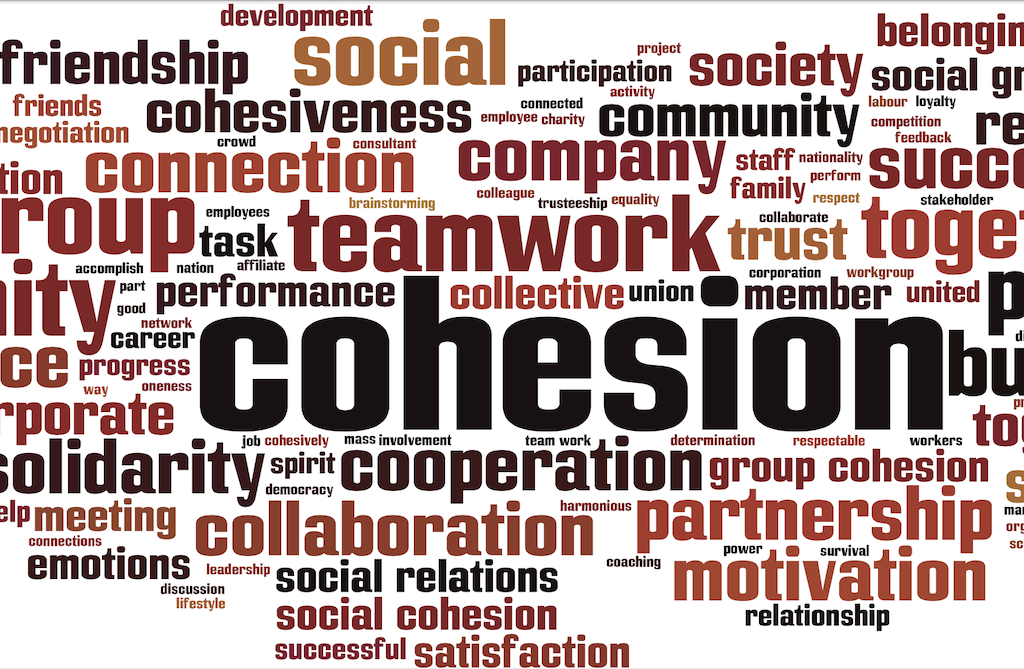
Chaiwat Satha-Anand: Bridging Troubled Waters - Forging Cohesion in Divided Societies

This article was first published in RSIS Commentary, No.069, 22 June 2022. RSIS Commentary is a platform to provide timely and, where appropriate, policy-relevant commentary and analysis of topical and contemporary issues. The authors’ views are their own and do not represent the official position of the S. Rajaratnam School of International Studies, NTU. These commentaries may be reproduced with prior permission from RSIS and due recognition to the author(s) and RSIS.

Synopsis

In an era of social tension and conflict, building bridges to foster cohesion has become critical. As the classic song “Bridge Over Troubled Water” reminds us, we should not ignore the troubled water under the bridges that we are building.

Commentary

At the inaugural International Conference on Cohesive Societies (ICCS) in Singapore in June 2019, President Halimah Yacob called on countries and societies to build bridges, not walls, across increasingly identitarian divides. At the same event, Dr Ali Al Nuaimi from the United Arab Emirates’ Hedayah International Centre of Excellence for Countering Violent Extremism reinforced this message by pointing out that we are in “an era of building bridges, not wars”.

When building bridges in the context of deeply divided societies, it is important to understand the troubled water under them. Three guiding questions could help elucidate the kind of “troubled water” challenging bridge builders as they try to foster social cohesion today: (1) Where could the rifts be found; (2) how deep are such rifts currently in contemporary societies; and (3) why is it so difficult to deal with such rifts?

Erosion of Civil Religion

In coming to terms with divided societies through the first question on where the rifts could be found, it is wise to follow what Robert Bellah wrote half a century ago. He said that people were connected in a cohesive society because of the strength of a collection of beliefs, symbols, and rituals with respect to sacred things institutionalised in a collectivity.

These beliefs, symbols and rituals give definition to a nation, not unlike the power a religion holds over its believers and followers– hence the term “civil religion”. It is the strength of civil religion that holds people of differences in a cohesive collective that could place trust in institutions such as the police, the court, or the media.

Judging from what has recently transpired in highly polarised societies such as the United States and Thailand, trust in the electoral process has been eroding in the former, while issues pertaining to monarchical institutional reform — unthinkable in the past — have seemingly torn the traditional fabric of society asunder in the latter.

Polarisation is also tearing at the seams of democratic institutions and practices around the world, from Bangladesh, Brazil and India to Kenya and Poland, among others. Perhaps, “civil religion” that once held these societies in cohesion is now fracturing, if not already broken down in some cases.

Gravity of “Ordinary Virtue”

How deep is the fracture threatening civil religion that has held societies together for so long? I think the cohesive quality of civil religion has been put through a vigorous test when the “universal” language of rights and liberty that reverberates well with liberals — both people and societies — is contested by the moral language used by ordinary people in their everyday virtues.


In Ordinary Virtues, Michael Ignatieff maintains that it is these ordinary virtues – trust and tolerance among others – which serve as the “moral operating system” guiding people through competing ideas and demands.

For ordinary virtues, the key moral distinction is self/other and citizen/stranger. Assuming the stranger is “the other”, race, religion, gender, and nationality are then primary for the self/citizen, while common humanity becomes secondary.

Consider the issue of tolerance believed to be crucial for social cohesion as an example. In ordinary virtues, tolerance is not an obligation, but a gift from the citizen; the state as sovereign defines who gets the gift. Citizens give gifts of tolerance to strangers on condition that the strangers accept their “moral operating system”. Tolerance will be denied if the stranger insists that it is his/her right.

Ignatieff further observes that while different groups can live in the same societies, they do so apart rather than together. While ordinary virtues can sometimes unite us, at other times they divide us. On one hand, they are the key to healing, reconciliation, and solidarity.

On the other, they could be easily exploited in the name of “politics of fear and exclusion” as one’s own group is privileged over others. It is perhaps how existing political discourse could empower or confiscate the ordinary virtues in this heightened “politics of fear and exclusion” that makes the water under the bridge extremely dangerous at present.

The Football Stadium Ecosystem

Why has building bridges to foster social cohesion in the context of heightened “politics of fear and exclusion” become increasingly difficult? Many have identified the influence of online communication, its nature and speed, as the main problems.

Others engage in the “war” against “fake news” with their versions of “true” accounts, not realising, perhaps, that the notion of “truth” itself has become increasingly problematic.

In my view, one of the best answers to the difficult question can be found in Zeynep Tufekci’s MIT Technology Review article. She suggests that to understand the destructive tendency of digital technology, one must look beyond the technologies themselves toward its ecosystem.

She explains that when “we encounter opposing views in the age and context of social media, it’s not like reading them in a newspaper while sitting alone, … (but) hearing them from the opposing team while sitting with our fellow fans in a football stadium”.

In an ecosystem where the sense of identity conflict is all-consuming, “belonging is stronger than facts”. Within this ecosystem, where facts are almost relegated to insignificance, a petrified sense of belonging poses a severe threat to a cohesive society that aims to cut across identitarian differences.

The Necessity of Building Bridges

Since working towards social cohesion in divided societies is so important currently, there is a dire need to try to understand the locations and depth of rifts threatening cohesion, as well as the condition that makes it difficult to work towards realising a healthy cohesive society.

Only by critically identifying the elemental conditions that constitute the troubled water under the bridge — civil religion, ordinary virtues, and ecosystem — and then confronting these realities, could bridge-building be realistically attempted and meaningful social cohesion possible.

About the author
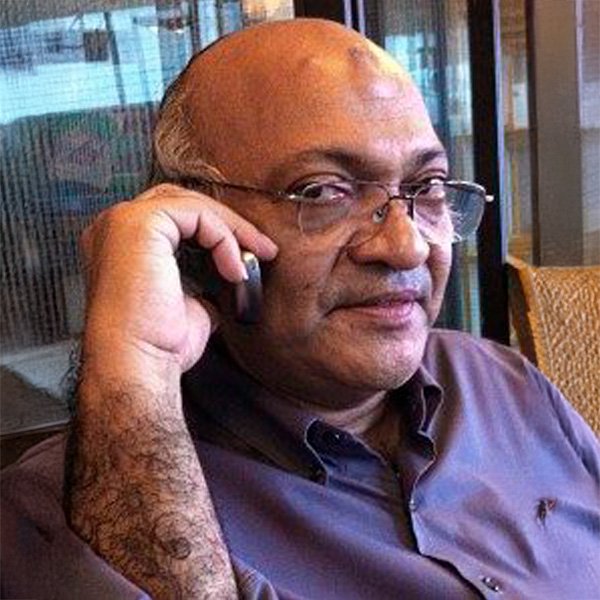
Dr Chaiwat Satha-Anand is a Professor of Political Science at Thammasat University, Bangkok, and Founder and Director of the Thai Peace Information Centre. He is the author of Nonviolence and Islamic Imperatives (2017), and “The Governor, The Cow Head, and the Thrashing Pillows: Negotiated “Restrictive Islam” in Twenty-First Century Southeast Asia” (in Religions, 2022).

Share

Leave a Reply

Your email address will not be published. Required fields are marked *

Related Posts

Photo Jan Oberg China has recently garnered significant attention due to its advancements in various technological fields, such as quantum physics and artificial intelligence. In media discussions and my lectures on China, it is common to encounter objections asserting that the West, particularly the United States, is certainly ahead of China. These assertions appear to be more emotional than factual. However, a more fundamental consideration is whether this question holds any significance. Cultural Perspective One aspect that Westerners often overlook is the cultural variation in understanding the relationship between abstract academic insights and practical applications of those insights. To comprehend the origin and significance of discussions on technological superiority, it is essential to acknowledge cultural and social differences between China and the West. I have explored this topic before in some of my previous articles published on the TFF website. Particularism On the cultural dimension universalist – particularist, China exhibits...
On the invisible codes of culture that shape our worldviews long before memory or reason. This analysis was initially published on the author’s “China21 Journal” which contains several analyses of related issues, China-Western relations and how to increase knowledge and mutual understanding. Last week, we picked up our 5-year-old son from his public kindergarten in Beijing. On the way home, he proudly recited a Tang Dynasty poem by heart — 春望 (Chūnwàng, or Spring View, 757 AD), one of the most famous and widely recited works from that vibrant dynastic era over a thousand years ago, written by the renowned poet 杜甫 (Dù Fǔ, 712–770). The poem reflects on wartime and exile — hardly light or child-friendly themes. But that’s not the point. Children (and adults) recite ancient poems not just for their content, but for their rhythm, rhyme, tone, and the cultural feeling embedded in them. This is how cultural programming begins: not through rules or explanations,...
Today is 9 April. It marks the 80th Anniversary of Hitler’s invasion of Denmark. Denmark’s Radio reports today on how the country’s war museums have become ‘attractions’ where people queue to get in and go on guided tours, and ticket sales are booming. Of course, it never occurs to anyone to ask why Denmark and so many other countries are so preoccupied with war – monuments, anniversaries, museums, have so many bookshops with lots of books about war, war history, weapons, uniforms – use military-inspired fashion or drive city jeeps and other modern cars that look like armoured vehicles. Not to mention why there aren’t the same peace-inspired things – peace monuments, peace museums, bookshops with peace books… The answer is simple enough. The West as a culture, as a social cosmology and a collective way of thinking and behaving, is a terrible violence-based apparatus of world wars, armament, colonialism,...

Recent Articles

PressInfo # 141, December 21, 2001It’s time to prepare reconciliation between Albanians and Serbs PressInfo # 140, December 14, 2001Ibrahim Rugova’s decade-long leadership in Kosovo/a PressInfo # 139, 11. december, 2001En god nyhet: Jugoslaviens Sannings- och försoningskommission PressInfo # 139, 11. december, 2001Gode nyheder: Jugoslaviens Sandheds- og Forsoningskommission PressInfo # 139, December 11, 2001Good news: Yugoslavia’s Truth and Reconciliation Commission PressInfo # 138, November 8, 2001TFF co-founder PhD with thesis about young people with roots in other cultures PressInfo # 138, November 8, 2001TFF:s medstiftare doktor på avhandling om unga med ursprung i andra kulturer PressInfo # 137, October 17, 2001A new Marshall Plan: Advancing human security and controlling terrorism PressInfo # 136, October 15, 2001The UN and Annan really deserve it PressInfo # 135, October 10, 2001Preventing a terrorist mushroom cloud PressInfo # 134, 17 oktober, 2001Sverige og 11. september PressInfo # 134, October 9, 2001Sweden and September 11...
Peace is promoted by constructive proposals and dialogue Four preceding PressInfos have expressed concern over — and criticised — the ongoing, militarisation of the EU. Some will say: but there are no alternatives. We believe that there are always alternatives, that democracies are characterised by alternatives and choice, and that openly discussed alternatives will improve the quality and legitimacy of society’s decision–making. In addition, it is an intellectual and moral challenge to not only criticise but also be constructive. If we only tell people that we think they are wrong, they are not likely to listen. However, if we say: what are your views on this set of ideas and steps? — we may sometimes engage them in dialogue and sow a seed. Most people in power circles live their daily lives in in a time frame and a social space where certain ideas, viewpoints and concepts are just not...
Photos © TFF 2000 Read PressInfo 90 “Lift the Sanctions and Bring More Aid to Yugoslavia” See Pictures from Belgrade © TFF 2000 Please reprint, copy, archive, quote or re-post this item, but please retain the source.

TFF on Substack

Discover more from TFF Transnational Foundation & Jan Oberg.

Most Popular

PressInfo # 141, December 21, 2001It’s time to prepare reconciliation between Albanians and Serbs PressInfo # 140, December 14, 2001Ibrahim Rugova’s decade-long leadership in Kosovo/a PressInfo # 139, 11. december, 2001En god nyhet: Jugoslaviens Sannings- och försoningskommission PressInfo # 139, 11. december, 2001Gode nyheder: Jugoslaviens Sandheds- og Forsoningskommission PressInfo # 139, December 11, 2001Good news: Yugoslavia’s Truth and Reconciliation Commission PressInfo # 138, November 8, 2001TFF co-founder PhD with thesis about young people with roots in other cultures PressInfo # 138, November 8, 2001TFF:s medstiftare doktor på avhandling om unga med ursprung i andra kulturer PressInfo # 137, October 17, 2001A new Marshall Plan: Advancing human security and controlling terrorism PressInfo # 136, October 15, 2001The UN and Annan really deserve it PressInfo # 135, October 10, 2001Preventing a terrorist mushroom cloud PressInfo # 134, 17 oktober, 2001Sverige og 11. september PressInfo # 134, October 9, 2001Sweden and September 11...
Peace is promoted by constructive proposals and dialogue Four preceding PressInfos have expressed concern over — and criticised — the ongoing, militarisation of the EU. Some will say: but there are no alternatives. We believe that there are always alternatives, that democracies are characterised by alternatives and choice, and that openly discussed alternatives will improve the quality and legitimacy of society’s decision–making. In addition, it is an intellectual and moral challenge to not only criticise but also be constructive. If we only tell people that we think they are wrong, they are not likely to listen. However, if we say: what are your views on this set of ideas and steps? — we may sometimes engage them in dialogue and sow a seed. Most people in power circles live their daily lives in in a time frame and a social space where certain ideas, viewpoints and concepts are just not...
Photos © TFF 2000 Read PressInfo 90 “Lift the Sanctions and Bring More Aid to Yugoslavia” See Pictures from Belgrade © TFF 2000 Please reprint, copy, archive, quote or re-post this item, but please retain the source.
Read More
Imagen-thumbnail-The-Transnational-1
PressInfo # 141, December 21, 2001It’s time to prepare reconciliation between Albanians and Serbs PressInfo # 140, December 14, 2001Ibrahim Rugova’s decade-long leadership in Kosovo/a PressInfo # 139, 11. december, 2001En god nyhet: Jugoslaviens Sannings- och försoningskommission PressInfo # 139, 11. december, 2001Gode nyheder: Jugoslaviens Sandheds- og Forsoningskommission PressInfo # 139, December 11, 2001Good news: Yugoslavia’s Truth and Reconciliation Commission PressInfo # 138, November 8, 2001TFF co-founder PhD with thesis about young people with roots in other cultures PressInfo # 138, November 8, 2001TFF:s medstiftare doktor på avhandling om unga med ursprung i andra kulturer PressInfo # 137, October 17, 2001A new Marshall Plan: Advancing human security and controlling terrorism PressInfo # 136, October 15, 2001The UN and Annan really deserve it PressInfo # 135, October 10, 2001Preventing a terrorist mushroom cloud PressInfo # 134, 17 oktober, 2001Sverige og 11. september PressInfo # 134, October 9, 2001Sweden and September 11...
Imagen-thumbnail-The-Transnational-1
Peace is promoted by constructive proposals and dialogue Four preceding PressInfos have expressed concern over — and criticised — the ongoing, militarisation of the EU. Some will say: but there are no alternatives. We believe that there are always alternatives, that democracies are characterised by alternatives and choice, and that openly discussed alternatives will improve the quality and legitimacy of society’s decision–making. In addition, it is an intellectual and moral challenge to not only criticise but also be constructive. If we only tell people that we think they are wrong, they are not likely to listen. However, if we say: what are your views on this set of ideas and steps? — we may sometimes engage them in dialogue and sow a seed. Most people in power circles live their daily lives in in a time frame and a social space where certain ideas, viewpoints and concepts are just not...
Imagen-thumbnail-The-Transnational-1
Photos © TFF 2000 Read PressInfo 90 “Lift the Sanctions and Bring More Aid to Yugoslavia” See Pictures from Belgrade © TFF 2000 Please reprint, copy, archive, quote or re-post this item, but please retain the source.
Imagen-thumbnail-The-Transnational-1
Av FRANK SØHOLM GREVIL 16 augusti 2004  Vi er nu nået til tredje akt i det absurde teaterstykke, der i analogi med de store skueprocesser i Moskva 1936-38 er blevet døbt ‘Grevil-sagen’. Første akt bestod i min anonyme fremlæggelse af egenhændigt nedklassificerede rapporter i Berlingske Tidende i februar og marts. Andet akt udgjordes af min fremtræden med navn og billede i Information i april samt den efterfølgende mediestorm, som uden min direkte medvirken kostede en forsvarsminister taburetten samt en sigtelse for brud på tavshedspligten. Tredje akt bliver en retssag, hvor jeg står tiltalt for at have overtrådt straffelovens bestemmelser om uberettiget videregivelse eller udnyttelse af fortrolige oplysninger. Statsanklageren har ovenikøbet valgt at påberåbe sig særligt skærpende omstændigheder. Da jeg aldrig har modtaget betaling for at stille rapporterne til rådighed eller lade mig interviewe, må det skærpende bestå i, at “videregivelsen eller udnyttelsen er sket under sådanne omstændigheder, at det påfører...
Imagen-thumbnail-The-Transnational-1
Af Svenska Irakkommittén mot de Ekonomiska Sanktionerna (SIES) 13 september 2002 FN:s ekonomiska sanktioner mot Irak har nu pågått i tolv år och drabbat det irakiska folket med svåra lidanden. Enligt FN:s egna siffror har mer än 1,5 miljoner människor, varav ca 600 000 barn, dött som en direkt följd av sanktionerna. Dessutom har ett lågintensivt bombkrig mot landet pågått under dessa år. Av all denna förödelse- orsakad huvudsakligen av amerikansk och brittisk politik- har Saddam Husseins brutala och diktatoriska regim snarast stärkts än försvagats. Nu förbereder USA under president Bushs ledning ett storskaligt bombkrig mot Irak som kommer att innebära ett ännu större lidande för civilbefolkningen. Ett sådant krig kommer dessutom att ytterligare undergräva freden och säkerheten i världen. Att upprätta en demokratisk regim i Irak är det irakiska folkets angelägenhet och får enligt folkrätten inte ske med krigshandlingar utifrån. Folkrätten och FN:s stadgar måste respekteras. Vi vädjar till...

