September 14, 2021
Modified responses on Aug. 23rd to questions posed by Zahra Mirzafarjouyan, Mehr News Agency, and originally published on Falk’s homepage.
• 1 Why could the Taliban capture Kabul and gain power so rapidly without considerable resistance from people and the army?
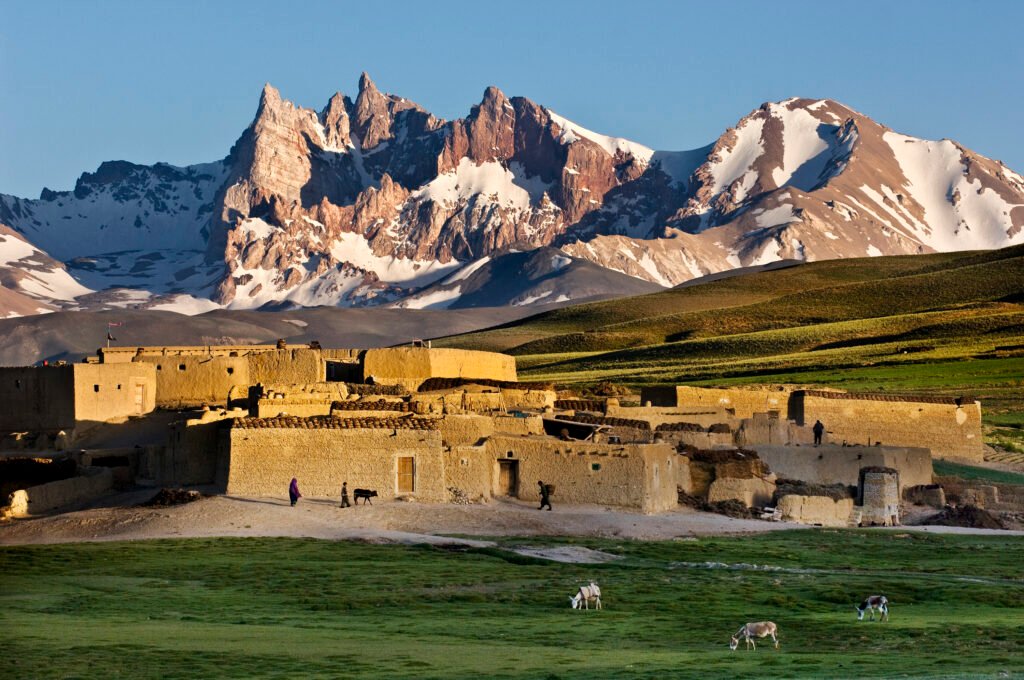
The U.S. led NATO Afghan intervention and occupation was flawed in mission from its outset in 2001, and indeed in the period before the attack and large-scale, ambitious regime-changing, state-building occupation. In the post-colonial world, the military superiority of Western intervening powers has proved unable to shape the political outcomes of a prolonged struggle for the control of non-Western sovereign spaces, especially if the society is beset by unresolved tribal and ethnic conflicts, as well as by warlordism and drug cartels.
In Afghanistan, as elsewhere, this line of observation proved to be once again validated, despite trillions of dollars spent in devastating parts of the country and supposedly building armed forces and police capabilities and institutional competence sufficient to bring order and stability to post-Taliban Afghanistan.
The fundamental explanation of the rapid collapse of the Kabul government is that it had no legs of its own to stand upon, which became evident as soon as the U.S. made clear its intention to withdraw its occupying army. Afghan collaboration with the intervenors was largely left to secularists, opportunists, corrupt politicians and private sector entrepreneurs, and ambitious careerists, as well as the alignment of some ethnic groups, and the support of secularized social elites in the larger cities.
The Taliban despite its abysmal human rights record during its five-year period in power at the end of the last century (1996-2001) never lost its credibility as a defender of the Afghani homeland and retained the loyalty of many nationalist elements in this overwhelmingly religious country.
To explain the unexpectedly quick and dramatic collapse of the Kabul government so elaborately constructed by the Western intervenors over a twenty-year period of occupation defied expectations on all sides. Taliban reassurances of peace and reconciliation undoubtedly weakened whatever will to resist survived the impending American military withdrawal, and gave Afghan collaborators with the Americans a stark choice between cutting their ties to the imposed, defeated government or abandoning the sinking ship of state by leaving the country.
These 2021 Taliban reassurances touched many of the concerns prompting the West to act in 2001, included proclaiming the end of the war for control of the country, amnesty for those who worked in and on behalf of the Kabul government, promises of the protection of the rights of women, tolerance of diversity, and pledges not to allow its territory to be used in the future as it was in the past as a base for projecting terrorism beyond its borders.
The Biden diplomacy never seemed influenced by these reassurances, especially their reliability, as it had unconditionally announced its intention to withdraw and end at least one ‘forever war’ for the sake of ‘national interests.’
Yet the basic explanation of the unexpectedly quick collapse of anti-Taliban resistance also exhibited a series of political misjudgments of the United States despite 20 years of experience in the country. It obviously did not appreciate that its investment in the Afghan army, police force, and state-building failed to create even the semblance of a countervailing force to the technologically war-fighting techniques of the Taliban. Had Washington realized this vulnerability to the chaotic collapse that ensued, it would have handled its own withdrawal differently, getting Americans and their Afghan collaborators out while it still could exert effective control over the main cities.
If ever, a politics of spectacle made a sensible decision by Washington to withdraw from Afghanistan greeted favorably around the world, including the United States, into a public relations disaster, it was on media display for the past two weeks on TV screens worldwide.
• 2 How do you assess the US policy in Afghanistan during the past 20 years? To what extent the US policy is responsible for the current instability in the country?
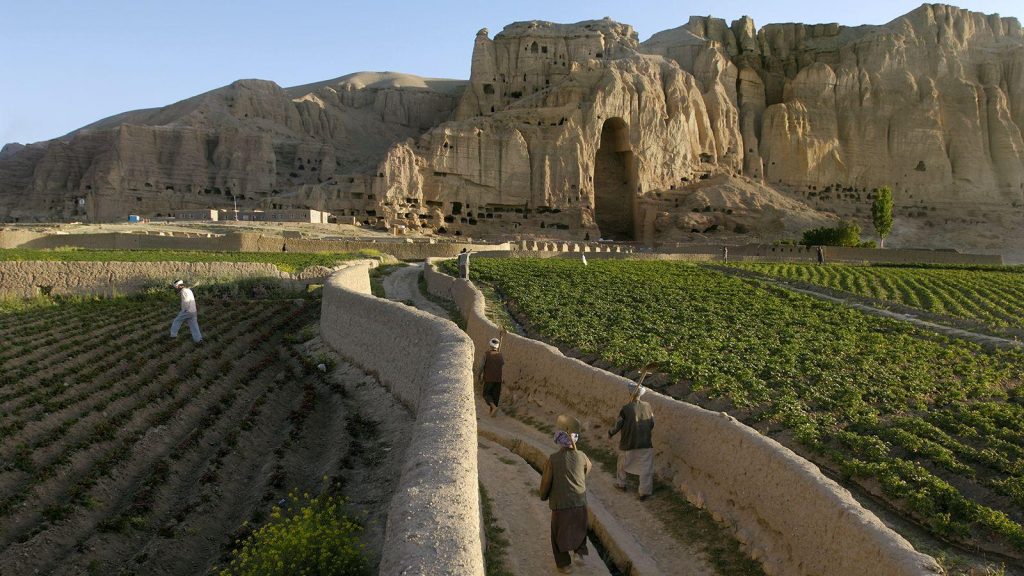
To some extent, my response to the prior question covers these issues. The viability of intervening in a non-Western state in the post-colonial era should have been discredited long ago, and certainly after the decade of maximum effort in Vietnam with its Kabul-like ending. The success of the anti-colonial movements in Asia and Africa should have demonstrated to the West that military intervention on the basis of acceptable costs in lives and resources was no longer a policy option, however great the temptation, however strong the insider pressures of special mercenary interests, and however deep the geopolitical memories of ‘the good old days’ when the West could intervene at will confident of a high rate of success (with the ironic exception of Afghanistan that proved unconquerable even in colonial times!).
The result of such post-colonial missions, mainly led by the U.S., is their eventual failure preceded by years of devastation, widespread human suffering, what might be called ‘combat capitalism’ (with an appreciative nod to Naomi Klein). ‘Intervention fatigue’ over time grows among the American public and leadership, generally expressed by a growing political consensus that the undertaking, whatever its ideological or imperial rationalization, is not worth the effort.
The undertaking is fundamentally illegitimate from the perspective of law and morality. It is increasingly perceived as too costly materially and reputationally, and as essentially irrelevant as a security threat. The senseless ordeal of prolonged killing and dying is viewed as evidence that America has lost its way, lacking credible justifications and stumbling toward a humiliating defeat.
Because American lives and taxpayer dollars were increasingly seen as wasted, the resulting political fallout is disguised by the leadership with a lame rationale that convinces almost no one except a compliant Western media, yet prepared the way for the next geopolitical fiasco of a similar kind.
Such rationales are rejected in the short run, including by returning American soldiers who felt cheated, understanding that their patriotic sacrifices were in vain and even misguided, and that the whole imperial venture had been built on delusions and lies. And yet memories are far shorter and weaker than the interests at stake.
These patterns of failed interventions are likely to be repeated in the future, oblivious to this record of failure.
The fact that such perverse behaviour persists reveals the absence of the moral and political imagination needed to comprehend and act upon the changed international circumstances of the 21st century. This absence includes a stubborn refusal to learn from China about how an ambitious state should go about expanding and heightening its prosperity along with its regional and world influence in a post-colonial era.
In part, this failure stems from systemic sources. It is associated with the bureaucratic and entrenched interests in the United States that benefit from a high defence budget and a militarized approach to security that became ingrained in the American internal balance of forces during the long Cold War. From its outset, in the late 1940s, this approach to security and geopolitical response depends on exaggerating, and even inventing, international threats as well as denying the tectonic global shift in the balance of forces from geopolitical intervenors.
National forces of resistance are motivated by an ethos of self-determination as the most basic of human rights and by a historical knowledge that intervenors can be defeated if nationalist energies remain united.
• 3 How do you see the future of Afghanistan? What US approach should be taken toward the country in future?
It is very difficult at this time so soon after the Taliban victory to anticipate the future of Afghanistan. It will depend, first of all, on the behaviour of the Taliban as the governing force, and how this is portrayed in and manipulated by foreign countries, especially in the West.
The US in particular will likely maintain a very critical attitude toward Taliban governance partly to continue the myth that its intervention was justified and based on good intentions and the attempt to make life better for the Afghan people. The Taliban will also react, especially on the basis of its perceptions of whether the US has genuinely respected the outcome of the struggle, becoming respectful of Afghan sovereignty, and does not lend support to counterrevolutionary movements or impose sanctions. After all, Afghanistan was victimized by two decades of American-led NATO intervention, and will naturally give a high priority to defending the security of the country and its governing process.
There is bound to be hostile propaganda from a growing, aggrieved, and frightened Afghan refugee community, which might be manipulated by American militarist and reactionary forces to restore political will in the United States, reviving its reputation as a self-confident custodian of global security and promoter of human rights and liberal constitutionalism.
It is instructive to look back at the behaviour of the United States in the decade after its withdrawal from Vietnam in 1975 under somewhat similar circumstances when it tried, among other evasions of defeat, to sell the hysterical idea that the alternative to fighting against Communism in Vietnam was for the American people to fight its enemies on the city streets of the United States.
The American people have been exposed for decades to a disastrous bipartisan combination of fear at home and aggression abroad, which is being translated into a posture of imperial decline, exemplified by leadership that is either extremist in embracing denialism or depressing in its effort to face up to the overwhelming challenges of misjudging changing global realities for decades.
The best approach for the United States at this point in Afghanistan, although unlikely, is to encourage Taliban moderation by exhibiting in deeds and words its acceptance of the outcome in Afghanistan. This could be expressed by a rapid grant of diplomatic recognition to the Taliban as the legitimate government of Afghanistan in all international arenas, followed by the provision of significant levels of humanitarian assistance.
It is also important that the departures from Afghanistan should be handled in a non-provocative manner, stressing humanitarian responsibilities, and appreciating that many of those departing from Afghanistan partook of corruption and opportunism during the American presence, collaborating with a foreign intervention by a political actor with geopolitical motives and a Western secular orientation.
In the wider context of international relations, I would hope that the failures of the US approach to Iran ever since at least 1979 would finally lead the political class in Washington to switch its strategic engagement with the non-West from confrontation to accommodation.
It is never too late for this to happen. I wish I could conclude these responses by expressing the belief that this altered course of behaviour will actually happen in the near future. I am not presently hopeful.
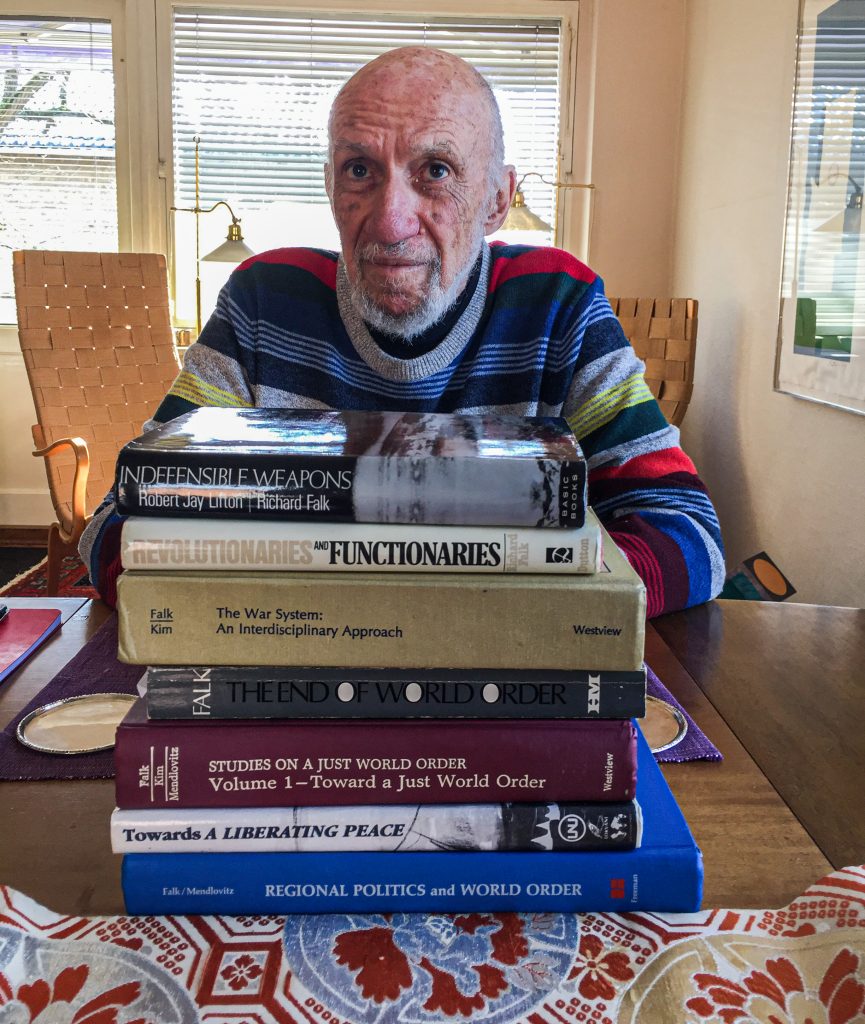
Richard Falk
Professor emeritus of international law at Princeton University, a dear friend and a TFF Associate since 1986.
Browse his extremely rich homepage/blog