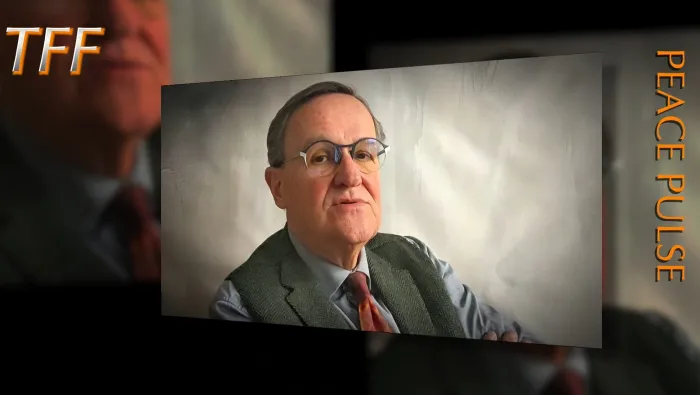
Biljana Vankovska: Reclaiming Utopia

Listen to this on Spotify

13 september, 2021

Contribution to GTI Forum(Great Transition Initiative) Can Human Solidarity Globalize?

To envision a better world of tomorrow calls for great courage because the dominant paradigm reads There Is No Alternative. Or, to quote the Borg from the Star Trek: The Next Generation series, “Resistance is futile!” It is how the imagination of another now (to refer to Yanis Varoufakis’s book) is kept imprisoned. The aim is to silence and discourage all thoughtful, rebellious, and critical minds (and groups). Critique is tolerated if it is not too radical (i.e., does not go deep to the root causes of the present inequalities and suffering) and if it comes mostly from the Western (“more civilized”) part of the world.

Originally published at The Great Transition Initiative

We, the people from the Global South, however, have much to say about the past, present, and future of this world. And most of all, about the lack of global solidarity—since we are on the “recipient side” of the crumbs of charity, assistance, and empathy.

Strangely, even we who used to live in an acting utopia of former Yugoslavia have almost forgotten the unique experiences of socialism with a human face, non-aligned foreign policy, self-management, and the culture of peace with which we grew up.

The free and universal health care (along with free and accessible education and retirement system) was based on the solidarity principle. Even the traces in today’s intrinsic solidarity with the Palestinians, Iraqis, or any other oppressed groups comes from the old school system based on values of non-enmity, antimilitarism, global solidarity, and belief in international law.

Yugoslavia was far from a perfect country, yet it was the closest realization of the ideals of the Paris Commune. The Yugoslav leadership and population did not fear to think beyond the two dominant mantras of Western capitalism and individualism and Eastern state socialism and collectivism.

The peace researcher Hakan Wiberg once compared Yugoslavia (with its internal diversities and contradictions) to a flawed butterfly that was not meant to fly but, not knowing that, flew for several decades. The successor states almost overnight embraced the TINA principle and sought to make any past achievement and legacy obsolete and non-inspirational.

The so-called international community has been insisting on the heavy feeling of guilt, shame, and self-blame for the bloody conflicts of the 1990s. Instead of imprisoned imagination, here one can talk of killed imagination (and utopia).

For many of us, it is of utmost importance to evoke Karl Marx’s warning from 1852: “Men make their own history, but they do not make it as they please; they do not make it under self-selected circumstances, but under circumstances existing already, given and transmitted from the past. The tradition of all dead generations weighs like a nightmare on the brains of the living.”

We gave up the positive and even heroic achievements of our predecessors, and instead embraced the traditions of the past generations in the West as guidance for the allegedly inevitable (bright!) future. Instead of seeking friends and showing empathy and solidarity with the ones who are in a more miserable position, we have been confronted with (newly invented) enemies at home and abroad, take part in imperial endeavors of our new colonial masters, and teach our children that war is peace and peace is war.

Self-management (in economic, political, and societal terms) used to be a school of participatory democracy and mutual solidarity among the members of the community/communities of Yugoslavia and with the wider world.

Egoism, competition, and self-interests are the driving forces for the new generation of “entrepreneurs.” How to work subversively, especially from within academia, is the challenge I face every day. Planting the seeds of critical thinking and dissent is essential, and yet possible: step by step, day by day, patiently and stubbornly against the mainstream.

Without personal freedom and self-awareness of the pandemic of inequality that has long preceded the COVID-19 pandemic, there can be no collective action toward a common goal and global solidarity.

The promotion of various forms of global solidarity is a luxury of rare (yet courageous) people able and free enough to work on the global cause. One should not disregard and disrespect much less significant efforts on a micro level that take place every day. Solidarity grows from within small communities, and only then expand and embrace wider spaces of our Earthland.

But those small heroes often need moral and intellectual support. The resistance against social injustices is well-alive despite the grim general picture of the world, but it lives in small pockets of society. It calls for a trigger to be awakened—such as mass tragedies and misfortunes.

Even the once war-ravaged part of former Yugoslavia still has the potential to provide for an outburst of mass solidarity in a time of need (be they floods, earthquakes, etc.). Bearing in mind that all these “natural catastrophes” are in essence a result of social decay and structural violence embedded in unjust and repressive institutional arrangements, this is obviously not enough.

Solidarity could be sustainable only if institutionalized and yet not alienated from the people the system should serve.

In April 2020, Arundhati Roy hoped that the pandemic was a portal, i.e., a gateway between one world and the next. Indeed, the world is changing even faster than we thought, but there is no guarantee that the results will be positive.

The COVID-19 pandemic is just a test for everything else: if we manage to disempower Big Pharma, then anything else will be possible. Our common struggle for a better world should be carried out on many levels and in many forms.

Obviously, this is (again) a time of monsters, and we need to synthesize the feelings of pessimism and optimism, and to transcend them in а Gramscian way: while our minds may be pessimistic, we should mobilize as many people with strong and optimistic wills as possible.

What should be our common and most urgent goals in this endeavor? Palestine and the pandemic response come first to mind: these urgent affairs combine the local with the planetary! Ending Israeli apartheid and making COVID-19 vaccines (and eventually cures) a global public good.

The next step should be universal health care, along with the universal basic income. Global civil society (not the one deliberatively created and funded by power centers in order to promote the liberal agenda or even the status quo) must reclaim its independence from any limitations imposed by geopolitical “realism.”

Free market, neoliberal status quo, and militaristic interventionism “for the sake of humanitarianism” or R2P are not outcomes of any natural laws; they are all man-made and their sustainability depend inter alia on current hegemony of knowledge.

Let’s reimagine and adopt a sense of possibility because There Are Thousands of Alternatives (TATA) should be our guiding star. By labeling something as utopia, we immediately give up the sense of possible-ism.

We have no other choice but to embark on the path fueled by necessity and desire, without being ashamed by our inherent need to dream and work for a better world.

While being guided by TATA principle, there is just one thing we are not allowed to disregard: the bio-political imperatives that imperil human survival and ecological balance call for unprecedented cooperative energies turned loose.

Originally published at The Great Transition Initiative

About the author

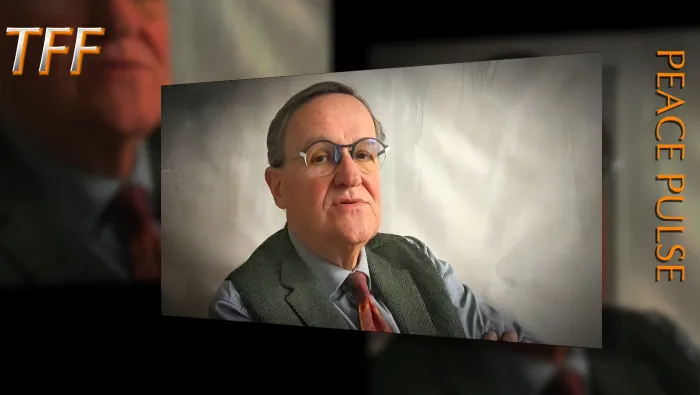
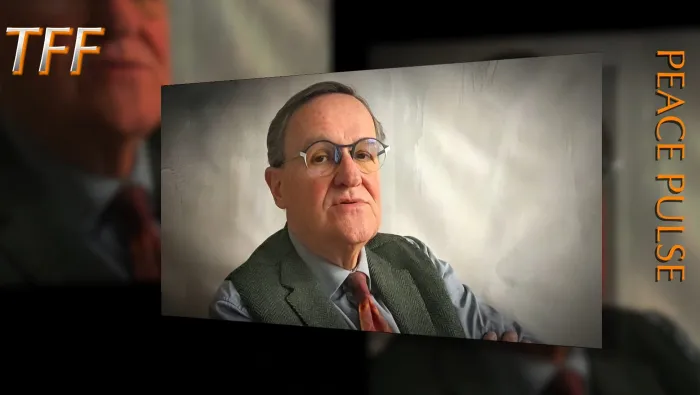
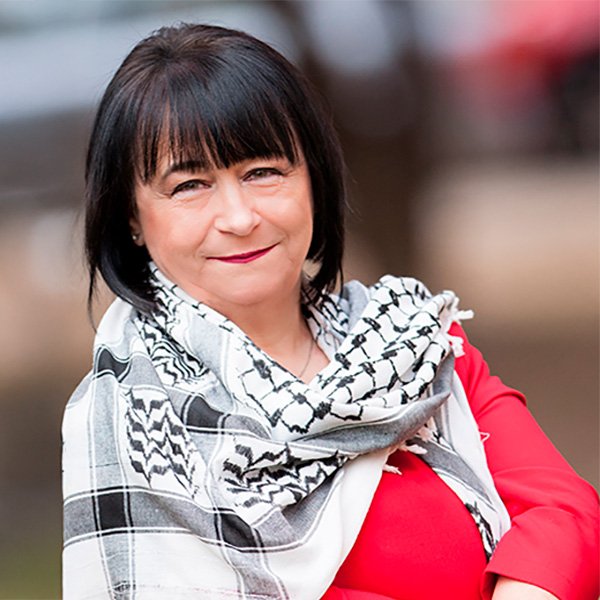
Biljana Vankovska

Biljana Vankovska is Professor of International Relations and Peace Studies at Saints Cyril and Methodius University. She has been a pioneer in peace and conflict studies in Macedonia. Vankovska has been a Guest Senior Research Fellow at Copenhagen Peace Research Institute (COPRI), a faculty member at European Peace University in Stadschlaining, and a Senior Fellow at the Geneva Centre for the Democratic Control of Armed Forces (DCAF). She is an International Advisor of the Transnational Foundation for Peace and Future Studies (TFF) in Lund. She holds a PhD in philosophy from Saints Cyril and Methodius University.

Please help TFF remain truly independent by contributing if you benefited from this article

[paypal-donation]
Ph.D. Political Science, Department of Political Studies, Faculty of Law, University of Skopje, 1992 MA Political Science, Department for Political Studies, Faculty of Law, University of Skopje, 1988 BA Law, Department of Political and Administrative Studies, Faculty of Law, University of Skopje, 1982

Share

Leave a Reply

Your email address will not be published. Required fields are marked *

Related Posts

PRESS RELEASE – 6 OCTOBER 2025 LAY DOWN YOUR ARMSPEACE PRIZE FOR 2025 is awarded Francesca Albanese The United Nations Special Rapporteur on the occupied Palestinian territories – as the person who, in accordance with Alfred Nobel’s will, has “done the most or the best work for fraternity between nations and for the abolition or reduction of standing armies as well as for the holding and promotion of peace congresses.” Francesca Albanese has forcefully and unwaveringly worked against Israel’s full-scale war on the occupied Palestinian territories, in particular Israel´s ongoing genocide against the Palestinian people. She has confronted Israel’s systematic war crimes and crimes against humanity in a truly global outreach. Further, she has brought governments, international organisations and people’s groups together to underline the responsibility of the world at large to act and to stop arming, enabling, and profiting from Israel’s ongoing criminal actions. But first of all, Albanese...
Officially, the drones were not identified. By simply thinking critically – which journalists and selected experts no longer do – there may be a good reason for that. And this article will never be mentioned in Denmark… Drones over Denmark. No damage. No trace. No answers. Yet the headlines scream “Russian threat,” and Prime Minister Mette Frederiksen speaks with a certainty that defies logic: “We don’t know they were Russian—but we know Russia is the biggest threat to Europe.” It could be nobody else – unless you make an interest analysis which I did two days ago. This is not security policy. It’s theatre. And the audience is being played. Let’s rewind. These drones—unphotographed, untracked, unclaimed—appear and vanish like ghosts. Airports shut down. Panic spreads. Military budgets swell. And the narrative hardens: Russia is behind it. But what if that’s not just wrong but deliberately misleading? Here’s a hypothesis for...
And why the world, especially the EU, must now declare itself independent of the United States. UN’s 80th anniversary This year, the United Nations celebrates the 80th anniversary of its founding. The UN was formed after the scourge of the Second World War, in which 70 to 85 million people were killed and many countries were destroyed. That war came on the heels of the First World War, which also killed between 15 and 22 million people. After the Second World War, especially after the use of nuclear weapons by the United States, which marked a turning point in the history of warfare that could result in the end of civilisation as we know it, humanity decided to move away from the era of empires and big power politics and usher in a new era of peace, freedom and cooperation. These were the principles enshrined in the UN Charter. The United States...

Recent Articles

PressInfo # 141, December 21, 2001It’s time to prepare reconciliation between Albanians and Serbs PressInfo # 140, December 14, 2001Ibrahim Rugova’s decade-long leadership in Kosovo/a PressInfo # 139, 11. december, 2001En god nyhet: Jugoslaviens Sannings- och försoningskommission PressInfo # 139, 11. december, 2001Gode nyheder: Jugoslaviens Sandheds- og Forsoningskommission PressInfo # 139, December 11, 2001Good news: Yugoslavia’s Truth and Reconciliation Commission PressInfo # 138, November 8, 2001TFF co-founder PhD with thesis about young people with roots in other cultures PressInfo # 138, November 8, 2001TFF:s medstiftare doktor på avhandling om unga med ursprung i andra kulturer PressInfo # 137, October 17, 2001A new Marshall Plan: Advancing human security and controlling terrorism PressInfo # 136, October 15, 2001The UN and Annan really deserve it PressInfo # 135, October 10, 2001Preventing a terrorist mushroom cloud PressInfo # 134, 17 oktober, 2001Sverige og 11. september PressInfo # 134, October 9, 2001Sweden and September 11...
Peace is promoted by constructive proposals and dialogue Four preceding PressInfos have expressed concern over — and criticised — the ongoing, militarisation of the EU. Some will say: but there are no alternatives. We believe that there are always alternatives, that democracies are characterised by alternatives and choice, and that openly discussed alternatives will improve the quality and legitimacy of society’s decision–making. In addition, it is an intellectual and moral challenge to not only criticise but also be constructive. If we only tell people that we think they are wrong, they are not likely to listen. However, if we say: what are your views on this set of ideas and steps? — we may sometimes engage them in dialogue and sow a seed. Most people in power circles live their daily lives in in a time frame and a social space where certain ideas, viewpoints and concepts are just not...
Photos © TFF 2000 Read PressInfo 90 “Lift the Sanctions and Bring More Aid to Yugoslavia” See Pictures from Belgrade © TFF 2000 Please reprint, copy, archive, quote or re-post this item, but please retain the source.

TFF on Substack

Discover more from TFF Transnational Foundation & Jan Oberg.

Most Popular

PressInfo # 141, December 21, 2001It’s time to prepare reconciliation between Albanians and Serbs PressInfo # 140, December 14, 2001Ibrahim Rugova’s decade-long leadership in Kosovo/a PressInfo # 139, 11. december, 2001En god nyhet: Jugoslaviens Sannings- och försoningskommission PressInfo # 139, 11. december, 2001Gode nyheder: Jugoslaviens Sandheds- og Forsoningskommission PressInfo # 139, December 11, 2001Good news: Yugoslavia’s Truth and Reconciliation Commission PressInfo # 138, November 8, 2001TFF co-founder PhD with thesis about young people with roots in other cultures PressInfo # 138, November 8, 2001TFF:s medstiftare doktor på avhandling om unga med ursprung i andra kulturer PressInfo # 137, October 17, 2001A new Marshall Plan: Advancing human security and controlling terrorism PressInfo # 136, October 15, 2001The UN and Annan really deserve it PressInfo # 135, October 10, 2001Preventing a terrorist mushroom cloud PressInfo # 134, 17 oktober, 2001Sverige og 11. september PressInfo # 134, October 9, 2001Sweden and September 11...
Peace is promoted by constructive proposals and dialogue Four preceding PressInfos have expressed concern over — and criticised — the ongoing, militarisation of the EU. Some will say: but there are no alternatives. We believe that there are always alternatives, that democracies are characterised by alternatives and choice, and that openly discussed alternatives will improve the quality and legitimacy of society’s decision–making. In addition, it is an intellectual and moral challenge to not only criticise but also be constructive. If we only tell people that we think they are wrong, they are not likely to listen. However, if we say: what are your views on this set of ideas and steps? — we may sometimes engage them in dialogue and sow a seed. Most people in power circles live their daily lives in in a time frame and a social space where certain ideas, viewpoints and concepts are just not...
Photos © TFF 2000 Read PressInfo 90 “Lift the Sanctions and Bring More Aid to Yugoslavia” See Pictures from Belgrade © TFF 2000 Please reprint, copy, archive, quote or re-post this item, but please retain the source.
Read More
Imagen-thumbnail-The-Transnational-1
PressInfo # 141, December 21, 2001It’s time to prepare reconciliation between Albanians and Serbs PressInfo # 140, December 14, 2001Ibrahim Rugova’s decade-long leadership in Kosovo/a PressInfo # 139, 11. december, 2001En god nyhet: Jugoslaviens Sannings- och försoningskommission PressInfo # 139, 11. december, 2001Gode nyheder: Jugoslaviens Sandheds- og Forsoningskommission PressInfo # 139, December 11, 2001Good news: Yugoslavia’s Truth and Reconciliation Commission PressInfo # 138, November 8, 2001TFF co-founder PhD with thesis about young people with roots in other cultures PressInfo # 138, November 8, 2001TFF:s medstiftare doktor på avhandling om unga med ursprung i andra kulturer PressInfo # 137, October 17, 2001A new Marshall Plan: Advancing human security and controlling terrorism PressInfo # 136, October 15, 2001The UN and Annan really deserve it PressInfo # 135, October 10, 2001Preventing a terrorist mushroom cloud PressInfo # 134, 17 oktober, 2001Sverige og 11. september PressInfo # 134, October 9, 2001Sweden and September 11...
Imagen-thumbnail-The-Transnational-1
Peace is promoted by constructive proposals and dialogue Four preceding PressInfos have expressed concern over — and criticised — the ongoing, militarisation of the EU. Some will say: but there are no alternatives. We believe that there are always alternatives, that democracies are characterised by alternatives and choice, and that openly discussed alternatives will improve the quality and legitimacy of society’s decision–making. In addition, it is an intellectual and moral challenge to not only criticise but also be constructive. If we only tell people that we think they are wrong, they are not likely to listen. However, if we say: what are your views on this set of ideas and steps? — we may sometimes engage them in dialogue and sow a seed. Most people in power circles live their daily lives in in a time frame and a social space where certain ideas, viewpoints and concepts are just not...
Imagen-thumbnail-The-Transnational-1
Photos © TFF 2000 Read PressInfo 90 “Lift the Sanctions and Bring More Aid to Yugoslavia” See Pictures from Belgrade © TFF 2000 Please reprint, copy, archive, quote or re-post this item, but please retain the source.
Imagen-thumbnail-The-Transnational-1
Av FRANK SØHOLM GREVIL 16 augusti 2004  Vi er nu nået til tredje akt i det absurde teaterstykke, der i analogi med de store skueprocesser i Moskva 1936-38 er blevet døbt ‘Grevil-sagen’. Første akt bestod i min anonyme fremlæggelse af egenhændigt nedklassificerede rapporter i Berlingske Tidende i februar og marts. Andet akt udgjordes af min fremtræden med navn og billede i Information i april samt den efterfølgende mediestorm, som uden min direkte medvirken kostede en forsvarsminister taburetten samt en sigtelse for brud på tavshedspligten. Tredje akt bliver en retssag, hvor jeg står tiltalt for at have overtrådt straffelovens bestemmelser om uberettiget videregivelse eller udnyttelse af fortrolige oplysninger. Statsanklageren har ovenikøbet valgt at påberåbe sig særligt skærpende omstændigheder. Da jeg aldrig har modtaget betaling for at stille rapporterne til rådighed eller lade mig interviewe, må det skærpende bestå i, at “videregivelsen eller udnyttelsen er sket under sådanne omstændigheder, at det påfører...
Imagen-thumbnail-The-Transnational-1
Af Svenska Irakkommittén mot de Ekonomiska Sanktionerna (SIES) 13 september 2002 FN:s ekonomiska sanktioner mot Irak har nu pågått i tolv år och drabbat det irakiska folket med svåra lidanden. Enligt FN:s egna siffror har mer än 1,5 miljoner människor, varav ca 600 000 barn, dött som en direkt följd av sanktionerna. Dessutom har ett lågintensivt bombkrig mot landet pågått under dessa år. Av all denna förödelse- orsakad huvudsakligen av amerikansk och brittisk politik- har Saddam Husseins brutala och diktatoriska regim snarast stärkts än försvagats. Nu förbereder USA under president Bushs ledning ett storskaligt bombkrig mot Irak som kommer att innebära ett ännu större lidande för civilbefolkningen. Ett sådant krig kommer dessutom att ytterligare undergräva freden och säkerheten i världen. Att upprätta en demokratisk regim i Irak är det irakiska folkets angelägenhet och får enligt folkrätten inte ske med krigshandlingar utifrån. Folkrätten och FN:s stadgar måste respekteras. Vi vädjar till...