Risk of Nuclear War Over Taiwan in 1958 Said to Be Greater Than Publicly Known

The famed source of the Pentagon Papers, Daniel Ellsberg, has made
another unauthorized disclosure — and wants to be prosecuted for it.

Charlie Savage

By Charlie Savage
Published May 22, 2021 • Updated May 23, 2021 • 阅读简体中文版閱讀繁體中文版

Soldiers in 1958 on Kinmen Island, also called Quemoy. According to an apparently still-classified document, American officials doubted they could defend Taiwan with only conventional weapons. 
Soldiers in 1958 on Kinmen Island, also called Quemoy. According to an apparently still-classified document, American officials doubted they could defend Taiwan with only conventional weapons. Credit…John Dominis/The LIFE Picture Collection, via Getty Images

WASHINGTON — When Communist Chinese forces began shelling islands controlled by Taiwan in 1958, the United States rushed to back up its ally with military force — including drawing up plans to carry out nuclear strikes on mainland China, according to an apparently still-classified document that sheds new light on how dangerous that crisis was.

American military leaders pushed for a first-use nuclear strike on China, accepting the risk that the Soviet Union would retaliate in kind on behalf of its ally and millions of people would die, dozens of pages from a classified 1966 study of the confrontation show. The government censored those pages when it declassified the study for public release.

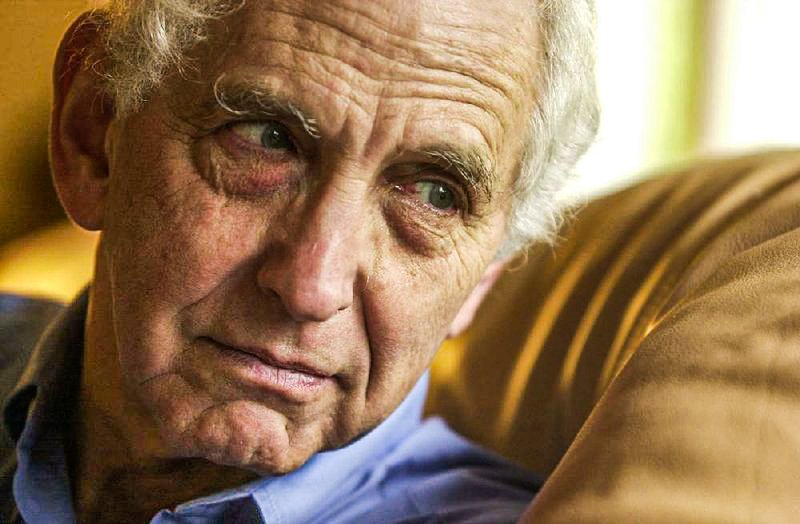
The document was disclosed by Daniel Ellsberg, who leaked a classified history of the Vietnam War, known as the Pentagon Papers, 50 years ago. Mr. Ellsberg said he had copied the top secret study about the Taiwan Strait crisis at the same time but did not disclose it then. He is now highlighting it amid new tensions between the United States and China over Taiwan.CRISIS OVER TAIWAN STRAITRead the full version of an apparently still-classified document or just its previously censored pages.

While it has been known in broader strokes that United States officials considered using atomic weapons against mainland China if the crisis escalated, the pages reveal in new detail how aggressive military leaders were in pushing for authority to do so if Communist forces, which had started shelling the so-called offshore islands, intensified their attacks.

The crisis in 1958 instead ebbed when Mao Zedong’s Communist forces broke off the attacks on the islands, leaving them in the control of Chiang Kai-shek’s nationalist Republic of China forces based on Taiwan. More than six decades later, strategic ambiguity about Taiwan’s status — and about American willingness to use nuclear weapons to defend it — persists.

The previously censored information is significant both historically and now, said Odd Arne Westad, a Yale University historian who specializes in the Cold War and China and who reviewed the pages for The New York Times.

“This confirms, to me at least, that we came closer to the United States using nuclear weapons” during the 1958 crisis “than what I thought before,” he said. “In terms of how the decision-making actually took place, this is a much more illustrative level than what we have seen.”

Drawing parallels to today’s tensions — when China’s own conventional military might has grown far beyond its 1958 ability, and when it has its own nuclear weapons — Mr. Westad said the documents provided fodder to warn of the dangers of an escalating confrontation over Taiwan.

Even in 1958, officials doubted the United States could successfully defend Taiwan using only conventional weapons, the documents show. If China invaded today, Mr. Westad said, “it would put tremendous pressure on U.S. policymakers, in the case of such a confrontation, to think about how they might deploy nuclear weapons.”

“That should be sobering for everyone involved,” he added.

In exposing a historical antecedent for the present tensions, Mr. Ellsberg said that was exactly the takeaway he wanted the public to debate. He argued that inside the Pentagon, contingency planning was likely underway for the possibility of an armed conflict over Taiwan — including what to do if any defense using conventional weapons appeared to be falling short.

“As the possibility of another nuclear crisis over Taiwan is being bandied about this very year, it seems very timely to me to encourage the public, Congress and the executive branch to pay attention to what I make available to them,” he said about what he characterized as “shallow” and “reckless” high-level discussions during the 1958 Taiwan Strait crisis.

He added, “I do not believe the participants were more stupid or thoughtless than those in between or in the current cabinet.”

Among other details, the pages that the government censored in the official release of the study describe the attitude of Gen. Laurence S. Kuter, the top Air Force commander for the Pacific. He wanted authorization for a first-use nuclear attack on mainland China at the start of any armed conflict. To that end, he praised a plan that would start by dropping atomic bombs on Chinese airfields but not other targets, arguing that its relative restraint would make it harder for skeptics of nuclear warfare in the American government to block the plan.

“There would be merit in a proposal from the military to limit the war geographically” to the air bases, “if that proposal would forestall some misguided humanitarian’s intention to limit a war to obsolete iron bombs and hot lead,” General Kuter said at one meeting.

At the same time, officials considered it very likely that the Soviet Union would respond to an atomic attack on China with retaliatory nuclear strikes. (In retrospect, it is not clear whether this premise was accurate. Historians say American leaders, who saw Communism as a monolithic global conspiracy, did not appreciate or understand an emerging Sino-Soviet split.)

But American military officials preferred that risk to the possibility of losing the islands. The study paraphrased Gen. Nathan F. Twining, the chairman of the Joint Chiefs of Staff, as saying that if atomic bombings of air bases did not force China to break off the conflict, there would be “no alternative but to conduct nuclear strikes deep into China as far north as Shanghai.”

He suggested that such strikes would “almost certainly involve nuclear retaliation against Taiwan and possibly against Okinawa,” the Japanese island where American military forces were based, “but he stressed that if national policy is to defend the offshore islands then the consequences had to be accepted.”

The study also paraphrased the secretary of state, John Foster Dulles, as observing to the Joint Chiefs of Staff that “nobody would mind very much the loss of the offshore islands but that loss would mean further Communist aggression. Nothing seems worth a world war until you looked at the effect of not standing up to each challenge posed.”

Ultimately, President Dwight D. Eisenhower pushed back against the generals and decided to rely on conventional weapons at first. But nobody wanted to enter another protracted conventional conflict like the Korean War, so there was “unanimous belief that this would have to be quickly followed by nuclear strikes unless the Chinese Communists called off this operation.”

A wounded soldier being transported to Taiwan from Kinmen Island in 1958 during a cease-fire.
A wounded soldier being transported to Taiwan from Kinmen Island in 1958 during a cease-fire. Credit…Getty Images

Mr. Ellsberg said he copied the full version of the study when he copied the Pentagon Papers. But he did not share the Taiwan study with reporters who wrote about the Vietnam War study in 1971, like Neil Sheehan of The Times.

Mr. Ellsberg quietly posted the full study online in 2017, when he published a book, “Doomsday Machine: Confessions of a Nuclear War Planner.” One of its footnotes mentions in passing that passages and pages omitted from the study are available on his website.

But he did not quote the study’s material in his book, he said, because lawyers for his publisher worried about potential legal liability. He also did little else to draw attention to the fact that its redacted pages are visible in the version he posted. As a result, few noticed it.

One of the few who did was William Burr, a senior analyst at George Washington University’s National Security Archive, who mentioned it in a footnote in a March blog post about threats to use nuclear weapons in the Cold War.

Mr. Burr said he had tried about two decades ago to use the Freedom of Information Act to obtain a new declassification review of the study — which was written by Morton H. Halperin for the RAND Corporation — but the Pentagon was unable to locate an unabridged copy in its files. (RAND, a nongovernmental think tank, is not itself subject to information act requests.)

Mr. Ellsberg said tensions over Taiwan did not seem as urgent in 2017. But the uptick in saber-rattling — he pointed to a recent cover of The Economist magazinethat labeled Taiwan “the most dangerous place on Earth” and a recent opinion column by The Times’s Thomas L. Friedman titled, “Is There a War Coming Between China and the U.S.?” — prompted him to conclude it was important to get the information into greater public view.

Michael Szonyi, a Harvard University historian and author of a book about one of the offshore islands at the heart of the crisis, “Cold War Island: Quemoy on the Front Line,” called the material’s availability “hugely interesting.”

Any new confrontation over Taiwan could escalate and officials today would be “asking themselves the same questions that these folks were asking in 1958,” he said, linking the risks created by “dramatic” miscalculations and misunderstandings during serious planning for the use of nuclear weapons in 1958 and today’s tensions.

Mr. Ellsberg said he also had another reason for highlighting his exposure of that material. Now 90, he said he wanted to take on the risk of becoming a defendant in a test case challenging the Justice Department’s growing practice of using the Espionage Act to prosecute officials who leak information.

Enacted during World War I, the Espionage Act makes it a crime to retain or disclose, without authorization, defense-related information that could harm the United States or aid a foreign adversary. Its wording covers everyone — not only spies — and it does not allow defendants to urge juries to acquit on the basis that disclosures were in the public interest.

Mr. Ellsberg said he wanted to take on the risk of becoming a defendant in a test case challenging the Justice Department’s growing practice of using the Espionage Act to prosecute officials who leak information.
Mr Ellsberg said he wanted to take on the risk of becoming a defendant in a test case challenging the Justice Department’s growing practice of using the Espionage Act to prosecute officials who leak information. Credit…Britta Pedersen/Picture-Alliance/DPA, via Associated Press

Using the Espionage Act to prosecute leakers was once rare. Mr. Ellsberg himself was charged under it, before a judge threw out the charges in 1973 because of government misconduct. The first successful such conviction was in 1985. But it has now become routine for the Justice Department to bring such charges.

Most of the time, defendants strike plea deals to avoid long sentences, so there is no appeal. The Supreme Court has not confronted questions about whether the law’s wording or application trammels First Amendment rights.

Saying the Justice Department should charge him for his open admission that he disclosed the classified study about the Taiwan crisis without authorization, Mr. Ellsberg said he would handle his defense in a way that would tee the First Amendment issues up for the Supreme Court.

“I will, if indicted, be asserting my belief that what I am doing — like what I’ve done in the past — is not criminal,” he said, arguing that using the Espionage Act “to criminalize classified truth-telling in the public interest” is unconstitutional.
No data was found

Share

Leave a Reply

Your email address will not be published. Required fields are marked *

Related Posts

PRESS RELEASE – 6 OCTOBER 2025 LAY DOWN YOUR ARMSPEACE PRIZE FOR 2025 is awarded Francesca Albanese The United Nations Special Rapporteur on the occupied Palestinian territories – as the person who, in accordance with Alfred Nobel’s will, has “done the most or the best work for fraternity between nations and for the abolition or reduction of standing armies as well as for the holding and promotion of peace congresses.” Francesca Albanese has forcefully and unwaveringly worked against Israel’s full-scale war on the occupied Palestinian territories, in particular Israel´s ongoing genocide against the Palestinian people. She has confronted Israel’s systematic war crimes and crimes against humanity in a truly global outreach. Further, she has brought governments, international organisations and people’s groups together to underline the responsibility of the world at large to act and to stop arming, enabling, and profiting from Israel’s ongoing criminal actions. But first of all, Albanese...
Officially, the drones were not identified. By simply thinking critically – which journalists and selected experts no longer do – there may be a good reason for that. And this article will never be mentioned in Denmark… Drones over Denmark. No damage. No trace. No answers. Yet the headlines scream “Russian threat,” and Prime Minister Mette Frederiksen speaks with a certainty that defies logic: “We don’t know they were Russian—but we know Russia is the biggest threat to Europe.” It could be nobody else – unless you make an interest analysis which I did two days ago. This is not security policy. It’s theatre. And the audience is being played. Let’s rewind. These drones—unphotographed, untracked, unclaimed—appear and vanish like ghosts. Airports shut down. Panic spreads. Military budgets swell. And the narrative hardens: Russia is behind it. But what if that’s not just wrong but deliberately misleading? Here’s a hypothesis for...
And why the world, especially the EU, must now declare itself independent of the United States. UN’s 80th anniversary This year, the United Nations celebrates the 80th anniversary of its founding. The UN was formed after the scourge of the Second World War, in which 70 to 85 million people were killed and many countries were destroyed. That war came on the heels of the First World War, which also killed between 15 and 22 million people. After the Second World War, especially after the use of nuclear weapons by the United States, which marked a turning point in the history of warfare that could result in the end of civilisation as we know it, humanity decided to move away from the era of empires and big power politics and usher in a new era of peace, freedom and cooperation. These were the principles enshrined in the UN Charter. The United States...

Recent Articles

We know that medical personnel have failed to report to higher authorities wounds that were clearly caused by torture and that they have neglected to take steps to interrupt this torture. In addition, they have turned over prisoners’ medical records to interrogators who could use them to exploit the prisoners’ weaknesses or vulnerabilities. We have not yet learned the extent of medical involvement in delaying and possibly falsifying the death certificates of prisoners who have been killed by torturers. A May 22 article on Abu Ghraib in the New York Times states that “much of the evidence of abuse at the prison came from medical documents” and that records and statements “showed doctors and medics reporting to the area of the prison where the abuse occurred several times to stitch wounds, tend to collapsed prisoners or see patients with bruised or reddened genitals.” http://www.truthout.org/docs_04/080604J.shtml#16 According to the article, two doctors who...
Jan Øberg behandler i artiklen en lang række faktorer, som ligger til grund for den måde vores samfund er organiseret på – og derfor også for konflikter. Artiklen introducerer således sammenhængen mellem familien, foreninger, regeringer, NGO’ er, nation, stat, nationalstat og alliancer for på denne måde bedre at kunne forstå konflikter og i sidste ende blive klogere mht. at løse disse. Øberg, der er fortaler for global bevidsthed, hvilket skal ses i lyset af den øgede globalisering, skelner mellem kulturkamp og kulturdialog. Endelig behandles begrebet magt og magtesløshed: giver magt ret til at udøve magt – fordi man mener at have ret? Litteraturliste og arbejdsspørgsmål efter artiklen. Ordene vi bruger om verden I satellitperspektiv kan man godt tale om den menneskelige familie eller menneskeheden. Udtrykket understreger, at der eksisterer – eller burde eksistere – et fællesskab fordi vi alle er mennesker og sammen bebor denne klode og ingen anden. Og...
Kapitel 2: Forskellige sider af Europa og USA…fortsat 2.5 Militære relationer I forbifarten har vi allerede sagt nogle ting om USA’s militære situation. Kig lige en gang til på afsnit 2.3. Nu skal vi uddybe det militære forhold mellem USA og EU. Der er en række ligheder mellem visse europæiske landes og USA’s militær. Næsten alle er med på en eller anden måde i NATO, direkte som medlem – selv Island, der ikke har et forsvar – eller indirekte i Partnerskab for Fred. USA og Canada er med i OSCE (på dansk OSSE), Organisationen for Sikkerhed og Samarbejde i Europa, der tæller over 50 lande. USA samt England og Frankrig er kernevåbenstater og de har styrker til intervention langt borte fra hjemlandet, om end USA’s er tifold større. Alle har også en omfattende våbeneksport og bruger den som et middel til at tjene penge og få loyale venner på, det...

TFF on Substack

Discover more from TFF Transnational Foundation & Jan Oberg.

Most Popular

We know that medical personnel have failed to report to higher authorities wounds that were clearly caused by torture and that they have neglected to take steps to interrupt this torture. In addition, they have turned over prisoners’ medical records to interrogators who could use them to exploit the prisoners’ weaknesses or vulnerabilities. We have not yet learned the extent of medical involvement in delaying and possibly falsifying the death certificates of prisoners who have been killed by torturers. A May 22 article on Abu Ghraib in the New York Times states that “much of the evidence of abuse at the prison came from medical documents” and that records and statements “showed doctors and medics reporting to the area of the prison where the abuse occurred several times to stitch wounds, tend to collapsed prisoners or see patients with bruised or reddened genitals.” http://www.truthout.org/docs_04/080604J.shtml#16 According to the article, two doctors who...
Jan Øberg behandler i artiklen en lang række faktorer, som ligger til grund for den måde vores samfund er organiseret på – og derfor også for konflikter. Artiklen introducerer således sammenhængen mellem familien, foreninger, regeringer, NGO’ er, nation, stat, nationalstat og alliancer for på denne måde bedre at kunne forstå konflikter og i sidste ende blive klogere mht. at løse disse. Øberg, der er fortaler for global bevidsthed, hvilket skal ses i lyset af den øgede globalisering, skelner mellem kulturkamp og kulturdialog. Endelig behandles begrebet magt og magtesløshed: giver magt ret til at udøve magt – fordi man mener at have ret? Litteraturliste og arbejdsspørgsmål efter artiklen. Ordene vi bruger om verden I satellitperspektiv kan man godt tale om den menneskelige familie eller menneskeheden. Udtrykket understreger, at der eksisterer – eller burde eksistere – et fællesskab fordi vi alle er mennesker og sammen bebor denne klode og ingen anden. Og...
Kapitel 2: Forskellige sider af Europa og USA…fortsat 2.5 Militære relationer I forbifarten har vi allerede sagt nogle ting om USA’s militære situation. Kig lige en gang til på afsnit 2.3. Nu skal vi uddybe det militære forhold mellem USA og EU. Der er en række ligheder mellem visse europæiske landes og USA’s militær. Næsten alle er med på en eller anden måde i NATO, direkte som medlem – selv Island, der ikke har et forsvar – eller indirekte i Partnerskab for Fred. USA og Canada er med i OSCE (på dansk OSSE), Organisationen for Sikkerhed og Samarbejde i Europa, der tæller over 50 lande. USA samt England og Frankrig er kernevåbenstater og de har styrker til intervention langt borte fra hjemlandet, om end USA’s er tifold større. Alle har også en omfattende våbeneksport og bruger den som et middel til at tjene penge og få loyale venner på, det...
Read More
Imagen-thumbnail-The-Transnational-1
We know that medical personnel have failed to report to higher authorities wounds that were clearly caused by torture and that they have neglected to take steps to interrupt this torture. In addition, they have turned over prisoners’ medical records to interrogators who could use them to exploit the prisoners’ weaknesses or vulnerabilities. We have not yet learned the extent of medical involvement in delaying and possibly falsifying the death certificates of prisoners who have been killed by torturers. A May 22 article on Abu Ghraib in the New York Times states that “much of the evidence of abuse at the prison came from medical documents” and that records and statements “showed doctors and medics reporting to the area of the prison where the abuse occurred several times to stitch wounds, tend to collapsed prisoners or see patients with bruised or reddened genitals.” http://www.truthout.org/docs_04/080604J.shtml#16 According to the article, two doctors who...
Imagen-thumbnail-The-Transnational-1
Jan Øberg behandler i artiklen en lang række faktorer, som ligger til grund for den måde vores samfund er organiseret på – og derfor også for konflikter. Artiklen introducerer således sammenhængen mellem familien, foreninger, regeringer, NGO’ er, nation, stat, nationalstat og alliancer for på denne måde bedre at kunne forstå konflikter og i sidste ende blive klogere mht. at løse disse. Øberg, der er fortaler for global bevidsthed, hvilket skal ses i lyset af den øgede globalisering, skelner mellem kulturkamp og kulturdialog. Endelig behandles begrebet magt og magtesløshed: giver magt ret til at udøve magt – fordi man mener at have ret? Litteraturliste og arbejdsspørgsmål efter artiklen. Ordene vi bruger om verden I satellitperspektiv kan man godt tale om den menneskelige familie eller menneskeheden. Udtrykket understreger, at der eksisterer – eller burde eksistere – et fællesskab fordi vi alle er mennesker og sammen bebor denne klode og ingen anden. Og...
Imagen-thumbnail-The-Transnational-1
Kapitel 2: Forskellige sider af Europa og USA…fortsat 2.5 Militære relationer I forbifarten har vi allerede sagt nogle ting om USA’s militære situation. Kig lige en gang til på afsnit 2.3. Nu skal vi uddybe det militære forhold mellem USA og EU. Der er en række ligheder mellem visse europæiske landes og USA’s militær. Næsten alle er med på en eller anden måde i NATO, direkte som medlem – selv Island, der ikke har et forsvar – eller indirekte i Partnerskab for Fred. USA og Canada er med i OSCE (på dansk OSSE), Organisationen for Sikkerhed og Samarbejde i Europa, der tæller over 50 lande. USA samt England og Frankrig er kernevåbenstater og de har styrker til intervention langt borte fra hjemlandet, om end USA’s er tifold større. Alle har også en omfattende våbeneksport og bruger den som et middel til at tjene penge og få loyale venner på, det...
Imagen-thumbnail-The-Transnational-1
Background Christian Harleman and Jan Oberg conducted a fact-finding mission to Burundi between November 26 and December 6, 2003. (See websites about the country here). The first TFF mission took place in March 1999. Unfortunately, since then it has not been practically possible to implement the co-operation with Burundi’s Ministry of Education and Burundian NGOs that was planned at the time. The 2003 mission had three purposes. First, to do fact-finding in general about the situation and, in particular, the progress under the Arusha Peace Process. Second, to explore the possibilities for co-operation between the government and relevant NGOs on the one hand and TFF on the other, in order to develop and deepen the existing competence in fields such as conflict-understanding, reconciliation and peace-building. Finally, third, to find out whether it would be possible, in co-operation with the Swedish Rescue Services Agency (Statens Räddningsverk), to establish a health care unit that...
Imagen-thumbnail-The-Transnational-1
Former UN Under-Secretary-General with special responsibility for peacekeeping operations TFF associate August 20, 2003 YRINGHAM, Mass.- Ralph Bunche was born in Detroit 100 years ago today (August 7, 2003). His passionate determination to get results did not extend to seeking credit for them, so his work is better remembered than he is. Of all his many accomplishments – civil rights pioneer, Nobel Peace Prize laureate, chief drafter of two chapters of the United Nations charter, negotiator of the armistices that ended the first Arab-Israeli war – Bunche said he was proudest of developing what came to be known as peacekeeping. Setting up the United Nations Truce Supervision Organization in Palestine in 1948, Bunche formulated the principles that have governed peacekeeping operations ever since. In the 1956 Suez crisis, working with Secretary General Dag Hammarskjold and Lester Pearson of Canada, he organized the first peacekeeping force, the United Nations Emergency Force...
– nästan 11 månader Till Sofia nästan 11 månader # 1  Till Sofias huvudsida Till alla Privata Foto-Serier