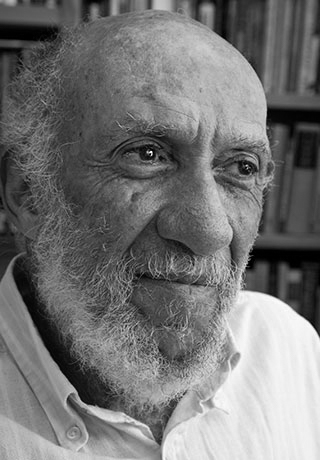
By chance I was reading César Vallejo’s poem, “Black Stone on a White Stone,” in a translation by Geoffrey Brock, and was struck by the opening stanza:
I’ll die in Paris in the pouring rain
a day I have a memory of already.
I’ll die in Paris – I won’t try to run –
a Thursday perhaps, in Autumn, like today.
Without being literal, I was reminded that I could appraise my death while alive, and not leave a final reckoning to some solemn memorial event in which speakers are challenged to find humorous anecdotes to lighten the occasion, otherwise uttering honorific platitudes quite unrelated to the experiential core of my being.
I had been thinking quite a bit recently about ‘lost causes.’
Recently I gave a lecture at Columbia University on this theme, inspired by Edward Said’s seminal late essay “On Lost Causes” (1997) in which he ties together the ‘nobility of failure’ as portrayed in literature with his own unswerving dedication to the Palestinian struggle for a just peace.
On that occasion, I was also stimulated by the approach taken, perverse in some ways, to this theme by Slavoj Žižek (In Defense of Lost Causes, 2009), especially his insistence that the best we humans can hope for is to choose the right kind of failure, and not be discouraged by apparent defeat or the distortions in practice of worthy goals.
His paraphrase of Samuel Beckett’s electrifying guidelines seems relevant to my own wildly utopian dreams for a just world: “…after one fails, one can go on and fail better, while indifference drowns us deeper and deeper in the morass of imbecilic Being.” (p.7)
Finally, Camus’ notorious imagining of Sisyphus as “happy” strikes a different note, that acceptance of futility is a kind of illumination as to the nature of life’s ceaseless struggle for a redemptive meaning that can only end in frustration.
The final words of The Myth of Sisyphus (1942) tell us something about Camus’ understanding of life well lived as being nothing more or less than a process that continues, punctuated by the rhythm of defeat: “One must imagine Sisyphus happy.”
Whether a life has, or should have, meaning beyond this purely behavioral matter of continuation and persistence, seems a personal matter for Camus, but not for me or for most religions.
Camus seems to be making a less ambitious claim than either Said or Žižek who are talking not just about futility as the generic character of human experience, but about engagement in the pursuit of what might be called the public spiritual good, a purposive journey or pilgrimage that imagines as realizable a just peace on earth.
This understanding has led me to propose a political identity that I label ‘citizen pilgrim,’ the quest for a desired end as defining our public life experience as an active participant in the ‘not yet’ character of an unknown future. Of course, the thirst for immortality or life after death is the ultimate lost cause.
Although stimulated by these kinds of reflections on the human condition, I make no claim to situate myself on such grand pedestals of celebrity. It is rather an exercise in self-perception from the perspective of a whole life that cannot be definitively apprehended until after death: A sort of embrace of the impossible. Because not yet being dead, there may yet be redefining moments that would call for reassessment.
In this respect, we remain inherently mysterious to ourselves, as well as to others. Yet if we wait for the drama of life to end we have clearly waited too long.
Our only impossible possibility is to contemplate our death as if it has happened already, a futuristic memoir, although if written at an advanced age, is only trivially futuristic as most of what stirs the heart and soul has already happened or, if fortunate as in my case, is happening.
If I try to capture some sort of provisional essence in relation to public life, I am struck by the early prosaic attraction of lost causes. I could say, self-critically, that only lost causes have ever held my interest and attracted me deeply.
As a child living in New York City, I chose mindlessly to give allegiance to the Brooklyn Dodgers (before they became a success story, and long before they took their show to the benign confines of the San Francisco Bay) and spurned the more New York Yankees, perpetual winners and geographically more natural as I was living in Manhattan.
Yet even when a wavering and sullen adolescent neither pinstripes nor golf had any allure for me. At the same time, I was instructed by the misfortunes of my father.
After divorced by my mother he pursued unattainable movie stars and others achieving warm friendships but never the enduring intimacy that he was seeking. Living through his disappointments as a child helped me avoid a private life of lost causes, although not entirely.
Later, when some sort of deferred adulthood arrived, I finally began to think, feel, and act politically.
First, I had to shake off the influence of my father’s confusing blend of a loving nature with hardhearted conservative politics: empathy and tenderness at home combined with an abstract love of country and state that affirmed militarism and belligerence internationally and cruelty and reactionary politics domestically, truly, an ethos of winners accompanied by his mild forms of racism and patriarchy, even homophobia, but fortunately contradicted by a non-judgmental acceptance of the other in concrete circumstances.
Then Cold War liberalism came into my life. It was ‘the group think’ of academic life during my maturing years in the 1950s and 1960s, believing in the moral superiority of our capitalist and individualist side while favoring a more cooperative world order provided the United States did the things it needed to do to hold onto its advantages of wealth and power.
While realizing the limits and shortcomings of the liberal mentality, I never felt comfortable with radical alternatives, especially if institutionally and ideologically defined. Hence, political loneliness.
My first political encounter with a lost cause was Vietnam. I became opposed to the war on a prudential basis that drew upon the kind of consensus realism that was the required 101 thinking that prevails among university faculties, especially on elite campuses.
Later, by way of friends and afraid to seem afraid, I went to North Vietnam, and saw the war differently, that is, from the perspective of the victims and the relative purity of a peasant society.
I saw my country, the United States, as the main global bully, killing and devastating at a distance remote from its own society (although subjecting young American combatants willingly and unwillingly to service in an immoral and strategically perplexing war).
Yet underneath this transformed outlook, I remained enough of a realist today to presuppose that the side with hard power superiority would win in the end, that in effect I was sadly championing a lost cause. (I remember Lyndon Johnson bombastic dismissal of North Vietnam as ‘a tenth-rate Asian power’ as hubris, yet not inaccurate according to battlefield metrics).
I was unabashed in declaring my commitment to Vietnamese self-determination, but I expected that eventually the suffering and destruction would be too much to bear for the Vietnamese, and they would submit to Washington’s will.
Instead, I overlooked the historically positive side of American impatience, the unwillingness to stay the dumb course, and so it turned out that it was America that was unwilling to endure further suffering and loss, although statistically it was losing far less than the Vietnamese.
The Vietnamese advantage was their perseverance and a recognition that what was at stake for them was almost an absolute as compared with the United States for whom it was always a matter of calculating the balance between gains and losses.
When the Vietnamese finally gained victory, I was pleased by the outcome of the war, and even briefly believed that the anti-colonial tidal waves sweeping across the world were going to reshape the future in desirable ways.
At the same time, with a less active engagement I was committed to the anti-apartheid struggle, having visited South Africa in 1968 as an official observer at a major political trial of the leading resistance figures in the de facto colonized country, then called South West Africa, renamed Namibia after political independence.
I had earlier worked at the International Court of Justice in The Hague for most of a year on behalf of Ethiopia and Liberia in a case that was brought to establish that South Africa’s administrative role in South West Africa was incompatible with the extension of apartheid racism.
South Africa’s racist claims were astonishingly supported by the decision, and this made me convinced that law and lawyers could not be trusted, and that there would be no liberation from apartheid without the torments of a long and bloody struggle.
It never dawned on me or those in South Africa with whom I discussed these issues endlessly that there might emerge a relatively peaceful path to majoritarian democracy and multi-racial constitutionalism.
As with Vietnam, the relatively benign outcome seemed a kind of political miracle, and as such, did not shake my belief that I was hopelessly destined to be a lifelong champion of lost causes.
Yet it also made me realize that victorious outcomes may somehow control the end game of lost causes.
In this respect, the lostness of lost causes is always in doubt, not rationally so much as existentially, and that makes all the difference between psychology and history. It also vindicates devoting energy to just causes, whether they seem lost or not.
In recent years my main public involvement has been with the Palestinian struggle for rights under international law, for peace and justice.
This struggle increasingly has the aspect of being a classic lost cause, given the power disparities, Israeli land grabbing, and the Zionist ambition as embodied in Israel’s current leadership to control all or most of historic Palestine.
And yet, a brief review of the outcome of international conflicts in the period since the end of World War II suggests that the side that usually wins in the end takes control of commanding heights of law, morality, and historical destiny, not the side that dominates the battlefield or is more adept at deploying the instruments of violence.
Like Vietnam, from the perspective of ‘war’, the Israel-Palestine encounter has all the ugly elements of one-sidedness. The violent encounters are more accurately grasped as ‘massacres,’ ‘horror shows,’ or ‘atrocities’ than as warfare.
From my after-death vantage point, I will not waver in support for the Palestinian struggle, yet I lack the present capacity to depict a plausible victory scenario, hence it is an engagement with a lost cause coupled with the proviso that we never know for sure.
Recently, after a talk on Palestine in Dunedin, New Zealand, a person in the audience posed a challenging question: “shouldn’t you distinguish between ‘a really lost cause’ and ‘a lost cause.’ At the time I agreed that such a distinction would be useful as hope is an essential element in political engagement for most people, and to give finality to lostness would annihilate hope.
Yet later I wondered about whether I made this concession thoughtlessly, which amounted to the admission that really lost causes should be denigrated, and probably abandoned, as pure Chekhovian nostalgia.
I thought about Piranadello’s plays celebrating fantasy at the expense of reality (e.g. ‘So It Is (If You Think So),’ 1917), and recalled my spirited friends devoted to the empowerment of indigenous peoples as in the Hawaiian Sovereignty Movement.
Such an engagement seems clearly to qualify as a really lost cause, and yet, the expression of the vision is itself an intrinsic good, ennobling, and liberating in precisely Pirandello’s sense, and humanly preferable to the denial of injustice as in the uncritical celebration of Columbus Day or Thanksgiving.
Victories of the moral and spiritual imagination may be more valuable and redemptive in our lives even if their political embodiment seems forever beyond reclaiming.
For much of my professional life I have been devoted to the lost cause of eliminating nuclear weapons. At times, this lost cause has seemed as though it might not be lost, at other times it seems truly lost.
Since we cannot know the future, our present assessments are unavoidably provisional, and it remains a moral imperative for me to remain engaged in the struggle for their elimination.
This dialogue with myself continues.
Edward Said makes clear that when shifting gears from culture to politics, it is important to act responsibly in the latter settings of actual struggle where lives are at stake and suffering is real.
He indicated that he was thinking of his own identification with the Palestinian struggle, which was radically different for this reason in his mind from a deep appreciation of the ethos that guided Cervantes to craft his great vision of the lost cause of medieval gallantry.
I feel the same way, although less centered, embracing anti-nuclearism at the same time as affirming solidarity with the Palestinian struggle.
Toward the end of the Vallejo poem these lines complete this arc of thought:
I see myself, as never before, alone
César Vallejo is dead. Everyone hit him,
though he is not doing them the slightest harm
I identify with such a self-image, but only politically, not personally where I am the fulfilled recipient of various forms of sustaining love.
And I am not yet brave enough to say (and mean) ‘Richard Falk is dead.’ Yet to contemplate death without the metaphysical painkillers of an imagined afterlife is to be finally alone.
In a sense learning to die is equivalent to learning to live alone, and takes courage and fortitude.