

The lost peace discourse and the arts as a possible way out?

“Crystal Opalescent”

The discourse about, or for, peace has mostly disappeared over the last 2-3 decades. It applies to research (and its non-governmental funding possibilities), to politics in general and to the media. 

In foreign and security politics, the intellectual level is now such that it does not even seem strange to decision-makers that they never obtain peace advice or consult peace experts. The fantasy-assumption is that if only there is enough military’ security’ means applied to enough societal problems, peace will automatically come about. 

I can’t remember having heard a parliamentarian or minister mention or conceptualise peace beyond the level of the state dinner speech – that is, devoid of theoretical and factual content as well as of meaning. 

Originally published as an editorial on the Transcend Media Service, TMS.

The mainstream media have no one who can focus on peace – not to mention, do peace journalism with professional conflict analysis. Military, political, psychological and economic warfare as well as interventions – usually in the fake-and-omission mode – dominate the reporting. 

Remarkably, that applies also to those who are firmly against these types of policies: the focus is critical but seldom constructive: What should and can be done? Think Chomsky.

Living in Sweden, I cannot remember the last 20 or so years to have seen a peace perspective applied to the world or a particular conflict by any mainstream media in the Nordic countries. There is simply no editors, reporters or journalists who are specialised in such a perspective. And “peace people” seem barred from those media.

So the peace discourse has vanished. Peace made invisible. Peace being treated as the big benign Godot in the middle of the room that everybody, knowingly or not, pretends will never come and is unrealistic – that is, irrelevant and much more unrealistic than the ongoing militarism, nuclearism, interventionism and ongoing destruction of that Nature on which we are all dependent and with which we must all have a partnership.

Those of us who have been engaged in international matters for about half a century are seen as survivors of a culture gone by – the culture, thinking, researching and action for peace. Welcome to the Museum of Peace and its niks…

In other words, in the corridors of today’s more or less kakistocratic (” a government that is ruled by the least suitable, able, or experienced people”) power circles, the word ‘peace’ will be met with silence, ridiculed, considered overly idealistic/unrealistic out of time and place.

Conclusion on those points: We should simply just continue in spite of all – lit the light in that darkness ’cause the times will change. If you work out of conviction, passion or talent – like, say, a composer – you don’t stop just because you don’t get attention. You continue because you are passionate about your values and goals and because – precisely in these times – you have a delightfully different story to tell: that peace is possible and by no measure unrealistic but requires different thinking, knowledge and policies. 

This leads me to continue saying that we must change this fact: 95% of the people in the West, devote 95% of their energies to the world as it is – criticising this or that, producing diagnoses and prognoses, predicting catastrophes, issuing warnings and fighting each other about the right interpretation or making up conspiracies and propaganda.

But such negative energy will get us exactly nowhere:

• When you fall ill, you don’t fancy a doctor who does only diagnosis and prognosis but hasn’t got a clue about your treatment, do you?

• The focus ought to be on the better futures that are possible – imagining them and finding ways to reach them – together. Dear Elise Boulding always rightly told us that what people cannot imagine they won’t work for.

• We know more than enough about today’s problems to now attend creatively to what could be instead of what is: that is, a little of wisdom built on top of knowledge – as E F” Small is Beautiful” Schumacher expressed it: We are now so knowledgeable that we cannot do without wisdom.

In short, positive energy put into visualising and “visionising”…

This leads me in this short article – as well as in my own life – to the question: What about art?

Can the arts become one of the building blocks of the necessary bridge between what is and what could be? Between criticism and constructivism? Between now/here and vision/strategy towards different future(s)? Between the blindness of the information avalanche and the seeing of a better future?

I believe it can – however with the qualification “in principle” or ”theoretically”.

Art is fundamentally about seeing something less visible or not readily visible. It’s about realising something that does not yet exist but comes bursting out of the imagination. It’s about doing old things in new ways or doing what has never been done before.

Art is based on an emotionally/intuitively expressive urge to say something – also beyond empirical reality – to make a wake-up call to fellow global citizens. It’s the thing the artist does because she or he can do nothing better than exactly that.

True art is existential – no matter today’s perverted commercial “art market” and “art industry” (and some who are inside that are indeed true artists anyhow, complicated and contradictory as it may seem).

If you can’t hear those defining qualities in, say, Beethoven’s symphonies or in Dylan’s poetry-music, if you cannot see it in Helen Frankenthaler’s paintings, sense it in Tolstoy’s writings, or in Boulding’s writings – and Gandhi’s and King’s too – there is nothing I can do to explain what I mean.

But there is still at least one problem on my mind: Why is so much of the arts also focused more – much more – on violence, war, evil, death, drama, killing, aggression and suffering?

Why is so little of it motivated by or conveying life-confirming stuff such as reconciliation, forgiveness, harmony, diversity, development, cooperation, joy, conviviality … and peace?

Why is so much of it on problems rather than solutions? On history/present more than on the future?

The classical discussion – are humans fundamentally good or evil? – can be extended to: Do humans pay attention mostly to good or to evil? To problems or solutions? And that is much more easy to answer.  

Perhaps you now think that I am exaggerating and that these matters can simply not be quantified. That’s a valid argument but I believe we should try to dialogue about it anyhow. 

Many of the great works in literature, films, music, and paintings build on themes of violence and destruction and take their inspiration in the dark sides of human and societal nature, behaviour and actions. They ask the question why the past and present world is evil – rather than stimulate our imagination to perceive the better world as it could be – to paraphrase George Bernhard Shaw.

I was reminded of that when recently I went to the leading photography festival in Sweden, if not in Scandinavia – the Landskrona Photo Festival –  which I always visit because I am also an art photographer.

Beyond any doubt, it shows high average quality, considerable diversity, many and highly topical themes – all the attributes defining fine curatorship.

So what was my problem?

Well, that at least 40% of the exhibited works focus on war, genocide, massacre, concentration camps, the suffering of particular groups of people, refugees and other ‘damned of the earth.’ And that much of the rest is either expressive of de-politicising identity issues or experimental photography, constructed, stage-set or hybrid, formalistic.

And it’s all pretty lifeless! No humour, satire, no attempt to depict beauty, conviviality, happiness. Or make the spectator think about peace and other positive values.

I mean, what is the point of displaying yet another series of (documentary) images of skeletons from various massacres in the narrow, dark prison cells of a Citadel?

Is the assumption, perhaps, the – naive – one like the one surrounding Hiroshima and hibakusha films and photos, namely that by showing them the audience will be appalled and become more critical or warfare and other types of violence?

Is it part of the broader “violence industry” in which we also find the museums of wars and massacres and Holocaust?

Or is it that it hits us emotionally and get an “automatic” mileage, a little like if a photographer takes portraits of celebrities rather than non-celebrities, then she or he becomes famous more easily?

Why are there so many more images in this world of destruction than of construction, of violence than of peace? 

The very important World Press Photo contest is another – worse – example. Just look at the photos on the link. 

It’s filled with violence and suffering – and I am relatively sure that those who run these contests and festivals are not even aware of that bias or have discussed it. As if reality or the imagination or the creative impulse could not also be expressed through images of beauty and peace?

Perhaps we have come so far down the mental slippery slope that war and destruction is considered (un- or subconsciously) to be more ‘realistic’ and significant or ‘normal’ and everyday-like than peace, love, cooperation and beauty?

We live in an age influenced much more by images than by text and even sound – also because everybody has become a kind of photographer.

What the hundreds of images we more or less consciously perceive during a day through all sorts of media tell us about the world is extremely important in shaping our worldview. 
 
Well, you may say, it’s always been the case that the negative dominated and fascinated us, hasn’t it? Perhaps. 

But if so, let’s become a bit more peace-creative and re-balance it all! 

If you thought this was useful or even thought-provoking, we’d be grateful for your contribution to this unique homepage.

The author
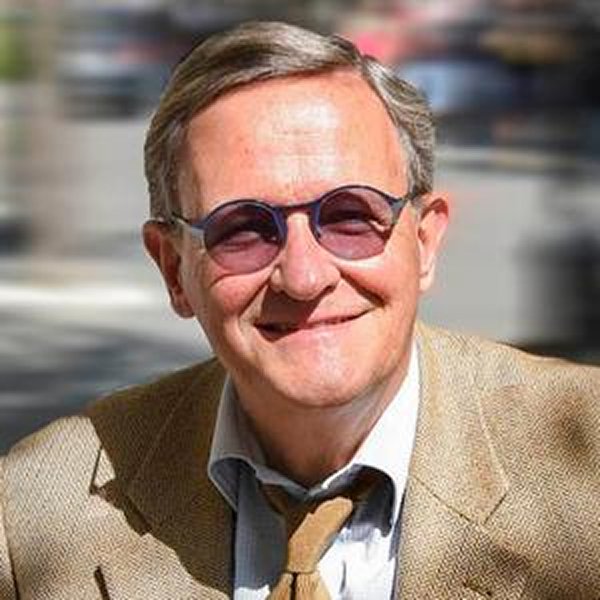
Peace & future researcher + ‌Art Photographer

Share

Leave a Reply

Your email address will not be published. Required fields are marked *

Related Posts

PRESS RELEASE – 6 OCTOBER 2025 LAY DOWN YOUR ARMSPEACE PRIZE FOR 2025 is awarded Francesca Albanese The United Nations Special Rapporteur on the occupied Palestinian territories – as the person who, in accordance with Alfred Nobel’s will, has “done the most or the best work for fraternity between nations and for the abolition or reduction of standing armies as well as for the holding and promotion of peace congresses.” Francesca Albanese has forcefully and unwaveringly worked against Israel’s full-scale war on the occupied Palestinian territories, in particular Israel´s ongoing genocide against the Palestinian people. She has confronted Israel’s systematic war crimes and crimes against humanity in a truly global outreach. Further, she has brought governments, international organisations and people’s groups together to underline the responsibility of the world at large to act and to stop arming, enabling, and profiting from Israel’s ongoing criminal actions. But first of all, Albanese...
Officially, the drones were not identified. By simply thinking critically – which journalists and selected experts no longer do – there may be a good reason for that. And this article will never be mentioned in Denmark… Drones over Denmark. No damage. No trace. No answers. Yet the headlines scream “Russian threat,” and Prime Minister Mette Frederiksen speaks with a certainty that defies logic: “We don’t know they were Russian—but we know Russia is the biggest threat to Europe.” It could be nobody else – unless you make an interest analysis which I did two days ago. This is not security policy. It’s theatre. And the audience is being played. Let’s rewind. These drones—unphotographed, untracked, unclaimed—appear and vanish like ghosts. Airports shut down. Panic spreads. Military budgets swell. And the narrative hardens: Russia is behind it. But what if that’s not just wrong but deliberately misleading? Here’s a hypothesis for...
And why the world, especially the EU, must now declare itself independent of the United States. UN’s 80th anniversary This year, the United Nations celebrates the 80th anniversary of its founding. The UN was formed after the scourge of the Second World War, in which 70 to 85 million people were killed and many countries were destroyed. That war came on the heels of the First World War, which also killed between 15 and 22 million people. After the Second World War, especially after the use of nuclear weapons by the United States, which marked a turning point in the history of warfare that could result in the end of civilisation as we know it, humanity decided to move away from the era of empires and big power politics and usher in a new era of peace, freedom and cooperation. These were the principles enshrined in the UN Charter. The United States...

Recent Articles

Jan Øberg behandler i artiklen en lang række faktorer, som ligger til grund for den måde vores samfund er organiseret på – og derfor også for konflikter. Artiklen introducerer således sammenhængen mellem familien, foreninger, regeringer, NGO’ er, nation, stat, nationalstat og alliancer for på denne måde bedre at kunne forstå konflikter og i sidste ende blive klogere mht. at løse disse. Øberg, der er fortaler for global bevidsthed, hvilket skal ses i lyset af den øgede globalisering, skelner mellem kulturkamp og kulturdialog. Endelig behandles begrebet magt og magtesløshed: giver magt ret til at udøve magt – fordi man mener at have ret? Litteraturliste og arbejdsspørgsmål efter artiklen. Ordene vi bruger om verden I satellitperspektiv kan man godt tale om den menneskelige familie eller menneskeheden. Udtrykket understreger, at der eksisterer – eller burde eksistere – et fællesskab fordi vi alle er mennesker og sammen bebor denne klode og ingen anden. Og...
Kapitel 2: Forskellige sider af Europa og USA…fortsat 2.5 Militære relationer I forbifarten har vi allerede sagt nogle ting om USA’s militære situation. Kig lige en gang til på afsnit 2.3. Nu skal vi uddybe det militære forhold mellem USA og EU. Der er en række ligheder mellem visse europæiske landes og USA’s militær. Næsten alle er med på en eller anden måde i NATO, direkte som medlem – selv Island, der ikke har et forsvar – eller indirekte i Partnerskab for Fred. USA og Canada er med i OSCE (på dansk OSSE), Organisationen for Sikkerhed og Samarbejde i Europa, der tæller over 50 lande. USA samt England og Frankrig er kernevåbenstater og de har styrker til intervention langt borte fra hjemlandet, om end USA’s er tifold større. Alle har også en omfattende våbeneksport og bruger den som et middel til at tjene penge og få loyale venner på, det...
Background Christian Harleman and Jan Oberg conducted a fact-finding mission to Burundi between November 26 and December 6, 2003. (See websites about the country here). The first TFF mission took place in March 1999. Unfortunately, since then it has not been practically possible to implement the co-operation with Burundi’s Ministry of Education and Burundian NGOs that was planned at the time. The 2003 mission had three purposes. First, to do fact-finding in general about the situation and, in particular, the progress under the Arusha Peace Process. Second, to explore the possibilities for co-operation between the government and relevant NGOs on the one hand and TFF on the other, in order to develop and deepen the existing competence in fields such as conflict-understanding, reconciliation and peace-building. Finally, third, to find out whether it would be possible, in co-operation with the Swedish Rescue Services Agency (Statens Räddningsverk), to establish a health care unit that...

TFF on Substack

Discover more from TFF Transnational Foundation & Jan Oberg.

Most Popular

Jan Øberg behandler i artiklen en lang række faktorer, som ligger til grund for den måde vores samfund er organiseret på – og derfor også for konflikter. Artiklen introducerer således sammenhængen mellem familien, foreninger, regeringer, NGO’ er, nation, stat, nationalstat og alliancer for på denne måde bedre at kunne forstå konflikter og i sidste ende blive klogere mht. at løse disse. Øberg, der er fortaler for global bevidsthed, hvilket skal ses i lyset af den øgede globalisering, skelner mellem kulturkamp og kulturdialog. Endelig behandles begrebet magt og magtesløshed: giver magt ret til at udøve magt – fordi man mener at have ret? Litteraturliste og arbejdsspørgsmål efter artiklen. Ordene vi bruger om verden I satellitperspektiv kan man godt tale om den menneskelige familie eller menneskeheden. Udtrykket understreger, at der eksisterer – eller burde eksistere – et fællesskab fordi vi alle er mennesker og sammen bebor denne klode og ingen anden. Og...
Kapitel 2: Forskellige sider af Europa og USA…fortsat 2.5 Militære relationer I forbifarten har vi allerede sagt nogle ting om USA’s militære situation. Kig lige en gang til på afsnit 2.3. Nu skal vi uddybe det militære forhold mellem USA og EU. Der er en række ligheder mellem visse europæiske landes og USA’s militær. Næsten alle er med på en eller anden måde i NATO, direkte som medlem – selv Island, der ikke har et forsvar – eller indirekte i Partnerskab for Fred. USA og Canada er med i OSCE (på dansk OSSE), Organisationen for Sikkerhed og Samarbejde i Europa, der tæller over 50 lande. USA samt England og Frankrig er kernevåbenstater og de har styrker til intervention langt borte fra hjemlandet, om end USA’s er tifold større. Alle har også en omfattende våbeneksport og bruger den som et middel til at tjene penge og få loyale venner på, det...
Background Christian Harleman and Jan Oberg conducted a fact-finding mission to Burundi between November 26 and December 6, 2003. (See websites about the country here). The first TFF mission took place in March 1999. Unfortunately, since then it has not been practically possible to implement the co-operation with Burundi’s Ministry of Education and Burundian NGOs that was planned at the time. The 2003 mission had three purposes. First, to do fact-finding in general about the situation and, in particular, the progress under the Arusha Peace Process. Second, to explore the possibilities for co-operation between the government and relevant NGOs on the one hand and TFF on the other, in order to develop and deepen the existing competence in fields such as conflict-understanding, reconciliation and peace-building. Finally, third, to find out whether it would be possible, in co-operation with the Swedish Rescue Services Agency (Statens Räddningsverk), to establish a health care unit that...
Read More
Imagen-thumbnail-The-Transnational-1
Jan Øberg behandler i artiklen en lang række faktorer, som ligger til grund for den måde vores samfund er organiseret på – og derfor også for konflikter. Artiklen introducerer således sammenhængen mellem familien, foreninger, regeringer, NGO’ er, nation, stat, nationalstat og alliancer for på denne måde bedre at kunne forstå konflikter og i sidste ende blive klogere mht. at løse disse. Øberg, der er fortaler for global bevidsthed, hvilket skal ses i lyset af den øgede globalisering, skelner mellem kulturkamp og kulturdialog. Endelig behandles begrebet magt og magtesløshed: giver magt ret til at udøve magt – fordi man mener at have ret? Litteraturliste og arbejdsspørgsmål efter artiklen. Ordene vi bruger om verden I satellitperspektiv kan man godt tale om den menneskelige familie eller menneskeheden. Udtrykket understreger, at der eksisterer – eller burde eksistere – et fællesskab fordi vi alle er mennesker og sammen bebor denne klode og ingen anden. Og...
Imagen-thumbnail-The-Transnational-1
Kapitel 2: Forskellige sider af Europa og USA…fortsat 2.5 Militære relationer I forbifarten har vi allerede sagt nogle ting om USA’s militære situation. Kig lige en gang til på afsnit 2.3. Nu skal vi uddybe det militære forhold mellem USA og EU. Der er en række ligheder mellem visse europæiske landes og USA’s militær. Næsten alle er med på en eller anden måde i NATO, direkte som medlem – selv Island, der ikke har et forsvar – eller indirekte i Partnerskab for Fred. USA og Canada er med i OSCE (på dansk OSSE), Organisationen for Sikkerhed og Samarbejde i Europa, der tæller over 50 lande. USA samt England og Frankrig er kernevåbenstater og de har styrker til intervention langt borte fra hjemlandet, om end USA’s er tifold større. Alle har også en omfattende våbeneksport og bruger den som et middel til at tjene penge og få loyale venner på, det...
Imagen-thumbnail-The-Transnational-1
Background Christian Harleman and Jan Oberg conducted a fact-finding mission to Burundi between November 26 and December 6, 2003. (See websites about the country here). The first TFF mission took place in March 1999. Unfortunately, since then it has not been practically possible to implement the co-operation with Burundi’s Ministry of Education and Burundian NGOs that was planned at the time. The 2003 mission had three purposes. First, to do fact-finding in general about the situation and, in particular, the progress under the Arusha Peace Process. Second, to explore the possibilities for co-operation between the government and relevant NGOs on the one hand and TFF on the other, in order to develop and deepen the existing competence in fields such as conflict-understanding, reconciliation and peace-building. Finally, third, to find out whether it would be possible, in co-operation with the Swedish Rescue Services Agency (Statens Räddningsverk), to establish a health care unit that...
Imagen-thumbnail-The-Transnational-1
Former UN Under-Secretary-General with special responsibility for peacekeeping operations TFF associate August 20, 2003 YRINGHAM, Mass.- Ralph Bunche was born in Detroit 100 years ago today (August 7, 2003). His passionate determination to get results did not extend to seeking credit for them, so his work is better remembered than he is. Of all his many accomplishments – civil rights pioneer, Nobel Peace Prize laureate, chief drafter of two chapters of the United Nations charter, negotiator of the armistices that ended the first Arab-Israeli war – Bunche said he was proudest of developing what came to be known as peacekeeping. Setting up the United Nations Truce Supervision Organization in Palestine in 1948, Bunche formulated the principles that have governed peacekeeping operations ever since. In the 1956 Suez crisis, working with Secretary General Dag Hammarskjold and Lester Pearson of Canada, he organized the first peacekeeping force, the United Nations Emergency Force...
– nästan 11 månader Till Sofia nästan 11 månader # 1  Till Sofias huvudsida Till alla Privata Foto-Serier
Till Sofias huvudsida