George Floyd’s killing: Part 2

Pulling down statues may make us feel good but will
not eliminate the root causes of racism and discrimination

Part TwoPart 1 here

The protests to the cruel killing of George Floyd and many others before him and even some after him have not remained confined to the United States or among black people alone, but have given rise to a global movement for change and an end to racism and discrimination.

Many protestors in the United States have called for the toppling of the statues of Confederate generals and for the names of places and institutions named after them to be changed, while in many European countries demonstrators have called for the toppling of statues of those who are symbols of racism, imperialism and white supremacy.

Clearly, toppling a few statues may give temporary satisfaction to those who have been the victims of racism, but is it the best or a lasting solution?

There is a difference between “feel good politics” and “do good politics”.

What is needed is not to vent our anger against a few statues, but to think of long-term solutions to the phenomenon of racism and discrimination.

When I first arrived in Britain as a young student in 1960, I caught a taxi at the then BOAC terminal in London and asked the driver to take me to an inexpensive hotel. He dropped me in front of the Cromwell Hotel in Cromwell Road, Kensington.

Oliver Cromwell was the leader of the Puritan Movement who led the Parliament’s armies against Charles I during the English Civil War, and signed the warrant for the execution of King Charles I in 1649. On 20 April 1653, he dismissed the Rump Parliament by force, setting up a nominated assembly known as Barebone’s Parliament before being invited to rule as Lord Protector. The Puritans also engaged in a great deal of artistic vandalism, destroying many beautiful religious buildings and artefacts.

This road in London, was actually named after Cromwell’s son who once owned a house there.

Having come from what was then royal Iran and being partly familiar with British history, I found it odd that Cromwell who had tried to abolish the monarchy and who had killed a king would have his name given to a road and a hotel without any government action.

The following day I asked a British friend of mine about why Cromwell’s name had not been erased from all records after the Restoration of the monarchy and why various monuments commemorated him.

He replied: “Because he was a part of British history”.

I found that attitude a much more mature approach compared to the practice of many third world countries where every new regime tries to eliminate the traces of the previous one. This also happened in Iran. The Pahlavi Dynasty (1925-79) that succeeded the Qajar Dynasty (1789-1925) tried to erase or undermine all the achievements of the previous dynasty.

Cities, buildings and roads changed their names to new names associated with the Pahlavis. The ancient city of Urumiyyeh became Rezaiyyeh, named after Reza Shah, Anzali port became Pahlavi port, Tehran’s longest street was called Pahlavi Street, and many statues of both Pahlavi kings were erected all over the place.

The same pattern was followed after the fall of the Pahlavis. One of the first things that the leaders of the Islamic Republic did was to try to erase the monuments and statues of the Pahlavi dynasty. The “hanging judge” Ayatollah Khalkhali led the crowd towards Reza Shah’s mausoleum and raised it to the ground.

The monument that the Shah had built in the middle of Tehran to commemorate Iran’s 2,500 years of monarchy, but most specifically to perpetuate his own name, called Shahyad, changed its name to “Freedom Square”, and Tehran’s longest thoroughfare, the Pahlavi Street, was renamed Valiasr Street (after the so-called Hidden Imam).

No doubt, when the Islamic Republic is replaced with a new regime, new rulers will also try to destroy Khomeini’s huge mausoleum and will change many names associated with the Islamic regime.

The toppling of the monuments associated with an old era may be tempting and may provide some momentary emotional relief, but they also destroy a part of history, and a nation without history is like a tree which has had the roots cut off.

One can easily understand the depth of anger of those who have been the victims of racism in the past or at present, and their desire to remove the statues of some slaver owners or colonialists that remind them of the period of their oppression.

How can one learn about the background of those monsters and not sympathise with those who wish to remove the stain of shame from their cities?

Tens of thousands of mainly peaceful demonstrators took to the streets in different parts of Britain demanding racial justice. In Bristol, demonstrators pulled down the statue of Edward Colston from its pedestal, reminiscent of American soldiers pulling down Saddam Hussein’s statue in Baghdad, and threw it into a canal.

Colston who became a major benefactor to the city of Bristol and whose name honours/shames many streets and buildings, built his enormous fortune on slavery. He transported more than 80,000 African men, women and children across the Atlantic, many of them to their death during transit or in the plantations.

Thousands of demonstrators gathered outside Oriel College in Oxford demanding the removal of the statue of imperialist Cecil Rhodes. Rhodes was an ardent believer in British imperialism who founded the southern African territory which was named Rhodesia after him (renamed later as Zimbabwe when it achieved independence after nearly 70 years as a British colony), and in some ways he was the author of apartheid in South Africa.

His primary motivation in politics was based on his professed belief that the Anglo-Saxon race was “the first race in the world”, adding that “the more of the world we inhabit the better it is for the human race.”[1]

Sadly, such sentiments do not only belong in the past but are repeated in different forms by some arrogant politicians right up to the present time. During his Senate hearing, US Secretary of State Mike Pompeo said that America was not only exceptional but unique. Pompeo, a US Army veteran, addressing The American Legion 101st National Convention on 27 August 2019, boasted: “Americanism means recognising America as ‘an exceptional nation’”.

After referring to the US’s “achievements” in Afghanistan and Venezuela, galvanising international support for sanctions on North Korea and Iran, etc., he told his military audience: “It’s very simple: you have contributed mightily to proud American achievements. By doing so you, your organization, each of you as individuals, is a proud American achievement unto itself.”

He added: “In fact, America itself – the idea of America and her promise – is at the core of everything that you do.”[2]

This is the language of all past imperialists and colonialists who made use of high-sounding ideals to invade and suppress other nations. But no government has acted in a more parochial and racist manner than the administration of which Pompeo is a member.

From banning Muslim immigrants, to savagely separating children from their parents at US borders in the south, selling huge volumes of deadly weapons to dictatorial regimes that are engaged in genocidal wars in Yemen and elsewhere, imposing illegal sanctions on numerous countries, organising clumsy coup attempts against Venezuela and Bolivia, violating international law and granting Jerusalem and parts of the occupied territories to the apartheid Israeli regime, withdrawing from a number of international treaties such as the Paris Climate Accord, the nuclear deal with Iran, the Start Treaty with Russia, undermining various vital UN organisations such as the WHO in the middle of a pandemic, or UNESCO or International Court of Justice, etc. the current US regime has a terrible record hardly matched by any previous administration.

It requires an exceptional, indeed a unique, degree of arrogance and blindness to ignore this unenviable record of aggression, violation of international law and human rights, and talk about US exceptionalism for allegedly spreading freedom and democracy throughout the world. 

Nevertheless, the answer to this and past examples of racism and arrogance is not to engage in acts of demolition, although on 18th June, Oriel College finally promised to remove Rhodes statue. There must be a better way of tackling the root-causes of all that injustice.

In fact, by removing the statues of racists and imperialists one has done them a great favour, because with their removal their memory also fades gradually and people forget about their crimes.

Far better to keep them where they are but add a plaque to them explaining what they did.

A nation that demolishes its history cuts its own roots and dims its memory. In fact, it is impossible to erase the past and pretend that it did not exist. We are the products of our past and we must accept it for good or ill.

As the American novelist William Falkner said: “The past is not dead, it is not even past.” In the words of Iranian poet Omar Khayyam:

The Moving Finger writes; and, having writ,
Moves on: nor all thy Piety nor Wit
Shall lure it back to cancel half a Line,
Nor all thy Tears wash out a Word of it.

We cannot erase the past, but we can admit our past mistakes, learn from them and try to put them right.

Don’t pull down statues, pull down statutes

One of the ways that unjust governments have perpetuated past injustices has been by passing unfair statutes and giving legal legitimacy to their racist behaviour. It’s well past time for changing the laws that discriminate against black and ethnic groups and on the whole the poorer classes of society, and to introduce new legislation. One such area is systemic police reform.

American politicians have been aware of police bias but have done little to address it. As early as 2006, an FBI report revealed that law-enforcement forces had been “infiltrated” by White Supremacists and in fact, it called it an epidemic.[3]

It is appalling that black people are 40 times more likely to be subjected to “Stop and Search” than white people. The rate of death under detention is proportionately much higher for black people than for whites, as is the rate of incarceration.

This means that one of the first steps that needs to be taken is to fundamentally change the culture of policing and make it more accountable.

The issue of violence and the militarisation of the police is closely connected with the issue of America’s growing militarisation abroad. The United States spends nearly as much on its military as the rest of the world combined, and it is by far the largest exporter of deadly weapons. It also has hundreds of bases in way over hundred countries.

In order to reduce this excessive reliance on military force at home and abroad, people should demand massive cuts in the budgets of the Pentagon and the police and instead spend the money on removing economic disparity.

One can think of dozens of other measures that can be taken in the United States and in the West as a whole, which are more effective than pulling down some statues. Those measures would have a permanent effect and would make America and the West much more humane, more equal and more desirable places for their citizens to live.
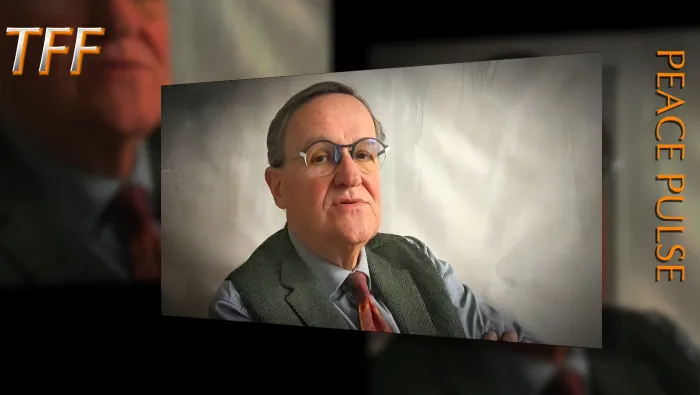
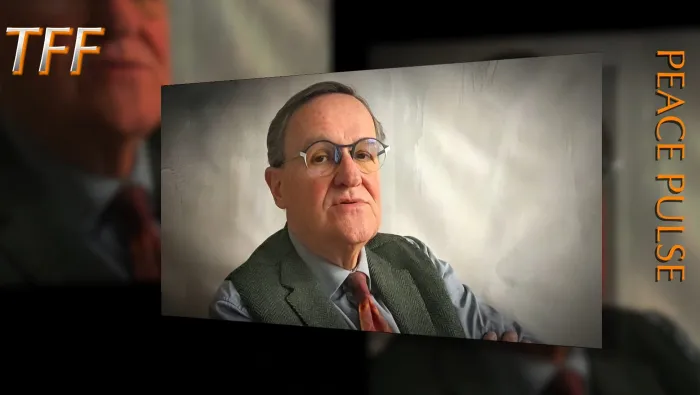
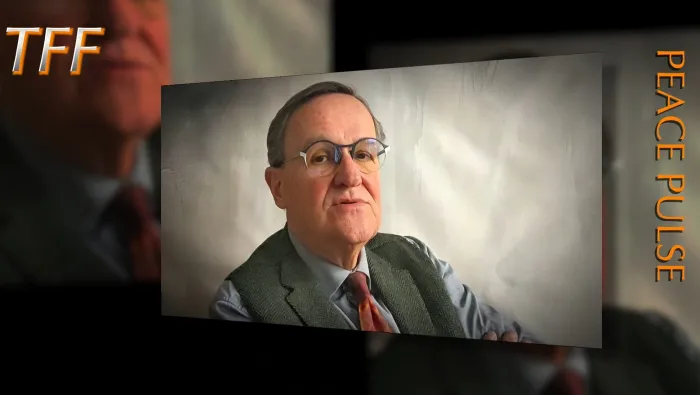
Farhang Jahanpour is a former professor and dean of the Faculty of Languages at the University of Isfahan, and a former Senior Research Scholar at Harvard.
He is also a TFF Associate and former Board member of the foundation.
For the past 30 years, he has been teaching courses on the Middle East at the Department of Continuing Education and is a member of Kellogg College at the University of Oxford.

Part 1 of ‘George Floyd’s killing and its international repercussions”

Please help TFF remain truly independent here if you benefited from this article

[paypal-donation]

Notes

[1] William Thomas Stead, ed. “The Last Will and Testament of Cecil John Rhodes”, London, 1902, p. 58.

[2] See Steven B. Brooks, Pompeo: Americanism means recognizing America as an ‘exceptional nation’, American Legion, Aug 27, 2019.

[3] “White Supremacist Infiltration of Law Enforcement,” 17 October, 2006.

Photo on top
John Raphael Smith: Slave TradeSlave Trade, print on paper by John Raphael Smith after George Morland, 1762–1812; in the Rijksmuseum, Amsterdam.Courtesy of the Rijksmuseum, Amsterdam (RP-P-1969-83)
Former Professor and Dean of the Faculty of Languages, University of Isfahan; former lecturer at Cambridge, Harvard and Oxford universities; retired Editor for Middle East and North Africa, BBC Monitoring.

Share

Leave a Reply

Your email address will not be published. Required fields are marked *

Related Posts

PRESS RELEASE – 6 OCTOBER 2025 LAY DOWN YOUR ARMSPEACE PRIZE FOR 2025 is awarded Francesca Albanese The United Nations Special Rapporteur on the occupied Palestinian territories – as the person who, in accordance with Alfred Nobel’s will, has “done the most or the best work for fraternity between nations and for the abolition or reduction of standing armies as well as for the holding and promotion of peace congresses.” Francesca Albanese has forcefully and unwaveringly worked against Israel’s full-scale war on the occupied Palestinian territories, in particular Israel´s ongoing genocide against the Palestinian people. She has confronted Israel’s systematic war crimes and crimes against humanity in a truly global outreach. Further, she has brought governments, international organisations and people’s groups together to underline the responsibility of the world at large to act and to stop arming, enabling, and profiting from Israel’s ongoing criminal actions. But first of all, Albanese...
Officially, the drones were not identified. By simply thinking critically – which journalists and selected experts no longer do – there may be a good reason for that. And this article will never be mentioned in Denmark… Drones over Denmark. No damage. No trace. No answers. Yet the headlines scream “Russian threat,” and Prime Minister Mette Frederiksen speaks with a certainty that defies logic: “We don’t know they were Russian—but we know Russia is the biggest threat to Europe.” It could be nobody else – unless you make an interest analysis which I did two days ago. This is not security policy. It’s theatre. And the audience is being played. Let’s rewind. These drones—unphotographed, untracked, unclaimed—appear and vanish like ghosts. Airports shut down. Panic spreads. Military budgets swell. And the narrative hardens: Russia is behind it. But what if that’s not just wrong but deliberately misleading? Here’s a hypothesis for...
And why the world, especially the EU, must now declare itself independent of the United States. UN’s 80th anniversary This year, the United Nations celebrates the 80th anniversary of its founding. The UN was formed after the scourge of the Second World War, in which 70 to 85 million people were killed and many countries were destroyed. That war came on the heels of the First World War, which also killed between 15 and 22 million people. After the Second World War, especially after the use of nuclear weapons by the United States, which marked a turning point in the history of warfare that could result in the end of civilisation as we know it, humanity decided to move away from the era of empires and big power politics and usher in a new era of peace, freedom and cooperation. These were the principles enshrined in the UN Charter. The United States...

Recent Articles

Gandhi, Arun. Lord Richard Attenborough. Kasturba: a lifeNew Delhi: Penguin Books Ltd., 2000.315 pp, 295 Indian Rs, US $22.51 January 29, 2002 Arun Gandhi, grandson to Mohandas and Kasturba, has written a thorough account of Kasturba’s life. Arun begins with a description of Kasturba’s childhood in Porbandar in the late1800s, before she met Mohandas. By having chosen to embark on difficult research into his grandmother’s life, including her first years which are not well-documented, Arun ensures that the reader receives an intimate and life-long portrait of this amazing woman. Kasturba is presented as a lively woman &endash; obedient, yet with a mind of her own. As the relationship between Kasturba and Mohandas developed, Arun maintains that Kasturba’s influence over Mohandas in her own quiet way also grew, to which some of Mohandas’ writings also attest.  Arun paints a vivid picture of the beginnings of Mohandas’ non-violence movement in South Africa, a...
In response to an urgent Appeal from all the living Nobel Peace Prize Laureates, the General Assembly of the United Nations, on November 1998, unanimously declared the first decade of the twenty-first century to be The Decade for a Culture of Peace and Nonviolence. While people are naturally concerned about the amount of violence in our world and how it threatens our future, the Nobel Laureates are right to remind us of the potential of nonviolence and our calling to build a culture of peace and nonviolence.  The twentieth century is instructive in the way that the philosophy and practice of nonviolence have begun to flourish and in the way that nonviolent movements have had an exponential growth across the world. Mohandas Gandhi and Martin Luther King, Jr. are the most famous nonviolent leaders but many have built upon the paths they charted as in country after country, tyrannies and...
We know that medical personnel have failed to report to higher authorities wounds that were clearly caused by torture and that they have neglected to take steps to interrupt this torture. In addition, they have turned over prisoners’ medical records to interrogators who could use them to exploit the prisoners’ weaknesses or vulnerabilities. We have not yet learned the extent of medical involvement in delaying and possibly falsifying the death certificates of prisoners who have been killed by torturers. A May 22 article on Abu Ghraib in the New York Times states that “much of the evidence of abuse at the prison came from medical documents” and that records and statements “showed doctors and medics reporting to the area of the prison where the abuse occurred several times to stitch wounds, tend to collapsed prisoners or see patients with bruised or reddened genitals.” http://www.truthout.org/docs_04/080604J.shtml#16 According to the article, two doctors who...

TFF on Substack

Discover more from TFF Transnational Foundation & Jan Oberg.

Most Popular

Gandhi, Arun. Lord Richard Attenborough. Kasturba: a lifeNew Delhi: Penguin Books Ltd., 2000.315 pp, 295 Indian Rs, US $22.51 January 29, 2002 Arun Gandhi, grandson to Mohandas and Kasturba, has written a thorough account of Kasturba’s life. Arun begins with a description of Kasturba’s childhood in Porbandar in the late1800s, before she met Mohandas. By having chosen to embark on difficult research into his grandmother’s life, including her first years which are not well-documented, Arun ensures that the reader receives an intimate and life-long portrait of this amazing woman. Kasturba is presented as a lively woman &endash; obedient, yet with a mind of her own. As the relationship between Kasturba and Mohandas developed, Arun maintains that Kasturba’s influence over Mohandas in her own quiet way also grew, to which some of Mohandas’ writings also attest.  Arun paints a vivid picture of the beginnings of Mohandas’ non-violence movement in South Africa, a...
In response to an urgent Appeal from all the living Nobel Peace Prize Laureates, the General Assembly of the United Nations, on November 1998, unanimously declared the first decade of the twenty-first century to be The Decade for a Culture of Peace and Nonviolence. While people are naturally concerned about the amount of violence in our world and how it threatens our future, the Nobel Laureates are right to remind us of the potential of nonviolence and our calling to build a culture of peace and nonviolence.  The twentieth century is instructive in the way that the philosophy and practice of nonviolence have begun to flourish and in the way that nonviolent movements have had an exponential growth across the world. Mohandas Gandhi and Martin Luther King, Jr. are the most famous nonviolent leaders but many have built upon the paths they charted as in country after country, tyrannies and...
We know that medical personnel have failed to report to higher authorities wounds that were clearly caused by torture and that they have neglected to take steps to interrupt this torture. In addition, they have turned over prisoners’ medical records to interrogators who could use them to exploit the prisoners’ weaknesses or vulnerabilities. We have not yet learned the extent of medical involvement in delaying and possibly falsifying the death certificates of prisoners who have been killed by torturers. A May 22 article on Abu Ghraib in the New York Times states that “much of the evidence of abuse at the prison came from medical documents” and that records and statements “showed doctors and medics reporting to the area of the prison where the abuse occurred several times to stitch wounds, tend to collapsed prisoners or see patients with bruised or reddened genitals.” http://www.truthout.org/docs_04/080604J.shtml#16 According to the article, two doctors who...
Read More
Imagen-thumbnail-The-Transnational-1
Gandhi, Arun. Lord Richard Attenborough. Kasturba: a lifeNew Delhi: Penguin Books Ltd., 2000.315 pp, 295 Indian Rs, US $22.51 January 29, 2002 Arun Gandhi, grandson to Mohandas and Kasturba, has written a thorough account of Kasturba’s life. Arun begins with a description of Kasturba’s childhood in Porbandar in the late1800s, before she met Mohandas. By having chosen to embark on difficult research into his grandmother’s life, including her first years which are not well-documented, Arun ensures that the reader receives an intimate and life-long portrait of this amazing woman. Kasturba is presented as a lively woman &endash; obedient, yet with a mind of her own. As the relationship between Kasturba and Mohandas developed, Arun maintains that Kasturba’s influence over Mohandas in her own quiet way also grew, to which some of Mohandas’ writings also attest.  Arun paints a vivid picture of the beginnings of Mohandas’ non-violence movement in South Africa, a...
Imagen-thumbnail-The-Transnational-1
In response to an urgent Appeal from all the living Nobel Peace Prize Laureates, the General Assembly of the United Nations, on November 1998, unanimously declared the first decade of the twenty-first century to be The Decade for a Culture of Peace and Nonviolence. While people are naturally concerned about the amount of violence in our world and how it threatens our future, the Nobel Laureates are right to remind us of the potential of nonviolence and our calling to build a culture of peace and nonviolence.  The twentieth century is instructive in the way that the philosophy and practice of nonviolence have begun to flourish and in the way that nonviolent movements have had an exponential growth across the world. Mohandas Gandhi and Martin Luther King, Jr. are the most famous nonviolent leaders but many have built upon the paths they charted as in country after country, tyrannies and...
Imagen-thumbnail-The-Transnational-1
We know that medical personnel have failed to report to higher authorities wounds that were clearly caused by torture and that they have neglected to take steps to interrupt this torture. In addition, they have turned over prisoners’ medical records to interrogators who could use them to exploit the prisoners’ weaknesses or vulnerabilities. We have not yet learned the extent of medical involvement in delaying and possibly falsifying the death certificates of prisoners who have been killed by torturers. A May 22 article on Abu Ghraib in the New York Times states that “much of the evidence of abuse at the prison came from medical documents” and that records and statements “showed doctors and medics reporting to the area of the prison where the abuse occurred several times to stitch wounds, tend to collapsed prisoners or see patients with bruised or reddened genitals.” http://www.truthout.org/docs_04/080604J.shtml#16 According to the article, two doctors who...
Imagen-thumbnail-The-Transnational-1
Jan Øberg behandler i artiklen en lang række faktorer, som ligger til grund for den måde vores samfund er organiseret på – og derfor også for konflikter. Artiklen introducerer således sammenhængen mellem familien, foreninger, regeringer, NGO’ er, nation, stat, nationalstat og alliancer for på denne måde bedre at kunne forstå konflikter og i sidste ende blive klogere mht. at løse disse. Øberg, der er fortaler for global bevidsthed, hvilket skal ses i lyset af den øgede globalisering, skelner mellem kulturkamp og kulturdialog. Endelig behandles begrebet magt og magtesløshed: giver magt ret til at udøve magt – fordi man mener at have ret? Litteraturliste og arbejdsspørgsmål efter artiklen. Ordene vi bruger om verden I satellitperspektiv kan man godt tale om den menneskelige familie eller menneskeheden. Udtrykket understreger, at der eksisterer – eller burde eksistere – et fællesskab fordi vi alle er mennesker og sammen bebor denne klode og ingen anden. Og...
Imagen-thumbnail-The-Transnational-1
Kapitel 2: Forskellige sider af Europa og USA…fortsat 2.5 Militære relationer I forbifarten har vi allerede sagt nogle ting om USA’s militære situation. Kig lige en gang til på afsnit 2.3. Nu skal vi uddybe det militære forhold mellem USA og EU. Der er en række ligheder mellem visse europæiske landes og USA’s militær. Næsten alle er med på en eller anden måde i NATO, direkte som medlem – selv Island, der ikke har et forsvar – eller indirekte i Partnerskab for Fred. USA og Canada er med i OSCE (på dansk OSSE), Organisationen for Sikkerhed og Samarbejde i Europa, der tæller over 50 lande. USA samt England og Frankrig er kernevåbenstater og de har styrker til intervention langt borte fra hjemlandet, om end USA’s er tifold større. Alle har også en omfattende våbeneksport og bruger den som et middel til at tjene penge og få loyale venner på, det...
Imagen-thumbnail-The-Transnational-1
Background Christian Harleman and Jan Oberg conducted a fact-finding mission to Burundi between November 26 and December 6, 2003. (See websites about the country here). The first TFF mission took place in March 1999. Unfortunately, since then it has not been practically possible to implement the co-operation with Burundi’s Ministry of Education and Burundian NGOs that was planned at the time. The 2003 mission had three purposes. First, to do fact-finding in general about the situation and, in particular, the progress under the Arusha Peace Process. Second, to explore the possibilities for co-operation between the government and relevant NGOs on the one hand and TFF on the other, in order to develop and deepen the existing competence in fields such as conflict-understanding, reconciliation and peace-building. Finally, third, to find out whether it would be possible, in co-operation with the Swedish Rescue Services Agency (Statens Räddningsverk), to establish a health care unit that...