Post-Corona thoughts from Beijing: 'There is and will be no going back to normal'

Photo – Jan Oberg

Gordon Dumoulin

May 5, 2020

People from abroad ask me lately how it is to be ‘back to normal’ in Beijing after the lockdown?

A little introduction

First of all we have not witnessed a strict lockdown here in Beijing such as in Wuhan, Hubei province, some other cities in China e.g. Hangzhou or even in Lombardy or Paris and Madrid.

Even though we have not been forced to stay at home since the beginning, public life had been minimized in Beijing and we have resiliently stayed inside most of the time for our own safety, minimizing the risk of further outbreak and in solidarity with the people fighting at the battlefield.

We have been subject to intense measure and data organisations to provide a bigger picture of the pandemic and virus, both through on-site checks of temperature and whereabouts and through high-tech with apps checking your whereabouts in relation to possible infections or drones checking your temperature.

Photo by the author

The latest measures are slowly easing with business, retail and public places cautiously opening up again but people remain very careful and alert, and families stay closely together with children remaining at home as schools keep closed until further notice.

Originally published on Gordon Dumoulin on Linkedin

This careful easing up will naturally actualize the question by others “how is life in Beijing being back to normal?” Well, let us get one thing straight: there is and will be no going back to normal in Beijing or any other place in the world due to, at least, the following four circumstances. 

Four circumstances which close the door to going back to normal

1. Human psychology: The Pause-and-Reflect Button

The pause-and-reflect button has changed people’s thoughts and behaviors with new lifestyles, needs and mindsets all over the world. Why would people anywhere long for traffic jams, pollution and stressful rat races in the current economic models ?

Author’s insert from The Sixth Tone

Resistance to change and adaptation would express a kind of longing back to “the good, old times” in the first phase but this desire will (and should) not last. The human behavioural change might be mistakenly underrated, but it will be a prime force from bottom-up towards a New Normal.

2. Transforming societies: High-tech breaking grounds

Technology has been breaking grounds in societies all over the world since the pandemic to assist humanity during the virus outbreak. High-tech and Big Data will be here to stay and rapidly breaking more grounds and transforming societies worldwide in the near future with more severe battles for humanity coming up (see below).

TV screening – photo by and of the author

It will not be a question if humanity accepts the technology but about how to manage technology implementations in a positive New Normal as one humanity all over the world.

3. The worse battle still to come: Economic hardship

While people are hoping for a soon victory over the Coronavirus, the worst sacrifice is yet to come – namely the global economic hardship in which people, societies and governments will have to be pro-active in battle, instead of being defensive and passive as they are now during the pandemic.

Author’s photo

The global economic disaster will demand very much from people in terms of sacrifice, adaptation and raising questions, considerations and consciousness about the pre-Corona lifestyles and economic models.

4. Humanity: the Naked Truth coming out

The naked truth of the pandemic is that humanity is outright miserable and failing to fight and sacrifice together as one humanity in solidarity. In fact, on the contrary, ‘tribes’ – by which I mean countries, societies, races, people – are drifting apart with politicizing the outbreak and straightforward blaming and harassing each other, often with a narcissist touch.

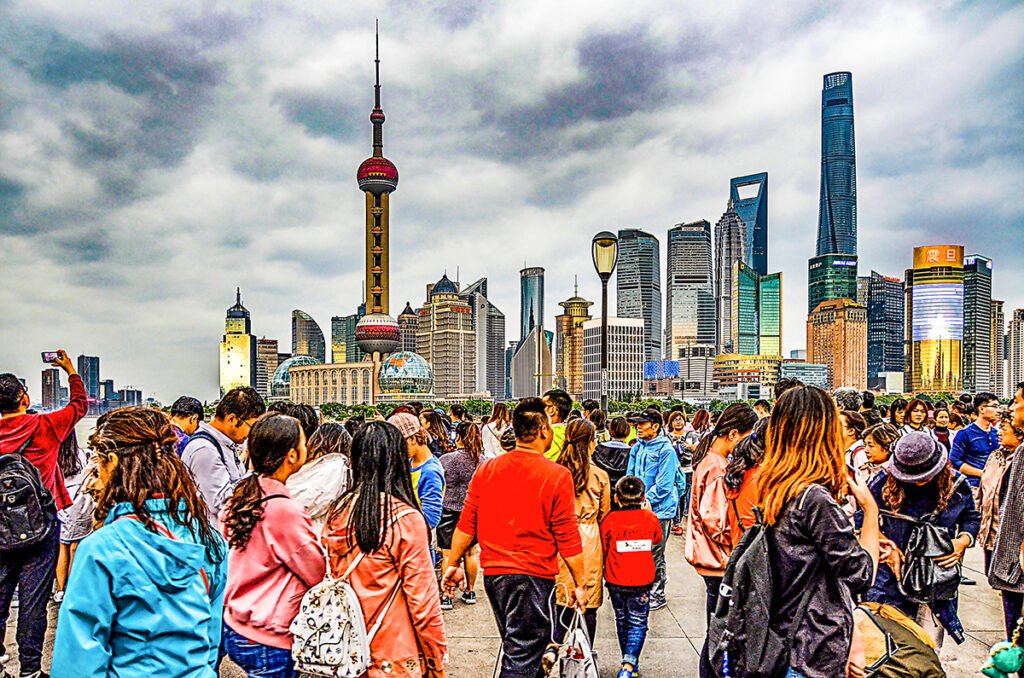
Photo from Unsplash

In recent months and fueled by mainstream and social media, we have all witnessed through media, or personally, a mass-activation of racial, national, political or economical biases by people and tribes towards others, physical attacks as well as verbal abuse.

These things will certainly not be forgotten. They will have a major impact for a long time; geopolitics and international communities will not be the same in the post-Corona era.

What could the post-Corona era look like?

I am not going to speculate here about different alternatives or pretend to have the right march forward clear in my mind but the following considerations should be kept clearly in mind during the coming time:

• The Coronavirus is drastically shaking humanity and its role on Mother Earth since recent months. Naked truths are coming out, different people and tribes are pushed to corners, baring and unfolding primal instincts and cognitive biases as the pandemic does not allow people to take theie time anymore for diplomatic or political considerations.

The Coronavirus is certainly happy with the miserable disaster created by how humanity is tackling the pandemic as they waste a lot of time tackling each other without a unified battle strategy with shared resources as one humanity.

People do close – but should not close – their eyes to the symptoms and changes appearing in front of us during the pandemic which unconditionally demands a trustful, transparent, respectful and equal collaboration of humankind all over the world.
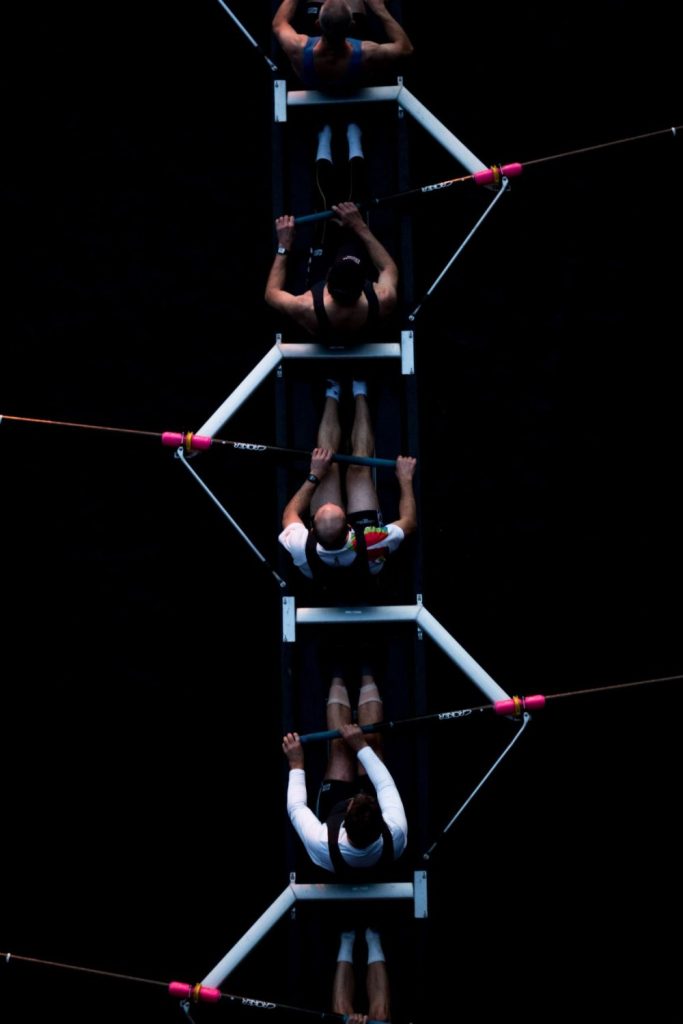
Photo from Unsplash

This collaboration of humankind requires a huge and unprecedented effort by humanity to organize themselves as one determined species for survival, equality and harmony. Unprecedented efforts in mutual solidarity, sacrifice, adaptation, cross-cultural intelligence, co-existence, acceptance and respect with the objective to settle on synergistic common grounds which affect all of us worldwide.

One might claim that these demands for humanity are exaggerated for this pandemic. But the coronavirus is just a ‘small’ trigger for testing humanity in which ‘only’ a unified and solidary defense against a common enemy is needed.

In a natural sense, it would be expected that a common enemy would bring humanity together in defence, but paradoxically the common enemy is rapidly exposing the vulnerability and weakness of humanity.

The real battles lie in front of us; economic hardship and transformation while the environment is also knocking on the doors of humanity demanding full sustainability and respect with immediate notice.
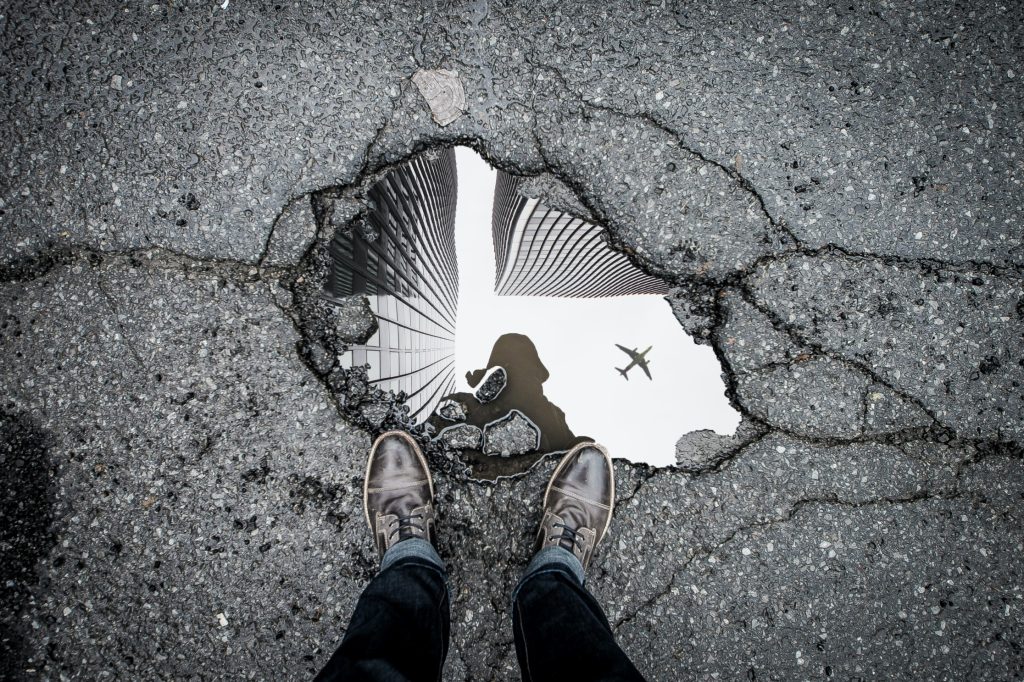
Photo from Unsplash

As people are not even being able to handle the pandemic efficiently as one species, drifting apart with senses of hostility and separation, how can we expect to be able to handle bigger future battles in which humanity needs to be pro-active towards themselves and stand as one instead of being defensive against a common enemy?

Economic hardships, changing geopolitical perspectives, tribes decoupling in the short term, politically and economically selfish visions and narcissism, senses of hostility and racism – all are symptoms which humanity has seen before on similar crossroads in history leading to unimaginable man-made disasters against themselves.

Yes, we are talking about the possibility of war here, and to be clear not about a trade war.

Photo from Unsplash

People seem to subconsciously forget history, hide their fears for the worst by telling it is not that bad and this can never happen to us humans today.

But today’s symptoms are stronger than ever having been in similar historical crash roads which had lead to man-made human disasters.

It only takes a little spark by the size of a match.

OK, this for the worst-case thoughts. I think it is very important that the word war is being spoken out as it is a reality looking at human history and today’s symptoms. Dialoguing with each other about the possibility and danger of war might decrease the risk and enhance the chances of collaboration.

International media and politicizing entities are bashing around about all the symptoms but the discussions about possible outcomes are carefully avoided.

How could we create a better post-corona era than the old world?

Collaboration, collaboration… and more collaboration with mutual solidarity, understanding, respect and acceptance in a peaceful co-existence. People, governments and societies need to change drastically and adapt to a new world where environment is being respected, basic human rights are being respected (as laid upon in UDHR – United Declaration of Human Rights), and different cultures within the framework are being respected.

Cross-cultural competence and Social Intelligence.

Crucially important is being able and human enough to support and sacrifice for others without conditions but solely for the strength and respect of being human.

Photo by the author

If this would not be possible and no more true inspirational and respected leadership would pop up within the current traditional configuration of national governments and international global agencies, people should be looking into developing new ecosystems with possible new economic and sustainable processes and social environments.

This can either go in harmony with traditional borders or otherwise some traditional borders might become irrelevant in time.

To put it crudely:

There is no going back to normal! And we should not want to go back to normal.

Immense challenges with immense opportunities and risks are laying ahead of humanity. And not very far away.

It is up to us whether to make the world a better place as a whole but it requires drastic change and adaptation from all of us.

It requires unconditional mutual solidarity and sacrifices to tackle a) the virus and – more radically thereafter – b) the economic hardship (with possibly changing, disrupting models for more equality and poverty reduction) and c) the environmental degradation. And the last-mentioned is not a pandemic curve but a straight line moving fast and steep downwards, dragging humanity down with it.

Challenging times ahead! Are we up for this?

杜墨 Gordon Dumoulin

Beijing, April 2020

‘Reboot and critical update for 20th century humanity in the 21th century world’

#reboothumanity #reboothumanity2020 #reboot2020 #reboothumanintelligence #humanitycriticalupdate

About Reboot Humanity

REBOOT Humanity • Critical update 2020 (RHC) is a think tank initiative aiming to raise questions and considerations from a pure humanity perspective. Independent from currently embedded systems, processes, cultures or politics, RHC is looking into the human intelligence software which is all about economic and social processes, cross-cultural competences and the role and compatibility of humanity in relation to the hardware; among others the environment and technology. 

Recent developments in past decades such as environmental degradation and economic and social tensions – and now adding the coronavirus pandemic impact on humanity – emphasizes the need for a reboot and for critical updates of the software on which humanity operates.

If you find thoughts like these important – perhaps necessary – reward TFF for making them available to you. Just like a cup of coffee…

[paypal-donation]
No data was found

Share

Leave a Reply

Your email address will not be published. Required fields are marked *

Related Posts

Officially, the drones were not identified. By simply thinking critically – which journalists and selected experts no longer do – there may be a good reason for that. And this article will never be mentioned in Denmark… Drones over Denmark. No damage. No trace. No answers. Yet the headlines scream “Russian threat,” and Prime Minister Mette Frederiksen speaks with a certainty that defies logic: “We don’t know they were Russian—but we know Russia is the biggest threat to Europe.” It could be nobody else – unless you make an interest analysis which I did two days ago. This is not security policy. It’s theatre. And the audience is being played. Let’s rewind. These drones—unphotographed, untracked, unclaimed—appear and vanish like ghosts. Airports shut down. Panic spreads. Military budgets swell. And the narrative hardens: Russia is behind it. But what if that’s not just wrong but deliberately misleading? Here’s a hypothesis for...
And why the world, especially the EU, must now declare itself independent of the United States. UN’s 80th anniversary This year, the United Nations celebrates the 80th anniversary of its founding. The UN was formed after the scourge of the Second World War, in which 70 to 85 million people were killed and many countries were destroyed. That war came on the heels of the First World War, which also killed between 15 and 22 million people. After the Second World War, especially after the use of nuclear weapons by the United States, which marked a turning point in the history of warfare that could result in the end of civilisation as we know it, humanity decided to move away from the era of empires and big power politics and usher in a new era of peace, freedom and cooperation. These were the principles enshrined in the UN Charter. The United States...
Drones over Nordic airports. No damage. No trace. No answers. Most assume Russia—but what if that’s not so? Why is there so much we are not told? This article explores the strategic ambiguity behind recent drone incursions and asks: Who else might benefit from sending drones into NATO airspace? From Ukraine’s surprising drone supremacy to Russia’s possible signalling, the silence itself may be the loudest message. These are the kinds of questions decent, intelligent investigative journalists and commentators could easily research. Why don’t they? Did you, dear reader, know or think of this? That the most powerful weapon in today’s conflicts might be the one that leaves no trace – and no answers. Just enough fear to justify the next move? Recently, drones have repeatedly appeared over Nordic airports and near some military facilities. They cause no damage – for which reason the designation “hybrid attack” is misleading but serves a purpose. These...

Recent Articles

Gandhi, Arun. Lord Richard Attenborough. Kasturba: a lifeNew Delhi: Penguin Books Ltd., 2000.315 pp, 295 Indian Rs, US $22.51 January 29, 2002 Arun Gandhi, grandson to Mohandas and Kasturba, has written a thorough account of Kasturba’s life. Arun begins with a description of Kasturba’s childhood in Porbandar in the late1800s, before she met Mohandas. By having chosen to embark on difficult research into his grandmother’s life, including her first years which are not well-documented, Arun ensures that the reader receives an intimate and life-long portrait of this amazing woman. Kasturba is presented as a lively woman &endash; obedient, yet with a mind of her own. As the relationship between Kasturba and Mohandas developed, Arun maintains that Kasturba’s influence over Mohandas in her own quiet way also grew, to which some of Mohandas’ writings also attest.  Arun paints a vivid picture of the beginnings of Mohandas’ non-violence movement in South Africa, a...
In response to an urgent Appeal from all the living Nobel Peace Prize Laureates, the General Assembly of the United Nations, on November 1998, unanimously declared the first decade of the twenty-first century to be The Decade for a Culture of Peace and Nonviolence. While people are naturally concerned about the amount of violence in our world and how it threatens our future, the Nobel Laureates are right to remind us of the potential of nonviolence and our calling to build a culture of peace and nonviolence.  The twentieth century is instructive in the way that the philosophy and practice of nonviolence have begun to flourish and in the way that nonviolent movements have had an exponential growth across the world. Mohandas Gandhi and Martin Luther King, Jr. are the most famous nonviolent leaders but many have built upon the paths they charted as in country after country, tyrannies and...
We know that medical personnel have failed to report to higher authorities wounds that were clearly caused by torture and that they have neglected to take steps to interrupt this torture. In addition, they have turned over prisoners’ medical records to interrogators who could use them to exploit the prisoners’ weaknesses or vulnerabilities. We have not yet learned the extent of medical involvement in delaying and possibly falsifying the death certificates of prisoners who have been killed by torturers. A May 22 article on Abu Ghraib in the New York Times states that “much of the evidence of abuse at the prison came from medical documents” and that records and statements “showed doctors and medics reporting to the area of the prison where the abuse occurred several times to stitch wounds, tend to collapsed prisoners or see patients with bruised or reddened genitals.” http://www.truthout.org/docs_04/080604J.shtml#16 According to the article, two doctors who...

TFF on Substack

Discover more from TFF Transnational Foundation & Jan Oberg.

Most Popular

Gandhi, Arun. Lord Richard Attenborough. Kasturba: a lifeNew Delhi: Penguin Books Ltd., 2000.315 pp, 295 Indian Rs, US $22.51 January 29, 2002 Arun Gandhi, grandson to Mohandas and Kasturba, has written a thorough account of Kasturba’s life. Arun begins with a description of Kasturba’s childhood in Porbandar in the late1800s, before she met Mohandas. By having chosen to embark on difficult research into his grandmother’s life, including her first years which are not well-documented, Arun ensures that the reader receives an intimate and life-long portrait of this amazing woman. Kasturba is presented as a lively woman &endash; obedient, yet with a mind of her own. As the relationship between Kasturba and Mohandas developed, Arun maintains that Kasturba’s influence over Mohandas in her own quiet way also grew, to which some of Mohandas’ writings also attest.  Arun paints a vivid picture of the beginnings of Mohandas’ non-violence movement in South Africa, a...
In response to an urgent Appeal from all the living Nobel Peace Prize Laureates, the General Assembly of the United Nations, on November 1998, unanimously declared the first decade of the twenty-first century to be The Decade for a Culture of Peace and Nonviolence. While people are naturally concerned about the amount of violence in our world and how it threatens our future, the Nobel Laureates are right to remind us of the potential of nonviolence and our calling to build a culture of peace and nonviolence.  The twentieth century is instructive in the way that the philosophy and practice of nonviolence have begun to flourish and in the way that nonviolent movements have had an exponential growth across the world. Mohandas Gandhi and Martin Luther King, Jr. are the most famous nonviolent leaders but many have built upon the paths they charted as in country after country, tyrannies and...
We know that medical personnel have failed to report to higher authorities wounds that were clearly caused by torture and that they have neglected to take steps to interrupt this torture. In addition, they have turned over prisoners’ medical records to interrogators who could use them to exploit the prisoners’ weaknesses or vulnerabilities. We have not yet learned the extent of medical involvement in delaying and possibly falsifying the death certificates of prisoners who have been killed by torturers. A May 22 article on Abu Ghraib in the New York Times states that “much of the evidence of abuse at the prison came from medical documents” and that records and statements “showed doctors and medics reporting to the area of the prison where the abuse occurred several times to stitch wounds, tend to collapsed prisoners or see patients with bruised or reddened genitals.” http://www.truthout.org/docs_04/080604J.shtml#16 According to the article, two doctors who...
Read More
Imagen-thumbnail-The-Transnational-1
Gandhi, Arun. Lord Richard Attenborough. Kasturba: a lifeNew Delhi: Penguin Books Ltd., 2000.315 pp, 295 Indian Rs, US $22.51 January 29, 2002 Arun Gandhi, grandson to Mohandas and Kasturba, has written a thorough account of Kasturba’s life. Arun begins with a description of Kasturba’s childhood in Porbandar in the late1800s, before she met Mohandas. By having chosen to embark on difficult research into his grandmother’s life, including her first years which are not well-documented, Arun ensures that the reader receives an intimate and life-long portrait of this amazing woman. Kasturba is presented as a lively woman &endash; obedient, yet with a mind of her own. As the relationship between Kasturba and Mohandas developed, Arun maintains that Kasturba’s influence over Mohandas in her own quiet way also grew, to which some of Mohandas’ writings also attest.  Arun paints a vivid picture of the beginnings of Mohandas’ non-violence movement in South Africa, a...
Imagen-thumbnail-The-Transnational-1
In response to an urgent Appeal from all the living Nobel Peace Prize Laureates, the General Assembly of the United Nations, on November 1998, unanimously declared the first decade of the twenty-first century to be The Decade for a Culture of Peace and Nonviolence. While people are naturally concerned about the amount of violence in our world and how it threatens our future, the Nobel Laureates are right to remind us of the potential of nonviolence and our calling to build a culture of peace and nonviolence.  The twentieth century is instructive in the way that the philosophy and practice of nonviolence have begun to flourish and in the way that nonviolent movements have had an exponential growth across the world. Mohandas Gandhi and Martin Luther King, Jr. are the most famous nonviolent leaders but many have built upon the paths they charted as in country after country, tyrannies and...
Imagen-thumbnail-The-Transnational-1
We know that medical personnel have failed to report to higher authorities wounds that were clearly caused by torture and that they have neglected to take steps to interrupt this torture. In addition, they have turned over prisoners’ medical records to interrogators who could use them to exploit the prisoners’ weaknesses or vulnerabilities. We have not yet learned the extent of medical involvement in delaying and possibly falsifying the death certificates of prisoners who have been killed by torturers. A May 22 article on Abu Ghraib in the New York Times states that “much of the evidence of abuse at the prison came from medical documents” and that records and statements “showed doctors and medics reporting to the area of the prison where the abuse occurred several times to stitch wounds, tend to collapsed prisoners or see patients with bruised or reddened genitals.” http://www.truthout.org/docs_04/080604J.shtml#16 According to the article, two doctors who...
Imagen-thumbnail-The-Transnational-1
Jan Øberg behandler i artiklen en lang række faktorer, som ligger til grund for den måde vores samfund er organiseret på – og derfor også for konflikter. Artiklen introducerer således sammenhængen mellem familien, foreninger, regeringer, NGO’ er, nation, stat, nationalstat og alliancer for på denne måde bedre at kunne forstå konflikter og i sidste ende blive klogere mht. at løse disse. Øberg, der er fortaler for global bevidsthed, hvilket skal ses i lyset af den øgede globalisering, skelner mellem kulturkamp og kulturdialog. Endelig behandles begrebet magt og magtesløshed: giver magt ret til at udøve magt – fordi man mener at have ret? Litteraturliste og arbejdsspørgsmål efter artiklen. Ordene vi bruger om verden I satellitperspektiv kan man godt tale om den menneskelige familie eller menneskeheden. Udtrykket understreger, at der eksisterer – eller burde eksistere – et fællesskab fordi vi alle er mennesker og sammen bebor denne klode og ingen anden. Og...
Imagen-thumbnail-The-Transnational-1
Kapitel 2: Forskellige sider af Europa og USA…fortsat 2.5 Militære relationer I forbifarten har vi allerede sagt nogle ting om USA’s militære situation. Kig lige en gang til på afsnit 2.3. Nu skal vi uddybe det militære forhold mellem USA og EU. Der er en række ligheder mellem visse europæiske landes og USA’s militær. Næsten alle er med på en eller anden måde i NATO, direkte som medlem – selv Island, der ikke har et forsvar – eller indirekte i Partnerskab for Fred. USA og Canada er med i OSCE (på dansk OSSE), Organisationen for Sikkerhed og Samarbejde i Europa, der tæller over 50 lande. USA samt England og Frankrig er kernevåbenstater og de har styrker til intervention langt borte fra hjemlandet, om end USA’s er tifold større. Alle har også en omfattende våbeneksport og bruger den som et middel til at tjene penge og få loyale venner på, det...
Imagen-thumbnail-The-Transnational-1
Background Christian Harleman and Jan Oberg conducted a fact-finding mission to Burundi between November 26 and December 6, 2003. (See websites about the country here). The first TFF mission took place in March 1999. Unfortunately, since then it has not been practically possible to implement the co-operation with Burundi’s Ministry of Education and Burundian NGOs that was planned at the time. The 2003 mission had three purposes. First, to do fact-finding in general about the situation and, in particular, the progress under the Arusha Peace Process. Second, to explore the possibilities for co-operation between the government and relevant NGOs on the one hand and TFF on the other, in order to develop and deepen the existing competence in fields such as conflict-understanding, reconciliation and peace-building. Finally, third, to find out whether it would be possible, in co-operation with the Swedish Rescue Services Agency (Statens Räddningsverk), to establish a health care unit that...