America's solitary foreign policy

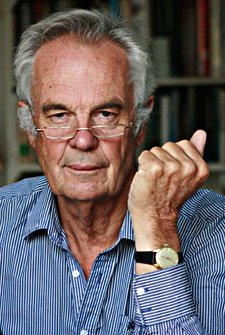
The greatest American foreign affairs columnist since Walter Lippmann was William Pfaff of The International Herald Tribune. He wrote in his path-breaking book, “Barbarian Sentiments” that the US political atmosphere was full of “exhausted ideas, like a dead star”.

Nevertheless, “these ideas remain central to the way certain subjects are discussed and to the formulation of national policy. These are ideas that people want or need to be true”.

I was told by the editorial page editor, Serge Schmemann, that when the New York Times bought the Herald Tribune the paper decided to cut back on printing Pfaff after 20 years of using him because he was considered anti-American – which, ironically, was one indication that he was right in his diagnosis.

Freud reminded us in his “Civilization and its Discontents”, that we should “familiarize ourselves with the idea that there are difficulties attaching to the nature of civilization which will not yield to any attempt at reform”.

So it is in America. As Irving Kristol has said, the task of the neo-conservative intellectuals, who have been a major influence on foreign policy over the last 40 years, is “to explain to the American people why they are right and to the intellectuals why they are wrong”.

That is the easy way out of Freud’s dilemma. For those who disagree with them, it is very much harder.

In such a political climate what hope is there for fresh ideas? As Pfaff has written, “In place of a re-examination of the old liberal political ideas, there is, in essential respects, their reiteration”.

Hence the failure of President Barack Obama and the probable failure of Joe Biden if and when he becomes president. Obama at the onset of his eight-year presidency said changing policy was like a large oil tanker making a U-turn at sea – it would take a long time to accomplish. But he never achieved that.

He may have damped down the US instinct to intervene in foreign countries, but even he stepped up the number of troops in Afghanistan when failure was obvious, intervened in Libya and helped the French overthrow Muammar Gadhaffi, precipitating a civil war and chaos the country had never known, and failed to put right in Iraq what his predecessor, George W. Bush, had rent asunder.

Biden will probably not much change the course from Obama’s day although he certainly will not emulate President Donald Trump. What sentimental and self-aggrandizing ideas the American culture displays! America is not the norm in the world despite it thinking that about itself for 200 years or more.

Only Bernie Sanders or Elizabeth Warren would try to do undo that – and even they reiterate the negative sentiments on Russia and China so common in American political discourse. “America’s problem is how to free itself from the grip of its exhausted ideas”, writes Pfaff.

If it can, there will be no more failed wars like Korea, Vietnam, Iraq, Afghanistan, Libya plus its confrontation with Cuba, all of which the US lost and chose to withdraw from with its tail between its legs.

The US could even become friends with Russia, Iran and China again. Vladimir Putin, as did Mikhail Gorbachev, wanted at one time to see created “a common European house”. This might well have evolved into membership of the European Union.

But America forestalled that possibility with its expansion of NATO, done with the connivance of its weak-kneed European allies who in their hearts didn’t fully agree with Washington’s policies but went along with them for the sake of NATO unity – a mistake of historical proportions, as Zbigniew Brzezinski argued.

Before the deed was done, a big majority of America’s top academic political scientists said this in a letter to President Bill Clinton, the architect of NATO’s expansion up to Russia’s borders but he did not listen.

In foreign policy Clinton was not a liberal Democrat, he was a neo-conservative. Ill-fortune shows her power, wrote Machiavelli, when no wise measures are taken to resist her.

A conciliatory Russia or China could ameliorate this. But it probably won’t happen until Europe takes the first step forward. European thoughts are not American thoughts.

Europe still has, somewhere buried in its soul and religious foundations, in its architecture, paintings, literature and music (both classical and popular – from Tchaikovsky to Paul McCartney) a very different way of looking at the world.

Europe has learnt the hard way with its world wars that state violence exacts a terrible, blood-soaked, cost. Hence the creation of the European Union, a successful attempt via the means of economic, financial and social policy to bring out the best in European/Christian political thought – the binding together of former war-like nations into a peaceful whole.

America is too complacent about Europe. Europeans are waking up to seeing that NATO’s policy towards Russia has done great harm. They have felt compelled to oppose the excesses of US power as exemplified in the persona of Donald Trump.

The post-war relationship between the US and Europe has changed and will doubtlessly continue to be a distancing from Washington’s viewpoint, once he is gone.

Once the Europeans decide to part from America on the big political issues – as they have already on Iraq, Afghanistan, Iran and Yemen (and as a generation ago they did on Vietnam), the relationship with Russia will undergo a major defrosting.

America should not be complacent about European attitudes. We can already see this evolution of Europe’s posture in President Emmanuel Macron of France and, to a lesser extent, in Chancellor Angela Merkel of Germany.

America’s Manifest Destiny is coming to its end.

If you think this article was useful, reward TFF with a dollar or two

[paypal-donation]

Foreign affairs columnist, film-maker and author

Share

Leave a Reply

Your email address will not be published. Required fields are marked *

Related Posts

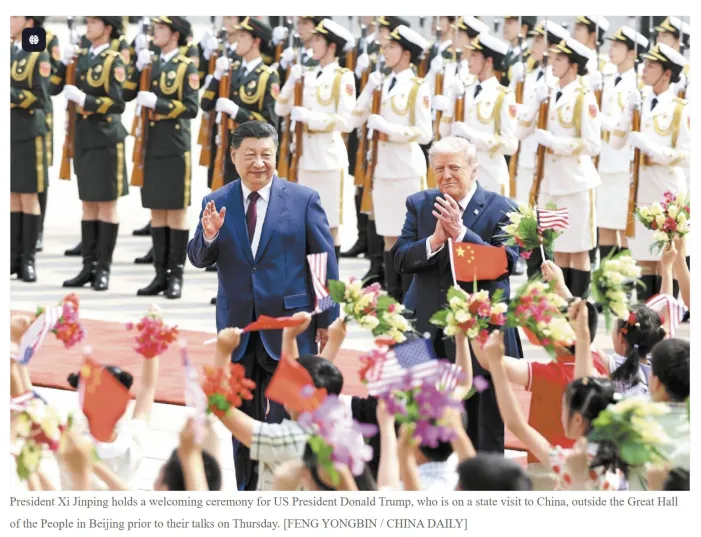
Jan Oberg May 15, 2026 Go to this Fox News page and scroll the whole way down: President Donald Trump tells the world that his meeting with President Xi Jinping yielded a lot of very concrete political and economic results – of course, only where the Chinese side, according to him, agreed with him. He does not mention the Taiwan issue, but Secretary of State, Marco Rubio, says that it did not feature prominently in their talks and that the US policy on Taiwan has not changed. Then go to China Daily – or Global Times – and you will see that for the Chinese it is framework, principles, structure of cooperation etc. that matters – all embedded in the overall idea of “constructive bilateral relationship of strategic stability.” Nowhere is any concrete agreement or deal – all that Trump refers to – mentioned. At the general level, this gives you insights into the very different social...
The MIMAC – Military-Industrial-Media-Academic Complex – drives the world’s rampant militarism and wars without end. Here is a short reflection of how it works against all interests of humanity. #5 deals with why there is no real enemy or threat images/analysis. It’s all ex-post constructions. And, btw, theTFF Peace Pulse is now on Rumble.
Jan Oberg, TFF director April 28, 2026 In this third TFF Peace Pulse, I make the important distinction between the violence and the conflict that violence is a symptom of. If you want peace, focus on the underlying conflict because that is the key to resolution, peacemaking, and a better future for the parties. The West is obsessed with violence, just look around you – and 90+ per cent of the public debate is about military issues and other violence – totally wasted for peace. These Peace Pulses will only be published here a few times. You will also not find them on YouTube and Vimeo because both platforms have blocked TFF and me; you know, peace is dangerous these days. Most TFF’s videos since 2007 are now on Rumble.

Recent Articles

Jan Oberg May 15, 2026 Go to this Fox News page and scroll the whole way down: President Donald Trump tells the world that his meeting with President Xi Jinping yielded a lot of very concrete political and economic results – of course, only where the Chinese side, according to him, agreed with him. He does not mention the Taiwan issue, but Secretary of State, Marco Rubio, says that it did not feature prominently in their talks and that the US policy on Taiwan has not changed. Then go to China Daily – or Global Times – and you will see that for the Chinese it is framework, principles, structure of cooperation etc. that matters – all embedded in the overall idea of “constructive bilateral relationship of strategic stability.” Nowhere is any concrete agreement or deal – all that Trump refers to – mentioned. At the general level, this gives you insights into the very different social...
Lena Petrova of “World Affairs In Context” with more than half a million subscribers on YouTube wanted to explore what a peace researcher like me has to say about, among other things, the First and the Second Cold War and why eethics has disappeared from politics. I am particularly happy about this conversation that also yielded an amazing number of very appreciative comments on YouTube. No doubt, people are longing for alternatives, including peace perspectives.
The MIMAC – Military-Industrial-Media-Academic Complex – drives the world’s rampant militarism and wars without end. Here is a short reflection of how it works against all interests of humanity. #5 deals with why there is no real enemy or threat images/analysis. It’s all ex-post constructions. And, btw, theTFF Peace Pulse is now on Rumble.

TFF on Substack

Discover more from TFF Transnational Foundation & Jan Oberg.

Most Popular

Jan Oberg May 15, 2026 Go to this Fox News page and scroll the whole way down: President Donald Trump tells the world that his meeting with President Xi Jinping yielded a lot of very concrete political and economic results – of course, only where the Chinese side, according to him, agreed with him. He does not mention the Taiwan issue, but Secretary of State, Marco Rubio, says that it did not feature prominently in their talks and that the US policy on Taiwan has not changed. Then go to China Daily – or Global Times – and you will see that for the Chinese it is framework, principles, structure of cooperation etc. that matters – all embedded in the overall idea of “constructive bilateral relationship of strategic stability.” Nowhere is any concrete agreement or deal – all that Trump refers to – mentioned. At the general level, this gives you insights into the very different social...
Lena Petrova of “World Affairs In Context” with more than half a million subscribers on YouTube wanted to explore what a peace researcher like me has to say about, among other things, the First and the Second Cold War and why eethics has disappeared from politics. I am particularly happy about this conversation that also yielded an amazing number of very appreciative comments on YouTube. No doubt, people are longing for alternatives, including peace perspectives.
The MIMAC – Military-Industrial-Media-Academic Complex – drives the world’s rampant militarism and wars without end. Here is a short reflection of how it works against all interests of humanity. #5 deals with why there is no real enemy or threat images/analysis. It’s all ex-post constructions. And, btw, theTFF Peace Pulse is now on Rumble.
Read More
Screenshot-2026-05-15-103534
Jan Oberg May 15, 2026 Go to this Fox News page and scroll the whole way down: President Donald Trump tells the world that his meeting with President Xi Jinping yielded a lot of very concrete political and economic results – of course, only where the Chinese side, according to him, agreed with him. He does not mention the Taiwan issue, but Secretary of State, Marco Rubio, says that it did not feature prominently in their talks and that the US policy on Taiwan has not changed. Then go to China Daily – or Global Times – and you will see that for the Chinese it is framework, principles, structure of cooperation etc. that matters – all embedded in the overall idea of “constructive bilateral relationship of strategic stability.” Nowhere is any concrete agreement or deal – all that Trump refers to – mentioned. At the general level, this gives you insights into the very different social...
Screenshot-2026-05-12-104023
Lena Petrova of “World Affairs In Context” with more than half a million subscribers on YouTube wanted to explore what a peace researcher like me has to say about, among other things, the First and the Second Cold War and why eethics has disappeared from politics. I am particularly happy about this conversation that also yielded an amazing number of very appreciative comments on YouTube. No doubt, people are longing for alternatives, including peace perspectives.
Screenshot-2026-04-13-154551 (2)
The MIMAC – Military-Industrial-Media-Academic Complex – drives the world’s rampant militarism and wars without end. Here is a short reflection of how it works against all interests of humanity. #5 deals with why there is no real enemy or threat images/analysis. It’s all ex-post constructions. And, btw, theTFF Peace Pulse is now on Rumble.
Screenshot-2026-04-13-154551 (1)
Jan Oberg, TFF director April 28, 2026 In this third TFF Peace Pulse, I make the important distinction between the violence and the conflict that violence is a symptom of. If you want peace, focus on the underlying conflict because that is the key to resolution, peacemaking, and a better future for the parties. The West is obsessed with violence, just look around you – and 90+ per cent of the public debate is about military issues and other violence – totally wasted for peace. These Peace Pulses will only be published here a few times. You will also not find them on YouTube and Vimeo because both platforms have blocked TFF and me; you know, peace is dangerous these days. Most TFF’s videos since 2007 are now on Rumble.
Screenshot-2026-04-13-154551
In contrast to most, we’ll bring alternatives, solutions, hope and strategies for a better future. Times are dangerous, yes, but that only intensifies the need for constructive thinking and action! Jan Oberg, TFF director April 13, 2026 The new TFF Peace Pulse uses video messages in a new way: Max 3-5-minute-long comments, ideas or perhaps mini-lectures, all about peace – positive peace. We launch them today on April 13, 2026 with a carefully crafted visual aesthetic fitting the content. We hope to publish them regularly from now on. We launch Peace Pulse (PP) – for a number of reasons. The world is in chaos, and there are countless reasons to feel concerned, frustrated, even angry. The atmosphere is saturated with doom and gloom, with negative energy and rear‑mirror thinking, while vision, imagination, alternatives, strategies and genuine future‑mindedness remain in short supply. And without them, we simply can’t save the world. Looking at problems from a hundred angles will...
IMG_5165 (1)
PART II — Publishing Peace in a System That Prioritises Militarism Jan Oberg, TFF director April 10, 2026 How TFF Maintains a Daily Voice in a Digital World Built for Noise This article is part of the series “TFF at 40″ and it invites you to learn about Four Decades of Publishing Peace. It takes a look at how a small, people‑financed peace foundation has communicated across four generations of technology — from wax stencils and fax machines to mass email and Substack — and why TFF continues to publish every single day in a system that rewards noise, conflict, and militarism. ◆ What it means to publish peace every single day in a digital system built for 24/7 news and other noise, confrontation, and militarism. How TFF’s independence, continuity, and global readership defy algorithms, donor cycles, and Western media censorhip — and why the Majority World keeps listening. When the...