
On 41st Anniversary, has Trump’s belligerence strengthened the Iranian government?

Oxford, UK (Special to Informed Comment) – On February 11, 2020, the Islamic Republic of Iran marks the 41st anniversary of the victory of the Islamic Revolution. Thus, it has defied the Trump administration’s prediction of its demise for two years beyond its allotted time.

In his speech at a conference of the MEK (Mojahedin-e Khalq or People’s Jihadis) in 2017, for which he received huge fees, the former National Security Advisor John Bolton said: “The outcome of the president’s policy review should be to determine that the Ayatollah Khomeini’s 1979 revolution will not last until its fortieth birthday…and that is why before 2019 we here will celebrate in Tehran.”[1]

In 2018 President Trump’s personal lawyer Rudy Giuliani also predicted: “Freedom is right around the corner … next year I want to have this convention in Tehran.”[2]

The Secretary of State Mike Pompeo and his neocon allies have tried very hard to fulfill those wishes and to bring about regime change in Iran before its 40th anniversary. To this end, they have implemented a policy of “maximum pressure” and have imposed unprecedented illegal sanctions in violation of the unanimously approved U.N. National Security Council Resolution 2231 that lifted all the earlier sanctions on Iran as part of the nuclear deal (Joint Comprehensive Plan of Action or JCPOA).

The nuclear deal was reached between Iran and the United States, and all other permanent members of the Security Council, plus Germany (5+1). The deal was also unanimously endorsed by the European Union Commission.

After President Trump violated the nuclear deal (there is no clause in it allowing one side to withdraw unilaterally) on 18 May 2018, Iran continued to abide by it for a whole year. The International Atomic Energy Agency (IAEA), which is in charge of supervising the deal, in 15 separate quarterly reports – five of them since President Trump came to power – has confirmed that Iran had faithfully carried out all her obligations under the deal. As late as last week, the IAEA stated that there had been no violations of the nuclear deal.[3]

A year after US withdrawal from the deal when Iran continued to be deprived of the economic benefits to which she was entitled, the Iranian president announced that Iran would take incremental steps to reduce her obligations under the deal, unless other parties fulfilled their commitments. Although all the steps that Iran has taken so far have been in keeping with the JCPOA, under the IAEA supervision and are reversible, they have been portrayed by US officials as major violations of the deal, and they have continued to increase the sanctions on Iran.

The other signatories to the deal criticised President Trump for his violation of the deal and promised to remain faithful to it. The EU3 (the United Kingdom, France and Germany) tried very hard to keep the deal alive by devising the INSTEX mechanism to facilitate trade with Iran.[4]

However, in view of US pressure and the dominant role that the US dollar plays as an international currency, all their efforts have proved futile. US sanctions amount to a virtual siege or blockade, which is an act of war. Not only have they drastically cut Iran’s oil exports which form a large part of the government budget, they have also prevented Iranian banks and industries engaging in normal business with the rest of the world.

This is on top of the United States blocking Iranian nationals from visiting the United States, and even detaining many Iranian US residents or Green Card holders for hours of questioning at the borders before readmitting them to the United States.

Contrary to the claims of US officials, the sanctions have also blocked the sale of food and medicine to Iran, despite the fact that there is no explicit restriction against them. However, due to the difficulty of banking transactions, in practice, Iranians cannot even import much-needed medicine.

Recently, the Swiss government suggested a new package to sell some $2.3 million worth of medicines to Iran. Even if this plan is implemented it is a drop in the ocean.[5] Before, the imposition of the sanctions, Iran imported more than $3.5 billion worth of medicines a year.

If there were any doubts about President Trump’s real motivation for violating the nuclear deal with all its grave consequences, his remarks at the ceremony unveiling the so-called “Deal of the Century” made his motives absolutely clear. Trump did not violate a truly remarkable non-proliferation agreement that could have acted as a model for other similar deals because it was in any way defective or did not prevent Iran from ever manufacturing a nuclear bomb. The main aim was to help his friend Benjamin Netanyahu in his vendetta against Iran.

When the nuclear deal was being negotiated under President Obama, Netanyahu addressed a joint session of Congress to kill the main foreign policy initiative of a sitting president, and he received dozens of standing ovations for this act of discourtesy. He did not get his way then, but as the Trump administration came to power, surrounded by strong supporters of Israel, including many Christian Zionists, Netanyahu found a unique opportunity to achieve his goal.

Standing next to Netanyahu at that ceremony, Trump said: “As everyone knows, I have done a lot for Israel: moving the United States Embassy to Jerusalem; recognizing — (applause) –- recognizing the Golan Heights — (applause) — and, frankly, perhaps most importantly, getting out of the terrible Iran nuclear deal.”[6] So, it is clear what was the real reason behind violating the nuclear deal.

The US’s withdrawal from the nuclear deal and the policy of “maximum pressure” on Iran has had a number of other grave consequences. It has put Iran and the United States on a path to war. In May 2019, there were attacks on four ships in the Indian Ocean, and the US said that it was highly likely that Iran was behind those attacks.

When, as directed by former National Security Advisor John Bolton, British marines boarded and stopped an Iranian tanker near Gibraltar for allegedly transporting oil to Syria, Iranian revolutionary guards seized the British-flagged tanker Stena Impero for alleged violations near the Strait of Hormuz. Both tankers were subsequently released with their cargoes intact.

On June 19, 2019 Iran shot down an advanced US military drone, claiming that it was flying over Iranian territory, and provided the debris of the drone in its waters to prove the point. On 14 September 2019, two major Saudi oil facilities were attacked by 25 drones and cruise missiles, cutting Saudi output by half. The Houthis claimed responsibility for those attacks, but the United States again pointed the finger at Iran.

However, the most serious incidents took place in December 2019 and January 2020. After a US contractor was killed in missile attacks at a US base in Iraq, US officials blamed Kata’ib Hezbollah, which they described as “Iran-backed militia”, for the attack. In retaliation for that killing, US forces attacked three of Kata’ib bases, killing dozens and wounding dozens more. Al-Arabia has put the number of those killed at the bases at 63.[7]

Those killings gave rise to massive protests in Baghdad, including an attack on the US Embassy, which was used as an excuse to assassinate the commander of the IRGC Quds Force, General Qasem Soleimani, and the deputy leader of the Kata’ib Abu Mahdi al-Muhandis, and a few other Iraqi officials who were with them.

Millions of Iraqis and Iranians took part in the funerals of those two generals. In retaliation for Soleimani’s assassination, Iran fired two dozen missiles at two US bases in Iraq. At first, President Trump tweeted that all was well, and no one had been injured. However, gradually it transpired that a number of forces in the bases had suffered traumatic brain injuries. At first, the number was put at 11, then 34, 54, 64, but according to the latest Reuters report more than 100 US troops suffered brain injuries.[8]

Iraqi officials have recently stated that the initial attack on the US base that killed one contractor had been carried out by ISIS, not by Kata’ib forces.[9] So, it seems that the world was brought to the brink of a major war on the basis of either a deliberate lie or a misunderstanding.

It is clear that Trump’s policy of “maximum pressure”, involving crippling economic sanctions and even threats of war has not brought the Iranian government to its knees. On the contrary, it has forced Iran into the position it held prior to signing the JCPOA. Meanwhile, many Majles deputies have demanded that the government should withdraw from the NPT. That will be a very provocative move that will make the situation even worse than it is at present.

But perhaps the worst outcome of Trump’s policy towards Iran has been to undermine the position of the moderates and reformers in the Iranian government and strengthen and embolden the hardliners. On 21 February, Iranians go to the polls to elect a new Parliament or Majles. The current Majles is dominated by moderates with 120 Reformist deputies, 86 hardliners or Principlists, 10 associated Principlists, 66 independents, and five from religious minorities.

However, the hard-line Guardian Council has disqualified a large number of applicants for election, including 90 of the current 290-strong parliamentarians. Iranian President Hassan Rouhani has criticised the disqualifications, saying: “We cannot simply announce that 1,700 candidates have been approved and ignore the question of how many political groups those people represent. That’s not what an election is about.”[10] He has called on the current parliament to pass legislation limiting the vetting powers of the Guardian Council.

This issue has opened up a major rift between moderates and hardliners. The West should have supported the more moderate elements who work for reconciliation with the West and more political freedoms at home. Repressive regimes can be changed either through foreign-led military force, and we have seen the consequences of such violent actions in Iraq and Libya; or through a gradual but meaningful change from within. Iranians have shown that they are in favour of peaceful change, but the current policies of the Trump administration have made this almost impossible.

The current impasse in Iran will either result in a much more hard-line government, similar to the one led by President Mahmud Ahmadinezhad, or even in a military coup led by the IRGC. Either scenario will push back the possibility of democratization in Iran by many years, and might even lead to a devastating war. The neocons who have been pushing Trump to pursue these policies have not served him, the United States or Iran well.

The only alternative is for the United States to return to the nuclear deal, lift the sanctions and then try to reach a more comprehensive agreement with the Iranian government. The other alternative is war.

If you think this analysis gave you both knowledge and perspective…

[paypal-donation]
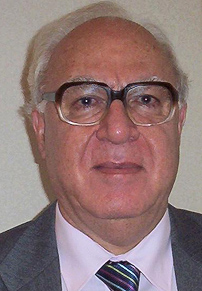
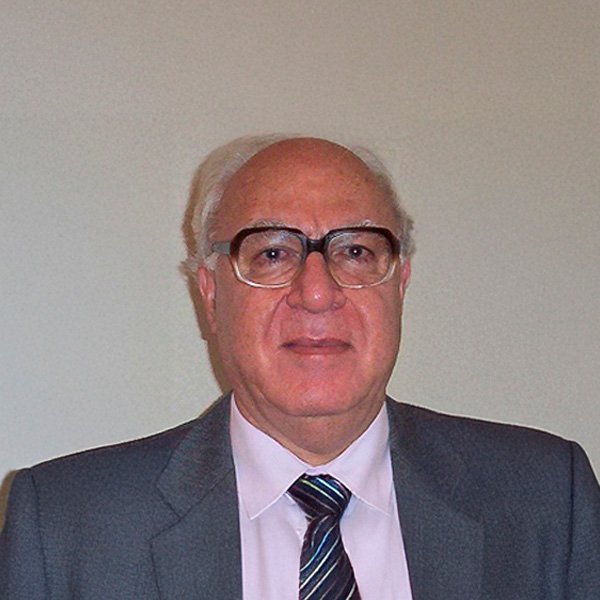
Farhang Jahanpour is a former professor and dean of the Faculty of Languages at the University of Isfahan. A British national of Iranian origins, he is a part-time tutor in the Department of Continuing Education at the University of Oxford. Follow him on Twitter at @FJShirazi
Professor Jahanpour is also a TFF Associates since many years back and a former TFF Board member.
Here his CV on TFF.

References

[1] https://www.youtube.com/watch?v=bfmLyrQ7E24]

[2] https://www.youtube.com/watch?v=6ouaJ16Lyds

[3] https://uk.reuters.com/article/uk-usa-iaea-iran/u-n-watchdog-sees-no-new-iranian-violations-of-nuclear-deal-idUKKBN1ZZ2SU

[4] https://www.dw.com/en/instex-europe-sets-up-transactions-channel-with-iran/a-47303580

[5] https://www.bloomberg.com/opinion/articles/2020-02-03/there-s-hope-for-humanitarian-trade-with-iran

[6] https://www.whitehouse.gov/briefings-statements/remarks-president-trump-prime-minister-netanyahu-state-israel-joint-statements/

[7] https://www.zeitoons.com/71386

[8] https://www.reuters.com/article/us-usa-pentagon-tbi-exclusive-idUSKBN2041ZK

[9] https://www.commondreams.org/news/2020/02/07/bombshell-iraqi-officials-say-isis-not-iran-likely-behind-rocket-attack-trump-used?cd-origin=rss&utm_term=AO&utm_campaign=Daily%20Newsletter&utm_content=email&utm_source=Daily%20Newsletter&utm_medium=Email

[10] https://www.theguardian.com/world/2020/feb/09/purge-of-reformists-in-iran-election-could-doom-nuclear-deal-say-diplomats

Share

Leave a Reply

Your email address will not be published. Required fields are marked *

Related Posts

The MIMAC – Military-Industrial-Media-Academic Complex – drives the world’s rampant militarism and wars without end. Here is a short reflection of how it works against all interests of humanity. #5 deals with why there is no real enemy or threat images/analysis. It’s all ex-post constructions. And, btw, theTFF Peace Pulse is now on Rumble.
Jan Oberg, TFF director April 28, 2026 In this third TFF Peace Pulse, I make the important distinction between the violence and the conflict that violence is a symptom of. If you want peace, focus on the underlying conflict because that is the key to resolution, peacemaking, and a better future for the parties. The West is obsessed with violence, just look around you – and 90+ per cent of the public debate is about military issues and other violence – totally wasted for peace. These Peace Pulses will only be published here a few times. You will also not find them on YouTube and Vimeo because both platforms have blocked TFF and me; you know, peace is dangerous these days. Most TFF’s videos since 2007 are now on Rumble.
In contrast to most, we’ll bring alternatives, solutions, hope and strategies for a better future. Times are dangerous, yes, but that only intensifies the need for constructive thinking and action! Jan Oberg, TFF director April 13, 2026 The new TFF Peace Pulse uses video messages in a new way: Max 3-5-minute-long comments, ideas or perhaps mini-lectures, all about peace – positive peace. We launch them today on April 13, 2026 with a carefully crafted visual aesthetic fitting the content. We hope to publish them regularly from now on. We launch Peace Pulse (PP) – for a number of reasons. The world is in chaos, and there are countless reasons to feel concerned, frustrated, even angry. The atmosphere is saturated with doom and gloom, with negative energy and rear‑mirror thinking, while vision, imagination, alternatives, strategies and genuine future‑mindedness remain in short supply. And without them, we simply can’t save the world. Looking at problems from a hundred angles will...

Recent Articles

“En dag som berättigar till fest”, utropade den London-baserade al-Quds al-Arabi efter FN:s eldupphörresolution, “eftersom detta är första gången som Israel accepterar ett FN-beslut från en position som besegrad och inte som segrare”. Att ett arabisk-israeliskt krig för en gångs skull slutat med arabisk seger, är en helt dominerade åsikt i arabiska medier. Al-Quds al-Arabi tillåter sig att drömma om att det israeliska nederlaget skall leda till massflykt från Israel. Men i nästa andetag påminner tidningen om att Israel aldrig brukar genomföra sina internationella åtaganden och varnar för att förlorarna, liksom tidigare, kan hämnas genom att provocera fram inbördeskrig i Libanon. Med tanke på de otaliga massmediala vittnesmålen om det libanesiska folkets eniga motståndskraft förefaller risken för inre stridigheter i det sargade landet just nu liten. Men visst kan man urskilja nyansskillnader i libanesiska tidningar. Vänsterorganet al-Safir uppfattar FN-resolutionen som en komplott i syfte att rädda Israel från ännu större...
Greenland – the world’s largest island, a continent of its own with only 57.000 inhabitants. I visited it for the first time in May 2005. I flew across the inland ice to Nuuk, the tiny capital with some 14.000 inhabitants. I was overwhelmed by the pride and kindness of everyone I met as well as by the unique natural beauty. Unfortunately, due to weather conditions during my ten-day stay I could get nowhere else but Nuuk. Fortunately, however, among those I met was Gitte Arvegaard, a Danish lawyer and negotiator employed by the local government, Greenland Home Rule. She turned out to be an enthusiastic photographer with a lot of pictures taken during various trips around Greenland. So this Greeland series is the result of our cooperative effort. We both hope you enjoy it and are stimulated to visit Greenland – about which you may read more here. Finally, if you want to...
 Jan Oberg’s storyof how he met Sir Paul Liverpool – where else to meet Paul McCartney? Paul’s old class mate and TFF Associate, Jonathan Power introduced me to Paul McCartney in Liverpool at an informal reception. It was held at what used to be their school, now the Liverpool Institute for Performing Arts and we were there to celebrate that Jonathan had written Amnesty International’s 40th Anniversary book. This happy event for “righting wrongs and writing songs” gave me an opportunity to meet Paul and tell him about TFF and get straight to the matter: would he consider making a donation in support of our work for peace? While I was probably the only one with such a wish that day, I was certainly not the only one who wanted to shake hands and talk with him. In the last minutes before Paul was to leave, Jonathan brought us together and we got about three...

TFF on Substack

Discover more from TFF Transnational Foundation & Jan Oberg.

Most Popular

“En dag som berättigar till fest”, utropade den London-baserade al-Quds al-Arabi efter FN:s eldupphörresolution, “eftersom detta är första gången som Israel accepterar ett FN-beslut från en position som besegrad och inte som segrare”. Att ett arabisk-israeliskt krig för en gångs skull slutat med arabisk seger, är en helt dominerade åsikt i arabiska medier. Al-Quds al-Arabi tillåter sig att drömma om att det israeliska nederlaget skall leda till massflykt från Israel. Men i nästa andetag påminner tidningen om att Israel aldrig brukar genomföra sina internationella åtaganden och varnar för att förlorarna, liksom tidigare, kan hämnas genom att provocera fram inbördeskrig i Libanon. Med tanke på de otaliga massmediala vittnesmålen om det libanesiska folkets eniga motståndskraft förefaller risken för inre stridigheter i det sargade landet just nu liten. Men visst kan man urskilja nyansskillnader i libanesiska tidningar. Vänsterorganet al-Safir uppfattar FN-resolutionen som en komplott i syfte att rädda Israel från ännu större...
Greenland – the world’s largest island, a continent of its own with only 57.000 inhabitants. I visited it for the first time in May 2005. I flew across the inland ice to Nuuk, the tiny capital with some 14.000 inhabitants. I was overwhelmed by the pride and kindness of everyone I met as well as by the unique natural beauty. Unfortunately, due to weather conditions during my ten-day stay I could get nowhere else but Nuuk. Fortunately, however, among those I met was Gitte Arvegaard, a Danish lawyer and negotiator employed by the local government, Greenland Home Rule. She turned out to be an enthusiastic photographer with a lot of pictures taken during various trips around Greenland. So this Greeland series is the result of our cooperative effort. We both hope you enjoy it and are stimulated to visit Greenland – about which you may read more here. Finally, if you want to...
 Jan Oberg’s storyof how he met Sir Paul Liverpool – where else to meet Paul McCartney? Paul’s old class mate and TFF Associate, Jonathan Power introduced me to Paul McCartney in Liverpool at an informal reception. It was held at what used to be their school, now the Liverpool Institute for Performing Arts and we were there to celebrate that Jonathan had written Amnesty International’s 40th Anniversary book. This happy event for “righting wrongs and writing songs” gave me an opportunity to meet Paul and tell him about TFF and get straight to the matter: would he consider making a donation in support of our work for peace? While I was probably the only one with such a wish that day, I was certainly not the only one who wanted to shake hands and talk with him. In the last minutes before Paul was to leave, Jonathan brought us together and we got about three...
Read More
Imagen-thumbnail-The-Transnational-1
“En dag som berättigar till fest”, utropade den London-baserade al-Quds al-Arabi efter FN:s eldupphörresolution, “eftersom detta är första gången som Israel accepterar ett FN-beslut från en position som besegrad och inte som segrare”. Att ett arabisk-israeliskt krig för en gångs skull slutat med arabisk seger, är en helt dominerade åsikt i arabiska medier. Al-Quds al-Arabi tillåter sig att drömma om att det israeliska nederlaget skall leda till massflykt från Israel. Men i nästa andetag påminner tidningen om att Israel aldrig brukar genomföra sina internationella åtaganden och varnar för att förlorarna, liksom tidigare, kan hämnas genom att provocera fram inbördeskrig i Libanon. Med tanke på de otaliga massmediala vittnesmålen om det libanesiska folkets eniga motståndskraft förefaller risken för inre stridigheter i det sargade landet just nu liten. Men visst kan man urskilja nyansskillnader i libanesiska tidningar. Vänsterorganet al-Safir uppfattar FN-resolutionen som en komplott i syfte att rädda Israel från ännu större...
Greenland – the world’s largest island, a continent of its own with only 57.000 inhabitants. I visited it for the first time in May 2005. I flew across the inland ice to Nuuk, the tiny capital with some 14.000 inhabitants. I was overwhelmed by the pride and kindness of everyone I met as well as by the unique natural beauty. Unfortunately, due to weather conditions during my ten-day stay I could get nowhere else but Nuuk. Fortunately, however, among those I met was Gitte Arvegaard, a Danish lawyer and negotiator employed by the local government, Greenland Home Rule. She turned out to be an enthusiastic photographer with a lot of pictures taken during various trips around Greenland. So this Greeland series is the result of our cooperative effort. We both hope you enjoy it and are stimulated to visit Greenland – about which you may read more here. Finally, if you want to...
p_mccartney_poem
 Jan Oberg’s storyof how he met Sir Paul Liverpool – where else to meet Paul McCartney? Paul’s old class mate and TFF Associate, Jonathan Power introduced me to Paul McCartney in Liverpool at an informal reception. It was held at what used to be their school, now the Liverpool Institute for Performing Arts and we were there to celebrate that Jonathan had written Amnesty International’s 40th Anniversary book. This happy event for “righting wrongs and writing songs” gave me an opportunity to meet Paul and tell him about TFF and get straight to the matter: would he consider making a donation in support of our work for peace? While I was probably the only one with such a wish that day, I was certainly not the only one who wanted to shake hands and talk with him. In the last minutes before Paul was to leave, Jonathan brought us together and we got about three...
Logo-Transnational
1942James Paul McCartney is born in Liverpool on June 18th. 1956Paul writes his first song, I Lost My Little Girl. 1957Paul meets John Lennon at St. Peter’s Church Fete, Woolton, Liverpool. He joins his first group, The Quarrymen and performs in his first gig at The New Clubmoor Hall, Liverpool, on October 18th. 1960Formation of The Beatles, who play residencies in Hamburg and at The Cavern in Liverpool. 1961First Beatles recordings issued in Germany, as the backing group for Tony Sheridan. 1962The first Beatles Parlophone recording, Love Me Do, reaches number 17 in the British charts. 1963The birth of Beatlemania. Please Please Me gives the group their first British Number 1. She Loves You cements their success. Please Please Me and With The Beatles albums released. 1964First triumphant American tour. The Beatles perform at the Royal Command Performance and release their first film, A Hard Day’s Night. Their single I...
Logo-Transnational
  Back to the series “Bujumbura, Burundi”
By JONATHAN POWER August 16, 2000 LONDON – Remember the summer of ’98? In the sweltering, torpid heat of a Roman august, charged with exhaust fumes, the international community gave its overwhelming approval to the establishment of an International Criminal Court that will enable those accused of “crimes against humanity” to be tried and, if convicted, sentenced. Only seven nations opposed or abstained from the motion, including Israel, China, India and the U.S.A. where the Pentagon had successfully waged bureaucratic guerrilla war to undermine the initially sympathetic stance of President Bill Clinton. Two years on we can now see what an epochal event that was. In a the stroke of 120 pens it changed the climate on political thuggery. After numerous half-starts and false starts ever since the Nuremberg and Tokyo trials that convicted the war criminals of the Second World War, the world at last had agreed en masse a common...

