Remembering the World Court Advisory Opinion on Israel’s Separation Wall After 15 Years

On July 9, 2004 the International Court of Justice (ICJ) in The Hague issued an Advisory Opinion by a vote of 14-1, with the American judge the lone dissenter, as if there would have been any doubt about such identity even if not disclosed.

The decision rendered in response to a question put to it by a General Assembly resolution declared the separation wall unlawful, and that compliance with international law would require it to be dismantled and Palestinian communities and individuals compensated for harm incurred.

As with the identity of the dissenting judge, the failure of Israel to comply with the decision was as predictable as the time of tomorrow’s sunrise.

Originally published at richardfalk.wordpress.com

Only slightly less anticipated was the American government response, which adopted its customary hegemonic tone, to instruct the parties that such issues should be resolved by politicalnegotiation, which even if heeded would end up as Israel wished, given the hierarchical relationship between Israel as occupier and Palestine as occupied.

It doesn’t require a legal education to dismiss the American argument as fatuous at best, cynical at worst. The question put to the ICJ was quintessentially legal, that is, whether the construction of the separation wall on occupied Palestinian territory was or was not consistent with the Fourth Geneva Convention governing belligerent occupation.

Although the decision is labeled as an ‘advisory opinion’ it has the authoritative backing of a fully reasoned and documented consensus of the world’s most distinguished jurists as to the requirements of international law in relation to the construction of this 700km wall, 85% of which is situated on occupied Palestinian territory.

The degree of authoritativeness of the legal analysis is enhanced by the one-sidedness of the decision. It is rare for a legal controversy before the ICJ to produce such near unanimity given the diversity of legal systems of the 15 judges and considering the civilizational and ideological differences that haunt world order generally.

This legal outcome in The Hague was overwhelmingly endorsed politically by the General Assembly mandating Israeli compliance. It is disappointing that Israeli defiance of both the ICJ, the world’s highest judicial tribunal, and the General Assembly, the organ of the UN most representative of the peoples of the world, should have occasioned so little adverse commentary over the years.

It is not only a further confirmation that the UN System and international law lacks the capacity to deliver even minimal justice to the Palestinian people but that such institutional authority is subject to a geopolitical veto, that is, international law without the backing of relevant power becomes paralyzed with respect to implementation.

When considering the constitutional right of veto given to the five permanent members of the Security Council as augmented by the informal geopolitical veto enabling dominant states to shield their friends as well as themselves from the constraints of international law, the dependence of law on the priorities of power becomes obvious, painfully so.

It helps us grasp the perverse ways the world is currently organized.  It is truly pathetic that only the weak and vulnerable are subject to the constraints of law, while the strong and those shielded by the strong are the lawless overlords of this unruly planet.

The wall a notorious international symbol of coercive and exploitative separation, as epitomized by the apartheid security structures imposed on the Palestinian people as a whole has a grotesque pattern of implementation.

Its ugly structures slice through and fragment Palestinian communities and neighborhoods, separating farmers from their farms, and creating a constant and an inescapable reminder of the nature of Israeli oppression.

It may put the issue of the separation wall in historical perspective to recall features of the Berlin Wall. During the Cold War it came to epitomize oppression in East Germany, and more generally in Eastern Europe.

If the East German government had dared extend the wall even a few feet into West Berlin it would have meant war, and quite possibly World War III.

And finally, when the wall came down it was an occasion of joyous celebration and a decisive moment in the historical dynamic that let the world know that the Cold War was over.

It is helpful to appreciate that the Berlin Wall was designed to keep people in, while the Israeli Wall is supposed to keep people out.

There is also the question of motivation. As many have pointed out, the wall remains unfinished more than 15 years after it was declared necessary for Israeli security, which tends to support those critics that pointed out that if security was the true motive, it would have been finished long ago.

Even if the claim is sincerely, in part, motivated by security, it illustrates the unjust impacts of ‘the security dilemma’: small increments of Israeli security are achieved by creating much larger increments of insecurity for the Palestinians.

Beyond security, it is obvious that this is one more land-grabbing tactic of the Israelis that is part of the wider Israeli strategy of treating ‘occupation,’ especially of the West Bank, as an occasion for ‘annexation.’ Even more insidiously, is the apparent Israeli intention to make Palestinian life near the wall so unendurable, that Palestinians relinquish their place of residence, ‘ethnic cleansing’ by any other name.  

What messages does this anniversary occasion deliver to the Palestinian people and the world? It is a grim reminder that the Palestinian people cannot hope to achieve justice or realize their rights by peaceful means.

Such a reminder is particularly instructive as it comes at a time when intergovernmental efforts to find a political compromise between Israeli expectations and Palestinian aspirations has been pronounced a failure. This failure, again not surprisingly, has meant a dramatic shift in approaching ‘peace’ and ‘a solution’ from diplomacy to geopolitics, from the Oslo flawed diplomatic framework to the Trump ‘deal of the century’ or as Kushner has rephrased it, ‘peace to prosperity.’

Or more transparently phrased, it is ‘the victory caucus’ that Daniel Pipes and the Middle East Forum that he presides over has promoted so successfully in recent months, in effect, advocating a final betrayal of the rights of the Palestinian people, an approach that has evidently found a receptive audience in both the U.S. Congress/White House and the Israeli Knesset.

This geopolitical strategy is a thinly disguised attempt to satisfy Israel’s expectations as to borders, refugees, settlements, water, and Jerusalem while repudiating Palestinian rights under international law, including their most fundamental right of self-determination, supposedly a legal entitlement of all peoples in the post-colonial era.

The question that remains is ‘how much longer can the Zionist Project swim against the strong historical current of anti-colonialism?’

The answer in my view depends on whether the global solidarity movement, together with Palestinian resistance, can reach a tipping point that leads Israeli leadership to reconsider its ‘security’ and its future. Such a point was reached in South Africa, admittedly under quite different conditions, but with an analogous sense that the Afrikaner leadership would never give up control without being defeated in a bloody struggle for power.   
Originally published at richardfalk.wordpress.com

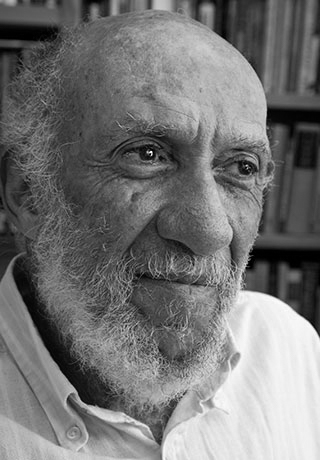
Professor Falk became an adviser to TFF when it was established in 1985.

Share

Leave a Reply

Your email address will not be published. Required fields are marked *

Related Posts

The MIMAC – Military-Industrial-Media-Academic Complex – drives the world’s rampant militarism and wars without end. Here is a short reflection of how it works against all interests of humanity. #5 deals with why there is no real enemy or threat images/analysis. It’s all ex-post constructions. And, btw, theTFF Peace Pulse is now on Rumble.
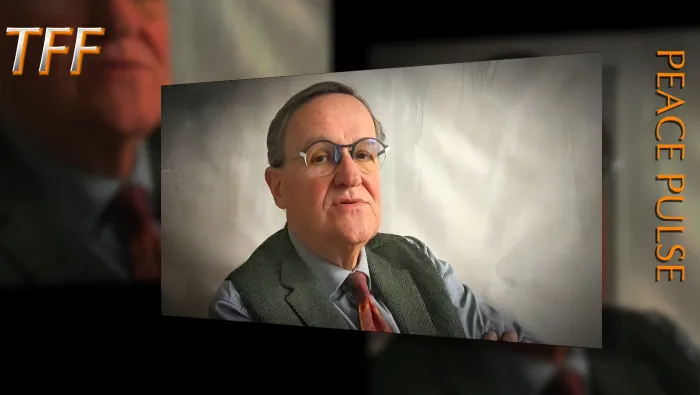
Jan Oberg, TFF director April 28, 2026 In this third TFF Peace Pulse, I make the important distinction between the violence and the conflict that violence is a symptom of. If you want peace, focus on the underlying conflict because that is the key to resolution, peacemaking, and a better future for the parties. The West is obsessed with violence, just look around you – and 90+ per cent of the public debate is about military issues and other violence – totally wasted for peace. These Peace Pulses will only be published here a few times. You will also not find them on YouTube and Vimeo because both platforms have blocked TFF and me; you know, peace is dangerous these days. Most TFF’s videos since 2007 are now on Rumble.
In contrast to most, we’ll bring alternatives, solutions, hope and strategies for a better future. Times are dangerous, yes, but that only intensifies the need for constructive thinking and action! Jan Oberg, TFF director April 13, 2026 The new TFF Peace Pulse uses video messages in a new way: Max 3-5-minute-long comments, ideas or perhaps mini-lectures, all about peace – positive peace. We launch them today on April 13, 2026 with a carefully crafted visual aesthetic fitting the content. We hope to publish them regularly from now on. We launch Peace Pulse (PP) – for a number of reasons. The world is in chaos, and there are countless reasons to feel concerned, frustrated, even angry. The atmosphere is saturated with doom and gloom, with negative energy and rear‑mirror thinking, while vision, imagination, alternatives, strategies and genuine future‑mindedness remain in short supply. And without them, we simply can’t save the world. Looking at problems from a hundred angles will...

Recent Articles

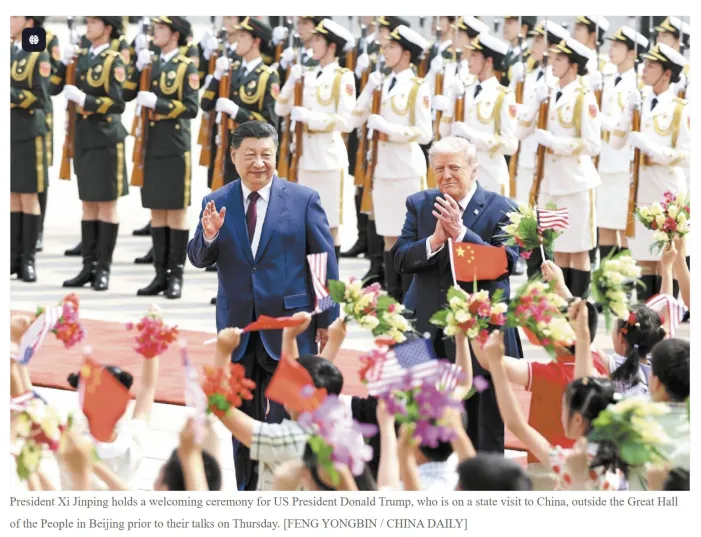
Jan Oberg May 15, 2026 Go to this Fox News page and scroll the whole way down: President Donald Trump tells the world that his meeting with President Xi Jinping yielded a lot of very concrete political and economic results – of course, only where the Chinese side, according to him, agreed with him. He does not mention the Taiwan issue, but Secretary of State, Marco Rubio, says that it did not feature prominently in their talks and that the US policy on Taiwan has not changed. Then go to China Daily – or Global Times – and you will see that for the Chinese it is framework, principles, structure of cooperation etc. that matters – all embedded in the overall idea of “constructive bilateral relationship of strategic stability.” Nowhere is any concrete agreement or deal – all that Trump refers to – mentioned. At the general level, this gives you insights into the very different social...
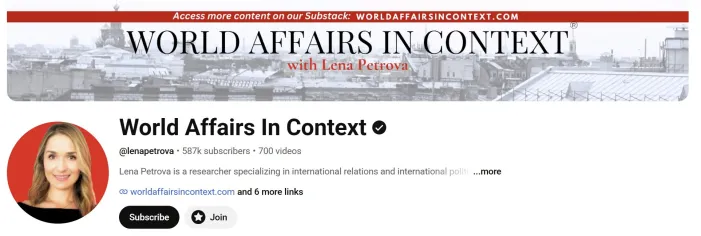
Lena Petrova of “World Affairs In Context” with more than half a million subscribers on YouTube wanted to explore what a peace researcher like me has to say about, among other things, the First and the Second Cold War and why eethics has disappeared from politics. I am particularly happy about this conversation that also yielded an amazing number of very appreciative comments on YouTube. No doubt, people are longing for alternatives, including peace perspectives.
The MIMAC – Military-Industrial-Media-Academic Complex – drives the world’s rampant militarism and wars without end. Here is a short reflection of how it works against all interests of humanity. #5 deals with why there is no real enemy or threat images/analysis. It’s all ex-post constructions. And, btw, theTFF Peace Pulse is now on Rumble.

TFF on Substack

Discover more from TFF Transnational Foundation & Jan Oberg.

Most Popular

Jan Oberg May 15, 2026 Go to this Fox News page and scroll the whole way down: President Donald Trump tells the world that his meeting with President Xi Jinping yielded a lot of very concrete political and economic results – of course, only where the Chinese side, according to him, agreed with him. He does not mention the Taiwan issue, but Secretary of State, Marco Rubio, says that it did not feature prominently in their talks and that the US policy on Taiwan has not changed. Then go to China Daily – or Global Times – and you will see that for the Chinese it is framework, principles, structure of cooperation etc. that matters – all embedded in the overall idea of “constructive bilateral relationship of strategic stability.” Nowhere is any concrete agreement or deal – all that Trump refers to – mentioned. At the general level, this gives you insights into the very different social...
Lena Petrova of “World Affairs In Context” with more than half a million subscribers on YouTube wanted to explore what a peace researcher like me has to say about, among other things, the First and the Second Cold War and why eethics has disappeared from politics. I am particularly happy about this conversation that also yielded an amazing number of very appreciative comments on YouTube. No doubt, people are longing for alternatives, including peace perspectives.
The MIMAC – Military-Industrial-Media-Academic Complex – drives the world’s rampant militarism and wars without end. Here is a short reflection of how it works against all interests of humanity. #5 deals with why there is no real enemy or threat images/analysis. It’s all ex-post constructions. And, btw, theTFF Peace Pulse is now on Rumble.
Read More
Screenshot-2026-05-15-103534
Jan Oberg May 15, 2026 Go to this Fox News page and scroll the whole way down: President Donald Trump tells the world that his meeting with President Xi Jinping yielded a lot of very concrete political and economic results – of course, only where the Chinese side, according to him, agreed with him. He does not mention the Taiwan issue, but Secretary of State, Marco Rubio, says that it did not feature prominently in their talks and that the US policy on Taiwan has not changed. Then go to China Daily – or Global Times – and you will see that for the Chinese it is framework, principles, structure of cooperation etc. that matters – all embedded in the overall idea of “constructive bilateral relationship of strategic stability.” Nowhere is any concrete agreement or deal – all that Trump refers to – mentioned. At the general level, this gives you insights into the very different social...
Screenshot-2026-05-12-104023
Lena Petrova of “World Affairs In Context” with more than half a million subscribers on YouTube wanted to explore what a peace researcher like me has to say about, among other things, the First and the Second Cold War and why eethics has disappeared from politics. I am particularly happy about this conversation that also yielded an amazing number of very appreciative comments on YouTube. No doubt, people are longing for alternatives, including peace perspectives.
Screenshot-2026-04-13-154551 (2)
The MIMAC – Military-Industrial-Media-Academic Complex – drives the world’s rampant militarism and wars without end. Here is a short reflection of how it works against all interests of humanity. #5 deals with why there is no real enemy or threat images/analysis. It’s all ex-post constructions. And, btw, theTFF Peace Pulse is now on Rumble.
Screenshot-2026-04-13-154551 (1)
Jan Oberg, TFF director April 28, 2026 In this third TFF Peace Pulse, I make the important distinction between the violence and the conflict that violence is a symptom of. If you want peace, focus on the underlying conflict because that is the key to resolution, peacemaking, and a better future for the parties. The West is obsessed with violence, just look around you – and 90+ per cent of the public debate is about military issues and other violence – totally wasted for peace. These Peace Pulses will only be published here a few times. You will also not find them on YouTube and Vimeo because both platforms have blocked TFF and me; you know, peace is dangerous these days. Most TFF’s videos since 2007 are now on Rumble.
Screenshot-2026-04-13-154551
In contrast to most, we’ll bring alternatives, solutions, hope and strategies for a better future. Times are dangerous, yes, but that only intensifies the need for constructive thinking and action! Jan Oberg, TFF director April 13, 2026 The new TFF Peace Pulse uses video messages in a new way: Max 3-5-minute-long comments, ideas or perhaps mini-lectures, all about peace – positive peace. We launch them today on April 13, 2026 with a carefully crafted visual aesthetic fitting the content. We hope to publish them regularly from now on. We launch Peace Pulse (PP) – for a number of reasons. The world is in chaos, and there are countless reasons to feel concerned, frustrated, even angry. The atmosphere is saturated with doom and gloom, with negative energy and rear‑mirror thinking, while vision, imagination, alternatives, strategies and genuine future‑mindedness remain in short supply. And without them, we simply can’t save the world. Looking at problems from a hundred angles will...
IMG_5165 (1)
PART II — Publishing Peace in a System That Prioritises Militarism Jan Oberg, TFF director April 10, 2026 How TFF Maintains a Daily Voice in a Digital World Built for Noise This article is part of the series “TFF at 40″ and it invites you to learn about Four Decades of Publishing Peace. It takes a look at how a small, people‑financed peace foundation has communicated across four generations of technology — from wax stencils and fax machines to mass email and Substack — and why TFF continues to publish every single day in a system that rewards noise, conflict, and militarism. ◆ What it means to publish peace every single day in a digital system built for 24/7 news and other noise, confrontation, and militarism. How TFF’s independence, continuity, and global readership defy algorithms, donor cycles, and Western media censorhip — and why the Majority World keeps listening. When the...