
Can Trump Survive Syria, Mattis, Stock Market Fall, & Friedman’s ‘Watershed Moment’?

I have long believed that the three red lines in Washington that no elected president can significantly transgress without being ejected from the Oval Office are unwavering support for the priorities of Wall Street, the Pentagon, and Israel.

With the announced withdrawal of American troops in Syria (and their 50% cut in Afghanistan), transgressed one of these red lines. What is more, he upset what the mainstream media has been calling ‘the last adult in the room,’ the Secretary of Defense, James Mattis, who made the country critically ponder Trump’s transgression by his thinly veiled rebuke in the form of a letter of resignation that has been treated as scripture by such hegemonic media outlets as CNN and the NY Times.

It has become clear that Trump transgressed two of the three red lines, a reality further aggravated by the Christmas shutdown of the Federal Government and his babyish tantrum about financing his wall.

And even Israel, the only un-transgressed red line, visibly shuddered in response to the Syria announcement, evidently worried by the way it was abruptly done without consultation. Probably even more worrisome to its leaders was what might follow from this withdrawal, which hinted at the possibility of a further American political disengagement from the Middle East.

Given Trump’s contention that now that ISIS had been defeated, a conclusion contested within the Beltway, further steps along these lines might soon occur.

I am sure Trump watchers in Tel Aviv are aware that he tends to double down when under attack, and the 50% cut in the Afghanistan combat force may be regarded as a step in this direction.

Trump has long developed a formidable reputation for managing to cross red lines without suffering adverse consequences. It was a surprise to me that he got away with attacking the service record of Senator McCain, the most celebrated name among recent American war heroes, deriding the Bush family, and even mocking the sacrifice of a gold star family whose son had died in Iraq.

Beyond these personal slurs, Trump had undermined the rule of law, overcome an array of challenges to his business empire, and even publicly insulted and berated such hallowed public institutions as the FBI and CIA. His private life should have shocked his Evangelical base, but it seems that his support for right to life judicial appointments was enough to earn him a free pass with respect to gambling, beauty shows, and even hush money handed out to throw a blanket of denial over his promiscuity.

Yet has he gone too far this time? We will find out early in 2019.

Perhaps he can mend fences by finding ‘an adult’ to replace Mattis at the Pentagon, escalate the war-mongering rhetoric directed at the UN and Iran, reaffirm his undying commitment to Israel backed by taking some concrete initiative, and explain the stock market decline as the dirty work of the Democrats and some treasonous behavior in the back rooms of the financial mavens who run Wall Street.

If he so acts, the Republicans at least will be inclined to forgive. After all their options have been limited ever since Trump’s base made it clear that their adoration of Trump is an absolute, and their support for the Republican Party is relative in all respects, and would vanish altogether the minute Trump is thrown under the nearest bus.

Tom Friedman, the self-anointed arbiter of establishment moods has portentously called the Syrian imbroglio ‘a watershed moment’ in which he decided for himself that it was no longer tenable to wait out Trump’s four years, and then go all out to defeat him in 2020 with a centrist candidate.

Friedman now puts a ball of urgency in the court of the Republican Party, calling for a family intervention, therapy style, in which Trump is read the riot act and told that unless there is “a radical change in how he conducts himself,” even Republicans will have no choice but to press for his resignation, and if that fails, then impeachment. [NY Times, Dec. 24, 2018]

There are ironies present.

When Trump makes a demilitarizing move he is under severe attack by the liberal establishment and representatives of the national security elite. This contrasts with the applause he received when he launched an air strike against Syrian targets in April 2017 after an alleged chemical weapons incident.

The bipartisan consensus that sustained the Cold War for more than four decades has never reconciled itself to geopolitical peace and has closed its eyes to any prospect of peace.

In revealing ways this pattern is not new. When Ronald Reagan, a president beloved by American conservatives and military hawks, returned in 1986  from a high profile summit at Reykjavik, Iceland with the Soviet leader, Mikhail Gorbachev, with signs of a breakthrough with respect to getting rid of nuclear weapons, even he was subjected to attack as ‘unprepared’ and not to be trusted with the protection of America’s strategic interest.

Of course, the liberal establishment joined in supporting the chorus of national security voices marginalizing. To embark upon a path that might produce nuclear disarmament was viewed with alarm in Washington, and the defenders of the militarist red line stepped forward.

Under these pressures, Reagan retreated to his comfort zone, which meant resuming the posture of being a hawkish Cold Warrior. At this point those who spoke for the established order breathed sighs of relief and reaffirmed Reagan as an inspirational leader/

Further back, in the early 1950s, when the notorious Senator Joe McCarthy attacked the Army, he transgressed, and soon had his wings clipped. This ability to destroy those who would weaken support for militarism and the American commitment to uphold global security has remained unassailable ever since World War II.

It has been manifest in what has been dubbed ‘the forever war’ by H. Bruce Franklin borrowing from Joe Haldeman’s celebrated science fiction classic. [See his fine book, Crash Course: From the Good War to the Forever War(2018) and it has made the existence of a peacetime economy and military budget a political impossibility.

Some thought the Soviet collapse at the end of the Cold War might change this outlook, but in retrospect any such hope was never realistic, out of touch with how militarism had restructured the American state since 1945.

After the Cold War ended, the war planners conjured up new threats and pursued strategic ambitions with undiminished zeal, and the world responded in kind.

If Trump manages to get away with these transgressions without either retreating or resigning, he might hang around for a long time, especially with the Democratic Party poised to adopt a losing centrist strategy for 2020.

As Yeats reminded us generations ago, under quite different circumstances, ‘the center cannot hold, mere anarchy is loosed upon the world.”

Only a progressive alternative has a chance of meeting the challenges facing the American people and indeed, the world.

If we as a people sleep through the Trump ordeal and the urgencies of climate change, inequality, and nuclearism, then doomsday gurus will soon be hailed as visionary prophets with fires of discontent burning ever brighter all around us, the planet ablaze.
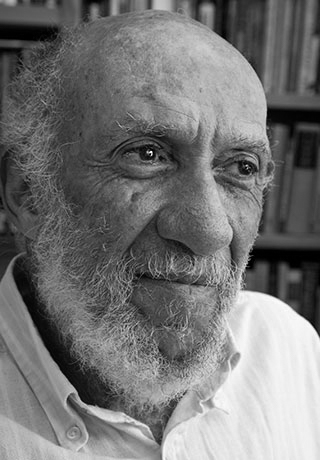

Professor Falk became an adviser to TFF when it was established in 1985.

Share

Leave a Reply

Your email address will not be published. Required fields are marked *

Related Posts

Officially, the drones were not identified. By simply thinking critically – which journalists and selected experts no longer do – there may be a good reason for that. And this article will never be mentioned in Denmark… Drones over Denmark. No damage. No trace. No answers. Yet the headlines scream “Russian threat,” and Prime Minister Mette Frederiksen speaks with a certainty that defies logic: “We don’t know they were Russian—but we know Russia is the biggest threat to Europe.” It could be nobody else – unless you make an interest analysis which I did two days ago. This is not security policy. It’s theatre. And the audience is being played. Let’s rewind. These drones—unphotographed, untracked, unclaimed—appear and vanish like ghosts. Airports shut down. Panic spreads. Military budgets swell. And the narrative hardens: Russia is behind it. But what if that’s not just wrong but deliberately misleading? Here’s a hypothesis for...
And why the world, especially the EU, must now declare itself independent of the United States. UN’s 80th anniversary This year, the United Nations celebrates the 80th anniversary of its founding. The UN was formed after the scourge of the Second World War, in which 70 to 85 million people were killed and many countries were destroyed. That war came on the heels of the First World War, which also killed between 15 and 22 million people. After the Second World War, especially after the use of nuclear weapons by the United States, which marked a turning point in the history of warfare that could result in the end of civilisation as we know it, humanity decided to move away from the era of empires and big power politics and usher in a new era of peace, freedom and cooperation. These were the principles enshrined in the UN Charter. The United States...
Drones over Nordic airports. No damage. No trace. No answers. Most assume Russia—but what if that’s not so? Why is there so much we are not told? This article explores the strategic ambiguity behind recent drone incursions and asks: Who else might benefit from sending drones into NATO airspace? From Ukraine’s surprising drone supremacy to Russia’s possible signalling, the silence itself may be the loudest message. These are the kinds of questions decent, intelligent investigative journalists and commentators could easily research. Why don’t they? Did you, dear reader, know or think of this? That the most powerful weapon in today’s conflicts might be the one that leaves no trace – and no answers. Just enough fear to justify the next move? Recently, drones have repeatedly appeared over Nordic airports and near some military facilities. They cause no damage – for which reason the designation “hybrid attack” is misleading but serves a purpose. These...

Recent Articles

Jan Øberg behandler i artiklen en lang række faktorer, som ligger til grund for den måde vores samfund er organiseret på – og derfor også for konflikter. Artiklen introducerer således sammenhængen mellem familien, foreninger, regeringer, NGO’ er, nation, stat, nationalstat og alliancer for på denne måde bedre at kunne forstå konflikter og i sidste ende blive klogere mht. at løse disse. Øberg, der er fortaler for global bevidsthed, hvilket skal ses i lyset af den øgede globalisering, skelner mellem kulturkamp og kulturdialog. Endelig behandles begrebet magt og magtesløshed: giver magt ret til at udøve magt – fordi man mener at have ret? Litteraturliste og arbejdsspørgsmål efter artiklen. Ordene vi bruger om verden I satellitperspektiv kan man godt tale om den menneskelige familie eller menneskeheden. Udtrykket understreger, at der eksisterer – eller burde eksistere – et fællesskab fordi vi alle er mennesker og sammen bebor denne klode og ingen anden. Og...
Kapitel 2: Forskellige sider af Europa og USA…fortsat 2.5 Militære relationer I forbifarten har vi allerede sagt nogle ting om USA’s militære situation. Kig lige en gang til på afsnit 2.3. Nu skal vi uddybe det militære forhold mellem USA og EU. Der er en række ligheder mellem visse europæiske landes og USA’s militær. Næsten alle er med på en eller anden måde i NATO, direkte som medlem – selv Island, der ikke har et forsvar – eller indirekte i Partnerskab for Fred. USA og Canada er med i OSCE (på dansk OSSE), Organisationen for Sikkerhed og Samarbejde i Europa, der tæller over 50 lande. USA samt England og Frankrig er kernevåbenstater og de har styrker til intervention langt borte fra hjemlandet, om end USA’s er tifold større. Alle har også en omfattende våbeneksport og bruger den som et middel til at tjene penge og få loyale venner på, det...
Background Christian Harleman and Jan Oberg conducted a fact-finding mission to Burundi between November 26 and December 6, 2003. (See websites about the country here). The first TFF mission took place in March 1999. Unfortunately, since then it has not been practically possible to implement the co-operation with Burundi’s Ministry of Education and Burundian NGOs that was planned at the time. The 2003 mission had three purposes. First, to do fact-finding in general about the situation and, in particular, the progress under the Arusha Peace Process. Second, to explore the possibilities for co-operation between the government and relevant NGOs on the one hand and TFF on the other, in order to develop and deepen the existing competence in fields such as conflict-understanding, reconciliation and peace-building. Finally, third, to find out whether it would be possible, in co-operation with the Swedish Rescue Services Agency (Statens Räddningsverk), to establish a health care unit that...

TFF on Substack

Discover more from TFF Transnational Foundation & Jan Oberg.

Most Popular

Jan Øberg behandler i artiklen en lang række faktorer, som ligger til grund for den måde vores samfund er organiseret på – og derfor også for konflikter. Artiklen introducerer således sammenhængen mellem familien, foreninger, regeringer, NGO’ er, nation, stat, nationalstat og alliancer for på denne måde bedre at kunne forstå konflikter og i sidste ende blive klogere mht. at løse disse. Øberg, der er fortaler for global bevidsthed, hvilket skal ses i lyset af den øgede globalisering, skelner mellem kulturkamp og kulturdialog. Endelig behandles begrebet magt og magtesløshed: giver magt ret til at udøve magt – fordi man mener at have ret? Litteraturliste og arbejdsspørgsmål efter artiklen. Ordene vi bruger om verden I satellitperspektiv kan man godt tale om den menneskelige familie eller menneskeheden. Udtrykket understreger, at der eksisterer – eller burde eksistere – et fællesskab fordi vi alle er mennesker og sammen bebor denne klode og ingen anden. Og...
Kapitel 2: Forskellige sider af Europa og USA…fortsat 2.5 Militære relationer I forbifarten har vi allerede sagt nogle ting om USA’s militære situation. Kig lige en gang til på afsnit 2.3. Nu skal vi uddybe det militære forhold mellem USA og EU. Der er en række ligheder mellem visse europæiske landes og USA’s militær. Næsten alle er med på en eller anden måde i NATO, direkte som medlem – selv Island, der ikke har et forsvar – eller indirekte i Partnerskab for Fred. USA og Canada er med i OSCE (på dansk OSSE), Organisationen for Sikkerhed og Samarbejde i Europa, der tæller over 50 lande. USA samt England og Frankrig er kernevåbenstater og de har styrker til intervention langt borte fra hjemlandet, om end USA’s er tifold større. Alle har også en omfattende våbeneksport og bruger den som et middel til at tjene penge og få loyale venner på, det...
Background Christian Harleman and Jan Oberg conducted a fact-finding mission to Burundi between November 26 and December 6, 2003. (See websites about the country here). The first TFF mission took place in March 1999. Unfortunately, since then it has not been practically possible to implement the co-operation with Burundi’s Ministry of Education and Burundian NGOs that was planned at the time. The 2003 mission had three purposes. First, to do fact-finding in general about the situation and, in particular, the progress under the Arusha Peace Process. Second, to explore the possibilities for co-operation between the government and relevant NGOs on the one hand and TFF on the other, in order to develop and deepen the existing competence in fields such as conflict-understanding, reconciliation and peace-building. Finally, third, to find out whether it would be possible, in co-operation with the Swedish Rescue Services Agency (Statens Räddningsverk), to establish a health care unit that...
Read More
Imagen-thumbnail-The-Transnational-1
Jan Øberg behandler i artiklen en lang række faktorer, som ligger til grund for den måde vores samfund er organiseret på – og derfor også for konflikter. Artiklen introducerer således sammenhængen mellem familien, foreninger, regeringer, NGO’ er, nation, stat, nationalstat og alliancer for på denne måde bedre at kunne forstå konflikter og i sidste ende blive klogere mht. at løse disse. Øberg, der er fortaler for global bevidsthed, hvilket skal ses i lyset af den øgede globalisering, skelner mellem kulturkamp og kulturdialog. Endelig behandles begrebet magt og magtesløshed: giver magt ret til at udøve magt – fordi man mener at have ret? Litteraturliste og arbejdsspørgsmål efter artiklen. Ordene vi bruger om verden I satellitperspektiv kan man godt tale om den menneskelige familie eller menneskeheden. Udtrykket understreger, at der eksisterer – eller burde eksistere – et fællesskab fordi vi alle er mennesker og sammen bebor denne klode og ingen anden. Og...
Imagen-thumbnail-The-Transnational-1
Kapitel 2: Forskellige sider af Europa og USA…fortsat 2.5 Militære relationer I forbifarten har vi allerede sagt nogle ting om USA’s militære situation. Kig lige en gang til på afsnit 2.3. Nu skal vi uddybe det militære forhold mellem USA og EU. Der er en række ligheder mellem visse europæiske landes og USA’s militær. Næsten alle er med på en eller anden måde i NATO, direkte som medlem – selv Island, der ikke har et forsvar – eller indirekte i Partnerskab for Fred. USA og Canada er med i OSCE (på dansk OSSE), Organisationen for Sikkerhed og Samarbejde i Europa, der tæller over 50 lande. USA samt England og Frankrig er kernevåbenstater og de har styrker til intervention langt borte fra hjemlandet, om end USA’s er tifold større. Alle har også en omfattende våbeneksport og bruger den som et middel til at tjene penge og få loyale venner på, det...
Imagen-thumbnail-The-Transnational-1
Background Christian Harleman and Jan Oberg conducted a fact-finding mission to Burundi between November 26 and December 6, 2003. (See websites about the country here). The first TFF mission took place in March 1999. Unfortunately, since then it has not been practically possible to implement the co-operation with Burundi’s Ministry of Education and Burundian NGOs that was planned at the time. The 2003 mission had three purposes. First, to do fact-finding in general about the situation and, in particular, the progress under the Arusha Peace Process. Second, to explore the possibilities for co-operation between the government and relevant NGOs on the one hand and TFF on the other, in order to develop and deepen the existing competence in fields such as conflict-understanding, reconciliation and peace-building. Finally, third, to find out whether it would be possible, in co-operation with the Swedish Rescue Services Agency (Statens Räddningsverk), to establish a health care unit that...
Imagen-thumbnail-The-Transnational-1
Former UN Under-Secretary-General with special responsibility for peacekeeping operations TFF associate August 20, 2003 YRINGHAM, Mass.- Ralph Bunche was born in Detroit 100 years ago today (August 7, 2003). His passionate determination to get results did not extend to seeking credit for them, so his work is better remembered than he is. Of all his many accomplishments – civil rights pioneer, Nobel Peace Prize laureate, chief drafter of two chapters of the United Nations charter, negotiator of the armistices that ended the first Arab-Israeli war – Bunche said he was proudest of developing what came to be known as peacekeeping. Setting up the United Nations Truce Supervision Organization in Palestine in 1948, Bunche formulated the principles that have governed peacekeeping operations ever since. In the 1956 Suez crisis, working with Secretary General Dag Hammarskjold and Lester Pearson of Canada, he organized the first peacekeeping force, the United Nations Emergency Force...
– nästan 11 månader Till Sofia nästan 11 månader # 1  Till Sofias huvudsida Till alla Privata Foto-Serier
Till Sofias huvudsida

