
What the Shah's son should do - instead of siding with Trump

After a long period of relative silence, Reza Pahlavi, the son of the deposed Iranian Shah who has lived in the United States for more than 40 years, recently made a rare public appearance, calling for a U.S.-backed regime change in Iran.

Speaking at the pro-Israel Washington Institute for Near East Policy on Friday, December 14, he called for “non-Military actions” in support of Iranians to replace the Islamic Republic with a secular democracy.

Since coming to office and even during the 2016 election campaign, President Donald Trump has adopted a very hostile attitude towards Iran and the landmark nuclear deal (the Joint Comprehensive Plan of Action or JCPOA) negotiated under President Barack Obama.

Some of the more hawkish members of his team have received huge fees speaking at the annual meetings of the Mojahedin-e Khalq (MEK) that are held outside Paris, and have openly called for regime change in Iran before the end of 2019.

Reza Pahlavi’s speech was in line with the Trump administration’s policies towards Iran, but he went even further and demanded action to bring about regime change. “You cannot come and say we support the Iranian people but we don’t want regime change,” he said. “How the hell do you want us to get to democracy while this regime is still in place?”

His appearance has created great excitement among some sections of the Iranian opposition abroad, who see him as a more viable alternative to the clerical regime than the MEK, which is seen as a terrorist organization and hated by most Iranians.

Could Reza Pahlavi play a role in ushering in regime change in Iran? What might that role be?

Whether we like it or not, the fall of Mohammad Reza Shah ’s government and the establishment of the Islamic Republic was not due to a military coup, as in Egypt, or a foreign coup, such as the 1953 coup against Mohammad Mosaddeq’s popular government.

As someone who lived in Iran and witnessed the early stages of the revolution, it was clear to me, as it will be to anyone who has studied the history of the revolution, that it was a mass movement.

Millions of people rose up against the government and demanded fundamental change, to such an extent that the Shah’s powerful military collapsed in the face of mainly bloodless nationwide demonstrations, strikes and, some terrorist and paramilitary activities mainly perpetrated by the members of the MEK.

The initial slogans of the Iranian revolution were “Freedom, Independence, Social Justice”. People wanted to put an end to arbitrary rule and lack of political freedom. They wanted to achieve independence from foreign domination and exploitation, which in their eyes had reduced Iran almost to the status of a US colony. They also wished to establish an economic system that distributed the enormous wealth of the country more equitably.

Sadly, none of those goals has been achieved and, instead, people even lost the degree of social freedom that they enjoyed under the Shah.

As a result, there is a certain amount of nostalgia for the old times. In several recent protests, people have chanted slogans in Iran and Reza Shah, presumably as a king who opposed and suppressed the clerics.

However, this does not mean that there is any likelihood of the return of the Pahlavis to power. As we say in Persian, “that jug has smashed and the wine has spilt.” Or in more poetic language, “that mighty torrent that has swept down the mountain, its return to the summit is most unlikely.”

Nearly 40 years since the fall of the Shah, it is time for U.S. politicians to understand and admit that fact. Any lasting change in Iran will and should come from within, even though U.S. neocons and their Israeli and Saudi backers wish otherwise.

Unlike most countries in the region, there has been a measure of public participation in politics in Iran, and elections have had an enormous effect on changing the Iranian government.

This is why, for better or worse, most people in Iran believe that they own the system, and it has also given them a measure of independence, completely unlike those regimes that, in the words or President Trump, cannot survive for ten days without U.S. support.

Many educated Iranians once had a very positive outlook towards the United States, but U.S. policies during the past few decades have completely alienated most Iranians. This feeling of hostility has been greatly strengthened as the result of the policies pursued by President Trump and the extremist members of his team.

President Trump cannot on the one hand bar Iranians from visiting the United States, prevent Iranian students from studying in US universities, deprive Iranian grandparents from attending the weddings of their grandchildren, impose unilateral sanctions on Iran, and even deprive Iranians from buying medicine abroad due to banking restrictions, and on the other hand still claim that he is on the side of the Iranian people.

Iranians also look at the outcome of U.S. policies in the Middle East and beyond. During the past few decades, rivers of blood have flowed in practically all Middle Eastern countries, particularly in Iran’s neighbours, while despite all this bloodshed and barbarity, the West has not been able to establish freedom and democracy in the Middle East.

On the contrary, it has destroyed what had formed the basis of some of the oldest civilizations in the world, leaving behind ruins in ancient Syria, Iraq, Yemen, and many other countries.

The US government also supported Saddam Hussein’s brutal invasion of Iran. In the process of militarisation, invasions and massacres, the West has also lost its soul, and its ideals and aspirations have also been diminished.

Both under President Khatami and President Rouhani, Iran extended a hand of friendship to the West. The Iranian government engaged in difficult negotiations andsigned a landmark agreement, not only with the United States, but with all the permanent members of the UN Security Council, plus Germany. The agreement also received the unanimous endorsement of the Security Council Resolution 2231 and the European Union. That agreement, unique in the history of nuclear negotiations, drastically curtailed Iran’s nuclear activities and blocked all the paths to the acquisition of nuclear weapons by Iran. In 12 reports, the International Atomic Energy Agency has repeatedly certified Iran’s full compliance with the terms of the agreement. Yet, against the almost unanimous international support for the JCPOA, President Trump unilaterally withdrew from that deal and imposed extraterritorial sanctions on Iran. Under these circumstances, any U.S. support for any person or opposition group, particularly the hated MEK, would be the kiss of death.

The best thing that Reza Pahlavi can do is to persuade the Trump administration to give up its insane and excessive hostility towards Iran, reverse its violation of the JCPOA, engage in serious multilateral negotiations on other matters of contention, and help the advancement of democracy, human rights and a strong middle class in Iran through greater engagement and economic development. Then, when the time is ripe, Reza Pahlavi can take part in elections in Iran and hopefully be elected to office on the basis of the goodwill that exists towards his father and grandfather.

Farhang Jahanpour is member of the TFF BOard and a former professor and dean of the Faculty of Languages at the University of Isfahan, and a former Senior Research Scholar at Harvard. For the past 30 years he has been teaching courses on the Middle East at the Department of Continuing Education and is a member of Kellogg College at the University of Oxford.

Photo on top: Reza Pahlavi from YouTube
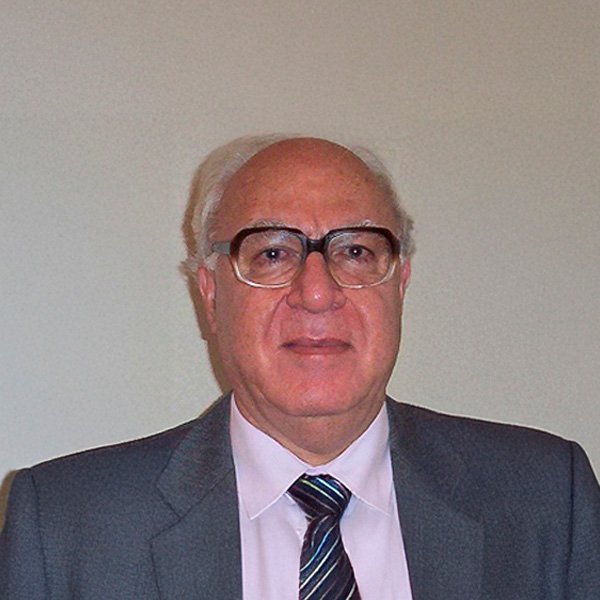
Former Professor and Dean of the Faculty of Languages, University of Isfahan; former lecturer at Cambridge, Harvard and Oxford universities; retired Editor for Middle East and North Africa, BBC Monitoring.

Share

Leave a Reply

Your email address will not be published. Required fields are marked *

Related Posts

Officially, the drones were not identified. By simply thinking critically – which journalists and selected experts no longer do – there may be a good reason for that. And this article will never be mentioned in Denmark… Drones over Denmark. No damage. No trace. No answers. Yet the headlines scream “Russian threat,” and Prime Minister Mette Frederiksen speaks with a certainty that defies logic: “We don’t know they were Russian—but we know Russia is the biggest threat to Europe.” It could be nobody else – unless you make an interest analysis which I did two days ago. This is not security policy. It’s theatre. And the audience is being played. Let’s rewind. These drones—unphotographed, untracked, unclaimed—appear and vanish like ghosts. Airports shut down. Panic spreads. Military budgets swell. And the narrative hardens: Russia is behind it. But what if that’s not just wrong but deliberately misleading? Here’s a hypothesis for...
And why the world, especially the EU, must now declare itself independent of the United States. UN’s 80th anniversary This year, the United Nations celebrates the 80th anniversary of its founding. The UN was formed after the scourge of the Second World War, in which 70 to 85 million people were killed and many countries were destroyed. That war came on the heels of the First World War, which also killed between 15 and 22 million people. After the Second World War, especially after the use of nuclear weapons by the United States, which marked a turning point in the history of warfare that could result in the end of civilisation as we know it, humanity decided to move away from the era of empires and big power politics and usher in a new era of peace, freedom and cooperation. These were the principles enshrined in the UN Charter. The United States...
Drones over Nordic airports. No damage. No trace. No answers. Most assume Russia—but what if that’s not so? Why is there so much we are not told? This article explores the strategic ambiguity behind recent drone incursions and asks: Who else might benefit from sending drones into NATO airspace? From Ukraine’s surprising drone supremacy to Russia’s possible signalling, the silence itself may be the loudest message. These are the kinds of questions decent, intelligent investigative journalists and commentators could easily research. Why don’t they? Did you, dear reader, know or think of this? That the most powerful weapon in today’s conflicts might be the one that leaves no trace – and no answers. Just enough fear to justify the next move? Recently, drones have repeatedly appeared over Nordic airports and near some military facilities. They cause no damage – for which reason the designation “hybrid attack” is misleading but serves a purpose. These...

Recent Articles

Jan Øberg behandler i artiklen en lang række faktorer, som ligger til grund for den måde vores samfund er organiseret på – og derfor også for konflikter. Artiklen introducerer således sammenhængen mellem familien, foreninger, regeringer, NGO’ er, nation, stat, nationalstat og alliancer for på denne måde bedre at kunne forstå konflikter og i sidste ende blive klogere mht. at løse disse. Øberg, der er fortaler for global bevidsthed, hvilket skal ses i lyset af den øgede globalisering, skelner mellem kulturkamp og kulturdialog. Endelig behandles begrebet magt og magtesløshed: giver magt ret til at udøve magt – fordi man mener at have ret? Litteraturliste og arbejdsspørgsmål efter artiklen. Ordene vi bruger om verden I satellitperspektiv kan man godt tale om den menneskelige familie eller menneskeheden. Udtrykket understreger, at der eksisterer – eller burde eksistere – et fællesskab fordi vi alle er mennesker og sammen bebor denne klode og ingen anden. Og...
Kapitel 2: Forskellige sider af Europa og USA…fortsat 2.5 Militære relationer I forbifarten har vi allerede sagt nogle ting om USA’s militære situation. Kig lige en gang til på afsnit 2.3. Nu skal vi uddybe det militære forhold mellem USA og EU. Der er en række ligheder mellem visse europæiske landes og USA’s militær. Næsten alle er med på en eller anden måde i NATO, direkte som medlem – selv Island, der ikke har et forsvar – eller indirekte i Partnerskab for Fred. USA og Canada er med i OSCE (på dansk OSSE), Organisationen for Sikkerhed og Samarbejde i Europa, der tæller over 50 lande. USA samt England og Frankrig er kernevåbenstater og de har styrker til intervention langt borte fra hjemlandet, om end USA’s er tifold større. Alle har også en omfattende våbeneksport og bruger den som et middel til at tjene penge og få loyale venner på, det...
Background Christian Harleman and Jan Oberg conducted a fact-finding mission to Burundi between November 26 and December 6, 2003. (See websites about the country here). The first TFF mission took place in March 1999. Unfortunately, since then it has not been practically possible to implement the co-operation with Burundi’s Ministry of Education and Burundian NGOs that was planned at the time. The 2003 mission had three purposes. First, to do fact-finding in general about the situation and, in particular, the progress under the Arusha Peace Process. Second, to explore the possibilities for co-operation between the government and relevant NGOs on the one hand and TFF on the other, in order to develop and deepen the existing competence in fields such as conflict-understanding, reconciliation and peace-building. Finally, third, to find out whether it would be possible, in co-operation with the Swedish Rescue Services Agency (Statens Räddningsverk), to establish a health care unit that...

TFF on Substack

Discover more from TFF Transnational Foundation & Jan Oberg.

Most Popular

Jan Øberg behandler i artiklen en lang række faktorer, som ligger til grund for den måde vores samfund er organiseret på – og derfor også for konflikter. Artiklen introducerer således sammenhængen mellem familien, foreninger, regeringer, NGO’ er, nation, stat, nationalstat og alliancer for på denne måde bedre at kunne forstå konflikter og i sidste ende blive klogere mht. at løse disse. Øberg, der er fortaler for global bevidsthed, hvilket skal ses i lyset af den øgede globalisering, skelner mellem kulturkamp og kulturdialog. Endelig behandles begrebet magt og magtesløshed: giver magt ret til at udøve magt – fordi man mener at have ret? Litteraturliste og arbejdsspørgsmål efter artiklen. Ordene vi bruger om verden I satellitperspektiv kan man godt tale om den menneskelige familie eller menneskeheden. Udtrykket understreger, at der eksisterer – eller burde eksistere – et fællesskab fordi vi alle er mennesker og sammen bebor denne klode og ingen anden. Og...
Kapitel 2: Forskellige sider af Europa og USA…fortsat 2.5 Militære relationer I forbifarten har vi allerede sagt nogle ting om USA’s militære situation. Kig lige en gang til på afsnit 2.3. Nu skal vi uddybe det militære forhold mellem USA og EU. Der er en række ligheder mellem visse europæiske landes og USA’s militær. Næsten alle er med på en eller anden måde i NATO, direkte som medlem – selv Island, der ikke har et forsvar – eller indirekte i Partnerskab for Fred. USA og Canada er med i OSCE (på dansk OSSE), Organisationen for Sikkerhed og Samarbejde i Europa, der tæller over 50 lande. USA samt England og Frankrig er kernevåbenstater og de har styrker til intervention langt borte fra hjemlandet, om end USA’s er tifold større. Alle har også en omfattende våbeneksport og bruger den som et middel til at tjene penge og få loyale venner på, det...
Background Christian Harleman and Jan Oberg conducted a fact-finding mission to Burundi between November 26 and December 6, 2003. (See websites about the country here). The first TFF mission took place in March 1999. Unfortunately, since then it has not been practically possible to implement the co-operation with Burundi’s Ministry of Education and Burundian NGOs that was planned at the time. The 2003 mission had three purposes. First, to do fact-finding in general about the situation and, in particular, the progress under the Arusha Peace Process. Second, to explore the possibilities for co-operation between the government and relevant NGOs on the one hand and TFF on the other, in order to develop and deepen the existing competence in fields such as conflict-understanding, reconciliation and peace-building. Finally, third, to find out whether it would be possible, in co-operation with the Swedish Rescue Services Agency (Statens Räddningsverk), to establish a health care unit that...
Read More
Imagen-thumbnail-The-Transnational-1
Jan Øberg behandler i artiklen en lang række faktorer, som ligger til grund for den måde vores samfund er organiseret på – og derfor også for konflikter. Artiklen introducerer således sammenhængen mellem familien, foreninger, regeringer, NGO’ er, nation, stat, nationalstat og alliancer for på denne måde bedre at kunne forstå konflikter og i sidste ende blive klogere mht. at løse disse. Øberg, der er fortaler for global bevidsthed, hvilket skal ses i lyset af den øgede globalisering, skelner mellem kulturkamp og kulturdialog. Endelig behandles begrebet magt og magtesløshed: giver magt ret til at udøve magt – fordi man mener at have ret? Litteraturliste og arbejdsspørgsmål efter artiklen. Ordene vi bruger om verden I satellitperspektiv kan man godt tale om den menneskelige familie eller menneskeheden. Udtrykket understreger, at der eksisterer – eller burde eksistere – et fællesskab fordi vi alle er mennesker og sammen bebor denne klode og ingen anden. Og...
Imagen-thumbnail-The-Transnational-1
Kapitel 2: Forskellige sider af Europa og USA…fortsat 2.5 Militære relationer I forbifarten har vi allerede sagt nogle ting om USA’s militære situation. Kig lige en gang til på afsnit 2.3. Nu skal vi uddybe det militære forhold mellem USA og EU. Der er en række ligheder mellem visse europæiske landes og USA’s militær. Næsten alle er med på en eller anden måde i NATO, direkte som medlem – selv Island, der ikke har et forsvar – eller indirekte i Partnerskab for Fred. USA og Canada er med i OSCE (på dansk OSSE), Organisationen for Sikkerhed og Samarbejde i Europa, der tæller over 50 lande. USA samt England og Frankrig er kernevåbenstater og de har styrker til intervention langt borte fra hjemlandet, om end USA’s er tifold større. Alle har også en omfattende våbeneksport og bruger den som et middel til at tjene penge og få loyale venner på, det...
Imagen-thumbnail-The-Transnational-1
Background Christian Harleman and Jan Oberg conducted a fact-finding mission to Burundi between November 26 and December 6, 2003. (See websites about the country here). The first TFF mission took place in March 1999. Unfortunately, since then it has not been practically possible to implement the co-operation with Burundi’s Ministry of Education and Burundian NGOs that was planned at the time. The 2003 mission had three purposes. First, to do fact-finding in general about the situation and, in particular, the progress under the Arusha Peace Process. Second, to explore the possibilities for co-operation between the government and relevant NGOs on the one hand and TFF on the other, in order to develop and deepen the existing competence in fields such as conflict-understanding, reconciliation and peace-building. Finally, third, to find out whether it would be possible, in co-operation with the Swedish Rescue Services Agency (Statens Räddningsverk), to establish a health care unit that...
Imagen-thumbnail-The-Transnational-1
Former UN Under-Secretary-General with special responsibility for peacekeeping operations TFF associate August 20, 2003 YRINGHAM, Mass.- Ralph Bunche was born in Detroit 100 years ago today (August 7, 2003). His passionate determination to get results did not extend to seeking credit for them, so his work is better remembered than he is. Of all his many accomplishments – civil rights pioneer, Nobel Peace Prize laureate, chief drafter of two chapters of the United Nations charter, negotiator of the armistices that ended the first Arab-Israeli war – Bunche said he was proudest of developing what came to be known as peacekeeping. Setting up the United Nations Truce Supervision Organization in Palestine in 1948, Bunche formulated the principles that have governed peacekeeping operations ever since. In the 1956 Suez crisis, working with Secretary General Dag Hammarskjold and Lester Pearson of Canada, he organized the first peacekeeping force, the United Nations Emergency Force...
– nästan 11 månader Till Sofia nästan 11 månader # 1  Till Sofias huvudsida Till alla Privata Foto-Serier
Till Sofias huvudsida


