

Money Is Not Wealth: Cryptos versus Fiats!

Most bankers, economists and investors after a couple of drinks, will admit that money is not wealth. Money is a metric, like inches and centimeters, for tracking real wealth: human ingenuity and technological productivity interacting with natural resources and biodiversity undergirding all human societies along with the daily free photons from our Sun, as described in “Valuing Today’s Circular Services Information Economies”.

So brainwashed are we by the false money meme of “money as wealth” that whenever anyone proposes needed infrastructure maintenance, better schools and healthcare or any public goods, we are intimidated by some defunct economist who says “Where’s the money coming from?”

They ought to know better, since, of course money is not scarce, it’s just information as I pointed out in 2001 at the annual meeting of the Inter-American Development Bank in an invited talk “Information, The World’s Real Currency, Is Not Scarce “(see World Affairs, April-June, Vol. 5, 2001, Delhi, India).

Since the 2008 global financial meltdown and bailouts, trust is disappearing: in banks, stock markets, corporations, governments, religious institutions, experts, academia, political parties’ rhetoric and even the Internet and social media.

This mistrust has fueled global populists across the political spectrum, with ubiquitous signs at their rallies, “Where’s MY Bailout?”  We see the rise of cryptocurrencies becoming bubbles, as many seek alternative stores of value and mediums of exchange they hope will prove more trustworthy than central banks’ fiat currencies: dollars, yen, euros, pounds, pesos backed only by their governments’ promises.

Trust is a precious commodity which undergirds all humanity’s markets, trading and exchange. Trust does not scale easily, abiding in face-to-face, handshake interactions in humanly-scaled communities, based on common agreements, shared infrastructure, resources and culture. Trust does not reside in packages of software, apps, AI, big data or social media platforms, as we learned in 2016.

So trust was sought in the blockchain platforms first developed by the mysterious computer expert, Satoshi Nakamoto in 2009 for his bitcoin. Now, over 1000 blockchain-based start-up companies and blockchains underlie the over 1,500 cryptocurrencies traded on electronic exchanges including Coinbase.

These computer-based distributed ledger blockchains are designed to engender trust by allowing person-to-person ability to verify each transaction or contract with a permanent record open to all.

Crypto promoters aspire to create global-level trust in the value of cryptocurrencies due to this transparency and their protocols limiting finite amounts to be issued, to create artificial scarcity. This vision is sullied by the many cases of criminality, hacking, stealing, frauds and other shenanigans.

Nevertheless, faith and trust in these cryptos remains strong, since proponents say central banks also manipulate their fiats – which is true!  We see fiat money being printed on TV shows!

Yet fake visuals of cryptos, such as the shiny golden colored coins are also shown with news about bitcoin. This is a “bit-con” since bitcoin is a digital algorithm, a string of computer code which is unlikely to become a ubiquitous medium of exchange or a store of value.

Still, the allure to libertarians, hackers and speculators is that cryptos exist with no middleman, for peer-to-peer global private use with no governments, no banks or financial intermediaries and few outside rules except those imposed by issuers. Millions of hackers worldwide soon began solving the ever more complex mathematical puzzles needed to claim their next block of newly minted bitcoin.

These “miners” now use some 30 terawatts annually of fossil-generated electricity, equivalent to the consumption of a country the size of Ireland, plus gobs of computer power. They are now affecting the Earth’s climate as I described in “Hey COP23: Bitcoin Miners Exploding CO2 Emissions!”

The loss of trust in fiat dollars, pounds, yen, euros, pesos we always use to pay each other cannot be replaced by cryptos – in spite of the current hype, as traditional financial markets now trade bitcoin futures and ETFs concocted by eager Wall Street players.

Nations including Russia, North Korea and Venezuela under international sanctions for violating norms, are now issuing their own cryptos to escape financial controls set by governments for fiat currency transactions. How will this war between governments and libertarian hackers’ cryptos versus fiats work out?

Clearly, trust in all forms of money is fading.

Today, people barter more goods and services on electronic platforms, swap and match, often directly without any use of currencies on platforms like Freecycle, and for everything from baby-sitting, sharing garden tools, spare rooms, vacation homes to finding their true love matches!

The familiar fiat currencies we still spend our lives earning, investing and saving for our retirement are losing their dominance in our lives and with that their role as a promised store of value. For example, few fiat currencies remain stable, as we see on FOREX trading screens daily.

Even the US dollar has lost about 80% of its value over the past 30 years – due to inflation, budget deficits, interest payments to bond-holders on our national debt, which recent tax cuts may increase by another $1.5 trillion.

Most US and European citizens register disbelief when they learn that all their national money in circulation is created out of thin air by private banks when they create loans and is therefore only backed by other peoples’ debts, not gold or any other commodity of value!

Governments in Britain, the USA and most countries gave their sovereign power to coin their own national money away to their private banks and allowed them to charge interest on their loans as well, as Ellen Brown explains in “Web of Debt”, (2010).

Our TV Special “The Money Fix” details on how this happened in the USA with founding of the Federal Reserve in 1913 and the rise of local currencies, barter and credit circles.

Governments’ policies became ever more erratic, swinging between obsolete textbook policy prescriptions: either “stimulation“ (quantitative easing QE, i.e. money-printing, tax cuts, lowering interest rates, buying dud mortgage-backed securities) or “austerity“ (cutting safety nets, education, healthcare, public services, selling off public assets) while continuing to bail out too-big-to-fail firms without prosecuting their reckless executives.

Ethical Markets dissects such obsolete economic policies and offers more realistic alternatives (www.ethicalmarkets.com).

Today, failing policy levers are being bypassed by the rise of cryptos, crowdfunding, peer-to-peer lending, electronic barter, information-based direct trading I describe in “FINTECH: Good and Bad News for Sustainable Finance”.  They reveal the stunning truth: Money Is Not Wealth and worse, it is no longer a reliable store of value!

All those dollars we pinched to save for our retirement are losing their value until we use them to buy something useful, and shift our investing from obsolete, polluting, unsustainable corporations into trustworthy, sustainable, well-managed and transparent enterprises so we can monitor their performance and social impacts ourselves.

As the shock of this reality sets in, it reveals how most financial market players try to make money out of money, trading stocks with each other which are tradeable contracts issued by big companies as explained by law professor Lynn Stout in “The Shareholder Value Myth”, (2012).

The latest Wall Street bubbles are index-based stocks and ETFs, reaching additional levels of abstraction. I first unraveled these truths in “Creating Alternative Futures” (1978, 1996) and “The Politics of the Solar Age” (1981,1986). I described the essential unpaid tasks underpinning the cash-based sectors measured in GDP and incomes of mostly male “breadwinners”. Textbooks designated wives to perform all the work of maintaining households, raising the next generation, caring for elders, volunteering in community service – all unpaid, as in this diagram (Cake).

Economic textbooks described all this vital productive work I called the Love Economy as “non-economic”!

Feminists emerged worldwide to insist this work be recorded and paid, as in Marilyn Waring’s “If Women Counted” (1990); lawyer (and TFF Associate) Riane Eisler’s Caring Economy campaign and Kate Raworth’s “Doughnut Economics” (2017).

I documented how thousands of communities around the world starved by their central governments of fiat currencies by austerity programs, simply created their own local currencies, like the famous “Berkshares” issued by the Schumacher Society and circulated, even by local banks in Great Barrington, MA. These townsfolk realized that using their own local currencies and credit could clear their local markets and employ their people meeting local needs.

Photographs of thousands of such local currencies issued all over North America and Mexico are catalogued in, “Depression Scrip of the United States 1930” (1961). They taught a key lesson: money cannot be a store of value – it must circulate in the community in order to meet needs and create jobs and prosperity. To assure these currencies were not saved, but spent, they all carried expiration dates and require stamps to re-validate them regularly affixed until they finally expired.

So this myth of money as a store of value is now threadbare.

Electronic platforms open up new possibilities for direct barter, with all the fintech exchanges now disrupting traditional finance and banking. These innovations offer hope that both cryptos and fiats may eventually be properly managed and regulated in the service of decentralized prosperity and focus on the new model; the UN’s Sustainable Development Goals (SDGs) are now ratified by 195 governments.

Accountants are renovating their models for information-based economies  where services account for some 80% of production: from unpaid voluntary work to intellectual property, R &D, design, brands, networks, “infostructure” (broadband, internet) and institutions, described in “Capitalism Without Capital” (2018). The International Integrated Reporting System (IIRC) models six forms of capital: finance, built facilities, intellectual, social, human and natural capitals, which then measure the extent to which companies and governments enhance or degrade all six forms.

This accounting revolution also from the Sustainable Accounting Standards Board (SASB); the Chartered Institute of Management Accountants www.cimaglobal.com, (ICAEW) finally discloses and internalizes all those “externalities” into companies’ balance sheets and provides full spectrum accounting – beyond money as the single metric.

Honest money: currencies fully backed 100% for example, by kilowatt hours of renewable electricity, productive assets and services can continue to be useful as mediums of exchange.

Expert Shann Turnbull in “Is A Stable Financial System Possible”, shows why currencies cannot be a predictable store of value, i.e. money is not wealth.

This article was originally published here.

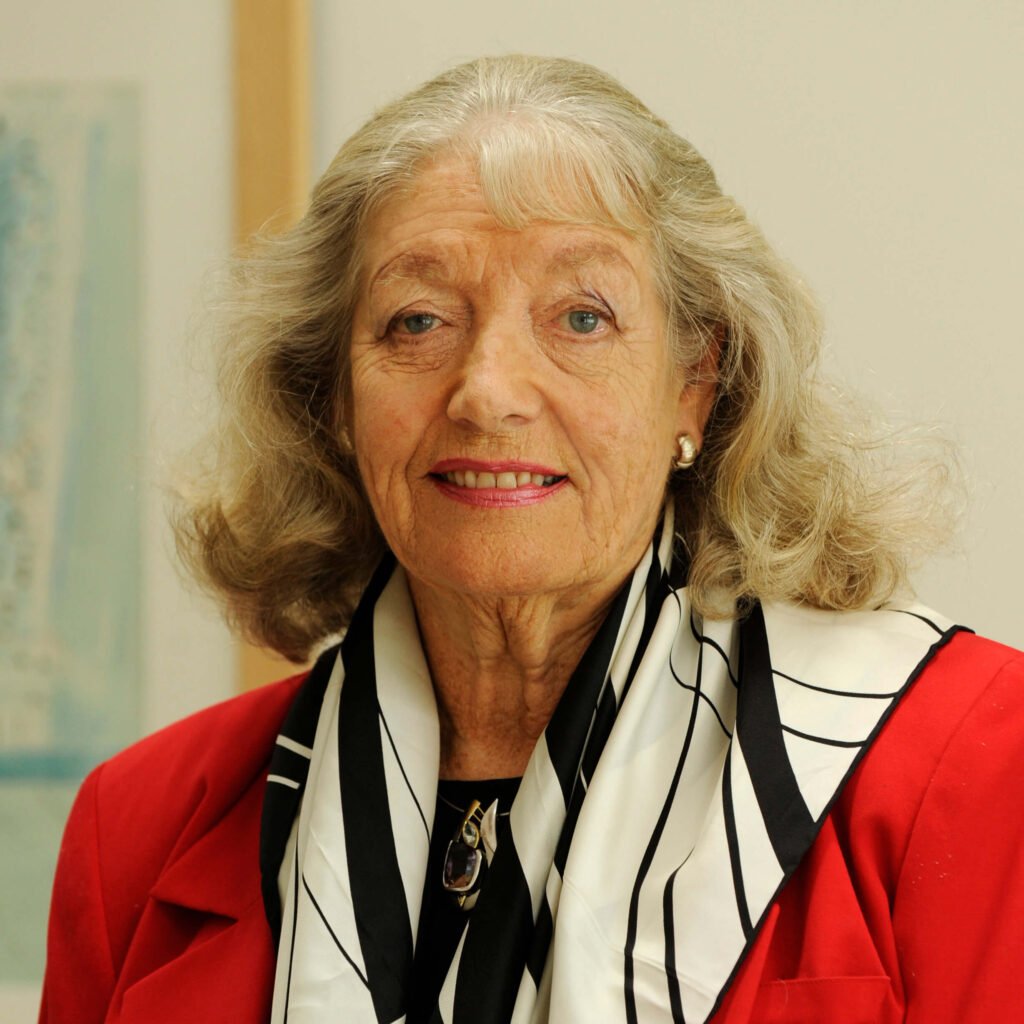
HAZEL HENDERSON, D.Sc.Hon., FRSA is CEO of Ethical Markets Media Certified B. Corporation, author of “Mapping the Global Transition to the Solar Age” and other books available in 800 libraries worldwide in many languages.  Producer of the global TV series “Transforming Finance”; the Green Transition Scoreboard® and other programs and services. And TFF Associate for decades.

Share

Leave a Reply

Your email address will not be published. Required fields are marked *

Related Posts

Officially, the drones were not identified. By simply thinking critically – which journalists and selected experts no longer do – there may be a good reason for that. And this article will never be mentioned in Denmark… Drones over Denmark. No damage. No trace. No answers. Yet the headlines scream “Russian threat,” and Prime Minister Mette Frederiksen speaks with a certainty that defies logic: “We don’t know they were Russian—but we know Russia is the biggest threat to Europe.” It could be nobody else – unless you make an interest analysis which I did two days ago. This is not security policy. It’s theatre. And the audience is being played. Let’s rewind. These drones—unphotographed, untracked, unclaimed—appear and vanish like ghosts. Airports shut down. Panic spreads. Military budgets swell. And the narrative hardens: Russia is behind it. But what if that’s not just wrong but deliberately misleading? Here’s a hypothesis for...
And why the world, especially the EU, must now declare itself independent of the United States. UN’s 80th anniversary This year, the United Nations celebrates the 80th anniversary of its founding. The UN was formed after the scourge of the Second World War, in which 70 to 85 million people were killed and many countries were destroyed. That war came on the heels of the First World War, which also killed between 15 and 22 million people. After the Second World War, especially after the use of nuclear weapons by the United States, which marked a turning point in the history of warfare that could result in the end of civilisation as we know it, humanity decided to move away from the era of empires and big power politics and usher in a new era of peace, freedom and cooperation. These were the principles enshrined in the UN Charter. The United States...
Drones over Nordic airports. No damage. No trace. No answers. Most assume Russia—but what if that’s not so? Why is there so much we are not told? This article explores the strategic ambiguity behind recent drone incursions and asks: Who else might benefit from sending drones into NATO airspace? From Ukraine’s surprising drone supremacy to Russia’s possible signalling, the silence itself may be the loudest message. These are the kinds of questions decent, intelligent investigative journalists and commentators could easily research. Why don’t they? Did you, dear reader, know or think of this? That the most powerful weapon in today’s conflicts might be the one that leaves no trace – and no answers. Just enough fear to justify the next move? Recently, drones have repeatedly appeared over Nordic airports and near some military facilities. They cause no damage – for which reason the designation “hybrid attack” is misleading but serves a purpose. These...

Recent Articles

PressInfo # 141, December 21, 2001It’s time to prepare reconciliation between Albanians and Serbs PressInfo # 140, December 14, 2001Ibrahim Rugova’s decade-long leadership in Kosovo/a PressInfo # 139, 11. december, 2001En god nyhet: Jugoslaviens Sannings- och försoningskommission PressInfo # 139, 11. december, 2001Gode nyheder: Jugoslaviens Sandheds- og Forsoningskommission PressInfo # 139, December 11, 2001Good news: Yugoslavia’s Truth and Reconciliation Commission PressInfo # 138, November 8, 2001TFF co-founder PhD with thesis about young people with roots in other cultures PressInfo # 138, November 8, 2001TFF:s medstiftare doktor på avhandling om unga med ursprung i andra kulturer PressInfo # 137, October 17, 2001A new Marshall Plan: Advancing human security and controlling terrorism PressInfo # 136, October 15, 2001The UN and Annan really deserve it PressInfo # 135, October 10, 2001Preventing a terrorist mushroom cloud PressInfo # 134, 17 oktober, 2001Sverige og 11. september PressInfo # 134, October 9, 2001Sweden and September 11...
Peace is promoted by constructive proposals and dialogue Four preceding PressInfos have expressed concern over — and criticised — the ongoing, militarisation of the EU. Some will say: but there are no alternatives. We believe that there are always alternatives, that democracies are characterised by alternatives and choice, and that openly discussed alternatives will improve the quality and legitimacy of society’s decision–making. In addition, it is an intellectual and moral challenge to not only criticise but also be constructive. If we only tell people that we think they are wrong, they are not likely to listen. However, if we say: what are your views on this set of ideas and steps? — we may sometimes engage them in dialogue and sow a seed. Most people in power circles live their daily lives in in a time frame and a social space where certain ideas, viewpoints and concepts are just not...
Photos © TFF 2000 Read PressInfo 90 “Lift the Sanctions and Bring More Aid to Yugoslavia” See Pictures from Belgrade © TFF 2000 Please reprint, copy, archive, quote or re-post this item, but please retain the source.

TFF on Substack

Discover more from TFF Transnational Foundation & Jan Oberg.

Most Popular

PressInfo # 141, December 21, 2001It’s time to prepare reconciliation between Albanians and Serbs PressInfo # 140, December 14, 2001Ibrahim Rugova’s decade-long leadership in Kosovo/a PressInfo # 139, 11. december, 2001En god nyhet: Jugoslaviens Sannings- och försoningskommission PressInfo # 139, 11. december, 2001Gode nyheder: Jugoslaviens Sandheds- og Forsoningskommission PressInfo # 139, December 11, 2001Good news: Yugoslavia’s Truth and Reconciliation Commission PressInfo # 138, November 8, 2001TFF co-founder PhD with thesis about young people with roots in other cultures PressInfo # 138, November 8, 2001TFF:s medstiftare doktor på avhandling om unga med ursprung i andra kulturer PressInfo # 137, October 17, 2001A new Marshall Plan: Advancing human security and controlling terrorism PressInfo # 136, October 15, 2001The UN and Annan really deserve it PressInfo # 135, October 10, 2001Preventing a terrorist mushroom cloud PressInfo # 134, 17 oktober, 2001Sverige og 11. september PressInfo # 134, October 9, 2001Sweden and September 11...
Peace is promoted by constructive proposals and dialogue Four preceding PressInfos have expressed concern over — and criticised — the ongoing, militarisation of the EU. Some will say: but there are no alternatives. We believe that there are always alternatives, that democracies are characterised by alternatives and choice, and that openly discussed alternatives will improve the quality and legitimacy of society’s decision–making. In addition, it is an intellectual and moral challenge to not only criticise but also be constructive. If we only tell people that we think they are wrong, they are not likely to listen. However, if we say: what are your views on this set of ideas and steps? — we may sometimes engage them in dialogue and sow a seed. Most people in power circles live their daily lives in in a time frame and a social space where certain ideas, viewpoints and concepts are just not...
Photos © TFF 2000 Read PressInfo 90 “Lift the Sanctions and Bring More Aid to Yugoslavia” See Pictures from Belgrade © TFF 2000 Please reprint, copy, archive, quote or re-post this item, but please retain the source.
Read More
Imagen-thumbnail-The-Transnational-1
PressInfo # 141, December 21, 2001It’s time to prepare reconciliation between Albanians and Serbs PressInfo # 140, December 14, 2001Ibrahim Rugova’s decade-long leadership in Kosovo/a PressInfo # 139, 11. december, 2001En god nyhet: Jugoslaviens Sannings- och försoningskommission PressInfo # 139, 11. december, 2001Gode nyheder: Jugoslaviens Sandheds- og Forsoningskommission PressInfo # 139, December 11, 2001Good news: Yugoslavia’s Truth and Reconciliation Commission PressInfo # 138, November 8, 2001TFF co-founder PhD with thesis about young people with roots in other cultures PressInfo # 138, November 8, 2001TFF:s medstiftare doktor på avhandling om unga med ursprung i andra kulturer PressInfo # 137, October 17, 2001A new Marshall Plan: Advancing human security and controlling terrorism PressInfo # 136, October 15, 2001The UN and Annan really deserve it PressInfo # 135, October 10, 2001Preventing a terrorist mushroom cloud PressInfo # 134, 17 oktober, 2001Sverige og 11. september PressInfo # 134, October 9, 2001Sweden and September 11...
Imagen-thumbnail-The-Transnational-1
Peace is promoted by constructive proposals and dialogue Four preceding PressInfos have expressed concern over — and criticised — the ongoing, militarisation of the EU. Some will say: but there are no alternatives. We believe that there are always alternatives, that democracies are characterised by alternatives and choice, and that openly discussed alternatives will improve the quality and legitimacy of society’s decision–making. In addition, it is an intellectual and moral challenge to not only criticise but also be constructive. If we only tell people that we think they are wrong, they are not likely to listen. However, if we say: what are your views on this set of ideas and steps? — we may sometimes engage them in dialogue and sow a seed. Most people in power circles live their daily lives in in a time frame and a social space where certain ideas, viewpoints and concepts are just not...
Imagen-thumbnail-The-Transnational-1
Photos © TFF 2000 Read PressInfo 90 “Lift the Sanctions and Bring More Aid to Yugoslavia” See Pictures from Belgrade © TFF 2000 Please reprint, copy, archive, quote or re-post this item, but please retain the source.
Imagen-thumbnail-The-Transnational-1
Av FRANK SØHOLM GREVIL 16 augusti 2004  Vi er nu nået til tredje akt i det absurde teaterstykke, der i analogi med de store skueprocesser i Moskva 1936-38 er blevet døbt ‘Grevil-sagen’. Første akt bestod i min anonyme fremlæggelse af egenhændigt nedklassificerede rapporter i Berlingske Tidende i februar og marts. Andet akt udgjordes af min fremtræden med navn og billede i Information i april samt den efterfølgende mediestorm, som uden min direkte medvirken kostede en forsvarsminister taburetten samt en sigtelse for brud på tavshedspligten. Tredje akt bliver en retssag, hvor jeg står tiltalt for at have overtrådt straffelovens bestemmelser om uberettiget videregivelse eller udnyttelse af fortrolige oplysninger. Statsanklageren har ovenikøbet valgt at påberåbe sig særligt skærpende omstændigheder. Da jeg aldrig har modtaget betaling for at stille rapporterne til rådighed eller lade mig interviewe, må det skærpende bestå i, at “videregivelsen eller udnyttelsen er sket under sådanne omstændigheder, at det påfører...
Imagen-thumbnail-The-Transnational-1
Af Svenska Irakkommittén mot de Ekonomiska Sanktionerna (SIES) 13 september 2002 FN:s ekonomiska sanktioner mot Irak har nu pågått i tolv år och drabbat det irakiska folket med svåra lidanden. Enligt FN:s egna siffror har mer än 1,5 miljoner människor, varav ca 600 000 barn, dött som en direkt följd av sanktionerna. Dessutom har ett lågintensivt bombkrig mot landet pågått under dessa år. Av all denna förödelse- orsakad huvudsakligen av amerikansk och brittisk politik- har Saddam Husseins brutala och diktatoriska regim snarast stärkts än försvagats. Nu förbereder USA under president Bushs ledning ett storskaligt bombkrig mot Irak som kommer att innebära ett ännu större lidande för civilbefolkningen. Ett sådant krig kommer dessutom att ytterligare undergräva freden och säkerheten i världen. Att upprätta en demokratisk regim i Irak är det irakiska folkets angelägenhet och får enligt folkrätten inte ske med krigshandlingar utifrån. Folkrätten och FN:s stadgar måste respekteras. Vi vädjar till...

