June 2018

Showing 1-10 of 4188 stories

Sort by
Categories

Year

Author / Contributor

Region

052316-Facebook-Dislike
    290475″ data-end=”1530428399″> Take a look at the short video below that Facebook suddenly sends me today, Saturday June 30, 2018 about my being so important for communities and how great Facebook is at creating a community feeling worldwide. Many thanks, I guess I am supposed to say. Well, I don’t. First, I detest these – I assume, artificial intelligence-based – videos where everything is soooo filled with stock photos, stock happy children, all dancing and having a gooood stock time and the stock music is just mechanical sing-along kitsch…OK, just had to let it out! Second, Facebook has destroyed the worldwide reach TFF and I had until about a year ago – thanks to their “algorithm”, political interference and tracking. We’re basically – that is, 90% or so – reaching only people in Denmark, Sweden and other Nordic countries and the rest outside. All the people I interacted...
Screenshot
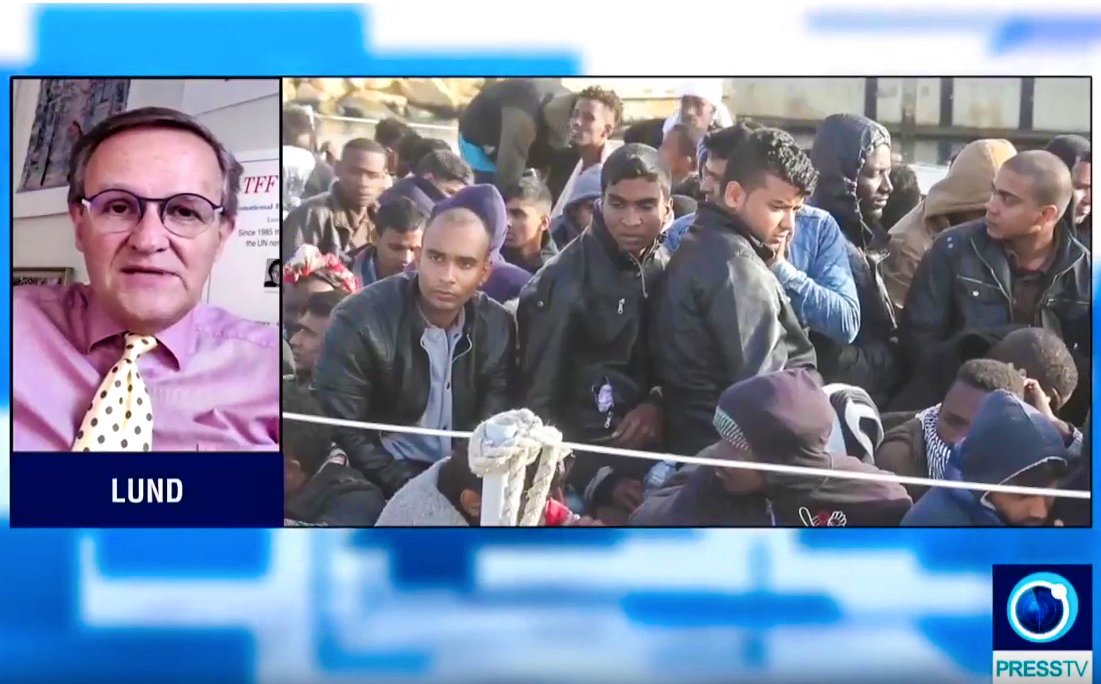
Oberg comments directly after the EU Summit on a series of issues, among them also defence and security. Here is the document from the European Council and nobody seem to contemplate the link between EU/NATO armament (arms exports), military intervention and NATO/EU countries ravaging one country after the other and the refugee flows. So, there is no end in sight unless the EU/NATO fundamentally changes interventionist and war policies which they are not likely to do (see the document) – and that may spell the end of the EU itself. Like terrorism, Europe’s refugee “problem” will be a perpetuum mobile until somebody has the moral and intellectual courage to stop and think and ask: What are the basic reasons we face these problems? That is why the discussion is now about borders, border control and reception centres far away – and not about refugees, asylum seekers (but ‘migration’ which is...
Screenshot
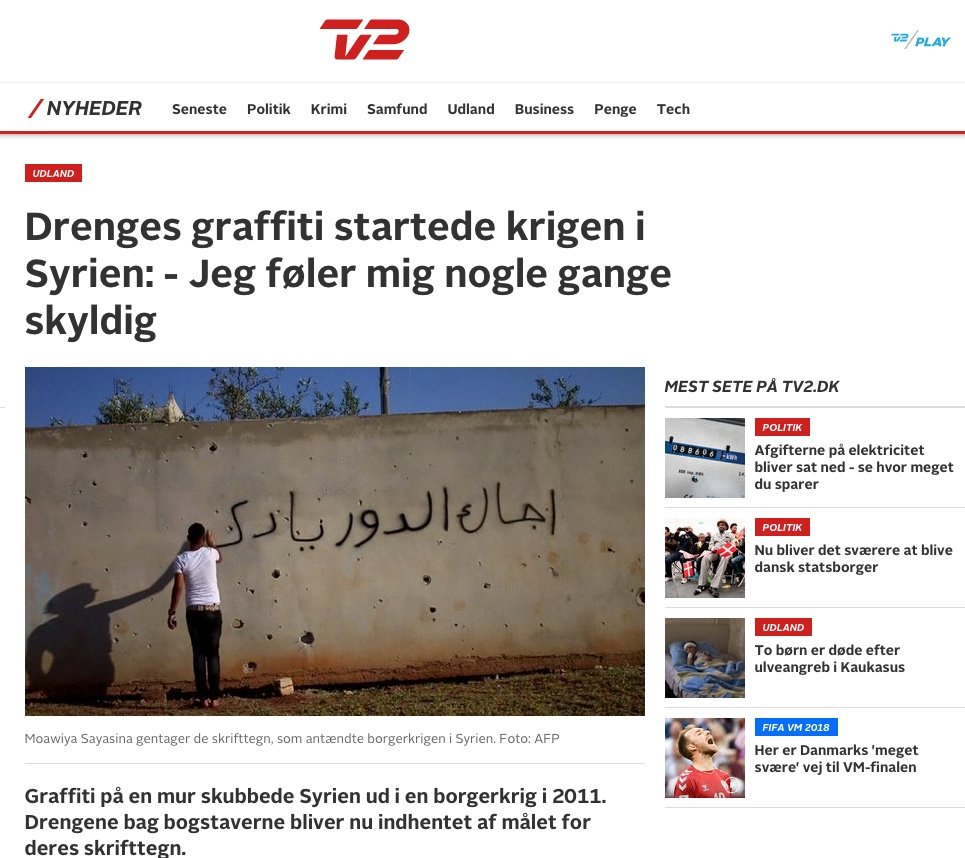
  Af Jan Øberg Det er mere end 7 år siden volden brød ud i Syrien, i Daraa. Det er det, TV2 vil fortælle os om hér. Og tidligere har fortalt hér. Skønt de mange år har man desværre ikke lært den lektie, der er så enkel: At volden kun er symptom på underliggende konflikter. At det det handler om ikke er volden/krigshandlingerne – men det der har fået volden til at bryde ud. At man kun kan komme frem til en fredelige fremtid hvis man forstår hvad konflikterne handler om. At medier, der kun fokuserer på volden men ikke kerer sig det mindste om årsagerne til den, gør volden meget mere “naturlig” og “uundgåelig.” I det aktuelle tilfælde stiller TV2 sig helt klart på de unge mænds side, der med våben i hånd bekæmper deres egen regering. De fremstilles som helt, der har startet krigen og – ja, hvordan...
12082015_Featured_EuropeCrisis3
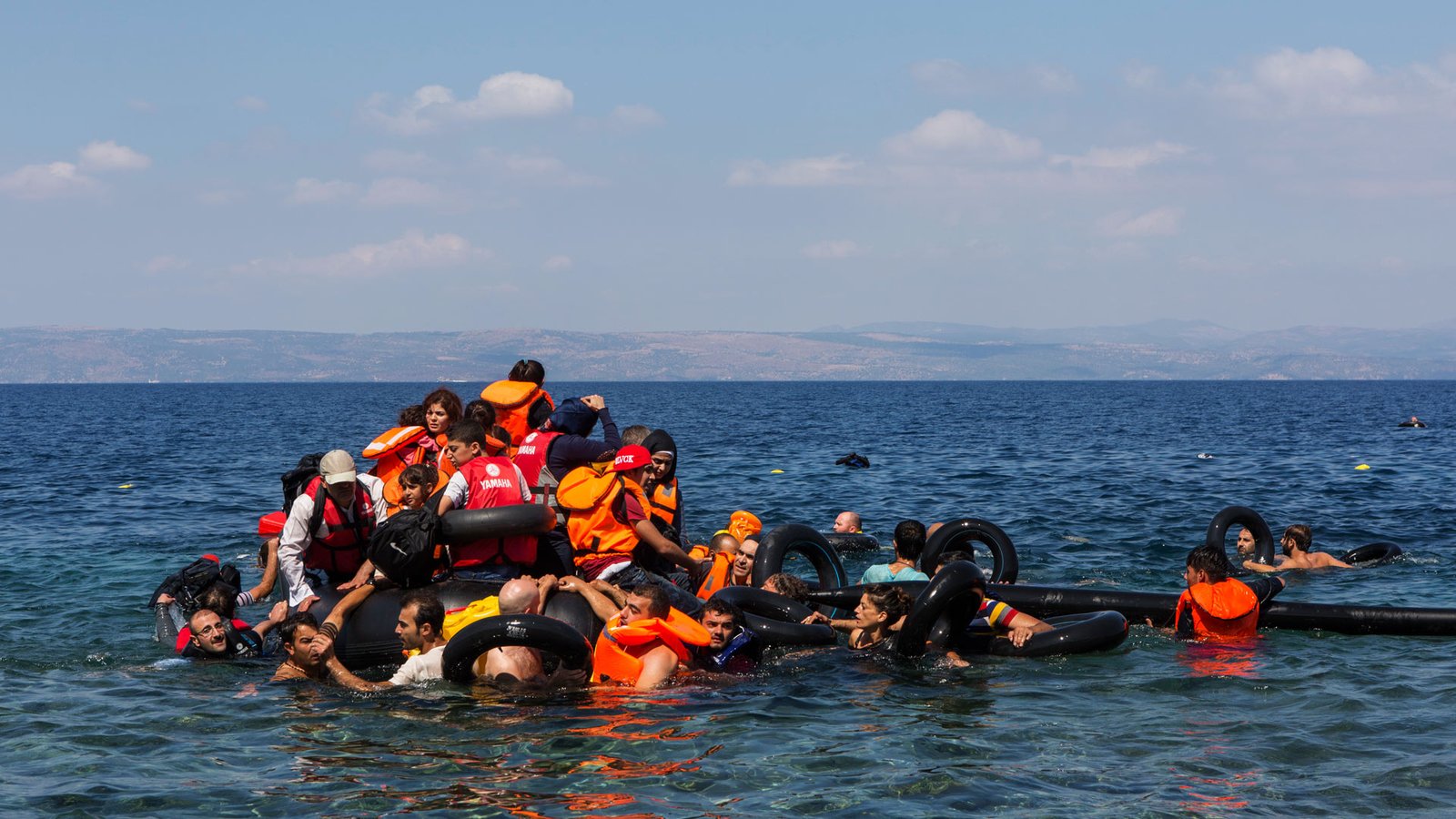
  By Nikolaj Nielsen and Damiano Bacci Brussels, June 27, 2018 Originally published by euobserver here Five years ago, Italian and EU leaders stood in silence as they watched coffins pile up in a warehouse on the island of Lampedusa. “Coffins of babies, coffins with the mother and the child that was born just at that moment. This is something that profoundly shocked me,” Jose Manuel Barroso, then EU commission president, said following his visit. It was early October 2013, when some 373 people had drowned off Lampedusa’s coast in their efforts to seek help, asylum, and opportunities in Europe. The European Commission then quickly announced big plans to curb the deaths. Border surveillance would be stepped up, boats rescuing people would not face sanctions, regional protection, resettlement and legal ways to access Europe would be offered, and diplomatic channels stepped up with African countries. A similar refrain would be...

jonathanpower
  Navel-gazing can sometimes be a good thing. But, as the self-help books and articles advocate, looking at one’s achievements to date to boost one’s morale is always a good step forward before attempting to improve the mind and spirit. Europe’s summit opens on Thursday. With immigration the central point on the agenda it’s going to be a big one. So what is the central achievement that won the EU the Nobel Peace Prize six years ago? It’s the abolition of war among EU countries. Today Europe is the most peaceful part of the world with the highest human rights standards of anywhere. Europe used to be the most war-stricken place on earth. Between 1648 and 1789 Europe was the site of 48 wars. The British army was at war in some part of the world throughout the entire nineteenth century. The twentieth century saw two world wars, centered in...
silkpeaceartroadlogo_800_TFFtoo
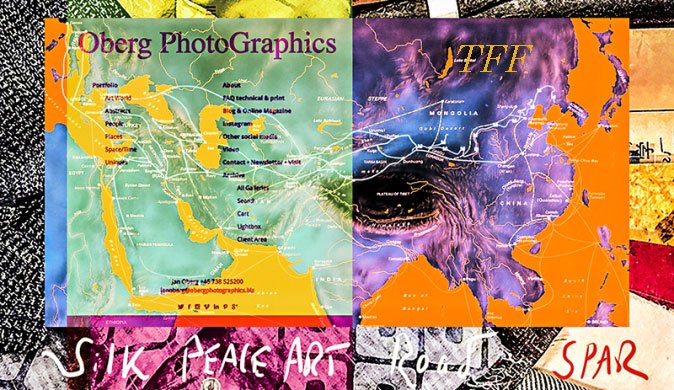
. This exciting opportunity stimulated the development of a bigger idea that combines Oberg’s work for peace and art photography with a focus on the Chinese-initiated Silk Belt and Road Initiative, the largest and most visionary in today’s world in terms of linking people and cultures into cooperation rather than confrontation. In various ways the project – with the Road as metaphor – stretches from Shanghai over Myanmar, Kazakhstan, Georgia, Iran and Syria to Venice and seeks to promote cooperation and peace in the process. It’s a joint project between Oberg PhotoGraphics and TFF. The “Silk PeaceArt Road” project is made public at this very early development stage where only little funding is secured to encourage you to share co-operative ideas, share contacts you may have in China and along the Silk Road or to potential partners, artists, sponsors, art institutions, etc.   Summary in 7 elements 1. To stay...
Screenshot
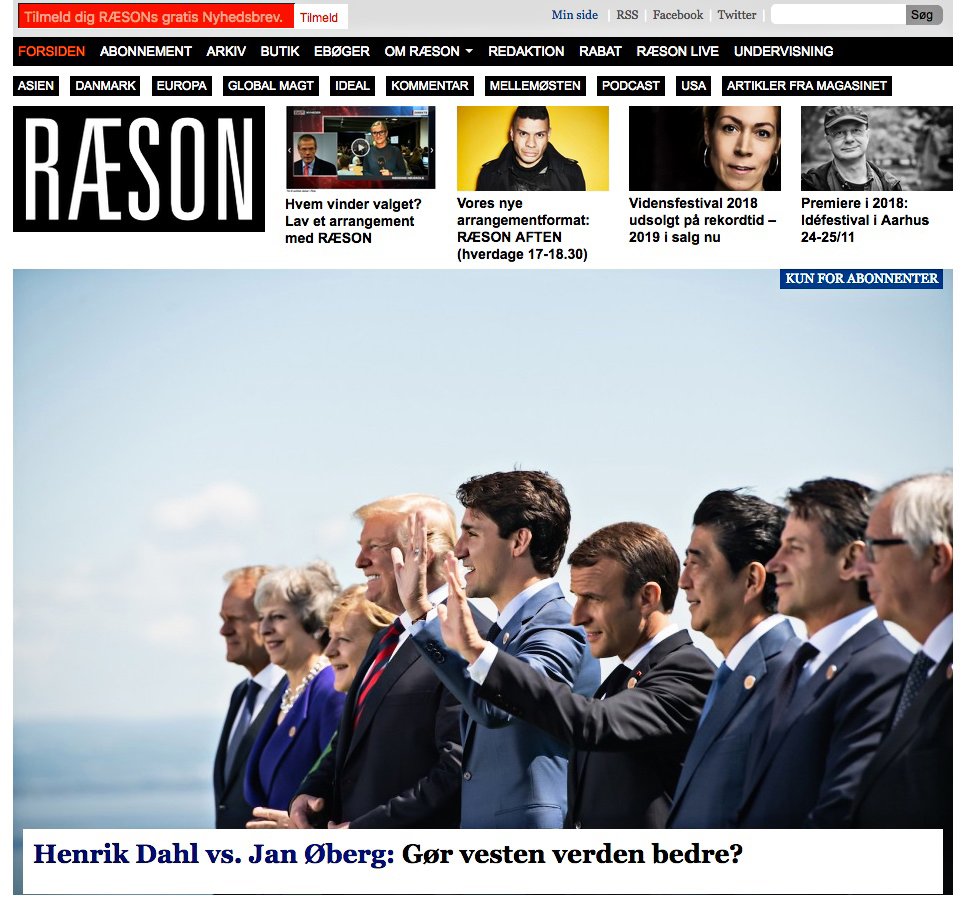
  Af Henrik Dahl & Jan Øberg 27. juni 2018 17 år efter 11. september og USA’s invasion af Afghanistan spørger Ræson: Gør vesten verden bedre? Chefredaktionen skriver: På en række områder har præsident Trump udfordret den traditionelle opfattelse af USA’s globale rolle, og givet sine allierede – herunder EU-landene – lejlighed til at overveje hvor langt de fælles interesser rækker. I Mellemøsten har Iran, Saudi-Arabien og Rusland de seneste år indtaget nye roller. I Asien bliver Kina stadig stærkere. En række iagttagere har de seneste år – med eller uden beklagelse – erklæret, at vestens mulighed for at sætte dagsordenen er ved at brænde endegyldigt ud. I en række artikler rejser RÆSON disse temaer over for eksperter, politikere og meningsdannere, herunder fredsforsker Jan Øberg og medlem af Folketinget, sociolog Henrik Dahl. I denne email-duel – “To meninger mødes” – skriver de på skift, fire indlæg hver. Artiklen er på...
JesperMJ
Born in 1988, Danish; rhetorician, writer, poet, speaker and communication advisor. Jesper Munk Jakobsen became TFF Associate in June 2018. Jesper Munk Jakobsen has a Master of Arts in rhetoric from Aarhus University, Denmark, and a prof.bach in communication from the Danish School for Media and Journalism. From 2015-2017 he was communications manager for the Student Council at Aarhus University. Over two years he wrote articles about local and national student politics, edited the student magazine, Delfinen, at Aarhus University and served as adviser concerning political issues and external communication. He has also previously been working with communication advising of the communication agency Mannov A/S and the Social Research Institute in Denmark, now known as VIVE. Contact Address Vestervang 35, 2 sal th. 8000 Aarhus C. Denmark E-mail: jespermunkjakobsen@outlook.dk Website & blog: jespermunkjakobsen.dk Phone: + 45 61454071
b979527b-b22b-0047-0000-000000000000
  Danish media have just informed the gaping Danes that their country is entering no less than “two military alliances” this week. That’s how the Ritzau News Bureau describes it and since a decent basic journalist capacity to problematize security and defence issue – as well as the peace discourse – has vanished, or been abolished, years ago, this is how both the leading conservative daily Berlingske Tidende and the Danish Broadcasting Corporation, Danmarks Radio, describe it too. Such headlines should raise a few eyebrows. They don’t. The Danes have – also long ago – willingly accepted that their country is among the most interventionist and war-fighting in Europe. One reason is that the media have virtually no people left who could perform deeper research or ask critical questions, especially about US/NATO affairs, let alone provide a diversity of perspectives. Abroad few bother to know about H.C. Andersen’s idyllic little...
gunnarwestberg-iContact
  By Gunnar Westberg June 21, 2018 The North Korea – USA nuclear crisis should teach us several lessons regarding nuclear weapons: 1. Nuclear weapons do not prevent nuclear proliferation. In 1970, the nuclear weapon states accepted the Nuclear Non-Proliferation Treaty, NPT. In this treaty, they agree to negotiate the complete disarmament of their own nuclear weapons. They have – equally completely – disregarded this pledge and insist that they must retain nuclear weapons in order to prevent other countries from acquiring them. The North Korea example shows us that this does not work.   2. Nuclear weapons are contagious. The nuclear weapons states also insist, contrary to their pledge in the NPT, that they must keep their nukes “for their own security”. This provides an excuse for other states to acquire them. A small country such as North Korea, DPRK, has stronger reasons to build nuclear weapons than a...
StephenFCohen
Ten ways the new US-Russian Cold War is increasingly becoming more dangerous than the one we survived. By Stephen F. Cohen June 21, 2018 Stephen F. Cohen, professor emeritus of Russian studies and politics at NYU and Princeton, and John Batchelor continue their (usually) weekly discussions of the new US-Russian Cold War. (You can find previous instalments, now in their fifth year, at TheNation.com.) Recent reports suggest that a formal meeting between Presidents Donald Trump and Vladimir Putin is being seriously discussed in Washington and Moscow. Such ritualized but often substantive “summits,” as they were termed, were frequently used during the 40-year US-Soviet Cold War too, among other things, reduce conflicts and increase cooperation between the two superpowers. They were most important when tensions were highest. Some were very successful, some less so, others were deemed failures. Given today’s extraordinarily toxic political circumstances, even leaving aside powerful opposition in Washington...
1-UCfJ71PaFR9wkLZ7Ib_Jiw
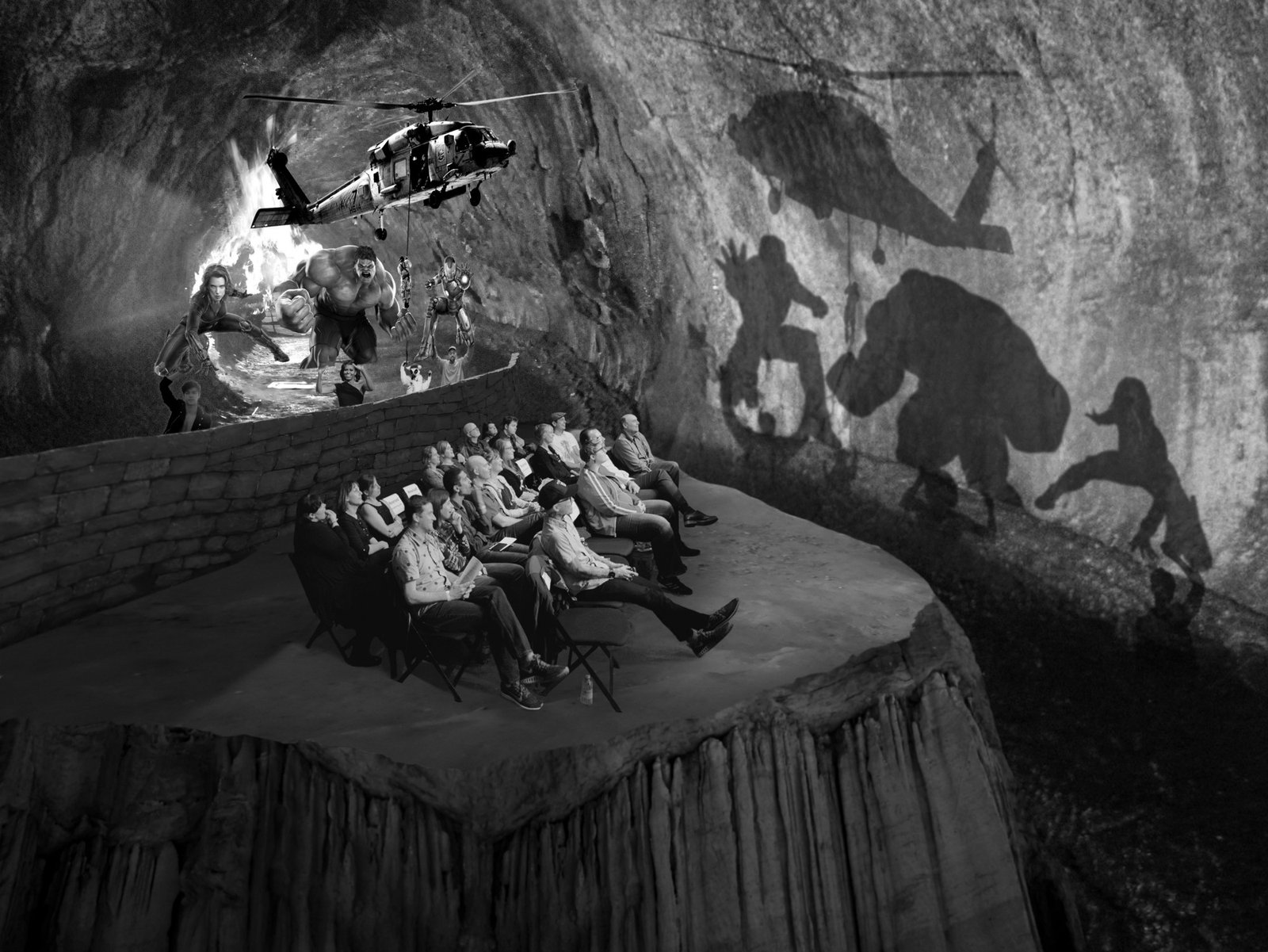
US military intelligence agencies have influenced over 1,800 movies and TV shows By Tom Secker and Matthew Alford Published by INSURGE INTELLIGENCE, a crowdfunded investigative journalism project for people and planet. Support INSURGE to keep digging where others fear to tread. Tom Secker and Matthew Alford report on their astonishing findings from trawling through thousands of new US military and intelligence documents obtained under the Freedom of Information Act. The documents reveal for the first time the vast scale of US government control in Hollywood, including the ability to manipulate scripts or even prevent films too critical of the Pentagon from being made — not to mention influencing some of the most popular film franchises in recent years. This raises new questions not only about the way censorship works in the modern entertainment industry, but also about Hollywood’s little-known role as a propaganda machine for the US national security apparatus. • • When...