April 2018

Showing 1-10 of 4016 stories

Sort by
Categories

Year

Author / Contributor

Region

KimandMoon
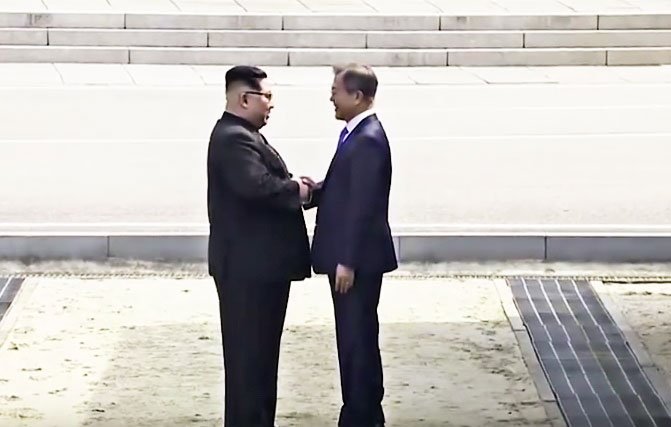
Please watch the video below carefully. You’ll see what could – could, and most likely will – become a piece of world peace history. Note the body language of the two leaders – warm smiles and long handshakes. In spite of being one and the same nation, they meet at the hardest border in the world. Why is it so? Because everybody else around – the US, Japan, Russia, China – to varying degrees want them to be divided and feel threatened by their possible unification. And yes, a unified Korea would be a formidable economic power but a huge, dangerous conflict would be gone, the US could withdraw, Japan would get a chance to reconciliate in substantive terms. What is most amazing in this clip is that Kim first steps over the border line into the South. Then – seemingly surprising Moon – invites Moon to step into the...
InaDehace_Insta
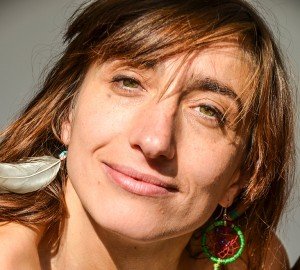
Ina Curic has been with TFF since 2006 – an Associate, a Board member and also TFF’s project coordinator when we worked in Burundi. After a few years away from the bigger world issues of the world, Ina Curic is now back as author of children’s books – bedtime stories for children and waking-up stories for parents, in one. In this short video* she tells you about the idea behind the books – which has a lot to do with peace and environmental education. She is also a mother of two and a very playful personality who loves to experiment and make people laugh and feel happy around her. Given all the world crisis we face as humanity, the message Ina Curic conveys is existentially important and gives hope to big and small alike. We recommend that you visit her homepage and download her first free ebook here and find...
Ina_portrait_1_800_cropped-kopia-300x270
Ina Curic became a TFF Associate in April 2006, TFF’s project coordinator in Burundi in May 2007 and a member of the foundation’s Board in March 2008. After years of service, she left the Board to develop her career as author and publisher but, in December 2018, she again joined the Board. Romanian-born Ina Curic is a trained sociologist, with an M.A. in Gender Studies from Babes-Bolyai University, Romania and an M.A. in Peace and Conflict Studies from the European Peace University, Austria. She has a solid background in peace and conflict research, gender studies and NGO management and more than fifteen years work experience with national civil society and international organizations in different countries. Since 1999, Ina has provided numerous national and international training programmes and workshops on different topics related to organizational development, project management, peace, conflict and gender and youth work-related issues in various settings.  Her field...
JO-Arb
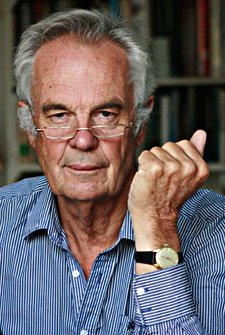
  A short comment to a very good statement by Madam Mogherini about Syria. She is right – and one must wonder why virtually every big power anyhow does not invest in political, negotiated solutions but in weapons. And why the world is so woefully unbalanced in terms of war-making versus peace-making. The simple truth is that every and each conflict on earth gets more difficult to solve from the moment some type of violence is introduced into it. That is why the world should focus on reducing  military development, production and sales. If Syria had been cordoned off and no weapons had entered its space, it would have been much much easier to solve the underlying conflicts – which, by the way, have little to do with Darrah in spring 2011 but much more complex things. I find it relevant to here also mention how pervasively all Security Council...
jonathanpower
  • A speech of General George Patton, a famous World War 2 warrior, has an uncanny resemblance to the philosophy of Donald Trump. “All real Americans love the sting and clash of battle. Americans love a winner and will not tolerate a loser- Americans despise cowards. Americans play to win- all the time. That’s why Americans have never lost, not ever will lose a war, for the very thought of losing is hateful to Americans.” Then came the Korean War (a stalemate), Vietnam (a loss), Afghanistan (mired in unconquerable mountains), Iraq 2 (a quagmire). Nevermind the failures, with Trump in the saddle a new toughness is apparent. He’s in the middle of conflicts with North Korea, Russia, Iran, Syria, China, Yemen, Somalia, Libya, and in Niger and Mali. “Fire and Fury”, aimed at North Korea, is in danger down the road of becoming his mantra. Recall that the US...

Samuelsen
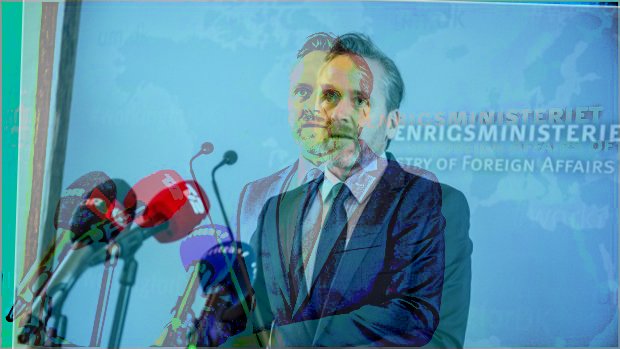
  Af Jesper Munk Jakobsen* 23. april 2018 Danmark har ikke tradition for at redde civile menneskers liv i Mellemøsten, når vi involverer os i konflikter ved at anvende militær. Regeringen bakker op om endnu en militæraktion i Mellemøsten, og nu står den danske befolkning igen som statister i en film, som har været spillet gentagne gange de sidste 16 år. Vesten griber til missiler og affyrer dem med besked om, at de redder endnu en befolkning i Mellemøsten. Det er dermed ikke uvant territorium for de danske medier, at Danmark bakker op om militæraktioner i Mellemøsten. Ifølge Anders Samuelsens Tweet den 12. april er det for de civile syreres skyld, at Danmark nu støtter op om et missilangreb i Syrien. Med Irak-krigen i frisk erindring vil jeg påstå, at udenrigsministerens påstand om, at man hjælper de civile i Syrien ved at affyre 105 missiler, kunne udfordres af den danske...
Screenshot
By Adam Johnson FAIR Originally published by FAIR on April 18, 2018 here “Only…with the departure of the Assad regime, will it be possible to ensure that Syrians do not suffer more atrocities,” the Washington Post (4/14/18) editorialized.     A survey by FAIR of the top 100 papers in the US by circulation found not a single editorial board opposed to Trump’s April 13 airstrikes on Syria. Twenty supported the strikes, while six were ambiguous as to whether or not the bombing was advisable. The remaining 74 issued no opinion about Trump’s latest escalation of the Syrian war. This is fairly consistent with editorial support for Trump’s April 2017 airstrikes against the Syrian government, which saw only one editorial out of 47 oppose the bombing (FAIR.org, 4/11/17). The single paper of dissent from last year, the Houston Chronicle, didn’t publish an editorial on last week’s bombing. Seven of the...
cropped-david6
By David Swanson* Imagine some foreign nation sent 100 missiles into Washington D.C. You can imagine this because Hollywood has trained you to imagine it.   Originally published at David Swanson here. April 20, 2018 Imagine that for weeks or months prior to this attack, the foreign nation’s government and public debated whether to do it. You can imagine this because you live in the one nation on earth where such debates happen, or because you have heard about the sorts of things that go on in the United States. Now imagine that the primary excuse for the attack settled on in the debate in the distant foreign capital was this: it would be punishment for the U.S. government’s use of and possession of banned weapons: depleted uranium, white phosphorous, napalm, cluster bombs, etc. You may be able to imagine that, depending on what you know about events in the...
JOSyria
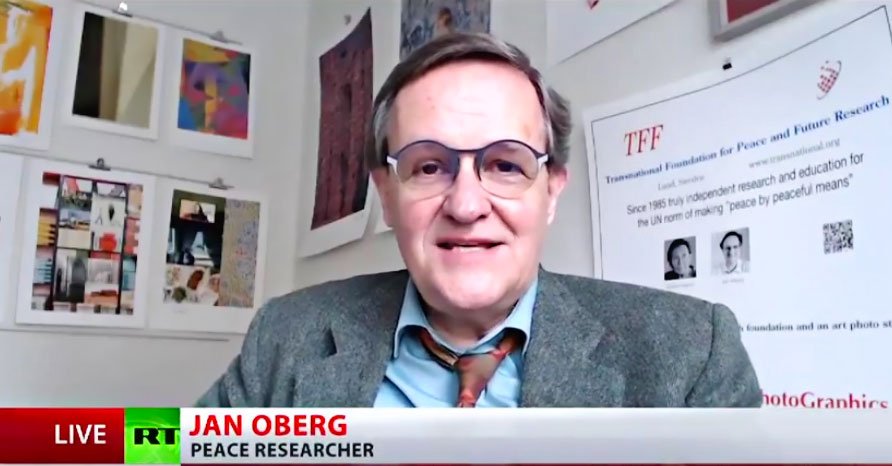
  , speaks with Russia Today and points out why this type of behaviour is totally unacceptable: It violates international law, undermines the UN and brings Syria, the region and the world further and further from peace. The people behind it and their media and other supporters must be perceived as either conflict- and peace illiterate or advocates of criminal activity. Both of which are tragic and making already dark times darker. We must say stop and argue: Peace first – The Secure the peace. In addition, contrary to the Western/NATO belief this is self-destructive and self-isolating. The international so-called community is, for the large majority, not behind this type of policy.
2
  By Tibor Várady April 19, 2018 Some introductory remarks concerning the use of the term “populism” The term “populism” is becoming increasingly popular in public discourse. It is difficult to deny – and I have no intention to try to deny – that the designation tackles (or tries to tackle) a serious problem. But wide use has made it more and more difficult to discern what ground is actually covered by this term. The question also arises, whether more coherent (even if contested) notions framed in social sciences may succeed in reining in careless use of the term “populism” in public discourse. A couple of years ago I was noting various contexts in which the term “populism” was used – particularly in the press. For instance, the Hungarian Népszabadság on May 2, 2009, cites the Slovak “SME” comparing the Czech and Hungarian government crisis, and concludes that “What is...
richard-falk-cropped-internal
This post is an assessment of the recent Syrian missile attack by the armed forces of the U.S., UK, and France from a variety of perspectives. It is a modified and expanded version of a text earlier published in The Wire  (Delhi) and Il Manifesto(Rome). I intend to write two further posts suggested by the controversy generated by the airstrikes of April 14, 2018, against sites associated with Syria’s alleged chemical weapons capabilities. These strikes raise questions of international law, domestic constitutional authorization for international uses of force, strategic logic, and moral imperatives and rationalizations. Each of these issues is capable of multiple interpretations raising further concerns about the appropriate location of the authority to decide given the nature of world order in the 21stcentury.  Preliminary reflections At this stage, it seems reasonable to wonder whether Syria was attacked because it didn’t use chemical weapons rather than because it did....
od960_logo@2x
By Edmund Fawcett Originally published by Open Democracy on April 7, 2018 here on   Unlike the hard right I have not conjured up an imaginary Other, but identified a genuine adversary in a struggle over democratic liberalism that is already engaged.   28 March 2018, Germany, Berlin: Olaf Scholz, Federal Minister of Finance (SPD), and German Chancellor Angela Merkel (CDU) attend a cabinet meeting at the Federal Chancellery. Gregor Fischer/Press Association. All rights reserved. To fix the topic, recall 18 months of recent electoral shocks, in reverse order. Last autumn in Germany’s national elections, the Alternative für Deutschland broke out from the fringes and won 94 seats in the federal parliament, a seventh of the total. Not since the early 1950s has Germany’s hard right won national representation and never in such strength. A year ago, Marine Le Pen at the head of the National Front advanced to the...