January 2002

Showing 1-10 of 5204 stories

Sort by
Categories

Year

Author / Contributor

Region

Imagen-thumbnail-The-Transnational-1
By Zelim Skurbaty, Ph.D., LL.D., The Danish Center for Human Rights  Speech delivered at the Graduation Ceremony forthe Master of Arts Students in Human Righs and Democratization16 November 2001, Malta University, Valetta Only for those without hope that hope is given to us Good afternoon Mr. Rector, members of the University Senate, graduates, teachers, friends, First of all, I want to thank on behalf of the Danish Center for Human Rights as well as on my own behalf Prof. Roger Michaleff, Rector of the Malta University, the Dean of the Faculty of Laws Prof. Ian Refalo, the Foundation for International Studies, Mr. Leslie Agius along with Ms Cynthia D’Amato and Ms Therese Cachia, for the honor to be part of this solemn and important ceremony. I feel grateful and privileged at the opportunity to address the graduates as well as the ‘rookies’ of the master of Arts human rights. The...

Imagen-thumbnail-The-Transnational-1
By Richard E. Rubenstein* The failure of the Democratic Party and the mainstream news media to criticize President Bush’s overwrought, alarmingly bellicose State of the Union speech is no less appalling for being predictable. Their vacuous, timid responses remind us once again that democracy and freedom depend ultimately on ideas and the courage to voice them, not just on forms of legality. Bush makes three points in his speech. (1) The war on Afghanistan was a great victory. (2) The war on global terrorism must be continued and expanded. (3) We will “defeat” the economic recession as well as the terrorists. For the moment, we can forget point (3), which simply dresses up the Bush Administration’s economic program in military rhetoric, and point (1), which represents the worst sort of tub-thumping propaganda. Afghanistan has been “freed from oppression,” although upwards of 40,000 new refugees have fled their homes to escape...
Imagen-thumbnail-The-Transnational-1
If only it were all so simple! If only there were evil people somewhere, insidiously committing evil deeds, and it were necessary only to separate them from the rest of us and destroy them. But the line dividing good and evil cuts through the heart of every human being. And who is willing to destroy a piece of his own heart? – Alexander Solzhenitsyn, The Gulag Archipelago In his autobiography Gandhi writes that “those who say that religion has nothing to do with politics do not know what religion means” (p. 370). Perhaps this is more obvious to us after September 11th, but it should always have been obvious: religion is about how we should live, and politics is about deciding together how we want to live. The main reason it has not been obvious is because most modern societies have been careful to distinguish the secular public sphere from the...
Imagen-thumbnail-The-Transnational-1
By Cynthia Cockburn for ‘Hands Across the Divide’, London   A small group of Cypriot women, calling themselves “Hands Across the Divide”, has started actively campaigning for peace in Cyprus…. They have to communicate by e-mail, because face to face meetings between people living in north and south Cyprus are so difficult to achieve. Since 1974, the island of Cyprus has been divided by a barbed-wire fence, which runs from coast to coast and through the heart of the principal city of Nicosia. Partition… This UN partition line was set up after a long period of ethnic violence beginning back in 1963, compounded by meddling on the part of other nations with an interest in the region. Ever since, the Turkish Cypriot population of the north of the country has lived in complete separation from the mainly Greek Cypriot population of the south. There’s only one checkpoint in the ‘Green Line’,...
Imagen-thumbnail-The-Transnational-1
Helsingborgs Dagblad, 31 januari 2001 Av en slump faller mina ögon på en liten notis i InternetWorld 1-2002: “Somalias enda internetleverantör, Somali Internet Company, tvingades stänga i december eftersom USA misstänker att företaget har kopplingar till terroristnätverket al-Qaida. Resultatet är att alla internetkaféer har tvingats slå igen. Stängningen drabbar inte bara somalier som vill hålla kontakt med släktingar utomlands, utan även näringslivet och alla internationella hjälporganisationer i landet.” Jag arbetade i Somalia 1977-81. Då skickade jag brev och telegram hem. Somalia var en samtalets kultur; ett skriftspråk hade just införts under Siad Barres första år av visionär (sedan sorgligt diktatorisk) statsledning. Somalierna träffades på marknaderna med sin boskap och sina kameler, berättade historier och nyheter och reciterade poesi medan de drack sött kanel-te och tuggade khat. På så sätt, och tack vare släkt- och klanstrukturer, visste alla 3,5 miljoner somalier allt om varandra. Och dygnet om lyssnade de på BBC:s Somalia-sektion ty...
mark
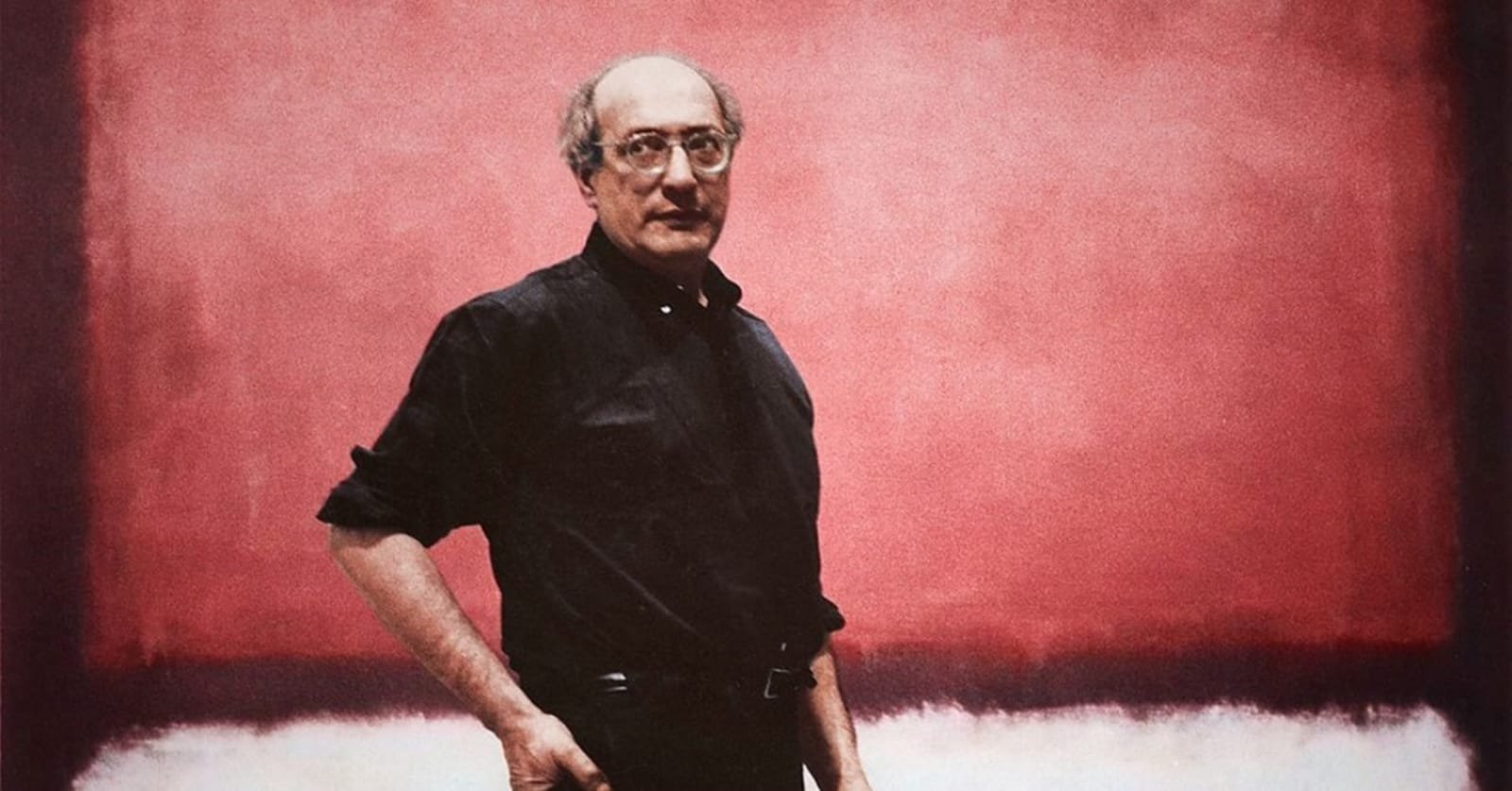
Beskyttet fra Londons og hele verdens støj, mode, tant og flygtighed og langt fra ligegyldighed og forbrugerisme kommer jeg bag Tate Moderns tykke maskinrumsmure ind i et mørkegråt kapellignende rum med dæmpet belysning. Her vises Mark Rothkos kæmpestore, afrundede rektangler i rødbrune nuancer, mystisk vibrerende i brunt og sort og, aner man, i alle jordens andre farver. I kompositionen kan de minde om tibetanske mandalas, former man stiller øjnene ind på og som derpå begynder at bevæge sig. Ind i et mørklilla univers, som indgyder mig ro. Konturløse kuber, som er skabt af en udramatisk, og blød – tilsyneladende – anvendelse af farver. Men mandalans detaljerigdom savnes – eller måske er hvert et billede netop en detalje i universet, et hologram i olie? Dystre bevæger de sig ind og ud af hinanden, som vinduer i – eller ud mod – et grænseløst rum. Skønhed? Ubeskrivelighed? Hvile? Intensitet? Fred? I krop og sjæl...
Imagen-thumbnail-The-Transnational-1
The idea behind the EU Europe after the Second World War developed a strong culture of pacifism. Part of this was driven by internal motives. The movement towards European Union was undoubtedly stimulated by the felt need to eliminate tensions between France and Germany, and to make impossible new eruptions within the European continent. The establishment of the European Coal and Steel Community was, amongst other things, a deliberate attempt to fuse resources and overcome the national economic competition which could bring about a renewal of militarism. Of course, all this unwound within the context of the Cold War, which, as it became more and more dependent on nuclear confrontation, aroused our own peace movements, for nuclear disarmament. Whilst not wishing to sentimentalise these different pacifisms , they undoubtedly became part of a wider culture, which was only partially eclipsed by the end of the Cold War, as a result...
Imagen-thumbnail-The-Transnational-1
LONDON – Chris Patten, the European commissioner for foreign affairs, said the other day that America had to be careful that after winning the war it didn’t lose the peace. But who can say that America has won the war? It hasn’t “smoked out” Osama bin Laden, the supposed objective. As for losing the peace, yes, the indications are indeed worrying. No one in Washington with their hand over their heart could say that world opinion is now behind America. It may have been momentarily in the immediate aftermath of September 11th but over the months that support has been whittled away. The treatment of the prisoners in Guantanamo has brought it all to a head. Indeed, the very fact that this issue has become so hot, particularly in Europe, is an indication of the deep doubts and reservations in the chancelleries of Western Europe about America’s on-going call to arms....
Imagen-thumbnail-The-Transnational-1
President Bush’s State of the Union address was great rhetorically, he was self-confident and visionary. He comforted, I assume, the souls of Americans. Members of Congress rose to their feet and applauded him repeatedly and enthusiastically. I’ve taken the trouble to listen to the speech, read it carefully and analyse it. Why do I, deep down, perceive this speech as bellicose, disrespectful of others and as boding ill for the world? I believe we all have a duty now to try to dialogue with Americans about the fact that some of us who are by no means “anti-American” feel increasingly alienated by what we hear and see. I, for one, was brought up with great admiration for the United States; my parent’s generation always pointed to how Americans helped Europe, to the Marshall Plan and the dynamism of American society, its art, literature and music, and the miracles of its...
Imagen-thumbnail-The-Transnational-1
During his first year in office, George W. Bush has engaged in three wars. His war against terrorism is widely known and discussed. His resolve to fight against evildoers with America’s military might is said to have defined his presidency. The president’s other two wars have received far less attention, but they may end up defining his presidency even more than his war against terrorism. These are his war against international law and his war against the international control of armaments. In the war against international law, the president has shown remarkable boldness in his disdain for the remainder of the international community. He has pulled out of the Kyoto Accords on Global Warming, perhaps the most critical environmental treaty of our time. He has also demonstrated his contempt for the creation of an International Criminal Court that would hold individuals accountable for the types of serious international crimes that...
Imagen-thumbnail-The-Transnational-1
Gandhi, Arun. Lord Richard Attenborough. Kasturba: a lifeNew Delhi: Penguin Books Ltd., 2000.315 pp, 295 Indian Rs, US $22.51 January 29, 2002 Arun Gandhi, grandson to Mohandas and Kasturba, has written a thorough account of Kasturba’s life. Arun begins with a description of Kasturba’s childhood in Porbandar in the late1800s, before she met Mohandas. By having chosen to embark on difficult research into his grandmother’s life, including her first years which are not well-documented, Arun ensures that the reader receives an intimate and life-long portrait of this amazing woman. Kasturba is presented as a lively woman &endash; obedient, yet with a mind of her own. As the relationship between Kasturba and Mohandas developed, Arun maintains that Kasturba’s influence over Mohandas in her own quiet way also grew, to which some of Mohandas’ writings also attest.  Arun paints a vivid picture of the beginnings of Mohandas’ non-violence movement in South Africa, a...
Imagen-thumbnail-The-Transnational-1
In the Fall Issue of Development Outreach, World Bank president James D. Wolfensohn reflects on the consequences of September 11 and says that we must fight terrorism and poverty, with “and” in italics. It is one of these élitist articles that states what an unidentified global “we” must now do to make the world a better place. While I do not doubt his wish to see a better world, the lack of both causal analysis and strategy for change in this article raises concerns. There are already thousands of such statements and many more will be made when the World Economic Forum is held in New York from January 31. Wolfensohn’s exposé, in spite of all the seemingly idealistic words, makes it abundantly clear that we live in a time in which political power is inversely related to intellectual power and truth power. He starts out asserting that “we know...